
Tesla to Wind Down Cybertruck Production as Musk Shifts Texas Factory to Robotaxi Future

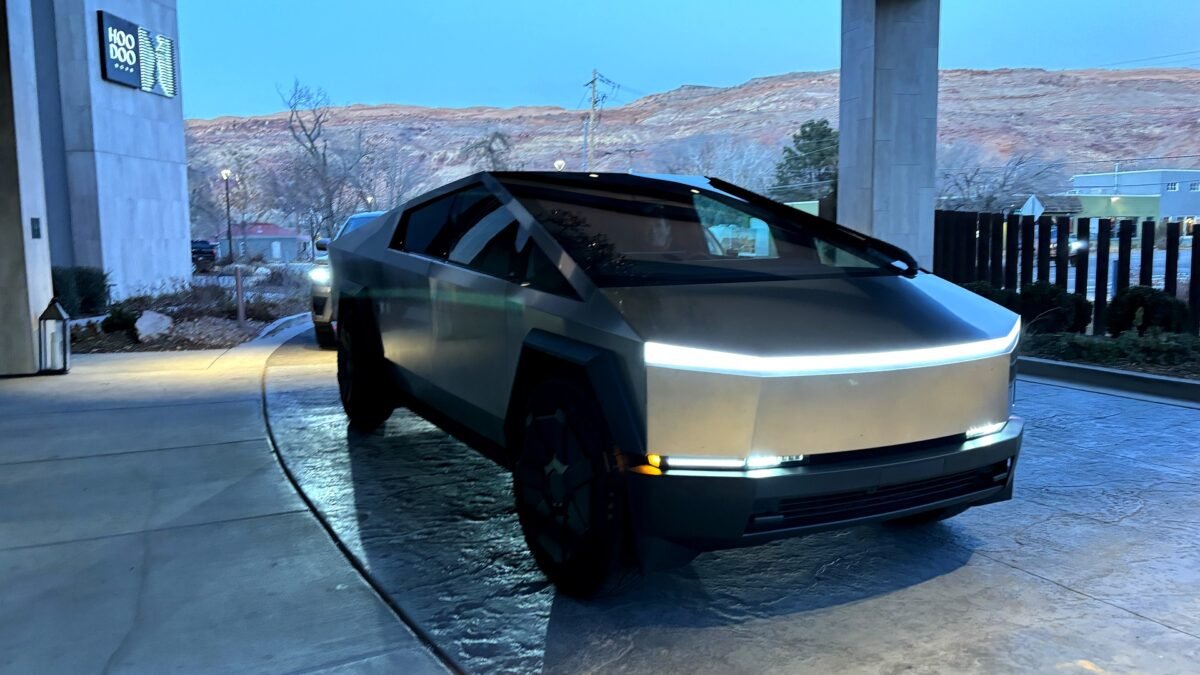
Tesla will wind down production of the Cybertruck at its Gigafactory in Texas around the middle of next year, chief executive Elon Musk has confirmed, bringing the curtain down on one of the most talked-about vehicles in modern automotive history and clearing factory space for the company’s driverless Cybercab robotaxi.
Musk announced the decision in a short post on X on Friday, 6 November. “Tesla will be winding down production of the Cybertruck at Gigafactory Texas around the middle of next year to make room for increased Cybercab production,” he wrote, according to USA Today.
The announcement, which landed on the same day that Tesla’s shares climbed 4.8 per cent as Wall Street rebounded from its worst sell-off since April 2025, marks a decisive turn in Tesla’s strategy. The Cybertruck, unveiled to enormous fanfare in November 2019 and pitched as the future of the pick-up truck, will be replaced on the Austin production line by a two-seat autonomous taxi with no steering wheel and no pedals — a vehicle that has yet to prove itself commercially.
Musk did not say whether Cybertruck production would end altogether or simply move elsewhere, and Tesla did not immediately respond to requests for comment, according to MarketWatch. But with the Texas plant the only factory known to build the truck, and with sales running at roughly a tenth of the volume Musk once promised, few in the industry expect the vehicle to survive in any meaningful form.
The decision had been telegraphed for months. On Tesla’s earnings call in January, Musk told investors that the Cybertruck line would be converted to build “just a fully autonomous vehicle”, and suggested the truck’s future lay in driverless cargo delivery inside cities. Friday’s post makes that pivot official — and sets a date on it.
A flagship that never found its market
When Musk unveiled the Cybertruck in November 2019, it was unlike anything on the road: a wedge of cold-rolled stainless steel inspired, in Musk’s own telling, by the films Blade Runner and James Bond, with a promised starting price of $39,900 and a claimed annual sales target of 250,000 vehicles.
Reality fell far short on every count. Deliveries did not begin until late 2023, the cheapest version eventually cost $59,900 — half as much again as the promised price — and the truck has been dogged by multiple recalls and quality complaints, according to Engadget.
Sales figures compiled by the automotive research firm Cox Automotive and reported by USA Today show the scale of the shortfall. Tesla sold 11,586 Cybertrucks in the United States in the first nine months of 2026, down 28 per cent from the 16,097 sold in the same period of 2025. That 2025 figure was itself down 38 per cent from the 25,974 sold in the first nine months of 2024. In the third quarter of 2026, Cox estimated sales of just 4,323 trucks — although other analysts put the figure higher, with the motoring site Electrek estimating that roughly 7,000 to 8,000 of the 8,295 vehicles Tesla delivered in its “Other Models” category in the quarter were Cybertrucks.
Either way, the totals are a fraction of what was promised. Engadget reported that Tesla has sold only around 71,000 Cybertrucks since deliveries began — fewer than three months’ worth of the 250,000-a-year volume Musk originally projected. The Australian motoring site Drive reported that the truck is set to become the shortest-lived production car in Tesla’s history, beating even the original Roadster’s three years and ten months.
Tesla does not report Cybertruck deliveries separately, so the exact figures depend on estimates. But the direction of travel is not in dispute: a vehicle launched as the future of the American pick-up is selling at a rate that would barely register against the roughly 700,000 Ford F-150s sold in the United States in a typical year.
The price rise hours before the axe fell
In a final twist, Tesla raised Cybertruck prices by up to about 9 per cent — roughly A$11,000 — only hours before Musk’s announcement, according to Drive. The timing underlined the abruptness of the decision, and the difficulty of reading Tesla’s intentions from its pricing: a vehicle whose price was rising in the morning was being wound down by the afternoon.
Hours after the announcement, the Cybertruck’s own lead engineer appeared to confirm that the end was final. Wes Morrill wrote on X that “Cybertruck was an incredible technology development platform and lives on through Cybercab,” in a post reported by Autoblog — language that reads as an epitaph rather than a pause. Morrill added that Tesla would continue to maintain spare parts for the model, a reassurance that will matter to the tens of thousands of owners who bought into the truck’s promise.
Why the Cybertruck failed
The Cybertruck’s failure has more than one cause, and analysts disagree about which mattered most. Its design was the most polarising of any mass-market vehicle in decades: loved by a devoted minority, derided by almost everyone else, and — crucially — too wide, too angular and too stainless-steel for the conservative tastes of the American pick-up buyer, who accounts for the largest and most loyal vehicle segment in the United States.
The price did the rest of the damage. At $59,900 for the cheapest version, the truck cost far more than the $39,900 Musk had promised, and far more than the work trucks it was supposed to replace. Pick-up buyers who tow, haul and work from their vehicles found little in the Cybertruck’s angular bed and limited range to justify the premium.
Then came the wider electric-vehicle slowdown. According to data from Cox Automotive reported by USA Today, carmakers sold 725,888 electric cars in the United States in the first nine months of 2026, down 30 per cent from the more than one million sold in the same period last year. The fall followed President Donald Trump’s decision, backed by Congress, to eliminate the popular $7,500 federal tax credit for electric vehicles — a change that removed a powerful incentive just as the market was cooling.
And then there is Musk himself. Industry analysts have noted the impact of the chief executive’s work with the Trump administration in 2025 and his outspoken conservative political positions on the sales performance of Tesla’s cars. The Cybertruck in particular launched during the height of the 2024 presidential campaign, when Musk was vocally supporting Trump, and the truck became a symbol of political alignment for some shoppers — and a target for others.
A study published by Yale University in November 2025 found that Tesla sold between one million and 1.26 million fewer vehicles between October 2022 and April 2025 than it otherwise would have, as a result of what the study’s authors called the “Musk partisan effect”. The same study found that Musk’s public political stances helped increase sales of other carmakers’ electric and hybrid vehicles by 17 to 22 per cent, as drivers opposed to the chief executive’s politics took their money elsewhere.
A poll released in January by EVs for All America, an advocacy group that works with car manufacturers to push lawmakers to adopt EV-friendly policies, found that 44 per cent of people who said they were seriously considering buying an electric vehicle had a mostly unfavourable opinion of Musk.
None of this is to say the Cybertruck had no admirers. Its stainless-steel body, armoured glass and futuristic silhouette made it instantly recognisable, and its owners are among the most loyal in the industry. But loyalty on that scale cannot sustain a factory line built for a quarter of a million trucks a year.
The Cybercab takes the factory floor
The vehicle taking the Cybertruck’s place on the Austin production line is the Cybercab, Tesla’s purpose-built robotaxi. Unveiled in October 2024, it is a gold-coloured, two-seat vehicle with no steering wheel and no pedals, designed from the outset to drive itself.
Tesla began offering rides in Cybercabs in Austin in September, and Musk told investors in April that the company planned to expand its Robotaxi service to “a dozen or so states” by the end of the year. Documents submitted to the United States Environmental Protection Agency in May, reported by USA Today, show the Cybercab will have a fully electric motor, weigh 3,113 pounds, carry a 48 kWh lithium-ion battery with a charge-depleting range of about 418 miles, and produce 219 horsepower with all-wheel drive.
Tesla is engineering the vehicle to sell for under $30,000, according to Autoblog — less than half the price of the cheapest Cybertruck — and Musk has publicly targeted production of millions of robotaxis a year, envisioning dedicated ride-hailing networks alongside personally owned Cybercabs that earn money for their owners when they are not being used. Tesla’s website now carries a form for people interested in buying Cybercabs for commercial use, individually or as a fleet, although there is still no word on when, or whether, the vehicle will be available for personal use.
The scale of the bet is visible in Tesla’s own filings. The company’s third-quarter shareholder update listed installed annual production capacity of more than 125,000 vehicles each for the Cybertruck and the Cybercab at the Texas plant, according to Invezz — capacity that will now be tilted decisively toward the robotaxi.
For passengers, the experience will be familiar to anyone who has ridden in a Waymo or Zoox vehicle in the select American markets where those services operate. Tesla says rides will be ordered through a phone app similar to those used for Uber and Lyft, with riders waiting at a designated pick-up point and tapping a “Start Ride” button when they climb in. There will be no human driver behind the wheel to greet them. Riders will be able to personalise the experience — climate settings, seat position, streaming — and certain profile settings will carry over for Tesla vehicle owners.
An all-or-nothing bet on autonomy
The decision to sacrifice the Cybertruck for the Cybercab is, in the end, a statement about what Tesla now is. The company that once defined itself by selling electric cars to drivers is increasingly defining itself by selling rides to passengers who never touch a steering wheel.
Musk has said the robotaxi will be a big part of Tesla’s “overall shift to an autonomous future”, and the Cybertruck’s fate shows how far that shift has gone. A vehicle that cost billions to develop, that carried the company’s brand into the largest vehicle segment in America, and that was supposed to sell a quarter of a million units a year, is being wound down after fewer than three full years of deliveries — not because it was replaced by a better truck, but because its factory space is worth more building a car with no driver at all.
Investors, for now, appear to approve. Tesla’s shares climbed 4.8 per cent on Friday, according to Benzinga, as the Nasdaq 100 rebounded 2 per cent from its worst day since 2020. Whether that approval survives contact with the realities of the robotaxi business — regulation, safety, competition from Waymo and Zoox, and the long history of Tesla’s missed deadlines on self-driving technology — is the question that will define the company for the next decade.
Analysis: Why It Matters
The end of Tesla as a car company — at least as we knew it
There is a temptation to read the Cybertruck’s demise as a story about a single failed vehicle. It is bigger than that. Tesla is the most valuable carmaker in the world, and it has just confirmed that it will stop building its only pick-up truck — the vehicle type that accounts for roughly one in five new vehicles sold in the United States — in order to build a taxi with no steering wheel. That is not a product decision. It is a declaration that Tesla no longer sees its future in selling cars to people who drive them. The company that made electric vehicles desirable is now betting that the car itself, as a product owned and driven by an individual, is a transitional technology. If Musk is right, the Cybertruck will be remembered as the last conventional vehicle Tesla ever tried to build. If he is wrong, it will be remembered as the moment Tesla walked away from the largest market in American motoring to chase a technology that has repeatedly failed to arrive on schedule.
250,000 a year became 11,586 in nine months
The numbers are the story, and they deserve to be stated plainly. Musk promised 250,000 Cybertrucks a year. In the first nine months of 2026, Tesla sold 11,586 — a run rate of about 15,000 a year, roughly six per cent of the target. The total sold since deliveries began is around 71,000, which is less than a single quarter of the promised annual volume. These are not the figures of a product that needs more time, or better marketing, or a price cut. They are the figures of a product that the market rejected. What makes the failure remarkable is that it happened in the most forgiving circumstances imaginable: the Cybertruck was launched by the most famous entrepreneur alive, covered by every news outlet on earth, and sold into the largest vehicle market in the world. It failed anyway. That should give pause to anyone who believes that publicity and charisma can substitute for a product people actually want to buy.
The price of politics
The Yale study’s finding — that Musk’s political positions cost Tesla between one million and 1.26 million vehicle sales over two and a half years — is one of the most striking pieces of research ever published about a single executive’s effect on a company. It suggests that the Cybertruck’s failure was not only a design and pricing failure, but a political one. The truck launched at the height of the 2024 campaign, when Musk was the most visible corporate supporter of Donald Trump, and it became a rolling political statement in a way no vehicle had before. Some buyers loved it for that. Far more, the evidence suggests, were put off by it — and bought a rival’s electric or hybrid vehicle instead. The lesson for every chief executive watching is a sobering one: in an age when a company’s leader is also its brand, a political stance is a product decision, and it carries a cost that can be measured in hundreds of thousands of unsold vehicles.
The Cybercab has to work — there is no plan B left in Austin
What is striking about Friday’s announcement is how absolute it is. Tesla is not keeping the Cybertruck line alive while the Cybercab finds its feet. It is winding the truck down, in the only factory that builds it, to make room for a vehicle that has been offering rides in a single city for less than two months. The Cybercab’s success is far from guaranteed: it depends on Tesla solving unsupervised full self-driving after more than a decade of trying, on winning regulatory clearance across federal and state authorities, and on beating Waymo and Zoox, which have been running driverless services for years. Tesla’s own history counsels caution — Musk has promised full self-driving “next year” so many times that the phrase has become a running joke in the industry. The difference now is that there is no fallback. The factory space, the engineering talent and the capital that once built the Cybertruck are all being committed to a bet that has to pay off.
A warning for the whole electric-vehicle industry
The Cybertruck’s failure also belongs to a wider story: the electric-vehicle market in the United States is cooling fast. Sales fell 30 per cent in the first nine months of 2026 after the $7,500 tax credit was eliminated, and the Cybertruck was the most exposed vehicle in that downturn — expensive, polarising, and dependent on exactly the kind of early-adopter enthusiasm that a cooling market kills first. But the deeper warning is about the industry’s habit of mistaking novelty for demand. The Cybertruck was novel in every sense: novel materials, novel shape, novel marketing, novel politics. What it was not, it turned out, was a truck that enough people wanted to buy at a price that made sense. As the electric-vehicle industry moves from its early-adopter phase into the mass market, that distinction — between a vehicle that generates headlines and a vehicle that generates sales — will decide which companies survive and which do not. Tesla has just learned the lesson the hard way. Its rivals should be taking notes.
What to Watch Next
- The mid-2027 deadline: Musk said production will wind down “around the middle of next year” — the phrasing leaves room for slippage, and Tesla’s record on deadlines is poor. Watch whether the wind-down begins on schedule in the second quarter of 2027, and whether any Cybertrucks are still being built by the end of that year.
- Whether production moves or ends: Musk did not say whether Cybertruck production would end entirely or move to another site. With no other factory known to build the truck, a move looks unlikely — but any announcement of a new production location would change the story completely.
- Cybercab production and deliveries: Tesla has promised Cybercab deliveries by the end of this year and millions of robotaxis a year in the longer term. The first hard numbers on Cybercab production volumes, delivery dates and ride volumes in Austin will show whether the pivot is real or aspirational.
- Robotaxi expansion: Musk told investors in April that the Robotaxi service would expand to “a dozen or so states” by the end of 2026. Whether that target is met — and whether regulators in those states cooperate — will be the first real test of the autonomous strategy.
- Tesla’s sales and share price: Tesla’s shares rose 4.8 per cent on the day of the announcement, but the company is giving up a product line and the pick-up market with it. Watch the next quarterly delivery figures for the “Other Models” category, and whether the market keeps rewarding the robotaxi bet if Cybercab volumes disappoint.
Sources
- USA Today — “Why Tesla is ending Cybertruck production and what comes next”
- Engadget — “Tesla is ‘winding down’ Cybertruck production at its Texas Gigafactory”
- USA Today — “Is Cybertruck nearing end of road? Musk to wind down production”
- Drive — “Tesla Cybertruck ute to be scrapped after sales ‘flop'”
- Invezz — “Tesla Cybertruck production cut: Why Elon Musk is shifting to Cybercab”
- Benzinga via TradingView — “Nasdaq 100 Rebounds 2% After Worst Day Since 2020, Payrolls Smash Estimates”

About the Author — Abdul Mannan
Related Articles
KOSPI Crashes 8% and Trading Is Halted as AI Sell-Off Sweeps Asia, Dragging Nikkei Into a Bear Market
South Korea halted trading for 20 minutes after the KOSPI crashed 8% below 5,000, as the AI sell-off…

Remember, Remember the Fifth of November: The Day the AI Bubble Burst
On 5 November 2026 the Nasdaq fell 5.5% in a single day and $2.5 trillion vanished, as the…
Toyota Shares Jump 17% in Biggest One-Day Gain in Almost 40 Years as Carmaker Raises Outlook and Unveils $89 Billion Returns Plan
Toyota raised its full-year operating profit forecast to ¥3.9 trillion and unveiled an $89 billion shareholder returns plan,…