
Prince Harry Makes Surprise Fourth Visit to Ukraine, Telling Wounded Veterans: ‘You’re Going to Win the War’

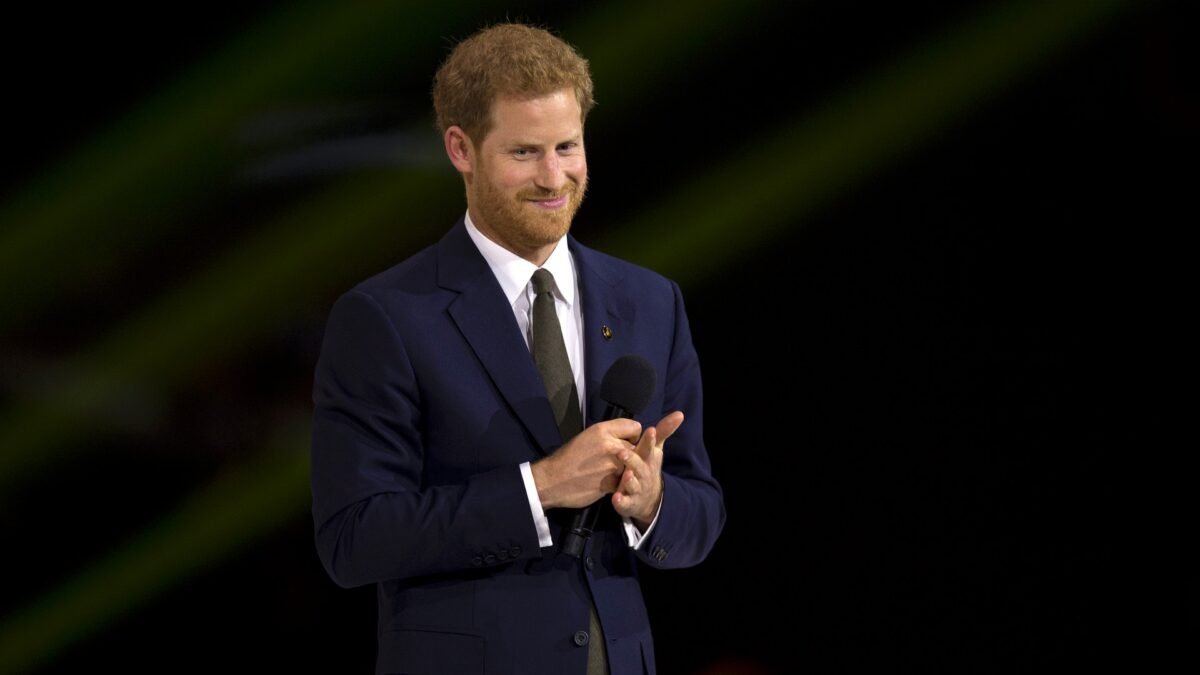
Prince Harry made an unannounced two-day visit to Ukraine over the weekend, his fourth trip to the country since Russia launched its full-scale invasion in 2022, and told wounded veterans gathered in the western city of Lviv that they would win the war.
The Duke of Sussex, 42, spent Saturday and Sunday, 14 and 15 November 2026, in Lviv, where he attended a conference for medics organised by the Superhumans rehabilitation centre and met soldiers and civilians being treated for war injuries, according to Reuters and the Associated Press.
Speaking at the conference on Saturday, in remarks that could only be reported after he had left Ukraine for security reasons, Harry told the audience: “You’re going to win the war and then you’re going to be set up for success.”
He also pledged that the Invictus Games, the Paralympic-style sporting event for wounded military personnel that he founded in 2014, would come to Ukraine once the war was over. “When the war is over and when Ukraine wins, we will be ready to support you in holding an Invictus Games,” he said, according to Reuters.
On Sunday, as he wrapped up the visit, Harry hailed Ukraine’s wounded veterans as society’s role models and said they needed continued support from Kyiv. “We’ve invested in them before they put the uniform on and we must invest with them once the uniform comes off,” he said during trials for the Invictus Games, according to the Associated Press.
“The rest of the world will continue to support you,” he added. “In my mind you’ve already won.”
A weekend kept secret until it was over
Nothing about the trip was announced in advance. Like Harry’s earlier visits to Ukraine, it was kept secret until he had left the country, a precaution made necessary by the fact that Lviv, although in the far west of the country near the Polish border, has frequently been targeted by Russian missiles.
The visit was only confirmed on Sunday evening, when news agencies published accounts of his two days in the city. Reuters reported that Harry had visited Lviv and spoken at the medics’ conference on Saturday, while the Associated Press reported on Sunday that he had wrapped up the unannounced weekend visit.
The secrecy was not new. His first visit to Ukraine, in April 2025, was announced only after he had departed, and the same pattern has held for every trip since. The Superhumans Centre, which hosted him again this weekend, said the visit was built around the first international Superhumans War Trauma Conference, held in Lviv on 13 and 14 November at the All-Ukrainian War Trauma Center, bringing together Ukrainian doctors and their international partners to improve the care of people with war injuries.
Harry’s presence at the conference was the point of the trip. He came, the centre said, to support Ukrainian doctors and their international partners as they work together on the treatment and rehabilitation of combat trauma, a field in which Ukraine has, by grim necessity, become a world leader in less than five years of full-scale war.
The timing underlined the point. The trip took place as Russia has pounded Ukraine in the run-up to winter, according to Agence France-Presse, with strikes on energy infrastructure and cities continuing as temperatures fall. The war has killed hundreds of thousands of people, displaced millions and left a large number of Ukrainians with disabilities and missing limbs, the agency reported.
What he said to the veterans
Harry’s remarks at the conference were short, direct and strikingly political for a member of the British royal family. By convention, members of the royal family avoid commenting on political matters, although King Charles and other senior royals have regularly voiced their support for Ukraine, Reuters noted in its report of the visit.
Harry, who is no longer a working royal, has been more outspoken on the subject than others in his family. Reuters reported that he used a speech during a visit earlier this year to implore the Russian president, Vladimir Putin, to end the war and to urge more action by the United States.
This weekend he went further than sympathy. “You’re going to win the war and then you’re going to be set up for success,” he told the conference on Saturday. It was a prediction, not a hope, and it was the line that travelled furthest from the visit.
He returned to the theme on Sunday, telling veterans at the Invictus trials that they were role models with “so much to give to society”. “Through Invictus we’re going to play the best role we can in that process,” he said, according to the Press Association.
Harry also addressed the question that hangs over every conversation about Ukraine’s wounded: what happens when the uniform comes off. “We’ve invested in them before they put the uniform on and we must invest with them once the uniform comes off,” he said, in a direct appeal to Kyiv to keep funding the care of its veterans long after the fighting stops.
The men he met
Much of the visit was spent not on stages but in conversation with individual veterans, and the accounts published on Sunday were built around three of them.
At the Superhumans Centre, Harry met Kostiantyn Vlasenko, a soldier who became the first Ukrainian to be airlifted by drone from the front lines. Vlasenko was seriously wounded in combat in February near the village of Synkivka in the Kharkiv region, with injuries that eventually forced the amputation of both his feet, one of which he performed himself, according to the office of President Volodymyr Zelenskyy, which awarded him the Hero of Ukraine honour, the nation’s highest.
Vlasenko had maintained his position for 232 days, hiding from Russian forces and relaying observations to his fellow troops, until he was flown out in early October. Harry called him “impressive”, to which the soldier replied, “stubborn”. “I have a huge amount of admiration and respect for you,” Harry told him, according to the Associated Press.
Harry also met Artem, a drone pilot who lost both arms in an artillery attack. Artem has learnt to use his feet for everyday tasks and is now being fitted with hi-tech prosthetic arms. The duke sat on a bed with him at the centre, according to the Press Association.
And he played sport with the veterans. On Saturday he watched wheelchair rugby players practise in preparation for next year’s Invictus Games, and he picked up a paddle himself, teaming up with a player who had lost an arm against two men who had each lost a leg in a game of pickleball.
“I asked him to play and he didn’t refuse,” said Oleksandr, a 49-year-old veteran from Odesa with an amputated leg, according to the Associated Press. “He talks to people, he isn’t like a royal personage. He loves ordinary people. He is completely different.”
Four visits in nineteen months
This was Harry’s fourth visit to Ukraine since Russia’s invasion, and his second to Lviv and the Superhumans Centre. The pattern of the visits tells its own story about how his relationship with the country has deepened.
His first visit came on 10 April 2025, when he travelled to Lviv unannounced to tour the Superhumans Centre with a delegation from the Invictus Games Foundation, including four veterans who had themselves experienced life-changing injury and recovery. He had been invited by the centre’s chief executive, Olga Rudneva, whom he had met at the Invictus Games in Vancouver in February 2025.
“This is my first visit to Ukraine, and it certainly won’t be the last,” he said at the time, in a video message recorded during the trip. During that visit he also met Ukraine’s minister of veterans affairs, Natalia Kalmykova, and members of the Ukrainian Invictus Games community, according to the Invictus Games Foundation.
His second visit took him to Kyiv in September 2025, when he arrived by train with an Invictus team, met wounded veterans and held talks with the prime minister, Yulia Svyrydenko, about plans to support rehabilitation. A third visit followed earlier this year, when he addressed a security conference in Kyiv.
Each visit has been unannounced, each has centred on wounded veterans rather than on politics or ceremony, and each has been organised through the Invictus Games Foundation rather than through any government channel. That consistency is the point: the visits are not diplomatic missions, and Harry is not acting as an envoy. He is doing the work he has done since he left the army, with the people he has worked with since he founded the Invictus Games.
The Superhumans Centre
The centre at the heart of all four visits is the Superhumans Centre in Lviv, an orthopaedic clinic that treats and rehabilitates wounded military personnel and civilians. It provides state-of-the-art prosthetics, reconstructive surgery and psychological support, all free of charge, to people affected by the war, according to the Invictus Games Foundation.
The centre has become one of the most important institutions in Ukraine’s war effort, not because of its size but because of what it represents. Ukraine now has around 1.4 million registered combat veterans, more than 10 percent of whom have disabilities, according to the Associated Press. The country is dealing with a scale of traumatic injury, above all amputations, that no European health system has faced since the Second World War.
The conference Harry attended this weekend was the centre’s attempt to turn that terrible experience into shared knowledge. Billed as the first international conference on modern ways to treat and rehabilitate combat trauma, it brought Ukrainian medics together with international partners to discuss the treatment of injuries that, in peacetime, most doctors never see.
Harry’s role at the conference was to lend his name and his attention to that work. He heard international and Ukrainian medics describe evacuating wounded soldiers and carrying out amputations, according to Agence France-Presse, and he spoke to the doctors as well as to the patients.
Invictus and Birmingham 2027
The other thread running through the visit was the Invictus Games themselves. Harry founded the games in 2014, while he was still serving in the army, to use sport in the recovery and rehabilitation of wounded, injured and sick military personnel. The first games were held in London that year; they have since been staged in Orlando, Toronto, Sydney, The Hague, Dusseldorf and Vancouver.
The next games are to be held in Birmingham, England, in July 2027, and Ukraine is planning to send 60 competitors, its largest ever team. Harry watched Ukrainian athletes compete in trials in Lviv over the weekend, in disciplines including wheelchair rugby and pickleball, the latter a new sport for the games.
Ukraine’s team has grown with every edition of the games, and its athletes have become among the most prominent in the competition, a reflection of the sheer number of wounded veterans the country now has. Harry told the wounded veterans in Lviv that he hoped Ukraine would also be able to host the games at some point, according to Reuters.
The promise he made at the conference, that the Invictus Games would come to Ukraine when the war is over and Ukraine wins, was the most forward-looking remark of the visit. It framed the games not as a consolation for the wounded but as a celebration to be held in a country at peace, and it tied Harry’s long-term commitment to Ukraine to the outcome of the war itself.
A prince outside the palace’s rules
Harry’s freedom to speak as he did this weekend is a direct consequence of his position outside the working royal family. He stepped back from royal duties in 2020 and now lives in the United States. He is the younger son of King Charles III, and he served ten years in the British Army, including two tours of duty in Afghanistan.
That military service is the foundation of everything he has done since. It is why he founded the Invictus Games, why he works with wounded veterans, and why his visits to Ukraine carry a weight that a purely ceremonial royal visit would not. He has been where the men he meets have been, and he speaks to them as a fellow soldier rather than as a visiting dignitary.
The contrast with the rest of the royal family is sharp. King Charles and other senior royals have voiced their support for Ukraine, but within the limits imposed by constitutional convention. Harry, no longer bound by those limits, has been free to say what working royals cannot, including his direct appeal to President Putin earlier this year and his prediction this weekend that Ukraine will win the war.
He was the second member of the royal family to visit Ukraine, following his aunt, Sophie, the Duchess of Edinburgh, who travelled to Kyiv the previous year. But he is the only one to have gone four times, and the only one to have made the country’s wounded veterans the centre of his public work.
The visit also comes at a moment when Ukraine’s diplomatic position is under intense pressure. President Zelenskyy has in recent days publicly urged the United States and Elon Musk to lift restrictions on the Starlink satellite system used by Ukrainian forces, and has said Washington floated the idea of Ukraine ceding the Donbas region in exchange for NATO membership, a proposal Kyiv has rejected. Harry’s visit offered no answers to those questions, and he did not pretend to. What it offered was a different kind of message: that the world’s attention has not moved on, and that the men and women wounded in the war are not forgotten.
Analysis: Why It Matters
A visit announced only after it ended is the story
The most revealing fact about this trip is not what Harry said but when the world was allowed to know he was there. The visit was announced only after he had left Ukraine, as every one of his visits has been, because Lviv, for all its distance from the front line, is a city that Russian missiles can reach. That a prince visiting a hospital needs the same operational secrecy as a military movement says everything about the war Ukraine is still fighting, nearly five years after the full-scale invasion began. The secrecy is also a measure of the visit’s seriousness. This was not a photo opportunity arranged for the cameras. There were cameras, of course, and photographs of Harry with veterans were published, but the trip was organised around a medical conference and a sports trial, not around a press conference. The point of going was the going itself.
The quote that will travel
“You’re going to win the war and then you’re going to be set up for success.” Of everything Harry said in Lviv, that sentence is the one that will be quoted, and it is worth asking why. It is not a policy, and it is not news in the strict sense: a prince’s prediction about the outcome of a war carries no military weight. But predictions of this kind matter in wartime because wars are fought on morale as well as on ground, and because the people who most need to hear that they will win are the people who have already paid the highest price. Harry said it to an audience of medics and veterans, in a city full of men learning to walk on prosthetic legs. He also said it knowing that it would be reported around the world, and knowing that the royal convention he no longer observes would have stopped a working royal from saying it at all. The sentence was aimed at two audiences at once: the wounded in the room, and the wider world that is growing tired of the war.
Invictus is the through-line
Strip away the royalty and what remains is a man doing the same work he has done for more than a decade. Harry founded the Invictus Games in 2014, and every one of his four visits to Ukraine has run through that organisation. The games are not a side project. They are the structure through which he understands war, injury and recovery, and they give his visits a purpose that a ceremonial tour would lack. The promise to bring the games to Ukraine when the war is over is the clearest expression of that: it treats the end of the war not as an abstraction but as a date on a calendar, a day when athletes will compete in a country at peace. It also gives Ukraine’s veterans something to train for that is not the war. Sixty Ukrainians will compete in Birmingham in July 2027. For men like Vlasenko and Artem, the trials in Lviv this weekend were the first step on that road.
A prince outside the palace’s rules
Harry’s outspokenness is possible only because he left the institution that would have silenced him. A working royal does not tell a foreign audience that their country will win a war, does not appeal directly to a foreign president to end it, and does not make promises about events to be held in a war zone. Harry has done all three, and the reason he can is that he stepped back from royal duties in 2020. That freedom comes at a cost, and the cost is visible in the controversy that has followed him ever since, including the long-running dispute over his security arrangements in Britain. But in Ukraine, the cost is invisible and the freedom is the whole point. The veterans he met do not care about palace protocol. They care that a man who served in Afghanistan, who founded the games they compete in, and who has now come to their country four times, is still paying attention. The royal family has a word for that kind of attention. It is called duty. Harry is performing it outside the family that defined it for him.
What the visit cannot do
For all its warmth, the visit changes nothing on the battlefield. It does not bring air defences, it does not lift restrictions on Starlink, and it does not answer the question of what settlement, if any, might end the war. It does not even change the arithmetic of Ukraine’s wounded: 1.4 million veterans, more than 140,000 of them living with disabilities, in a country whose health system is under daily attack. What it does is narrower and, in its own way, more durable. It tells the wounded that they are seen, it tells the doctors treating them that their work is valued, and it tells the world that the war, now in its fifth year, still commands the attention of people who could easily look away. That is not nothing. In a war that is increasingly fought in the dark, as the world’s attention drifts, being seen is itself a form of support. The test of the visit will not be in the headlines it generated this weekend but in whether the promises made in Lviv, above all the promise of an Invictus Games in a Ukraine at peace, are still being kept when the war finally ends.
What to Watch Next
- The Superhumans conference findings: whether the first international war trauma conference produces published guidance or partnerships that change how combat injuries are treated in Ukraine and beyond.
- Birmingham 2027 preparations: how Ukraine’s team of 60 athletes is selected and funded, and whether Harry’s visit accelerates sponsorship or government support for the team.
- The promise of a Ukrainian Games: whether the Invictus Games Foundation begins any formal planning for a future games in Ukraine, and what conditions it sets for doing so.
- Harry’s next visit: whether the pattern of unannounced trips continues, and whether a fifth visit takes him to Kyiv rather than Lviv.
- Veterans’ funding in Kyiv: whether the Ukrainian government acts on Harry’s appeal to keep investing in veterans once they leave the uniform, in its next budget.
- The royal family’s response: whether Buckingham Palace or other senior royals acknowledge the visit, and how the trip is received in Britain, where Harry’s public standing remains contested.
- The winter war: whether Russia’s campaign against Ukrainian energy infrastructure intensifies as temperatures fall, and how that affects the hospitals and rehabilitation centres Harry visited.
Sources
- Reuters — “Britain’s Prince Harry visits war-wounded in Ukraine” (15 November 2026)
- Associated Press — “Prince Harry salutes wounded Ukrainian veterans as ‘role models’ on surprise Ukraine visit” (15 November 2026)
- Agence France-Presse — “Prince Harry says ‘you’re going to win’ on Ukraine trip” (15 November 2026)
- Invictus Games Foundation — “Invictus Games Foundation joins The Duke of Sussex on trip to Ukraine” (10 April 2025)
- People — “Prince Harry Makes Surprise Visit to Ukraine, Says He Took a ‘Risk’ to Be There” (15 November 2026)
- Press Association via Hillingdon Times — “Harry hails wounded veterans as ‘role models’ during surprise visit to Ukraine” (15 November 2026)

About the Author — Abdul Mannan
Related Articles
NHS England on Track to Miss Key Cancer Treatment Target by Nearly 10,000 Patients
NHS England is on course to miss its target of treating 80 per cent of cancer patients within…
UK Ethics Watchdog Chief Stuart Sterling Steps Back Over Historic Sexual Misconduct Claims
Stuart Sterling, the first chief executive of the Ethics and Integrity Commission, has stepped back while the Cabinet…
Russell Brand Accuser Mia Latter Waives Anonymity in Campaign to Stagger the Age of Consent
Mia Latter, who alleges Russell Brand raped her when she was 16, has waived her anonymity to campaign…