
Carney and Xi Widen Canada-China Trade Deal as Ottawa Cuts Its Reliance on the United States

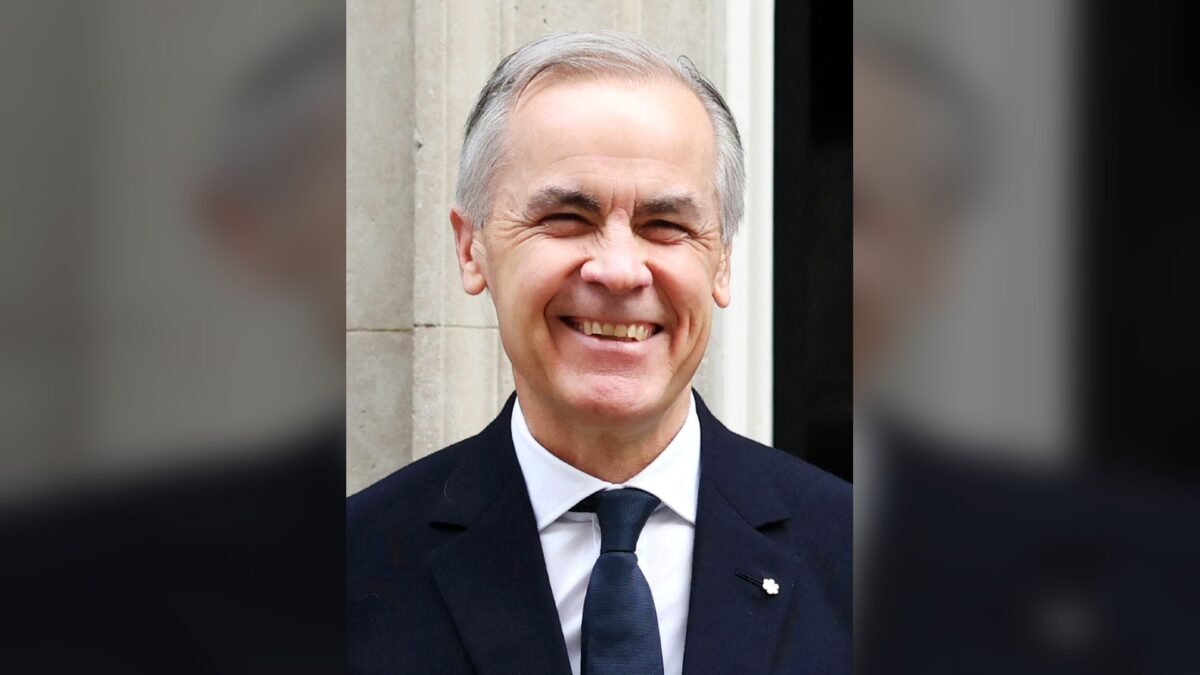
Canada and China have widened the trade truce they struck at the start of the year, agreeing on Tuesday to cut tariffs on a further C$400 million of Canadian exports, extend their preliminary trade arrangement until the end of 2028, and open new market access for Canadian farmers and seafood harvesters. The deal was sealed in Shenzhen, where Prime Minister Mark Carney met President Xi Jinping on the eve of the Asia-Pacific Economic Cooperation summit, and it is the clearest sign yet of how far Ottawa has moved in a single year from confrontation with Beijing towards a deliberate, guarded commercial partnership.
According to Reuters, China will provide additional tariff relief for around C$400 million, about US$280 million, in Canadian exports, including frozen pork cuts and fish and seafood. In exchange, Canada has agreed to extend by two years existing remission measures for certain Chinese steel and aluminium products that are currently set to expire at the end of 2026. The two leaders also agreed to extend and expand the Preliminary Joint Arrangement on Addressing Bilateral Economic and Trade Issues, the framework that has governed the thaw since January, until December 2028.
Carney, speaking after the meeting, said Canada was well ahead of schedule in its goal of boosting exports to China by 50 per cent by the end of the decade, and hailed what he called “greater predictability and stability” in the relationship. “We can work together more broadly, pragmatically to solve problems,” he told Xi before the two leaders went into private talks, according to The Canadian Press. Xi, for his part, said that since the two countries agreed in January to advance their strategic partnership, exchanges and cooperation across various fields had “fully resumed”.
The meeting, held mid-morning on Tuesday in Shenzhen — Monday evening in Canada — was the third between Carney and Xi since Carney became prime minister, and the second the two have held in China this year. It took place in a lavish guest house surrounded by manicured gardens, nestled among the skyscrapers of the high-tech metropolis that abuts Hong Kong. “In our lifetimes, this has grown from a rustic fishing village to an innovation-forward megacity,” Carney said in opening remarks delivered publicly before the private conversation began.
The agreement lands at a moment when both leaders have reason to want it. For Carney, it is another step in the central economic project of his premiership: reducing Canada’s heavy reliance on the United States, which under President Donald Trump has imposed hefty tariffs on many Canadian products and even threatened to annex Canada through economic coercion. For Xi, it is a further demonstration, on the eve of a summit he is hosting, that China can offer trading partners a more predictable alternative to Washington — and a useful piece of diplomacy two days before he sits down with Trump and Russian President Vladimir Putin in the first-ever trilateral meeting of the three leaders, scheduled for Thursday in the same city.
What was agreed in Shenzhen
The centrepiece of Tuesday’s announcement is the extension and expansion of the Preliminary Joint Arrangement, the document that has anchored the rapprochement since Carney’s first visit to Beijing in January. Under the expanded arrangement, China has agreed to suspend the application of its anti-discrimination tariffs from 1 January 2027 to 31 December 2028, according to the Prime Minister’s Office in Ottawa. The arrangement will further improve Canadian access to the Chinese market, particularly for farmers and seafood harvesters, and provide additional relief for approximately $400 million in Canadian exports.
The Prime Minister’s Office broke the figure down in detail. The relief covers most frozen pork cuts, worth $116 million a year, and $285 million in fish and seafood exports, covering certain frozen cold-water shrimp and prawns, including Pacific spot prawn, worth $87.5 million; certain molluscs, including geoduck, worth $61.4 million; sea cucumber, worth $39.4 million; and Greenland halibut, worth $96 million. According to The Canadian Press, the expansion removes a 25 per cent Chinese tariff on Canadian exports of frozen pork cuts and frozen cold-water shrimp, with Greenland halibut, some molluscs and sea cucumber also included on the list.
In exchange, Ottawa said it would extend to 31 December 2028 the existing remission measures for certain Chinese steel and aluminium products, and expand remission coverage to 32 tariff items — 23 steel items and nine aluminium items — for which Canadian supply is insufficient or unavailable. The two countries also committed to continue working on further reducing trade barriers.
The expansion builds on a two-year extension of tariff relief for Canadian exports of canola meal, peas, lobster and crab that was agreed at a bilateral Joint Economic and Trade Commission meeting in Beijing earlier this month. The leaders also agreed to open market access for Canadian fava beans, chickpeas and lentils to China, and to work towards an agreement on pet food and wild aquatic products by the end of the year.
Beyond the tariff measures, the visit produced a package of further initiatives. Canada will send a major trade mission to China in 2027, and the two countries have declared 2027 a Year of e-Commerce, with a cooperation mechanism aimed at helping small and medium-sized enterprises sell through the e-commerce platforms Chinese consumers use every day. Air Canada will launch new flights from Vancouver to Guangzhou in May 2027, with Chinese airlines also increasing flights. Canada is renewing funding of $8 million over five years for the China Council for International Cooperation on Environment and Development, and $850,000 over three years in scholarships that will support 850 additional Canadian students going to Chinese universities under the Canada Learning Initiative in China, a programme that has already sent more than 1,200 students since 2016.
The private sector was in the room as well. Carney and Xi welcomed more than $15 million in commercial agreements signed by five Canadian arts and culture companies, including a deal to bring Cirque du Soleil’s show Kurios to Shanghai in 2027, and a memorandum of understanding to launch a Canada-China CEO Roundtable, co-chaired by the Canada-China Business Council and the Bank of China, as a structured platform for business-to-business dialogue. The two sides also recorded the joint outcomes of the second Canada-China Economic and Financial Strategic Dialogue, welcomed the implementation of a bilateral currency swap arrangement, and noted that China’s Finance Ministry welcomed steps by the two central banks to implement the swap and qualified Canadian institutions to issue Panda bonds, yuan-denominated bonds sold in China.
A new Canada-China Ministerial Dialogue on Energy, held on 3 and 4 November, brought Canadian industry leaders together with key Chinese companies to discuss oil and gas, renewable energy and nuclear cooperation, and an inaugural Counter Narcotics Dialogue was held in Canada on 10 November, with the two sides agreeing to cooperate on border and customs measures against narcotics and precursor chemicals.
The numbers behind the deal
The $400 million at the centre of Tuesday’s announcement is, by the standards of Canada-China trade, a modest sum. But it sits on top of a much larger restoration. According to the Prime Minister’s Office, Canada has now restored market access for more than 90 per cent of the trade previously subject to tariff action — nearly $7.5 billion worth of Canadian exports. Canadian trade data cited by The Canadian Press suggests exports to China have surged 40 per cent since the first meeting in January, with increases in oil, canola and peas among the affected products. Shipments of Canadian crude oil to China have risen about 37 per cent in 2026, according to a Reuters calculation based on LSEG data.
The January deal that started the process was itself a significant exchange. Carney agreed to drop a 100 per cent tariff on Chinese electric vehicles to 6.1 per cent for up to 49,000 vehicles a year, and in exchange China lowered tariffs on Canadian canola. According to background information provided by Carney’s office, 16,211 Chinese electric vehicles have been imported into Canada since March, about half of which had a price of $35,000 or less. BYD, China’s biggest electric vehicle maker, has begun selling cars in Canada. Geely, the second biggest, announced in October that it expects to begin selling electric vehicles in Canada next year, and a second Chinese manufacturer has fulfilled Transport Canada’s requirements, though it has not been named. The electric vehicle quota is set to rise to 70,000 cars over five years.
The pork industry’s reaction to Tuesday’s news captured why the deal matters to the people it touches. The Beijing-based Canadian Meat Advocacy Office praised the widened access for pork, while noting that offal remains blocked. Canadian Meat Council chief executive Kyle Larkin said he hoped for a full return of the market access Canada lost in recent years, adding: “We’re confident with the momentum that we’ve had here.” Larkin told reporters in Shenzhen that the Chinese market was lucrative in part because of the diversity of cuts consumed there. “There’s a massive consumer base in China that consumes things like feet, like head, different offal, kidneys, hearts, etc. that aren’t so popular back [home] for Canadian consumers,” he said.
Carney’s parliamentary secretary, Kody Blois, said Tuesday’s announcements would have impacts across the country, from Nova Scotia lobster harvesters to the Canada Goose factories that operate in Winnipeg and Quebec. “There are areas where we will disagree,” he told reporters in Shenzhen. “The prime minister’s foreign policy has been around how do we co-operate, create value for Canadians and create benefits.”
A year of repair, in fast motion
The speed of the turnaround is what makes it remarkable. The relationship between Canada and China had soured badly during the tenure of former prime minister Justin Trudeau, including over accusations from Canada about foreign interference by China. In late 2018, China detained two Canadians, Michael Kovrig and Michael Spavor, following the arrest of the Chinese tech executive Meng Wanzhou on a United States warrant, in a detention that lasted more than 1,000 days and was almost universally understood as an arbitrary tit-for-tat. Trade restrictions followed, and Canadian canola, pork and other exports were caught in the diplomatic freeze.
Carney’s first trip to Beijing in January was the first visit to China by a Canadian prime minister in more than eight years. In that meeting, he and Xi launched a new Canada-China strategic partnership to stabilise trade, build out clean energy industries and better connect the two peoples. Under the partnership, the two countries strengthened economic and financial cooperation, expanded cultural exchanges, and reduced tariffs on Canadian exports of canola seed and meal, peas, crab and lobster. Ten months later, the Shenzhen meeting has extended that work, deepened it, and put a date on it: the arrangement now runs to the end of 2028.
Xi outlined four proposals to advance bilateral ties, according to the official Xinhua news agency: fostering a more “accurate understanding” of each other’s development paths; deepening cooperation in trade, energy, agriculture and finance while expanding into sectors such as the green, digital and e-commerce economies; strengthening people-to-people cultural exchanges; and upholding the multilateral trading system. “Stronger communication and cooperation between China and Canada will benefit not only our two countries but also Asia-Pacific and the world,” Xi told Carney during their meeting in the southern Chinese tech and manufacturing hub.
Carney, for his part, has drawn clear lines around the engagement. Before leaving Canada, he said he would raise foreign interference with Xi; a Chinese government spokesperson has denied any such activities. He has also said there are “clear guardrails” about what is on the table with China, with Ottawa barring work in sensitive sectors such as critical minerals and artificial intelligence. And he has said that discussions around more Chinese investment in Canada’s auto sector are dependent on ongoing trade talks with the United States.
The critics have not gone quiet. Security analysts and human rights groups have warned that closer ties with Beijing could compromise Canadian security and values, according to Reuters. Critics have pointed to the imprisonment of the Hong Kong pro-democracy media mogul Jimmy Lai, China’s secret execution of four Canadians last year, and Canadian intelligence findings that Beijing interfered in at least two federal elections. China has said it has no interest in interfering in Canada’s internal affairs. Xi’s framing of the relationship — that both countries benefit when they focus on shared goals and set aside differences — has alarmed human rights activists, The Canadian Press reported.
The American shadow
None of this can be understood without the United States. Carney’s turn to China comes in large part because of threats from President Donald Trump, who has imposed wide-ranging tariffs on Canadian goods and even threatened to annex Canada through economic coercion. A major plank of Carney’s economic strategy is to reduce Canada’s heavy reliance on the United States, and the China file is the most visible evidence of that strategy in action.
The tension spilled into the open on the eve of the Shenzhen meeting. On Sunday, Carney said he does not see Chinese auto investments as leverage, but said Canada will look elsewhere if Trump trade talks fail. Those comments prompted pushback from Trump trade adviser Peter Navarro, who posted on X on Monday: “Are u really threatening to play China off the U.S,” adding: “This is offensive in the extreme. You should be far more worried China is going to eat Canada alive — as it is already doing.” Navarro went on to say Vancouver was not British Columbia, but rather “PRC”, or the People’s Republic of China.
The exchange illustrates the bind Carney is in. Washington wants Ottawa to treat China as a security threat and keep its distance; Beijing wants Ottawa to treat China as a market and come closer; and Ottawa wants to do both at once — to sell pork, seafood and canola to China while keeping Chinese capital out of its critical minerals and artificial intelligence sectors, and to deepen ties with Beijing without rupturing the relationship with the United States that still accounts for the overwhelming majority of Canadian trade.
Carney’s visit to Shenzhen comes at the end of a nine-day overseas tour that has included summits in Dublin, Manila and Cambodia, and ahead of the APEC summit, where he will represent Canada at the Economic Leaders’ Meeting. It also comes two days before Xi hosts Trump and Putin in Shenzhen on Thursday for the first-ever trilateral meeting of the three leaders, with nuclear non-proliferation expected to dominate the agenda. The choreography is not accidental: the Canada-China deal gives Xi a concrete win to show his fellow leaders, and it gives Carney a demonstration, delivered in the same city where the trilateral will take place, that Canada is building options beyond Washington.
What the deal does not do
For all its breadth, Tuesday’s package has clear limits, and the people closest to the negotiations were candid about them. Blois acknowledged that the deal does not further access for canola oil, while canola seeds still face an import duty. He noted, however, that canola meal exports are worth multiples more for Canadian exporters, who gained more access this year. “It’s a much smaller priority in the big basket of what we’re doing to get market access back,” he said of canola oil, while saying it was still being pursued.
The pork sector’s welcome was similarly qualified. The Canadian Meat Advocacy Office praised the widened access but noted that offal remains blocked — a significant caveat, given that the diversity of cuts is precisely what makes the Chinese market so lucrative for Canadian exporters. Larkin’s hope for a “full return” of market access is a reminder that Tuesday’s deal restores much of what was lost, but not all of it.
The guardrails Carney has drawn also limit how far the partnership can go. Critical minerals and artificial intelligence are off the table, and any deeper Chinese investment in Canada’s auto sector depends on the outcome of the trade talks with the United States — a dependency that means Washington retains, in effect, a veto over the most strategically sensitive part of the Canada-China relationship. Carney has also said he wants Chinese carmakers to set up shop in Canada only if they provide decent jobs, and that he is wary of plants where workers assemble cars using components mostly made in China. Canada has already said no to that model for the shuttered Stellantis plant in Brampton, Ontario.
And the political risks have not disappeared. The foreign interference question, the Jimmy Lai case, the executions of Canadians and the intelligence findings about election interference are all still live issues in Canadian domestic politics, and they will be raised again the moment the next controversy arrives. The deal’s defenders argue that trade and values can be pursued on separate tracks; its critics argue that they cannot, and that every tariff removed is leverage given away. That argument will not be settled in Shenzhen. It will be settled in Ottawa, over the coming months, as the arrangement is implemented and its effects are measured.
Analysis: Why It Matters
Four hundred million dollars is not the story; the direction of travel is
On its own, C$400 million in tariff relief is a rounding error in a trading relationship worth tens of billions of dollars a year. What matters is the trajectory it confirms. In January, the two countries reopened a door that had been shut for years. In November, they widened it, lengthened the arrangement to the end of 2028, and added new products, new sectors and new institutions around it. The Preliminary Joint Arrangement is no longer a one-off fix; it is becoming the operating system of the relationship. That is the story, and it is a bigger one than any single tariff line.
Carney is buying insurance, and the premium is paid in criticism
Every prime minister who diversifies away from the United States pays a price, and Carney is paying his in public. The Navarro broadside is the cost of doing business with Beijing while Washington is watching, and it will not be the last such attack. But the logic of the strategy is straightforward: a country that sends the overwhelming majority of its exports to a single market, and whose largest customer has begun using tariffs as a political weapon and annexation as a talking point, cannot afford to have no alternative. China is the largest alternative available. The insurance is expensive, and it comes with its own risks, but the alternative — having no insurance at all — is worse.
The deal’s real test is not in Shenzhen but in the prairies and the ports
Trade deals are judged by whether the goods actually move. The test of Tuesday’s announcement will be whether Canadian pork exporters can rebuild the supply chains they lost, whether Nova Scotia lobster harvesters and British Columbia geoduck divers see the tariff relief in their prices, and whether the 40 per cent surge in exports since January continues or stalls. The canola oil caveat is a useful reminder that the deal is incomplete, and the offal restriction is a reminder that Beijing still holds cards it has not played. The numbers in a year’s time will tell the truth about this deal more honestly than any press release can today.
Xi is collecting partners before Thursday, and Carney is one of them
The timing of the Shenzhen meeting is not incidental. Xi is hosting the APEC summit, and on Thursday he will sit down with Trump and Putin in a meeting the Chinese Foreign Ministry has described as having “groundbreaking significance”. A trade deal with Canada, announced two days earlier in the same city, is a useful exhibit: it shows that China can make deals, keep them, and expand them, while the United States is imposing tariffs on its closest allies. For Carney, the same timing is useful in the opposite direction: it shows Washington that Canada has somewhere else to go, and that the somewhere else is willing to do business. Both leaders got what they wanted from the choreography. Whether either gets what they want from the substance is a separate question.
The guardrails are the most honest part of the deal
It would be easy to read Tuesday’s announcements as a warm embrace. The guardrails tell a more honest story. Canada will not let China into its critical minerals or its artificial intelligence sectors. Chinese auto investment depends on the American trade talks. Canola oil is still blocked, and offal is still blocked. The two sides have agreed to cooperate and to disagree, and both have said so publicly. That is not a failure of the partnership; it is the condition that makes the partnership possible. A deal that pretended the disagreements did not exist would not survive the first crisis. A deal that names them, and builds around them, might.
What to Watch Next
- The APEC summit in Shenzhen. Carney will represent Canada at the Economic Leaders’ Meeting, and the tone of the summit — and of any further bilateral announcements on its sidelines — will show whether Tuesday’s deal is the start of a programme or a one-off.
- The trilateral on Thursday. Xi hosts Trump and Putin in Shenzhen on 19 November for the first-ever meeting of the three leaders, focused on nuclear non-proliferation. Any reference to trade, tariffs or Canada in the aftermath will reveal how the big powers read the smaller deal struck two days earlier.
- The trade talks with Washington. Carney has tied deeper Chinese auto investment to the outcome of the United States trade talks, and Navarro’s public rebuke shows how closely Washington is watching. The next round of those talks will set the ceiling for how far the China relationship can go.
- Whether the goods actually move. Watch the export figures for pork, seafood and canola over the next two quarters. The 40 per cent surge since January is the baseline; if the new relief does not show up in shipments, the deal’s critics will have their answer.
- The canola oil question. Blois said canola oil access is still being pursued. Any movement on canola seed duties or canola oil access in the coming months would show whether Beijing is prepared to complete the restoration or keep a lever in reserve.
- The 2027 trade mission and the Year of e-Commerce. The test of the small-business promises made in Shenzhen will be whether the 2027 trade mission and the e-commerce cooperation mechanism produce real orders for Canadian firms, or only announcements.
- The domestic politics in Ottawa. The foreign interference debate, the Jimmy Lai case and the intelligence findings about election interference have not gone away. The first time the relationship hits a rough patch, the argument over whether the trade gains are worth the political cost will return to Parliament.
Sources
- Reuters, “Canada and China extend trade deals as Xi meets Carney ahead of APEC summit”
- Prime Minister of Canada, “Prime Minister Carney advances Canada’s strategic partnership with China across trade, commerce, and culture”
- Prime Minister of Canada, backgrounder: “Prime Minister Carney advances Canada’s strategic partnership with China”
- The Canadian Press, “Xi opens more pork access as Carney loosens steel restrictions during China visit”
- The Business Standard (Reuters), “Canada and China extend trade deals as Xi meets Carney ahead of APEC summit”
- TradingView / Seeking Alpha, “Canada, China extend tariff relief measures through 2028”

About the Author — Abdul Mannan
Related Articles
Anthropic IPO Draws Seven Times More Orders Than Shares on Offer as Bankers Weigh Pricing Above $78
Investors have placed orders for close to seven times the shares Anthropic is selling, according to Bloomberg, as…
Nvidia Board Rules Out Huang Return as Shares Hit 52-Week Low Ahead of Earnings
Nvidia's board has ruled out bringing Jensen Huang back as chief executive, sending the shares to a new…
ULA Vulcan Rocket Fails Ten Minutes Into Flight, Destroying 40 Amazon Leo Satellites
United Launch Alliance's Vulcan rocket suffered an anomaly ten minutes after liftoff from Cape Canaveral on Sunday, destroying…