
Capita Chief Executive Quits as Pension Failures Wipe 70% Off Shares in a Day

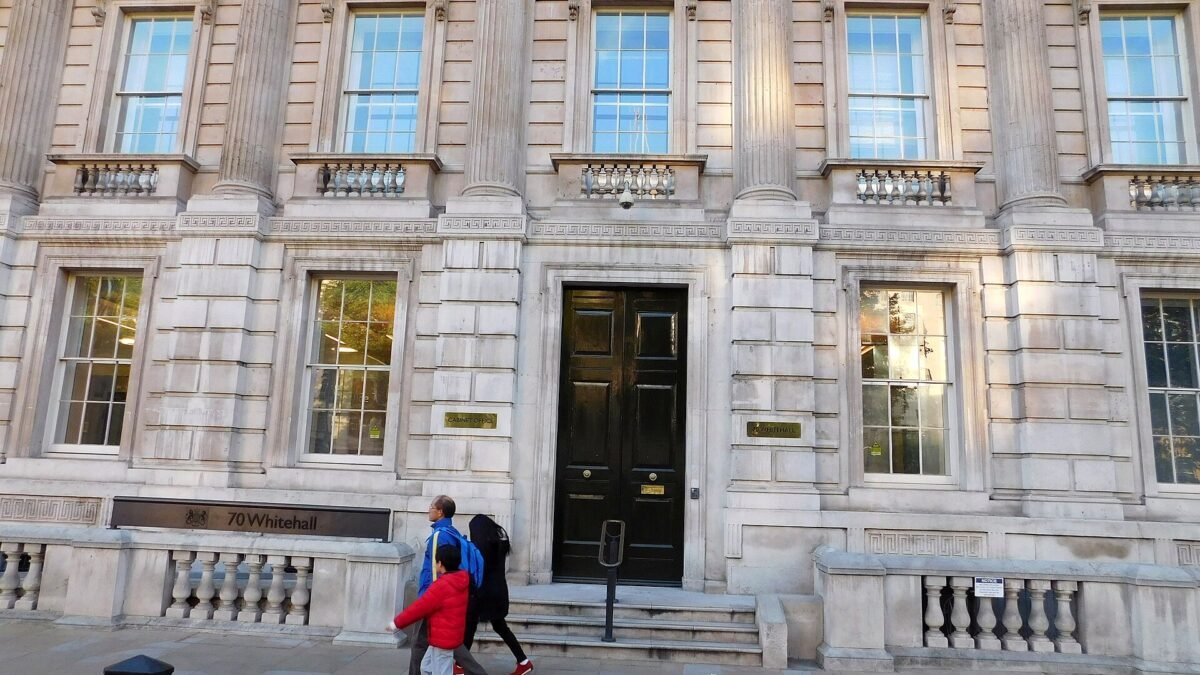
Capita’s chief executive has stepped down with immediate effect after the outsourcing giant’s botched running of the Civil Service Pension Scheme left thousands of retired civil servants waiting for their pensions, and wiped about 70 per cent off the company’s share price in a single day.
Adolfo Hernandez, who took charge of Capita in January 2024, agreed with the board on Monday, 23 November 2026, that he would leave the company at once, according to a statement from the firm. He will be replaced by Pablo Andres, Capita’s chief financial officer, while group financial controller Gemma Bate-Williams steps up to become finance chief.
The departure came alongside a grim trading update. Capita warned that its adjusted operating profit for 2027 would come in between £85 million and £95 million below previous expectations, and said it planned to raise about £190 million from shareholders in the first half of next year to shore up its finances.
Shares in the company plunged by around 70 per cent on Monday, falling to as low as 72p, the lowest level since October 1991, according to reports of the day’s trading. The scale of the fall stunned even seasoned watchers of a company that has spent years shrinking, selling businesses and cutting costs in an effort to turn itself around.
Mr Hernandez acknowledged the failure at the heart of the crisis. “I recognise that we have not delivered the service that members of the civil service pension scheme deserve,” he said in the company’s statement.
The announcement
Capita said in its statement that the board and Mr Hernandez had agreed that he would “step down as CEO and as a member of the board with immediate effect”. The wording was brief, and it left no doubt that the decision was tied to the pension scheme disaster, which has dominated the company’s year and drawn repeated criticism from MPs, unions and the retired civil servants affected.
David Lowden, Capita’s chairman, said the company’s top priority was now to “remediate the civil service pension scheme contract [and] rebuild trust with the government”. Mr Andres, the new chief executive, described fixing the pension scheme contract as a “key priority” for him.
The reshuffle is the latest in a long line of changes at the top of a company that was once one of Britain’s biggest outsourcing names. Mr Hernandez arrived from Amazon Web Services, where he was vice-president of global telecommunications, and had previously run the software firms SDL and Acision. He was appointed in November 2023 and took over in January 2024, promising to rebuild Capita as a technology-led business services company. Less than three years later, he has gone.
According to Computer Weekly, Mr Hernandez earned £1.6 million in his last pay packet, a figure that sat uncomfortably alongside the experiences of the pensioners his company had failed, some of whom were forced to apply for emergency loans while they waited for money they were owed.
The pension disaster
The Civil Service Pension Scheme is one of the biggest public-sector pension schemes in Britain, with around 1.7 million members, including serving civil servants, retired staff and their dependants. In 2023, the Cabinet Office awarded Capita a seven-year contract worth £239 million to administer it, taking over from the previous administrator, MyCSP. The handover took place on 1 December 2025.
Capita promised that artificial intelligence and automation would improve the service. Instead, the takeover brought a glitchy online portal and a service that, within weeks, was seriously failing. Some members struggled to receive pension payments at all. By January 2026, a month after the transfer, it was clear the service was in deep trouble, and a troubleshooter was brought in from HM Revenue & Customs to lead an urgent recovery plan, with 150 HMRC staff moved temporarily to the service.
Capita missed its deadline to restore normal service by the end of June. It later told MPs that all but the most complex cases would be back to normal by September. But the damage was already done. Media reports and MPs have described members feeling upset, frustrated and ignored, with some waiting months for payments. Thousands of retired civil servants were affected, some waited nearly a year for their pensions, and at least one was forced to use a food bank, according to Computer Weekly.
The human cost has been the most damning part of the story. Sir Geoffrey Clifton-Brown, chairman of the House of Commons Public Accounts Committee, said the mishandling of the scheme had “caused severe hardship for some scheme members, particularly considerably delayed bereavement payments”. The committee, he said, would “continue to pursue this dreadful matter”.
Mike Clancy, general secretary of the Prospect trade union, which represents civil servants, said: “The running of the Civil Service Pension Scheme has been nothing short of a disaster and caused severe financial hardship to many. Adolfo Hernandez stepping down is the right decision but it will be small comfort to those affected.”
The criticism has not only come from outside the company. In August, Mr Hernandez was criticised on Capita’s own internal message board after claiming that the “right” things were in place to turn the pension administration around. A member of the pensions team replied that the service provided by Capita “surpasses your assertion of ‘not good enough’, it has been abysmal for members”, adding that “members have died in waiting due to this whole catastrophe”, according to Computer Weekly. The worker said staff had tried to raise concerns, but their contacts had been “met with vague, deflective and meaningless responses”.
The Civil Service Campaigns Group, made up of people affected by the pension delays, said Mr Hernandez “was CEO throughout this crisis and must be held accountable for Capita’s failures”. It said the group had “repeatedly raised serious concerns directly with him and his senior leadership team, including the devastating impact on members, yet saw little evidence of meaningful action”. It added: “His departure must not be allowed to draw a line under these failures. He, Capita’s board and the Cabinet Office must be held to account for what went wrong, why repeated warnings were ignored and the harm caused to members.”
The government’s response
The government has already taken steps against Capita. It withheld £10 million in payments over the company’s performance during the transition of the pension service and was negotiating further penalties, according to The Register. It also appointed an auditor to assess the case for further penalties.
Last month, the National Audit Office launched an investigation into the pension scheme contract. Responding to the investigation, Capita said it “accepts that performance remains below the standards that scheme members and the Government rightly expect” and that fixing the problems was its top priority.
The government has also decided to bring the pension service back in-house, although no timeline has been given, according to Computer Weekly. Earlier this year, the government admitted that retired civil servants had been failed by the decision to outsource their pension scheme.
One former civil servant and scheme member, Steve Tessier, told Computer Weekly he was “glad to see that there is at least some accountability at last”, but added: “There are plenty of others who should be getting a P45, too, and not just people from Capita”, pointing to the Cabinet Office’s own role in the affair.
The campaign group also warned that its “immediate concern is ensuring Capita’s financial difficulties do not further destabilise the service or disrupt pension payments”. That concern is real: a company whose shares have fallen by 70 per cent in a day is not an obviously stable custodian of a pension scheme serving 1.7 million people.
The financial damage
The pension scheme failure is now costing Capita directly. The company said its adjusted operating profit for 2027 would be £85 million to £95 million below previous expectations. That includes £15 million to £25 million in additional costs under a recovery plan for the pension contract agreed with the Cabinet Office, alongside pressure from contract exits and other trading headwinds.
The Times reported that the downgrade was also driven by the exit of two “major” contracts in the company’s defence and pension solutions divisions. Capita said it had made significant progress in its transformation and strategic simplification, but the numbers told a different story.
The company plans to raise around £190 million through a share issue in the first half of 2027 to reduce borrowing and to “allow the business to move forward from a more stable foundation”, subject to support from its financial creditors. The need for a cash call so soon after years of disposals and cost-cutting underlines how far the company’s finances have deteriorated.
James Preece, principal analyst at the research firm Megabuyte, was blunt. “Slow motion car crash comes to mind,” he said. “It has been a turnaround job for coming up to four years now, with long-suffering shareholders watching dozens of disposals and business exits fail to arrest a structural decline in both margins and growth. Today’s update suggests that management’s underlying forecast assumptions alongside other more transient factors were still too punchy, and the leverage situation now calls for action. The share price reaction suggests confidence in this being a one-and-done raise is limited.”
Capita is also under fire over a separate £370 million contract with the Department for Work and Pensions, known as the Synergy deal, which covers human resources, payroll, finance and other back-office services across four government departments and nearly 100 arm’s-length bodies. The Public and Commercial Services Union is campaigning for the government to scrap that contract. Rival bidder Sopra Steria, which owns the incumbent provider, has launched a legal challenge alleging Capita’s bid was abnormally low. Capita and the Department for Work and Pensions have denied the allegations.
A company in long decline
Capita’s troubles did not begin with the pension scheme. The company, which provides services for businesses as well as the NHS, the military and local councils, has been shrinking for years. It was hit hard by a ransomware attack in March 2023, when the Black Basta criminal group hacked its systems and gained access to personal data of staff and clients. Around 90 organisations reported breaches of personal information held by Capita to the Information Commissioner’s Office.
The attack cost Capita about £25 million and contributed to a pre-tax loss of £106.6 million for 2023, as revenue fell nearly 7 per cent to £2.81 billion. The company’s share price fell by more than half in the year after the attack, and its customer satisfaction score dropped sharply, with the pensions administration business particularly affected. Affected scheme members are pursuing compensation through a class action against Capita.
Mr Hernandez responded to the 2023 results by announcing further cost cuts, aiming to save an additional £100 million by mid-2025, on top of the elimination of around 900 jobs and the closure or consolidation of dozens of sites announced in late 2023. “Our 2023 financial results have demonstrated some progress,” he said at the time. “But we have not yet delivered the operational excellence that will let us create the right platform for future growth or achieve our full potential for the benefit of shareholders.”
The irony is that, even as the cyberattack was damaging its pensions business, Capita continued to win lucrative government pension work. In November 2023, on the same day it announced the near-thousand job cuts, it told the London Stock Exchange it had won the ten-year, £239 million contract to run the Cabinet Office’s pension scheme. That contract, taken over in December 2025, is the one that has now brought down its chief executive.
The company’s heavy reliance on the UK public sector has become a vulnerability. The current government has a policy of bringing more work back in-house, and Capita’s much-publicised failures have strengthened the case for doing so. Computer Weekly noted that the combination of the pension scheme mistakes and the insourcing policy “will put the company under pressure”.
Analysis: Why It Matters
The fall of Adolfo Hernandez is, on its face, a familiar corporate story: a chief executive pays the price for a failed contract. But the Capita affair matters for reasons that go well beyond one company’s share price, because it sits at the intersection of three issues that Britain has failed to resolve for years — the outsourcing of public services, the accountability of private firms that run them, and the treatment of the people who depend on them.
First, the pension scheme itself. A pension is not a discretionary purchase. It is the money that retired civil servants — teachers of a sort, administrators, border staff, tax officials, the people who kept the state running — depend on to pay for food, heating, rent and care. When that money does not arrive, the consequences are immediate and personal. The reports of pensioners applying for emergency loans, of one member using a food bank, and of bereavement payments delayed for grieving families, are not abstractions. They are the direct result of a service that was supposed to be improved by a private contractor and was instead made worse. The fact that a member of Capita’s own pensions team felt compelled to say publicly, on an internal board, that members had “died in waiting” should haunt everyone involved in the decision to award the contract.
Second, the pattern. Capita promised artificial intelligence and automation. It delivered a glitchy portal and months of delay. This is not the first time a British outsourcing contract has been sold on the promise of technology and delivered on the reality of failure. The gap between the sales pitch and the service is the recurring story of public-sector outsourcing, and it keeps recurring because the incentives are wrong: contracts are won on price and promises, and the penalties for failure arrive slowly, if at all. The government withheld £10 million and is negotiating further penalties, but that is a fraction of the harm done to the people affected, and it is worth asking whether any penalty structure can ever compensate for a pensioner going without money for months.
Third, the accountability question. Mr Hernandez has gone, and his departure is welcome. But as Steve Tessier and the Civil Service Campaigns Group both pointed out, he is not the only person responsible. The Cabinet Office awarded the contract. It chose Capita in 2023, months after the company’s systems had been breached by ransomware and its pensions business had been exposed as vulnerable. It managed the transition. It is now deciding to bring the service in-house, which is an admission that the outsourcing decision was wrong, yet no minister or senior official has faced the same consequences as the chief executive. The National Audit Office investigation may shed light on that, but investigations take time, and the people waiting for their pensions do not have time to spare.
Fourth, the financial lesson. Capita’s shares fell 70 per cent in a day. That is not a normal market reaction to a profit warning; it is the market concluding that a company has lost control of its own story. The planned £190 million share issue will dilute existing shareholders, and the analyst’s warning that confidence in it being a “one-and-done raise is limited” suggests the market expects more pain. For a company that has spent four years selling businesses, cutting jobs and closing sites in the name of a turnaround, the pension scheme disaster raises a harder question: whether the business, as currently constructed, is viable at all. The government’s decision to take the pension scheme back in-house removes a major contract. The legal challenge to the £370 million Synergy deal threatens another. If both go, Capita’s public-sector business — its core — will be badly damaged.
Finally, there is the wider signal for British outsourcing. Capita was once the emblem of the model: a private company that could run public services more cheaply and more efficiently than the state. Its decline — the cyberattack, the losses, the disposals, and now the pension disaster — is the emblem of the model’s failure. The government’s insourcing policy is, in part, a response to that failure. But insourcing is not a magic solution either. The state will need to rebuild the capacity to run a pension scheme for 1.7 million people, and it will need to do so while the service is still being repaired. The transition itself carries risk, and the people who depend on the scheme will be watching closely to see whether the next administrator — whoever it is — does better than the last.
For now, the immediate question is whether the new chief executive, Pablo Andres, can stabilise a company in crisis while also fixing a pension service that has already failed thousands of people. He has described remediation as his key priority, which is the right thing to say. But Capita has said the right things before. The test will be whether, this time, the pensions are paid on time, the portal works, and the people who were failed get the service they were promised. Until then, the departure of one chief executive is a beginning, not an ending.
What to Watch Next
Several things will determine how this story develops. The first is the National Audit Office investigation, which will examine how the contract was awarded and managed. Its findings could be uncomfortable for both Capita and the Cabinet Office. The second is the government’s plan to bring the pension service in-house: the timeline, the cost and the arrangements for the transition will matter enormously to the 1.7 million members. The third is the £190 million capital raise, planned for the first half of 2027, and whether shareholders and creditors back it. The fourth is the legal challenge to the £370 million Synergy contract, which could remove another pillar of Capita’s public-sector business. And the fifth is the Public Accounts Committee, which has promised to keep pursuing the matter and whose hearings have already produced some of the most damning evidence about the scheme’s failings.
Sources
- The Register — “Capita CEO leaves following pensions contract disaster” (23 November 2026)
- Computer Weekly — “Capita CEO Adolfo Hernandez resigns over botched contract” (23 November 2026)
- The Times — “Capita boss exits amid profit warning over civil service pensions” (23 November 2026)
- Glasgow Times (PA) — “Capita boss steps down after Civil Service pension scheme failures” (23 November 2026)
- Capita — “Notice of Board change at Capita” (appointment of Adolfo Hernandez, 31 July 2023)

About the Author — Abdul Mannan
Related Articles
Sanofi to Acquire Insmed for $41 Billion in Landmark Bet on Respiratory Drugs
Sanofi has agreed to buy US drugmaker Insmed for $41 billion in cash, gaining the blockbuster lung drug…

CrowdStrike Agrees to Buy Zscaler in $43.9 Billion All-Stock Deal, Creating a Cybersecurity Giant
CrowdStrike has agreed to buy Zscaler in a $43.9 billion all-stock deal, uniting two cybersecurity giants — but…

Nvidia Brings Back Jensen Huang as Chief Executive After 11 Days as Shares Soar More Than 30%
Nvidia's board has unanimously reinstated Jensen Huang as chief executive, president and board director, just 11 days after…