
David Walliams Named as Celebrity Behind Failed Injunction as Guardian and ITV News Publish Grooming and Sexual Misconduct Allegations

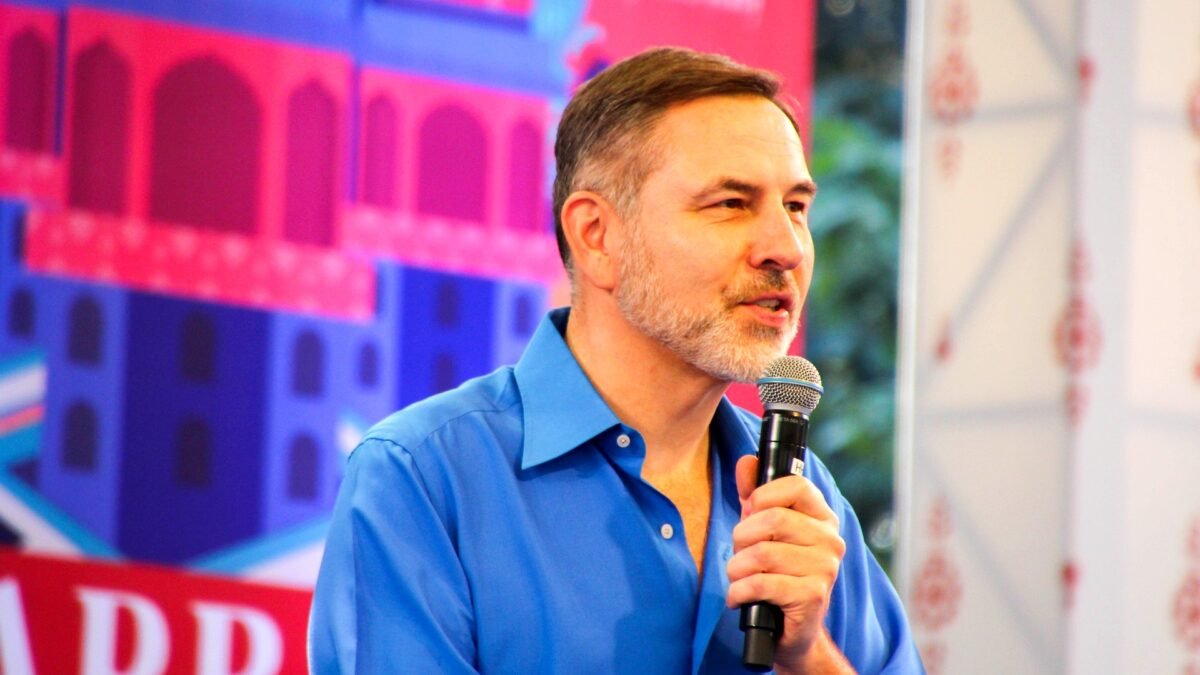
David Walliams, one of Britain’s best-known comedians and bestselling children’s authors, has been named as the anonymous celebrity who spent months trying to stop the Guardian and ITV News from publishing a joint investigation into his conduct towards young women and teenage girls. The investigation, published on Tuesday 10 November 2026, accuses the 55-year-old of using his fame and status to groom girls as young as 15 for sex and of sexual misconduct in the workplace. Walliams denies all of the allegations.
Walliams can be named after he lost a High Court bid for a lifelong injunction that would have prevented the two news organisations from reporting the claims at all. Mr Justice Nicklin dismissed his application on Tuesday 3 November, and Walliams chose not to appeal before the deadline of 4.30pm on Monday 9 November. With the temporary reporting restrictions lifted, the Guardian and ITV News published their findings on Tuesday, and ITV broadcast a documentary about the investigation, David Walliams: Power and Silence, on Tuesday night.
The reaction was immediate and sweeping. Within hours of publication, the BBC said it was reviewing all material featuring or written by Walliams and was removing some programmes, including Little Britain, from iPlayer while the review is under way. The Labour Party suspended his membership. Downing Street described the allegations as “deeply troubling”. His literary agency, Independent Talent Group, said it no longer represented him. And the Metropolitan Police said it had contacted the Guardian and ITV News to make sure any potential victims knew how to report to police, while confirming it had not received any related reports of sexual assault or any other offence.
No criminal charges have been brought against Walliams, and none of the allegations has been tested in a court of law. What has been decided in court is a different question: whether the public should be allowed to read the allegations at all. That question, and the extraordinary argument Walliams’s lawyers used to try to keep the reporting secret, is now at the centre of one of the most consequential British media-law cases in years.
The investigation in detail
The Guardian and ITV News investigation took three years to complete. According to the media organisations’ lawyers, speaking in court, reporters spoke to more than 100 people, including more than 30 sources with first-hand accounts of Walliams’s conduct, as well as his friends and colleagues. The allegations span from 2003 to recent years, according to the investigation as reported by several outlets.
At the heart of the reporting are the accounts of women who say they first encountered Walliams when they were 15 years old. Two women who are now in their 30s allege that he groomed them after first meeting them as teenagers, according to the investigation. Most of the women who spoke to the investigation say they were over 18 at the time of the interactions they describe, according to the Guardian’s reporting as summarised by CNN, but the youngest accounts are the ones that have drawn the most attention.
One woman, named by the Guardian and ITV News as Jade, says she was 15 and Walliams was 36 when they met in August 2007. She says he contacted her on MySpace, the social media platform, and that they exchanged emails, sometimes from her school email address, before meeting in a café. She says he then invited her back to his London home, where she says he kissed her and initiated sexual contact before she pulled away and he agreed to stop. She describes what happened to her as “sexual assault” and “grooming”, adding, according to the reporting: “It’s completely wrong in every way.” Walliams’s lawyers told the Guardian and ITV News that he denies having any sexual contact with Jade, that he never engaged in the grooming of young women, and that the allegations of serious criminal conduct against him are false.
A second woman, named by the news organisations as Alex, says she first met Walliams in January 2004 at a Little Britain fan event, when she was 15 and he was 32. She had given him printouts of comedy scripts she had written, along with a cover letter carrying her contact details. She says they were having sex by the time she was 17 and that, although she regarded the relationship as consensual, it “felt very … pushy”. “I felt like a prostitute, essentially,” she said, according to CNN’s account of the investigation. Walliams’s lawyers deny her account, telling the Guardian that the woman contacted Walliams and that he believed she was 18 at the time of their alleged encounter.
The investigation also recounts the account of a 17-year-old, Abby Tomlinson, who says she and three other teenage girls were left alone with Walliams in his dressing room after he invited her to watch the show, according to the International Business Times’s summary of the investigation. Other women describe being contacted by Walliams as teenagers and then pursued for sex when they were older, according to The Times’s account of the reporting.
The investigation does not stop at Walliams’s private life. It also alleges inappropriate behaviour towards women in two workplaces: the prime-time ITV show Britain’s Got Talent, where Walliams served as a judge from 2012 to 2022, and his publisher, HarperCollins. According to the Guardian and ITV News, sources alleged that Walliams inappropriately messaged young female junior employees at Britain’s Got Talent and invited young female fans backstage and into his hotel room. Walliams’s lawyers told the Guardian and ITV News that he denied the allegations of sexual harassment and inappropriate behaviour in the workplace.
At HarperCollins, the investigation reports that Walliams had a sexual relationship with a much younger, junior female employee, which his lawyers describe as consensual. According to the International Business Times’s summary, the employee was in her mid-20s when the relationship began in 2017 after a promotional event, and she later came to view it as an abuse of power. The publisher launched an internal inquiry in late 2023, in which at least five female employees discussed their experiences; the inquiry concluded in 2024 without action against Walliams, according to the same summary. HarperCollins stopped publishing any new titles by Walliams in December 2025, and in September 2026 it announced that it would stop publishing his back catalogue as well. The Telegraph reported at the time of the December 2025 decision that it followed an investigation into Walliams’s inappropriate behaviour towards young women, which Walliams denied.
Walliams’s response
Walliams denied the allegations in a detailed statement to the Guardian and ITV News, and in a personal letter to the journalists working on the investigation. In the letter, he wrote: “Looking back, I realise that at times I behaved thoughtlessly towards other people I had casual sexual relationships with.” He continued: “I realise I did not always take people’s feelings properly into account. That is something I regret. And whilst a power imbalance is inevitable when one party is famous, abusing that power is something else entirely and it is something that I never did. I am not a sexual predator.”
He added: “I have not broken the law, but I am devastated that some of the women I met 10 to 20 years ago have now expressed hurt or anger towards me.” His lawyers have told the Guardian that he rejects any allegations of criminal activity and has never engaged in the grooming of young women.
Walliams has not responded publicly since his name was published on Tuesday, according to the Press Association’s reporting. His barrister, Sara Mansoori KC, told the High Court during the proceedings that Walliams has no plans to return to public life.
The High Court battle
The reason Walliams’s name was secret for so long is that he went to the High Court to try to stop the story from being published at all. He brought legal action against Independent Television News, which makes ITV News, and Guardian News and Media, the publisher of the Guardian, before the two organisations reported the allegations. He sought a lifelong injunction preventing publication, and he was granted anonymity during the proceedings.
His case rested on an argument that the court heard was unprecedented. His lawyers said that publication could lead him to take his own life. The court heard that he had attempted suicide twice since the Guardian and ITV News first approached him about the allegations in May 2026, and that he had been detained under the Mental Health Act at an inpatient psychiatric hospital in October. According to the Guardian’s court reporting, he was still in hospital when Mr Justice Nicklin dismissed the case on Tuesday 3 November.
His lawyers argued under human rights law, and by reference to the legal precedent set in the case of the child killers Robert Thompson and Jon Venables, that the court had a duty to protect his life through a lifelong ban on reporting. The media organisations’ lawyers told the court, during a two-day hearing in October, that the allegations had been gathered after a “wide-ranging and rigorous investigation” and that there was a “strong” public interest in publishing them.
Mr Justice Nicklin refused the application. In a 52-page judgment, he accepted that the risk of suicide was “genuine (and) grave”, but held that it was “not inevitable” and that treatment could reduce it. He ruled that granting the injunction would be an “exceptionally serious interference” with freedom of expression, and that it would not treat Walliams’s psychiatric condition or remove his elevated risk. Crucially, he found that the state was already taking substantial and effective steps to protect him, through his detention under the Mental Health Act and the inpatient psychiatric treatment he was receiving, which he said significantly reduced the risk. Hospitals and health staff caring for Walliams meant, in the judge’s words, that the state had “assumed responsibility” for his immediate safety.
The judge also noted that there was no point at which publication would become safe merely through the passage of time, so the relief Walliams sought would have been of uncertain and potentially indefinite duration. A temporary injunction remained in place while Walliams had the chance to appeal. He had until 4.30pm on Monday 9 November to apply to the Court of Appeal. He did not do so, and the Guardian and ITV News published their investigation the following day.
Anyone affected by the issues raised in this article can contact Samaritans on 116 123, free of charge, at any time.
The fallout
The institutional response to publication was swift, and it came from almost every organisation connected to Walliams’s career. The BBC said: “These are serious allegations. As such, the BBC is looking carefully at all material featuring and written by David Walliams on our platforms. We are in the process of removing some programmes, including Little Britain, whilst this review is underway.” Little Britain was removed from BBC iPlayer within hours, along with other programmes including The Wheel and Would I Lie To You, and an episode of Doctor Who, “The God Complex”, in which Walliams appeared. A 2020 episode of Who Do You Think You Are? featuring Walliams was also unavailable.
The BBC’s move followed a pattern set by the publisher. HarperCollins had already ended its relationship with Walliams in December 2025, and its announcement in September 2026 that it would stop publishing his back catalogue meant that the books that made him one of Britain’s bestselling children’s authors were already disappearing from sale before the investigation was published. In 2025, his name was also dropped from a British theme park attraction, The World of David Walliams, according to the A.V. Club.
Independent Talent Group, the agency that represented him, told CNN on Tuesday that it had dropped him. “We are deeply disturbed by the allegations,” the agency said. “We are no longer representing him in any capacity.” Fremantle UK, which produces Britain’s Got Talent, said it was “disturbed and concerned by the allegations” against Walliams. The company added: “During his time on the show and in the intervening period, no complaint was ever made regarding his behaviour to Fremantle UK,” and said it encouraged anyone with other allegations to come forward.
The political response was equally direct. According to ITV News, the Labour Party suspended Walliams’s membership on Tuesday. The Prime Minister’s official spokesman described the allegations as “deeply troubling”, adding: “I don’t think we’ve seen the full extent of the reporting. They’re clearly deeply troubling allegations, and the Government will doubtless respond to them during the course of the day, I’m sure.” Justice minister Alex Davies-Jones told the House of Commons that the government was “concerned” by Walliams’s attempt to use an injunction to block the reporting, and that it was “looking at what more” it could do to prevent similar cases in future.
The Metropolitan Police said it was aware of the media reports about allegations involving a man in his 50s. A spokesperson said: “The Met has not received any related reports of sexual assault or any other offences. Should we receive any reports, they will be carefully assessed. Anyone who contacts the police will be supported by specialist officers.” The force said it had contacted the Guardian and ITV News to ensure that any potential victims were made aware of how they could report any criminal allegations to police. Reports can be made by calling 101, quoting the reference 4900/10NOV26.
Who is David Walliams
Walliams, 55, rose to fame alongside Matt Lucas in the BBC sketch comedy series Little Britain, which ran from 2003 to 2006 and became one of the defining comedy hits of its era. He went on to serve as a judge on Britain’s Got Talent from 2012 to 2022, a role that made him a fixture of Saturday night television for a decade, and to build a second career as one of Britain’s bestselling children’s authors.
His public image was that of a family entertainer: a comedian whose books were read in classrooms and whose television work was watched by children and parents together. That image had already taken damage before Tuesday’s publication. In 2020, Little Britain was pulled from Netflix because of its use of blackface, and the BBC removed some scenes from the series. In 2023, Walliams sued the production company behind Britain’s Got Talent after a recording of derogatory and sexually explicit comments he made to fellow judges was leaked to the Guardian. The investigation published on Tuesday is of a different order: it is not about offensive remarks, but about alleged sexual conduct towards teenage girls and young women over more than two decades.
Analysis: Why It Matters
A ruling about press freedom, not about guilt
The most important thing to understand about Tuesday’s publication is what the High Court did and did not decide. Mr Justice Nicklin did not rule on whether the allegations against Walliams are true. No witness was cross-examined on the substance of the claims in the injunction proceedings, and no jury has considered them. What the judge decided was whether the public should be allowed to read the results of a three-year journalistic investigation into a prominent public figure, when that figure argued that publication might lead him to take his own life.
That distinction matters, because it is easy to confuse the two questions. The speed and scale of the institutional response on Tuesday, with the BBC, Labour, his agency and his publisher all moving within hours, can create the impression that a verdict has been reached. It has not. What has been reached is a judgment about the balance between two rights: the right to life and the right to freedom of expression. The judge found that the risk to Walliams’s life was real and serious, but that it was being managed by the state through his hospital treatment, and that a lifelong ban on reporting would be a disproportionate interference with the press’s freedom to report on matters of substantial public interest. That reasoning will now be studied by every media lawyer in the country, because it sets out, in unusually direct terms, the limits of using personal risk as a reason to suppress reporting about a public figure.
Fame as the mechanism
The second thing the investigation puts in front of the public is a pattern, and the pattern is the story. According to the women who spoke to the Guardian and ITV News, the encounters did not begin in private. They began in the places where a famous man meets his audience: a fan event, a social media message, a set of comedy scripts handed over with a cover letter, a backstage pass, a dressing room. The allegation, in essence, is that celebrity itself was the mechanism, that access to a famous comedian was offered and then used, and that the age gap and the power gap made it difficult for the young women involved to say no, or to be heard when they did.
Walliams’s own statement engages directly with that point, and then rejects it. He accepts that “a power imbalance is inevitable when one party is famous”, but insists that “abusing that power is something else entirely and it is something that I never did”. That sentence is likely to become the most quoted line of his response, because it captures the central dispute in the case. The women who spoke to the investigation say the power imbalance was not incidental to what happened to them; it was the means by which it happened. The court has not resolved that dispute, and it cannot be resolved by a statement. It can only be resolved, if it is resolved at all, by evidence tested in a forum designed for that purpose. Until then, the public is left with two incompatible accounts of the same encounters, and with the knowledge that the women’s accounts were gathered by reporters who spoke to more than 100 people over three years.
The institutions that moved first
The third striking feature of Tuesday is how much had already happened before the public knew anything. HarperCollins stopped publishing new Walliams titles in December 2025 and announced in September 2026 that it would stop publishing his back catalogue. His name had already been removed from a theme park attraction. An internal inquiry at the publisher in late 2023 had heard from at least five female employees. In other words, the institutions closest to Walliams had been acting on concerns about his conduct for years, while the public, the readers of his books and the viewers of his shows, knew nothing.
That gap raises questions that go beyond one man. How did a publisher conduct an internal inquiry in 2023, conclude it in 2024 without action, and then drop the author in 2025? What did the BBC know, and when, about the man whose programmes it continued to broadcast? Fremantle’s statement that no complaint was ever made to it about Walliams’s behaviour sits alongside the investigation’s claim that sources alleged inappropriate behaviour towards women on the show he judged for a decade. The absence of a formal complaint is not the same as the absence of a problem, and the history of British broadcasting is full of cases in which that distinction was learned too late. The BBC’s decision to remove programmes while it reviews its archive is, in that light, both a practical step and an acknowledgement that the corporation does not yet know the full extent of what it holds.
The children’s author problem
The fourth dimension of the story is the one that makes it different from an ordinary celebrity scandal. Walliams is not only a television comedian. He is one of the most successful children’s authors in Britain, and his books are read in primary schools, stocked in libraries and given as gifts to children. The allegations against him concern teenage girls and young women, and the collision between that audience and those allegations is the reason the story has travelled so far beyond the entertainment pages.
HarperCollins’s decision to stop publishing his back catalogue, announced in September 2026, was already an extraordinary step for a publisher to take against a bestselling author, and it was taken before the public knew why. Schools and libraries will now have to decide what to do with books that are already on their shelves, and parents will have to decide what to tell children who have grown up reading them. There is no easy answer to either question, because the books themselves are not accused of anything, and because removing them also removes stories that children enjoy. But the questions will be asked, and they will be asked in classrooms and living rooms as well as in newsrooms, which is why the story matters beyond the fate of one career.
What the law still has to decide
Finally, the legal story is not over. No criminal charges have been brought, and the Metropolitan Police has received no reports. That may change now that the investigation is public and the force has invited anyone with information to come forward, quoting a dedicated reference number. If reports are made, the police will have to assess allegations that in some cases date back more than twenty years, with all the evidential difficulties that time creates. If no reports are made, the allegations will remain what they are now: serious claims, investigated by journalists, denied by the man they concern, and never tested in a criminal court.
Separately, the government has signalled that it will look at the injunction question. Justice minister Alex Davies-Jones told the Commons that ministers were “concerned” by Walliams’s attempt to use the courts to block the reporting, and that they were considering what more could be done to prevent similar cases. The Venables precedent, which Walliams’s lawyers invoked, was designed to protect the lives of two men whose identities were a matter of exceptional public danger. Whether it should ever have been argued in the case of a celebrity seeking to suppress reporting about his own alleged conduct is a question that Parliament, as well as the courts, may now want to answer. The judgment in Walliams’s case already gives a clear steer: the state’s duty to protect life, the judge held, is discharged by the state’s own protective measures, not by silencing the press.
What to Watch Next
- Police reports: Whether any woman comes forward to the Metropolitan Police now that the investigation is public, and how the force assesses allegations that in some cases date back to 2003. The dedicated reference is 4900/10NOV26.
- Walliams’s next move: Whether he takes any further legal action or makes any further public statement. His barrister told the court he has no plans to return to public life, and he let the deadline to appeal the injunction judgment pass without applying.
- The BBC review: Whether the removal of Little Britain and other programmes from iPlayer becomes permanent, and what the corporation’s review of its Walliams archive concludes.
- Books, schools and libraries: How schools, libraries and retailers respond to HarperCollins’s decision to stop publishing Walliams’s back catalogue, and whether his books remain on shelves.
- The injunction debate: What the government does after the justice minister’s statement that it is looking at how to prevent similar attempts to use the courts to block reporting, and whether Parliament takes up the question.
- Further reporting: Whether the Guardian and ITV News publish further material from their investigation, and whether other outlets, or other women, add to the record in the coming days.
Sources
- CNN — British celebrity David Walliams accused of sexual misconduct after losing legal battle to block reporting of claims
- The Times — David Walliams accused of preying on girls as young as 15
- USA Today — Children’s author, ‘Britain’s Got Talent’ alum faces serious grooming claims
- LADbible — David Walliams named as celebrity accused of sexual misconduct after failed injunction bid
- LADbible — BBC removes Little Britain from iPlayer after David Walliams named in sexual misconduct allegations
- Hello! Magazine — David Walliams named as famous man at centre of sexual misconduct allegations and failed injunction bid

About the Author — Abdul Mannan
Related Articles

US Evacuates Aircraft from RAF Mildenhall After Iran Threat as Two British Bases Raise Alert to Second-Highest Level
The United States moved refuelling tankers out of RAF Mildenhall on Monday after a threat linked to Iran,…
Labour MPs Urge Burnham to Scrap Draft Conversion Practices Bill Over Fears Parents Could Face Jail
At least a dozen Labour MPs have told party whips they are unhappy with the draft Conversion Practices…
Russell Brand Jailed for Ten Years and Six Months for Rape and Sexual Assault
Russell Brand has been jailed for ten years and six months after a judge at Southwark Crown Court…