
Dell Doubles Revenue to a Record $55 Billion as AI Server Demand Smashes Forecasts

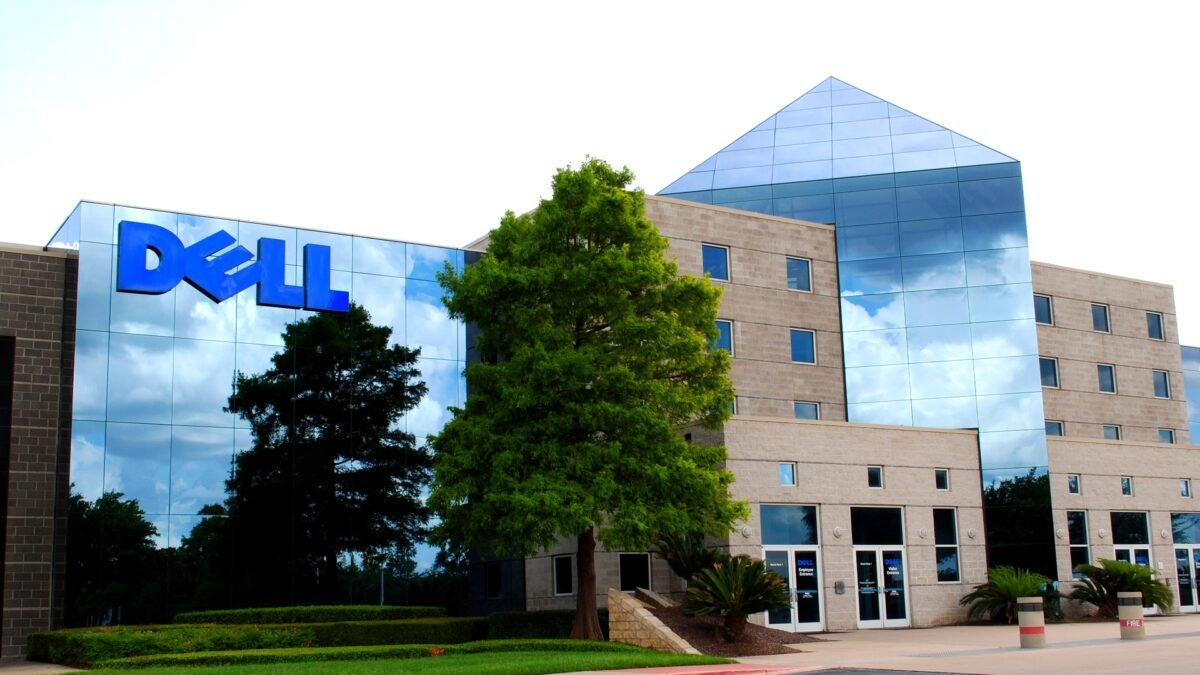
Dell Technologies has reported the strongest quarter in its 42-year history, more than doubling its revenue as demand for the servers that power artificial intelligence continued to surge, and raising its full-year forecasts for the third time this year. The results arrived at a moment when investors had begun to doubt whether the vast spending on AI infrastructure could last, and Dell’s answer, in the words of its chief operating officer, was that the company is now a different business altogether.
Revenue for the three months ended 30 October reached a record $54.94 billion, up 103 per cent on the same quarter a year earlier, according to Dell’s official results statement published on Tuesday. That was far ahead of the $49.32 billion average estimate compiled by analysts, according to Reuters, which cited data from LSEG. Adjusted earnings per share came in at $9.45, against expectations of $6.59, while net income climbed to $5.67 billion from $1.55 billion a year earlier. Diluted earnings per share under standard accounting rules rose 287 per cent to $8.82.
The Texas-based company, which began life selling personal computers from a university dormitory room, now expects full-year revenue of $202 billion for the fiscal year ending in late January, up from its previous target of $192 billion and above Wall Street’s expectation of about $194.5 billion. It also raised its forecast for revenue from AI-optimised servers to $78 billion, from $74 billion, and lifted its adjusted earnings per share estimate for the year to $29.68, from $25.50. The board approved an additional $25 billion in share repurchases, and the company returned a record $4.9 billion to shareholders during the quarter through buybacks and dividends.
Shares rose in after-hours trading after the results were released, according to Reuters, recovering some of the ground lost during a bruising regular session in which the stock had fallen nearly 12 per cent to close at $295.28 amid a broad sell-off in technology shares.
The numbers behind the quarter
The engine of the quarter was Dell’s Infrastructure Solutions Group, the division that sells servers, storage and networking equipment to businesses and cloud providers. Revenue in that division nearly tripled to $41.97 billion, according to Reuters, and operating income in the unit rose 308 per cent to $7.1 billion, with its operating margin expanding to 17 per cent from 12.4 per cent a year earlier, according to the company’s earnings call transcript.
Within that division, sales of AI-optimised servers reached $22.03 billion, up 291 per cent from $5.64 billion a year earlier and roughly a third higher than the previous quarter. Traditional server and networking revenue rose to $15.01 billion from $4.48 billion, while storage revenue increased 24 per cent to $4.9 billion, according to the Wall Street Journal.
The scale of demand is most visible in Dell’s order book. The company booked $60.2 billion in new AI server orders during the quarter, the second consecutive quarter in which orders exceeded $60 billion, and closed the period with a record $132.3 billion AI server backlog, up from $95 billion three months earlier. More than 7,500 customers are now deploying Dell AI Factories, the company’s packaged bundle of servers, storage, networking and software that helps businesses build and run AI models, according to Reuters.
Dell also generated record third-quarter cash flow from operations of $4.5 billion, taking year-to-date cash flow to $10.8 billion. Adjusted free cash flow reached $4.3 billion, up 157 per cent on a year earlier. Its core leverage ratio fell to 0.7 times after cash and investments rose by $2 billion in the quarter to $16.3 billion, according to the earnings call transcript.
For the current quarter, Dell forecast revenue of about $56.3 billion and adjusted earnings of $8.40 a share, both above analysts’ expectations of $53.62 billion and $7.49 respectively, according to the Wall Street Journal. Management cautioned, however, that operating margins in the infrastructure division would narrow from 17 per cent to just under 15 per cent in the fourth quarter, as lower-margin AI servers continue to dominate the sales mix.
A different company
“We are now a different company, with Infrastructure Solutions Group driving the vast majority of our profit and growth,” Jeff Clarke, Dell’s vice chairman and chief operating officer, said in the company’s results statement. The remark captures a transformation that has been building for a decade but has accelerated dramatically in the past two years.
Dell was founded in 1984 by Michael Dell, then a 19-year-old student at the University of Texas, who began by customising IBM-compatible personal computers from his dormitory room. The company went public in 1988, became one of the world’s largest PC makers, and was taken private again in 2013 in a $24.4 billion buyout led by its founder and the private equity firm Silver Lake, according to Britannica. Three years later it bought the data storage giant EMC for $67 billion, the largest technology merger of its time, and returned to the New York Stock Exchange in 2018.
For most of that history, the personal computer defined Dell in the public mind. In the latest quarter, the PC business, housed in the Client Solutions Group, contributed revenue of $12.89 billion, up just 3 per cent on a year earlier, according to Reuters, after growth had slowed sharply from 20 per cent in the previous three months. Operating income in the PC unit fell 6 per cent to $704 million, a margin of 5.5 per cent. The PC division now accounts for less than a quarter of Dell’s revenue, while infrastructure accounts for more than three quarters.
The shift is not merely a matter of arithmetic. Dell’s AI servers, many of them built around chips from Nvidia, are the physical backbone of the generative AI boom, running the complex workloads and autonomous agents that businesses and cloud providers are racing to deploy. Dell’s role is that of the assembler and integrator: it takes Nvidia’s processors, wraps them in its own server designs, storage and networking, tests complete racks before shipment, and delivers systems that customers can bring online within hours. Clarke said on the earnings call that pre-testing complete server racks allows clients to bring systems online within six hours of delivery, helping convert backlog into revenue faster.
The $132 billion question
The most important number in Dell’s report is also the one that invites the most scrutiny. A backlog of $132.3 billion is an extraordinary figure, larger than the annual revenue of most of the world’s biggest companies. The question investors keep asking is whether those orders will turn into cash, and whether the customers placing them can pay.
Dell has clearly heard the question. Clarke said the backlog had been “rigorously vetted for customer quality and access to capital, land and power”, according to Morningstar, and the company said no customers had rescheduled orders so far. The earnings call transcript noted that the vetting process examines each customer’s reliability and access to capital, land and electricity before an order is accepted. That language is aimed directly at the scepticism that has dogged the AI infrastructure trade: that some of the newest buyers, the so-called neocloud companies that rent out computing power, are financing their purchases with debt and may struggle if demand cools.
The scepticism is not abstract. Dell’s own shares had fallen by about 51 per cent between 14 October and 20 November, according to one market report, as investors grew doubtful about the sustainability of AI spending. The stock had also been caught in the wider sell-off in AI-related shares that followed the turmoil around Nvidia, whose chief executive Jensen Huang was reinstated only last week after resigning amid revelations about his personal conduct and suspected links to Chinese intelligence. Nvidia’s shares fell 7 per cent as lawmakers demanded answers about President Donald Trump’s involvement in Huang’s return, according to the BBC. Dell, whose AI servers depend heavily on Nvidia chips, is exposed to every tremor in that relationship.
There are other warning signs inside Dell’s own numbers. The margin squeeze expected in the fourth quarter shows that AI servers, for all their growth, are a lower-margin business than the traditional infrastructure Dell used to sell. The company also warned that component costs are rising. And the sheer speed of the buildout raises a longer-term question: if every major company is buying AI capacity at the same time, what happens when the first wave of building is done?
For now, Dell’s answer is that demand is not only continuing but broadening. Clarke said demand “continues to accelerate and broaden globally”, according to Reuters, and the customer count for its AI Factory packages has risen from about 6,500 in the previous quarter to more than 7,500. The backlog grew even as Dell shipped record volumes, which means new orders are arriving faster than the company can fulfil them.
Analysis: Why It Matters
Dell’s quarter matters for reasons that go well beyond one company’s balance sheet. It is the clearest test yet of whether the AI infrastructure boom is a genuine industrial buildout or a speculative bubble, and the evidence it offers cuts both ways.
On one side, the numbers are those of a real economy, not a paper one. Revenue more than doubled, cash flow hit records, and the company returned nearly $5 billion to shareholders in a single quarter. These are not the metrics of a company selling promises. Dell is selling physical machines that arrive on trucks, consume enormous amounts of electricity, and are installed in data centres that take years to plan. The $60.2 billion of orders booked in three months, and the $132.3 billion backlog behind them, represent commitments from thousands of customers, including large enterprises and cloud providers, not a handful of speculative buyers.
On the other side, the speed of the transformation is itself a cause for caution. Dell’s revenue has gone from $27 billion in a quarter to nearly $55 billion in twelve months. No supply chain, no workforce and no customer base absorbs that kind of growth without strain. The margin warning for the fourth quarter is a reminder that growth bought at lower margins is a different proposition from growth that enriches the seller. And the fact that Dell’s shares lost half their value in five weeks before these results shows that the market is already pricing in the possibility that the boom ends badly.
The deeper significance lies in what Dell’s transformation says about the structure of the AI economy. A decade ago, the most valuable companies in technology were those that owned the software and the platforms. Today, the money is flowing to the companies that pour concrete, lay power cables and assemble racks of chips. Dell, a company that many had written off as a PC maker of the past, has become a central supplier to the defining technology of the present. That is a remarkable reversal, and it underlines how the AI boom is, at its core, a hardware story: intelligence, however abstract it sounds, has to run on something, and that something is expensive, power-hungry and in short supply.
It also underlines how concentrated the AI supply chain has become. Dell’s fortunes are tied to Nvidia’s chips, Nvidia’s fortunes are tied to the political weather in Washington and Beijing, and the whole edifice rests on a small number of suppliers, customers and political decisions. The Huang affair showed how quickly a personal scandal at one company can become a market event for an entire sector. The Trump administration’s intervention to restore Huang, and the congressional inquiries that followed, showed how deeply politics is now entangled with the AI trade. Dell’s results cannot be read in isolation from that context.
There is a further lesson in the fate of Dell’s PC business. The division that built the company’s name now grows at 3 per cent while its sibling grows at nearly 200 per cent. That is not a failure of the PC business; it is a measure of how completely the centre of gravity in computing has moved from the device on the desk to the data centre on the outskirts of town. The personal computer is not disappearing, but it is no longer where the growth, the profit or the excitement is. For a company founded on selling computers directly to customers, that is a profound change of identity, and Clarke’s statement that Dell is “now a different company” is best read as an acknowledgement of it.
For the wider market, Dell’s results will be read as a counterweight to the gloom of recent weeks. The sell-off in AI shares was driven by a fear that spending was outrunning returns: that companies were pouring hundreds of billions of dollars into data centres without any clear evidence that the investment would pay. Dell’s quarter does not settle that argument, but it does show that the spending is continuing, that the orders are being placed by a broadening base of customers, and that at least one major supplier is converting that spending into cash. Whether the customers themselves can earn a return on their purchases is a question for their own results, and it will be answered over the coming quarters.
What to watch next
The first thing to watch is whether the backlog converts. Dell’s fourth-quarter guidance implies revenue of about $56.3 billion, which would be another record, but investors will be looking closely at cash collection and at whether any orders are delayed or cancelled. The company’s insistence on vetting customers for access to capital, land and power suggests it is already preparing for that scrutiny.
The second is margins. If infrastructure margins fall below 15 per cent in the fourth quarter as management expects, the question becomes whether they stabilise there or keep sliding as competition intensifies and component costs rise. Dell’s ability to defend profitability while growing at this pace will determine whether the AI server business is a durable profit engine or a high-volume, low-margin treadmill.
The third is the health of the customer base. The neocloud companies that have driven much of the recent ordering are relatively new, heavily indebted and dependent on continued investor enthusiasm. Any sign of stress among them would travel quickly to Dell’s order book.
The fourth is the political environment. The Nvidia saga demonstrated that the AI trade is now a matter of national security policy, congressional inquiry and presidential intervention. Export controls on advanced chips, the subject of a long-running dispute between Washington and Beijing, directly affect which customers Dell can serve and which chips it can ship. Any tightening of those controls would be felt immediately in Dell’s results.
Finally, watch the PC business. A recovery in personal computer demand would give Dell a second engine, but the latest quarter suggests that engine is idling. If the AI buildout slows, Dell will need the rest of its business to carry more weight than it does today.
Dell’s quarter is, in the end, a snapshot of an industry in the middle of a transformation it does not fully understand yet. The company has never sold so much, never earned so much, and never carried so large an order book. It has also never been so dependent on a single technology trend, a single supplier and a single set of political decisions. The results answer the question of whether AI demand is real. They leave open the harder question of how long it lasts.
Sources
- Dell Technologies — Third Quarter Fiscal 2027 Financial Results (official press release, 24 November 2026)
- Reuters — Dell lifts annual forecasts after record quarter on surging AI server demand
- The Wall Street Journal — Dell Lifts Outlook as Revenue Doubles on Server Demand
- Morningstar — Dell’s stock rises as the AI boom helps sales more than double
- Britannica — Dell: History, Technology, Computers, and Facts

About the Author — Abdul Mannan
Related Articles
Google’s Gemini 4 Agents Design Faster Quantum Algorithms — and Prove Every One Correct
Teams of Gemini 4 agents working for Google DeepMind cut the cost of quantum algorithms by up to…

China’s Z.ai Releases GLM-5.4, a Loop Transformer Model It Says Rivals Systems Four Times Its Size
Z.ai says its new GLM-5.4 model matches the reasoning of systems two to three trillion parameters in size…

Guterres Calls for Global AI Safety Framework in Bridgetown, Warning of ‘Biggest Transfer of Power in Human History’
UN chief António Guterres has called on governments to begin talks on a shared global framework for managing…