
Trump Unveils $8 Billion Diesel Aid for Farmers and Loans Emergency Heating Oil in Pre-Midterm Fuel Push

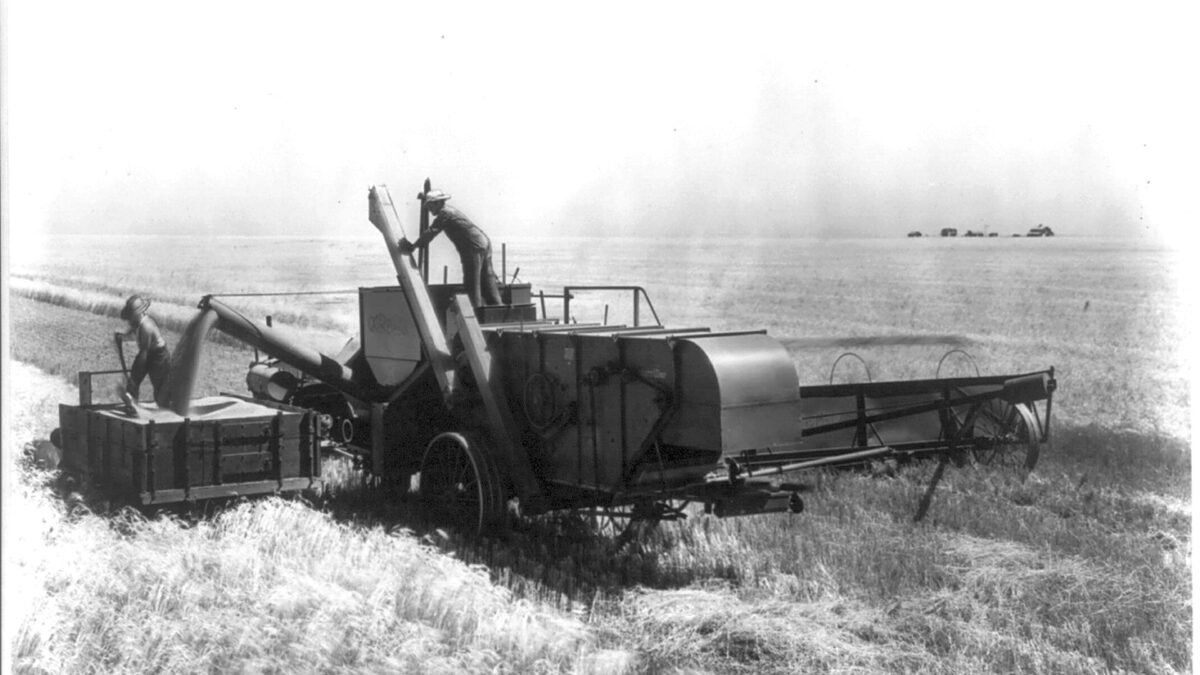
President Donald Trump has rolled out an $8 billion relief package for American farmers to offset record diesel costs, and a day later his administration moved to loan out up to a third of the country’s emergency heating oil reserve, as the White House mounts a two-front campaign against soaring fuel prices with less than two weeks to go before the midterm elections.
The farmer package, billed as a “harvest fuel relief program”, was announced by Trump late on Monday, October 19, at a campaign rally in Park City, in the Wichita metro area of Kansas, where he was stumping for the Republican incumbent Senator Roger Marshall. The Department of Agriculture said afterwards that it would make $8 billion available in one-time payments to farmers this harvest season, to provide relief during what it described as temporary market disruptions and rising input costs.
“Tonight, I’m also pleased to announce that the Department of Agriculture will be launching a new harvest fuel relief program, providing our farmers with $8 billion in support to offset diesel costs during this harvest season,” Trump told the crowd, according to Reuters.
A day later, on Wednesday, October 21, the Department of Energy offered to loan up to nearly a third of the 1-million-barrel Northeast Home Heating Oil Reserve, the emergency stockpile held at sites in New Jersey, Connecticut, Massachusetts and Maine, according to Reuters, which first reported the move. The offer came after senators from both parties urged the administration to release heating oil from the reserve as prices climb.
Together, the two announcements frame the administration’s closing economic argument ahead of the November 3 vote: that it is acting on the cost of living even as fuel prices, driven in large part by the war with Iran and the disruption of shipping through the Strait of Hormuz, remain at punishing levels.
The $8 billion farm programme
The farm payments will be administered by the department’s Farm Service Agency and are authorised under the Commodity Credit Corporation Charter Act, according to a USDA news release. The programme will provide what the department called proportional support to producers through a uniform formula designed to cover a portion of modelled losses during the 2026 crop year, with the national loss average based on Farm Service Agency reported planted acres, Economic Research Service cost-of-production estimates, and World Agricultural Supply and Demand Estimates for yields and prices, according to RFD-TV, which carried the USDA announcement in full.
Commodity-specific payment rates for Title I commodities will be released in November, the department said, while payment methodology for other eligible commodities will be announced later. Participation will not require a crop-insurance linkage, and farmers are being encouraged to set up Login.gov accounts ahead of the application period, with pre-filled applications planned for producers already connected to USDA systems, according to Pulse2.
Agriculture Secretary Brooke Rollins said the investment would “help bring certainty to our farmers during this harvest so they can continue to feed our nation”.
The payments arrive at a moment when production costs have been outrunning crop prices for three years, according to USA Today, with inflation linked to the administration’s trade disputes and the war in Iran compounding farmers’ difficulties. Fertiliser costs have surged this year as well: CNN reported that the Middle East conflict has disrupted roughly one-third of the world’s fertiliser supply that normally flows through the Strait of Hormuz, while USDA figures cited in reporting suggested that American farmers’ fertiliser, lime and soil-conditioner expenses would climb more than 15 per cent in 2026.
This is the second time in eleven months that the administration has offered farmers a one-off payment, according to CNN. In December, a $12 billion package went to more than 560,000 farmers who had been hurt by the trade wars, which had damped down international demand for American crops, according to the New York Post.
The administration has also tried to bring down diesel costs directly. Earlier this month, Trump signed an executive order deferring collection of the federal excise tax on red-dye diesel, the dyed fuel reserved for off-road farm and construction vehicles, through the end of the year, according to Reuters. USA Today noted, however, that the deferral has done little to ease the pressure at the pump.
Loaning the heating oil reserve
The heating oil announcement targets a different constituency: households in the north-east that heat their homes with oil as winter approaches. Heating oil is chemically similar to diesel, and the price of diesel has touched records above $6.50 a gallon following disruptions in the Middle East caused by the Iran war, according to Reuters.
The administration said there would be a competitive bidding process for the loans, open to both fuel retailers and terminal holders, so that fuel can flow into areas facing shortages. A source at the department said the administration would evaluate whether further releases are necessary, Reuters reported. Energy Secretary Chris Wright said the administration was “committed to doing everything in our power to lower energy costs”.
The move is striking because the stockpile is almost never used. The United States has tapped the Northeast Home Heating Oil Reserve only once since Hurricane Sandy struck the region in 2012, according to Reuters. Roughly a third of homes in New England use heating oil, including about half of homes in Maine, where a tight Senate race is under way.
The administration has attributed high fuel prices partly to the Iran conflict and partly to Ukrainian strikes on refineries in Russia, according to Reuters.
The price backdrop
The numbers explain the urgency. According to AAA figures cited by USA Today, the national average diesel price stood at $6.31 a gallon on Wednesday, October 21, up from $3.62 on the same date a year earlier. CNN put the October 20 average at $6.32. Prices set a record of about $6.52 a gallon on September 22, 2026, according to USA Today, and are roughly 75 per cent higher than they were twelve months ago.
With diesel the workhorse fuel of the harvest — powering tractors, combines and trucks — and heating oil prices rising into the heating season, the cost pressure is being felt both on the farm and in the home, and, according to polling cited in reporting, it has contributed to the president’s low approval ratings ahead of the November 3 elections, in which control of Congress is at stake.
The midterm stakes
Trump announced the farmer package at a rally for Senator Marshall, who is locked in an unexpectedly competitive race against the Democratic challenger Adam Hamilton in Kansas — a state that has not elected a Democratic senator since 1932, according to CNN. Trump credited Marshall with helping to put the aid package in place and told the crowd: “We love our farmers,” adding that more help would follow “when the Republicans win”.
Current polling projects close Senate races or even Democratic victories in several states that Trump carried comfortably in the last three presidential elections, including Iowa, Kansas, Ohio and Texas, while Democrats are forecast to win Senate contests in North Carolina and Georgia, according to CNN. Reuters reported that soaring heating oil costs have become a key issue in tight Senate races in New England, including Republican Senator Susan Collins’s difficult re-election fight in Maine and the toss-up open seat in New Hampshire between Democrat Chris Pappas and Republican John Sununu, as well as a challenge to Republican Senator Dan Sullivan in Alaska from Democrat Mary Peltola.
Democrats need to pick up at least four seats to win control of the Senate, where Republicans currently hold a 53-47 majority, according to a Reuters domestic news summary.
Analysis: Why It Matters
1. The midterm arithmetic is brutally simple
Voters do not experience “energy policy”; they experience the pump and the fuel bill. With diesel 75 per cent dearer than a year ago and heating bills rising just as the campaign enters its final fortnight, the administration is buying visibility: a named, numbered programme for farmers and a rarely used emergency instrument for north-eastern households. Both announcements land in exactly the geographies where Senate control will be decided. The political bet is that targeted relief registers more strongly than explanations of global supply disruption.
2. This is income support, not cheaper fuel
The important distinction, made by energy analysts quoted in the Daily Caller, is that the $8 billion programme is income support rather than a mechanism that lowers the price of diesel. A cheque to a farmer offsets his costs; it does nothing for the price every other driver pays. That is precisely why USA Today’s cars team found that the administration’s earlier efforts — the red-dye tax deferral included — have failed to move the needle on pump prices. The programme cushions, it does not correct. Judged as election messaging that may be enough; judged as energy policy it leaves the underlying price untouched.
3. A loan, not a sale — the reserve’s quiet warning
The heating oil move deserves a second look for what it is not: a sale. The administration is offering to loan fuel that must be returned, through a competitive bidding process, and only about a third of a one-million-barrel stockpile — modest against the scale of a New England winter. The fact that the reserve has been touched only once in fourteen years makes the loan symbolically powerful, but its material effect depends on how much of that third actually flows and whether the department follows through on further releases, which it says it is evaluating. Symbols do not heat homes; barrels do.
4. The administration is on both sides of the ledger
There is an awkward accounting beneath these announcements. The December $12 billion farmer package compensated producers for damage from the administration’s own tariff disputes. Now the harvest relief programme compensates them for costs driven substantially by a war the administration is waging and by tariffs it continues to wield — a market newsletter this week reported that Trump had announced an additional 25 per cent tariff on India over its purchases of Russian oil, on top of existing reciprocal tariffs, with a 21-day window before it takes effect. The administration is, in effect, taxing trade and waging war with one hand while writing relief cheques with the other. Voters may not mind. Economists will keep a ledger.
5. Two fronts, one audience
Read together, the announcements map precisely onto the electoral battlefield: farm states where Senate races have tightened against Republicans, and the north-east, where heating costs bite hardest and three Senate contests hang in the balance. Energy policy has rarely been this legible as campaign strategy. Whether it works depends on something no press release controls: the price on the pump two weeks from now.
What to Watch Next
- November payment rates: USDA will publish commodity-specific payment rates for Title I commodities next month and open the application process; the speed and simplicity of the rollout will decide whether the $8 billion reaches farmers before, or well after, the vote.
- Further reserve releases: the Energy Department says it is evaluating whether more of the heating oil stockpile should follow the first loan offer — watch for a second announcement as winter demand builds.
- The price signal: AAA’s weekly diesel figures will show whether any of this — tax deferrals, reserve loans, farm payments — actually moves the pump price, which is the only number voters will remember.
- The Senate map: Kansas, Iowa, Ohio, Texas, Maine, New Hampshire and Alaska will test whether cost-of-living relief buys goodwill in the states the administration is targeting.
- The India tariff clock: the reported additional 25 per cent tariff on India over Russian oil purchases carries a roughly three-week fuse; watch whether trade talks — with Secretary of State Marco Rubio in India this week — defuse it or let it detonate.
Sources
- Reuters — “US to launch $8 billion support program for farmers to offset diesel costs, Trump says”
- CNN — “Trump administration announces $8 billion farm relief plan as fuel, fertilizer costs bite”
- Reuters — “US aims to loan about a third of heating oil reserve in bid to tame prices”
- USDA announcement (carried by RFD-TV) — “Trump Administration Announces $8 Billion Harvest Fuel Relief Program”
- USA Today — “Trump announces $8B in fuel relief for farmers as diesel prices soar”

About the Author — Abdul Mannan
Related Articles

Chemical Tank Blast in Toledo Forces Hundreds to Evacuate as Hazardous Release Spills Into Michigan
A chemical tank blast at an MC Tank terminal in northern Toledo forced a one-mile evacuation and a…
Elon Musk Backs Possible Tesla–SpaceX Merger Worth $3.5 Trillion as Both Boards Launch Reviews
Elon Musk told investors that Tesla and SpaceX have each formed special committees of independent directors to study…

Trump Launches $25 Million Fraud Whistleblower Programme Offering Cash Bounties to Tipsters
President Donald Trump has announced a $25 million Justice Department programme paying cash rewards — up to $30,000…