
MS Dhoni Ends 19-Year IPL Playing Career as Chennai Super Kings Name Him Team Mentor for 2027

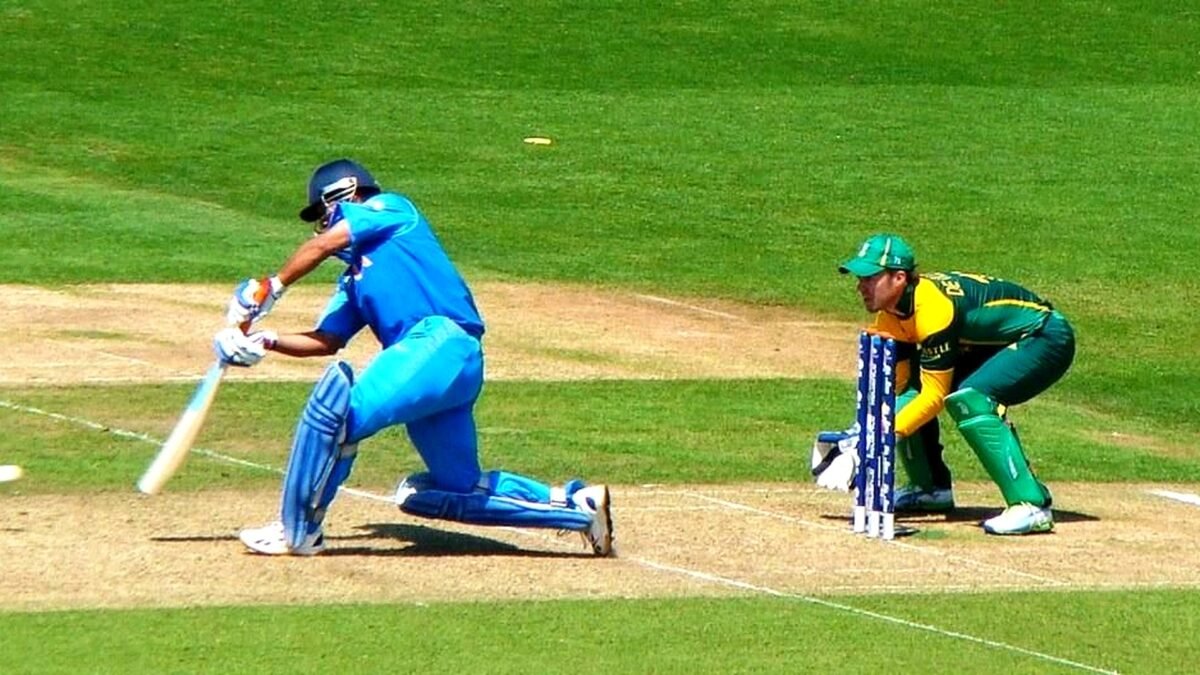
Mahendra Singh Dhoni has ended his playing career in the Indian Premier League, closing a 19-year chapter that made him the most decorated captain in the history of the tournament. Chennai Super Kings announced on Tuesday, 17 November 2026, that the 45-year-old will take up a new role as the franchise’s team mentor from IPL 2027, keeping him inside the yellow shirt he has worn, on and off, since the league began.
The announcement came three hours before the deadline for franchises to release and retain players ahead of the player auction on 16 December in Goa, according to ESPNcricinfo. It ends months of speculation about whether Dhoni, who did not play a single game in IPL 2026 because of a calf strain, would attempt one more season as a player. The franchise’s statement contained no comment from Dhoni himself, who has not spoken publicly about the decision.
“There is no CSK without MS Dhoni,” the franchise’s owner, N Srinivasan, said in the statement. “For nearly two decades, we have walked and grown alongside each other, through triumphs, setbacks and everything in between. Our relationship is as strong as it is because of one reason: we don’t question intentions. That trust is what made this journey possible.”
“In 2008, I insisted that Dhoni should be part of CSK,” Srinivasan added. “It turns out that’s the best decision I took. Not because of all his achievements for the franchise, but for the kind of human he is. Dhoni will always be a part of our identity. This will always be his home.”
Chennai’s managing director, KS Viswanathan, said the franchise would miss seeing Dhoni in yellow on the field but was glad he would keep guiding the players. “The bond will continue to grow and shape this team for years to come,” he said, according to Reuters.
The quietest possible goodbye
True to the man, the end arrived without ceremony. There was no press conference, no farewell lap, no staged final appearance. Instead, according to an account shared by the franchise’s co-owner, Rupa Gurunath, Dhoni delivered the news in a single quiet sentence during a routine video call on Saturday, 14 November, as Viswanathan read out the list of players to be released ahead of the retention deadline.
“Maybe you should add my name in it,” Dhoni said, Gurunath recounted. The call then shut down. “You won’t believe it — the video call just shut down at that moment,” she said. “You know what, even the internet could not handle you not being able to play the next season.”
It was an exit entirely in character for a cricketer nicknamed “Captain Cool” for his unflappable temperament, and for a man who announced his retirement from international cricket in August 2020 with a short social media post and no farewell match. Dhoni has always preferred to let the decision speak, and to let others do the talking afterwards.
The franchise, for its part, marked the moment with an emotional video carrying unseen clips from his years with the team, and a message that read: “A once-in-a-lifetime player. A new role. A bond that lasts forever.”
A career in yellow
Dhoni was Chennai’s first Super King. The franchise bought him for US$1.5 million at the inaugural IPL auction in 2008, weeks after he had led India to victory in the first T20 World Cup, and he went on to captain the side to five IPL titles, in 2010, 2011, 2018, 2021 and 2023, and to two Champions League titles, in 2010 and 2014. Chennai were the first team to win back-to-back IPL titles, and the first to win the IPL and the Champions League in the same year, according to ESPNcricinfo.
He played for Chennai in 17 of the first 19 seasons of the IPL, spending 2016 and 2017 with Rising Pune Supergiant while Chennai served a two-year suspension from the league following a corruption scandal. He finished his IPL career with 5,439 runs at an average of 38.30 and a strike rate of 137.45 across 278 matches, with 24 half-centuries and 264 sixes, according to Cricbuzz. He led the franchise in 12 IPL seasons and took them to 10 finals — a record of sustained contention no other captain in the league has matched.
The five titles as captain are a tally matched only by Rohit Sharma’s Mumbai Indians, but the context is different. Mumbai’s titles came in bursts; Chennai’s came across 13 years, with a two-year enforced absence in the middle, and with a squad that was repeatedly written off as too old. Dhoni’s Chennai kept coming back — after the suspension, after the 2020 season in which they missed the playoffs for the first time, after the 2022 season in which they finished ninth. The 2023 title, sealed off the last ball of a rain-hit final in Ahmedabad, was the most improbable of all: a team led by a 41-year-old captain who could barely run between the wickets won the tournament.
For the crowds at Chepauk, Chennai’s home ground, he was never just a captain. He was “Thala”, the Tamil word for leader, a title bestowed by fans who filled the stands simply to watch him bat, even in the later years when his innings lasted only a handful of balls. Reuters noted that crowds thronged the stadium just to get a glimpse of him, and that even as the runs stopped flowing from his blade, legions of fans still filled the stands to watch him bat lower down the order.
The long goodbye
The ending, when it came, had been visible for some time. Dhoni handed the captaincy to Ravindra Jadeja before the 2022 season, then took it back midway through the campaign because of the team’s poor results. Chennai finished ninth that year, but bounced back under his leadership to win the title in 2023. He relinquished the captaincy again one day before the start of IPL 2024, handing it to Ruturaj Gaikwad, under whom the side finished fifth.
Ahead of IPL 2025, Dhoni was retained by the franchise as an uncapped player, a status available to him because he had retired from international cricket five years earlier. An injury to Gaikwad midway through the season put him back in charge once more. Chennai finished at the bottom of the league that season, and Dhoni scored only 196 runs at an average of 24.50 and a strike rate of 135.17. His role as a batter had already shrunk to a cameo: he faced only 73 balls in 11 innings in IPL 2024, and 145 balls in 13 innings in IPL 2025.
His final IPL match came on 25 May 2025, against Gujarat Titans in Ahmedabad. He did not bat in that game. Then came 2026: a calf strain, on top of recurring knee and thumb problems, kept him out for the entire season, and he was rarely seen at the venue on match days. As Reuters put it, even the brief late-innings appearances that had sustained the bond with the crowds were no longer possible this year, and the injury effectively signalled the end of his career.
He had often said that he wanted to finish his IPL career in front of Chennai’s fans at Chepauk. As ESPNcricinfo noted, he will now not have such an ending. The farewell at home, the lap of honour, the final walk out to bat in yellow in front of his own crowd — none of it happened. The career ended the way so many sporting careers end: not with a ceremony, but with a body that would no longer do what it was asked to do, and a quiet sentence on a video call.
A new coaching room
Dhoni will join a revamped coaching staff for IPL 2027. Zaheer Khan has taken over as head coach, replacing Stephen Fleming, with Albie Morkel, Gareth Batty and Sridharan Sriram as assistant coaches, Mohit Sharma as bowling coach and James Foster as fielding coach. The overhaul follows three consecutive seasons in which Chennai failed to make the playoffs — a drought unthinkable for most of the franchise’s history, and the clearest sign that the old model had run its course.
What exactly a “team mentor” does is deliberately vague, and that vagueness is part of the point. Dhoni’s value to Chennai was never only tactical. It was the calm in the dressing room, the authority that settled young players, the judgement in the final over. A mentor’s role formalises that: he will be present, available and influential, without carrying the day-to-day burden of selection and strategy that a head coach bears.
His exit as a player also frees up four crore rupees (Rs 40 million) in the franchise’s purse for the mini auction on 16 December in Goa, according to Sportskeeda — a practical benefit for a side that needs rebuilding, and a measure of how little his playing contract had come to cost relative to his stature.
Analysis: Why It Matters
The quietest exit of the loudest career
No cricketer of the modern era has been watched as closely, or as constantly, as MS Dhoni. Every innings, every press conference silence, every helicopter shot was news. Yet he has ended both of his careers — international and IPL — in the same understated way: a short statement, no farewell match, no valedictory tour. That consistency is not an accident. Dhoni has always treated attention as something to be endured rather than sought, and he has always understood that a farewell tour is a performance, and he is not a performer.
There is a dignity in that, but also a cost, and it is worth naming. The fans who filled Chepauk to see him bat for a few balls never got the goodbye they had spent years anticipating. The franchise’s emotional video, with its unseen clips, is a substitute, not a replacement. Cricket’s modern economy runs on farewells — the marketed final season, the souvenir jersey, the sold-out home game — and Dhoni has now refused it twice. The IPL will be poorer for the absence of that occasion, but the refusal is also the most Dhoni thing he could have done: the game was never about him, and so the ending is not about him either.
The end was written in 2026
It is tempting to treat Tuesday’s announcement as a decision, but it reads more like a recognition. A 45-year-old wicketkeeper-batter with a calf strain, a troublesome knee and a thumb injury, who had not played a competitive match in 18 months and had been reduced to a handful of balls per innings, was not going to play another IPL season. The decision was made by his body in 2026; the announcement merely caught up with it.
That is why the manner of the announcement matters. Dhoni did not wait for a farewell season that would have been, in truth, a ceremonial one — a few token appearances, a standing ovation, a win that did not change anything. He chose instead to vacate his place cleanly, ahead of the retention deadline, so that the franchise could plan. It is the same instinct that led him to hand the captaincy to Gaikwad a day before a season began, and to step away from the Indian Test captaincy mid-series in 2014: he would rather leave a little early than stay a little too long. Few great athletes manage that timing. Most need to be pushed. Dhoni pushed himself.
What the mentor role actually means
The mentor’s job, as Chennai has defined it, is not coaching in the conventional sense. Dhoni will not be picking the XI or planning the bowling changes; Zaheer Khan, as head coach, will do that. What Dhoni brings is something rarer and harder to buy: institutional memory, and the authority that comes from having built the institution.
Consider what Chennai face. Three seasons without the playoffs. A new head coach. A young captain in Gaikwad who has now led the side through a fifth-place finish and a last-place finish. A squad that needs rebuilding at the auction. In that environment, a mentor who has won five titles with the same franchise, who knows every pressure point of the dressing room, and whose word settles arguments, is not a ceremonial appointment. It is a structural one.
There is also a risk, and it should be stated plainly. The history of great players in mentoring roles is mixed: the authority that makes them invaluable can also make them hard to work around, and a head coach needs room to fail on his own terms. Zaheer Khan is a serious appointment — a former India spearhead with his own standing — and the relationship between the two men will define whether this works. The early signs are encouraging: the coaching overhaul is sweeping, the roles are clearly separated, and Dhoni has never been a man to hover. But it will be watched closely, because it has to be.
The numbers that will not be matched soon
Five IPL titles as captain. Ten finals. 278 matches for one franchise, with two seasons away only because the franchise itself was suspended. A career that began at the inaugural auction in 2008, when he was the most expensive player in the league at US$1.5 million, and ended 19 seasons later with the same franchise — the longest unbroken association between a player and a team in the IPL.
Those numbers will stand for a long time, not because no one will be as good, but because the conditions that produced them no longer exist. The IPL is a league of churn now: mega-auctions, released players, three-year cycles. No captain will get 12 seasons with one franchise again, because no franchise keeps a core together for 12 seasons. Dhoni’s record is a record of an era — the era when a team could be built around a captain and a city, and when loyalty was a strategy rather than a sentiment.
And beyond the IPL, the arc is unmatched: the only captain in history to win the T20 World Cup (2007), the 50-over World Cup (2011) and the Champions Trophy (2013), and then to add five IPL titles and two Champions League titles with his franchise. No other cricketer has led teams to the top of all three international white-ball competitions and then done the same in the world’s richest league. That is not a record; it is a career that will be used to measure every captain who comes after him.
The Chepauk farewell that never happened
The saddest line in the coverage of this announcement is also the simplest: Dhoni had often said he wanted to finish his IPL career in front of Chennai’s fans at Chepauk, and he will now not have such an ending. It is worth sitting with that for a moment, because it captures something about the relationship between this player and this city that no statistic can.
Chennai adopted Dhoni — a boy from Ranchi, in Jharkhand, more than 1,600 kilometres away — as one of its own, and he returned the adoption. The “Thala” chant, the yellow sea at Chepauk, the crowds that stayed to the end of lost games just to see him walk out to bat: these were not the normal transactions of franchise sport. They were something closer to belonging. The 2023 title, won in Ahmedabad rather than Chennai, was celebrated in Chennai as if it had happened at home, because for Dhoni’s fans, home was wherever he was in yellow.
That the final act did not happen at Chepauk is a genuine loss, and it is a loss that belongs to the fans more than to the player. But there is a consolation, and it is the mentor’s role itself: Dhoni will be back at Chepauk, in yellow, in the dugout, for IPL 2027. It will not be the farewell he wanted. It may, in time, become something better — a second act in which the man who built Chennai’s identity stays to hand it over.
What to Watch Next
- The mini auction on 16 December in Goa: how Chennai spend the freed-up purse, and whether they rebuild around youth or chase established names, will show how seriously the franchise is treating the reset.
- Dhoni’s first public words as mentor: he has said nothing so far. When he speaks, the tone he sets — about his role, about Zaheer Khan, about Gaikwad — will tell the dressing room and the fans what this arrangement really is.
- Zaheer Khan’s first season as head coach: the former India fast bowler inherits a side that has missed the playoffs three years running. His first XI, and his first big selection call, will be scrutinised.
- Ruturaj Gaikwad’s captaincy: Dhoni’s presence in the dugout is both a support and a shadow. How Gaikwad leads with his predecessor watching from a few feet away is the human story of Chennai’s 2027 season.
- The Chepauk reception: when Dhoni walks out at the home ground in a non-playing role for the first time, the crowd’s reaction will be the farewell he never had — a season late, but no less real.
- Whether the mentor role becomes a pathway: if this works, other franchises will copy it, and the IPL will gain a new career stage for its ageing icons. If it does not, it will be remembered as a sentimental appointment.
- The generational changing of the guard: Dhoni was the last active link to the IPL’s first season as a player. His departure marks the moment the league’s founding generation has fully handed over — and the question now is who, if anyone, can fill the space he occupied.
Sources
- ESPNcricinfo — MS Dhoni ends IPL career, joins CSK as mentor
- Reuters — IPL career over, Dhoni unveiled as Chennai team mentor
- Cricbuzz — MS Dhoni calls time on IPL career, takes up CSK mentor role
- Sky Sports — MS Dhoni: Former India captain retires from playing role with IPL’s Chennai Super Kings aged 45
- The Hindu BusinessLine — MS Dhoni is new mentor of Chennai Super Kings, retires from playing IPL
- The SportsTak — CSK owner reveals how MS Dhoni quietly communicated his IPL retirement news to the franchise

About the Author — Abdul Mannan
Related Articles
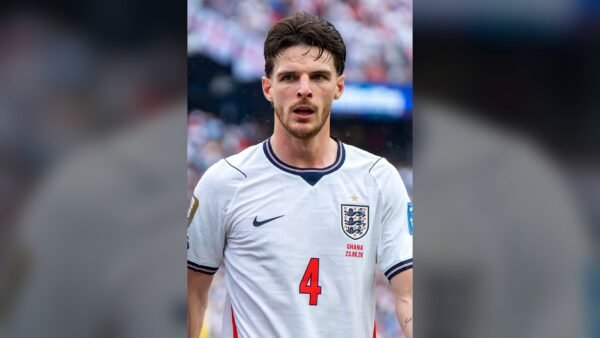
Declan Rice Agrees Five-Year Arsenal Contract Until 2031 as Gunners Lock Down Title-Winning Core
Declan Rice has agreed a new five-year contract with Arsenal that will keep the England midfielder at the…
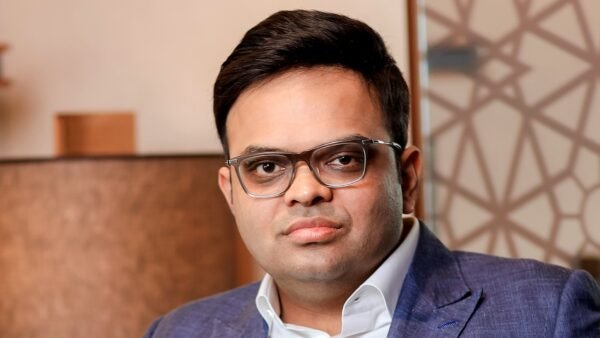
Jay Shah Re-Elected Unopposed as ICC Chair for Second Term as Board Locks In Cricket Calendar to 2035
The ICC Board has reappointed Jay Shah unopposed for a second term as chair, backing continuity as cricket…
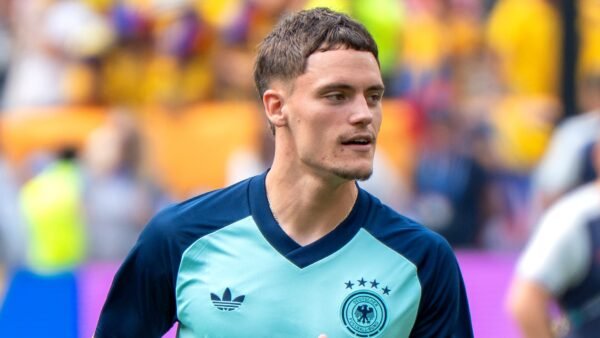
Wirtz Scores Twice as Germany Thrash Netherlands 5-0 to Reach Nations League Quarter-Finals
Florian Wirtz scored twice as Germany thrashed the Netherlands 5-0 in Berlin to win Nations League Group A2…