
Jay Shah Re-Elected Unopposed as ICC Chair for Second Term as Board Locks In Cricket Calendar to 2035

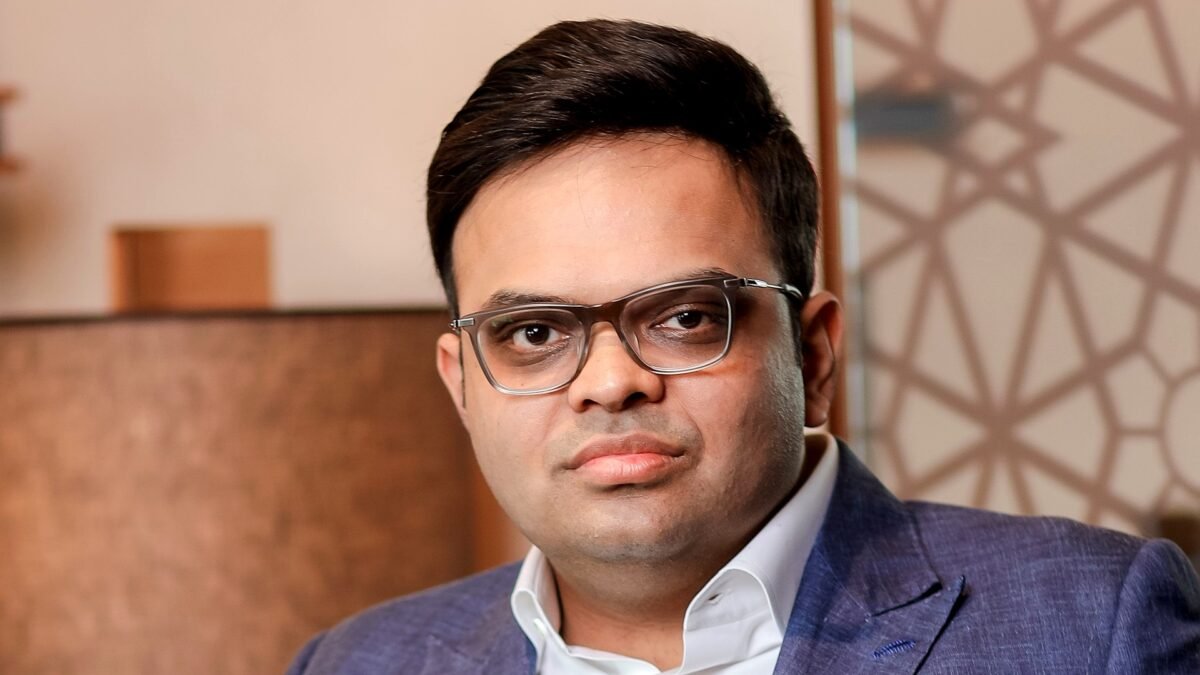
Jay Shah will lead world cricket for a second term. The International Cricket Council (ICC) Board confirmed on Monday that Shah has been reappointed unopposed as its chair, extending the tenure of the youngest person ever to hold the most powerful office in the sport and handing him the run-in to cricket’s return to the Olympic Games at Los Angeles in 2028.
According to the ICC, the decision followed a proposal by the ICC directors at the governing body’s board meetings in Bali, Indonesia. No rival candidate emerged, so no vote was needed. The board described the outcome as a reflection of its confidence in Shah’s leadership, and said the reappointment provides continuity at what it called a defining moment for the sport.
“I am deeply honoured by the confidence the ICC Board has placed in me and sincerely grateful to every Director for their continued trust and support,” Shah said in the ICC’s announcement. “Serving as Chair of the ICC is both a privilege and a responsibility, and I remain committed to working with our Members to advance the interests of cricket across the world.”
The announcement, made on 16 November, came at the end of a board meeting that did far more than settle the chairmanship. In the same session in Bali, the board approved the windows for the major men’s tournaments through to 2035, confirmed India as host of the 2029 Champions Trophy and co-host of the 2031 ODI World Cup with Bangladesh, and agreed that the World Test Championship will remain a nine-team competition through 2031. It was, in effect, a meeting that mapped the next decade of the international game — and then handed the map to the same man to deliver.
What the ICC announced
The ICC’s statement was short, and its language was the language of consensus. The board said the reappointment “reflects the Board’s confidence in Shah’s leadership and provides continuity at a defining moment for the sport, with global expansion, growth in fandom and commercial development central to its strategic roadmap”. It added that cricket is preparing for its return to the Olympic Games at Los Angeles 2028 and has recently announced an expanded long-range programme for competitions.
Shah used his own statement to frame the second term around the Olympics and the longer future. “We are entering one of the most important and exciting periods in our sport’s history,” he said. “Cricket’s return to the Olympic Games at LA28 presents an extraordinary opportunity to introduce our game to new audiences and inspire a new generation of players and fans.” He added that the ICC’s responsibility “extends well beyond delivering successful events”, and that the board must “build a stronger and more sustainable future for the sport with a focus on fans, athletes, commercial partners and other key stakeholders”.
The board’s supporting voices were drawn from across the membership. Richard Thompson, the chair of the England and Wales Cricket Board, said Shah’s continued leadership “comes at an important time for international cricket”, and argued that it is essential to “strengthen the international calendar, protect the relevance and competitiveness of bilateral cricket and ensure that our major events remain central to the sport’s future”. Tavengwa Mukuhlani, the ICC’s deputy chair and the chair of Zimbabwe Cricket, praised Shah’s “strong leadership and a clear commitment to bringing Members together around a shared vision”, and pointed to the 2027 Men’s Cricket World Cup in South Africa, Zimbabwe and Namibia as an important moment for African cricket.
Roger Twose, a director of New Zealand Cricket, said the reappointment “provides important continuity and leadership as international cricket enters a significant period of opportunity and change”. Dr Ros Rivaz, an ICC independent director, welcomed the chance to “further strengthen the growth of women’s cricket”, while Gurumurthy Palani, the chair of the Associate Members, said the growth of the game as “a truly global sport depends on creating meaningful opportunities for Members at every stage of development”.
The chorus was, by design, broad: England, New Zealand, Zimbabwe, the Associates, an independent director and the women’s game. The ICC’s message was that this was not one bloc’s decision but the whole board’s. Whether that is the whole story is a fair question, and it is one this article returns to below. But on the facts as announced, the reappointment was unanimous, unopposed and uncontested.
The one question the announcement did not answer
There is a detail the ICC’s statement does not contain, and it matters. The announcement says Shah has been reappointed for a second term. It does not say how long that term will last. Reports since the announcement have differed, and readers should not treat either version as settled until the ICC itself spells it out.
According to CricTracker, Shah’s second term runs until 2028, which would make it a two-year term. According to Nation Press, he has been reappointed for a second three-year term running through December 2030, with his first term running until December 2027 and the new term beginning at that point. Under the ICC’s constitution, a chair may serve no more than two consecutive three-year terms, which would make this his final tenure unless the constitution is amended, according to the same report.
The difference is not trivial. A term ending in 2028 would carry Shah through the Los Angeles Olympics and the 2027 World Cup, and then stop. A term running to December 2030 would carry him through the 2029 Champions Trophy in India, the 2030 T20 World Cup and the 2031 World Cup as well — effectively the whole of the calendar the Bali meeting has just fixed. Hindustan Herald, which noted the gap in the ICC’s own statement, put it plainly: the length is best treated as unconfirmed until the ICC spells it out. That is the right approach, and this article follows it. What is certain is that Shah remains chair, that nobody stood against him, and that the board has given him the next phase of the sport to run.
A calendar locked in to 2035
The Bali meetings settled far more than the chairmanship. According to the ICC, the board approved the windows for the established major men’s events up to the 2035 Cricket World Cup, giving players, boards and broadcasters a fixed roadmap for the next nine years. The schedule, as reported by Khel Now and myKhel from the ICC’s announcement, runs as follows.
The 2028 Men’s T20 World Cup will be held in Australia and New Zealand from 12 October to 12 November. India will host the 2029 Men’s Champions Trophy from 9 to 28 October — the first time India has staged the tournament since 2006. The 2030 Men’s T20 World Cup will be held in England, Ireland and Scotland from 4 July to 4 August. India and Bangladesh will co-host the 2031 Men’s Cricket World Cup from 9 October to 23 November, bringing the 50-over World Cup back to the subcontinent eight years after India lost the 2023 final on home soil. England will host the World Test Championship finals in 2029 and 2031, with the hosts of the tournaments scheduled after 2031 yet to be decided.
The board also confirmed that the World Test Championship will stay a nine-team competition through 2031, covering the 2027–29 and 2029–31 cycles. The nine teams remain Australia, Bangladesh, England, India, New Zealand, Pakistan, South Africa, Sri Lanka and the West Indies. The decision ends, for now, a debate about whether the championship should expand or be restructured, and it keeps the format that has run since the competition began.
ICC chief executive Sanjog Gupta said that locking in tournament windows so far ahead would help players and member associations plan better, strengthen high-performance programmes and build structured pathways. That is the administrative case, and it is a strong one: boards can now schedule bilateral series, plan venues and negotiate commercial deals around dates that will not move. But a fixed calendar is also a fixed set of promises. Every date the board has now published is a date it will be judged against, and the two Indian hosting assignments in particular will be watched closely in a sport where the politics of hosting has repeatedly spilled into the politics of the game itself.
Shah’s first two years
Shah, 38, first took charge of the ICC on 1 December 2024, after being elected unopposed on 27 August that year. According to Geo Super, he became the youngest ICC chair when he was first elected in 2024, at the age of 35. He succeeded Greg Barclay of New Zealand, who decided against seeking a third term.
Before moving to Dubai, Shah served as secretary of the Board of Control for Cricket in India (BCCI), the richest and most powerful national board in the sport, a role he held from 2019. He had also been one of the most influential figures in Asian cricket. His rise was fast by any standard: from the Gujarat Cricket Association to the BCCI secretary’s office, and then to the chair of the world game, all before his fortieth birthday.
His first term was not a quiet one. The Champions Trophy in early 2025 was staged in Pakistan and the United Arab Emirates under a hybrid arrangement, with India’s matches played in Dubai, after months of negotiation over whether the Indian team would travel to Pakistan. Under an arrangement agreed for the 2024–27 cycle, India–Pakistan matches at ICC events are played at neutral venues, a compromise that kept the tournament alive but also confirmed how far the sport’s biggest rivalry has moved from the field to the negotiating table. The tournament itself was completed successfully, and India won it, but the episode set the tone for Shah’s chairmanship: a leader who must manage not only cricket, but the politics that surround it.
The women’s game also moved forward on his watch. The ICC’s own statement singled out the growth of women’s cricket, and Dr Rivaz’s remarks pointedly noted the board’s responsibility to support women cricketers “in every jurisdiction”, including those whose opportunities to play have been disrupted — a reference to the Afghan women’s players who have been supported in exile since the Taliban’s return to power. The ICC has funded a support programme for those players, and the issue has become one of the more sensitive tests of the governing body’s stated values.
Commercially, the first term was steady rather than spectacular. The ICC’s broadcast deals were already in place, the major tournaments were delivered, and the board’s attention turned to the longer horizon: the Olympic return, the expanded events programme and the calendar that has now been fixed to 2035. That is the context in which the second term should be judged. Shah’s first term was, in large part, about keeping the show on the road. His second term is about whether the show grows.
Why nobody stood against him
The most striking fact about this reappointment is not that Shah won it. It is that nobody tried to stop him. In a sport whose boardroom has historically been a contest between blocs — England and Australia against Asia, the full members against the Associates, the old powers against the new money — an unopposed reappointment of the chair is a statement in itself.
Part of the explanation is structural. India is the financial engine of world cricket. The BCCI is by far the richest board, Indian broadcast rights underwrite the ICC’s income, and the Indian market is the audience every sponsor wants. A chair who arrives with the backing of the BCCI, and with the relationships Shah built during five years as its secretary, starts with an advantage no rival can easily match. The ICC’s directors proposed his continuation themselves, according to the ICC’s announcement, which suggests the decision was settled before it was announced.
Part of it is also personal. Shah has been, by the accounts of those who deal with him, an effective operator: decisive, well briefed and willing to take decisions that previous chairs deferred. The Champions Trophy compromise, whatever its critics say about it, was a decision. The calendar to 2035 is a decision. The Olympic programme is a decision. Boards that have spent years watching the ICC drift tend to reward a chair who makes things happen, even when they disagree with some of the things he makes happen.
And part of it is the absence of an alternative. There is no obvious candidate from another full member who could command the same breadth of support, and no appetite among the members for a contested election that would expose the board’s divisions. An unopposed reappointment is, in that sense, the path of least resistance. But it is also a risk. A chair who has never faced a challenger has never had his record tested in a contest, and a board that never holds a contest can drift into the habit of agreement. That is the tension at the heart of this story, and it is the one the analysis below takes up.
Analysis: Why It Matters
An unopposed reappointment is a verdict, not an accident
Elections that nobody contests still say something. They say that the people who could have stood decided, for whatever reason, that standing would cost them more than it would gain them. In Shah’s case, that calculation is easy to understand: he has the backing of the game’s richest board, the support of the directors who proposed him, and a record of delivering the tournaments and the calendar the members wanted. But it is worth pausing on what was not tested. Nobody asked the board to choose between Shah’s centralising instincts and a different model of leadership. Nobody forced a debate about whether the chair of the world game should also be, in effect, the representative of its most powerful member. And nobody obliged the ICC to explain, in public, why the most powerful job in cricket attracts so little competition. Unopposed does not mean unquestioned. It means the questions were never formally put, and that is a different thing.
The Olympics are the real test of the second term
Shah himself has put the Los Angeles Games at the centre of his second term, and he is right to do so. Cricket’s return to the Olympics after an absence of 128 years — the sport last appeared at Paris in 1900, in a single match between Great Britain and France — is the biggest opportunity the game has had in a generation. A successful Olympic tournament would put cricket in front of audiences that have never watched it, in a market, the United States, where the sport is growing but still marginal, and in a format, the Olympics, that confers a legitimacy no bilateral series can match.
But the Olympics are also the biggest risk. The tournament will be short, sharp and unforgiving: a small field, a compressed schedule and a global television audience that will judge the sport in a single week. If it works, cricket gains a new continent. If it is a muddle — if the format is unclear, the teams are uncompetitive or the event is overshadowed by the rest of the Games — the sport will have spent its one shot. Shah’s legacy will be shaped less by the calendar he has fixed than by the fortnight in Los Angeles in July 2028. That is the measure he has chosen for himself, and it is a demanding one.
The calendar is a promise — and a hostage to politics
Fixing the tournament calendar to 2035 is a genuine achievement, and the ICC is right to present it as one. Boards can plan, players can plan, and the sport can sell its future with a confidence it has often lacked. But a calendar is also a list of hostages. The 2029 Champions Trophy in India and the 2031 World Cup in India and Bangladesh are both, on paper, straightforward assignments. In practice, both will be delivered in a region where the politics of cricket has repeatedly overridden the logistics of cricket.
The hybrid arrangement that governed the 2025 Champions Trophy was a solution, but it was also a symptom: the two biggest teams in the sport cannot currently play each other on each other’s soil. Nothing in the Bali announcements suggests that will change by 2029 or 2031. Pakistan is not a host of either tournament, which removes the most obvious flashpoint, but the question of whether Pakistan will travel to India for the 2031 World Cup, and on what terms, will be asked sooner or later, and the answer will matter. Shah’s second term will be judged, in part, on whether he can keep the calendar he has just published intact. A calendar that survives contact with politics is worth more than one that merely looks tidy on paper.
Women’s cricket and the Associates will judge the rhetoric
Every ICC statement now promises growth in the women’s game and opportunity for the Associates, and the Bali statement was no exception. The test is whether the money and the fixtures follow the words. Women’s cricket has grown quickly, and the women’s game now has its own World Cups, its own leagues and its own audience. But it still receives a fraction of the investment, the broadcast attention and the scheduling priority of the men’s game, and the gap between the rhetoric and the reality is where the ICC’s credibility is most often tested.
The Associates face a similar test. The ICC’s expanded programme promises greater participation and development pathways, and the Olympic return is supposed to open the sport to new countries. But the Associates’ complaint has always been the same: they are invited to the conversation and then left outside the room when the money is divided. The nine-team World Test Championship, confirmed in Bali, is a reminder of how narrow the top of the sport remains. If Shah’s second term ends with the same nine teams playing the same Test cricket, the same handful of countries hosting the same tournaments, and the women’s game still waiting for parity, the Bali promises will read very differently in hindsight.
The question he will not be able to avoid
There is one question that will follow Jay Shah through his second term, and it is the question his supporters least like to hear. It is whether the concentration of power in one man, from one country, backed by one board, is healthy for a global sport. The question is not about Shah’s competence, which few dispute, or his intentions, which he has stated clearly enough. It is about structure. A sport whose richest member supplies its chair, whose biggest market supplies its income, and whose most powerful board supplies its political weight is a sport that depends, to an uncomfortable degree, on one country’s goodwill.
That dependence has served cricket well in some ways: Indian money has funded the game’s growth, Indian audiences have made its tournaments valuable, and Indian administrators have, at their best, driven the sport forward. But dependence is not the same as health, and the history of the game is littered with moments when the interests of the powerful and the interests of the sport diverged. The old “Big Three” arrangement, in which England, Australia and India carved up the ICC’s income and governance between them, was dismantled in 2017 precisely because it was seen as indefensible. Nobody is proposing its return. But nobody should pretend that the underlying imbalance has gone away either. Shah’s second term will be judged, ultimately, on whether he uses the power he has been given to broaden the game or to consolidate it. The board has given him the chance to answer that question. It has not, by reappointing him unopposed, answered it for him.
What to Watch Next
- The ICC’s clarification of the term length: whether the second term runs to 2028 or to December 2030, and what that means for the chairmanship after the Los Angeles Olympics.
- The Olympic programme: the format, the field and the schedule for cricket at Los Angeles 2028, and whether the ICC can secure the exposure the sport needs from a short tournament.
- The 2027 Men’s Cricket World Cup in South Africa, Zimbabwe and Namibia, the first major test of Shah’s second term and the biggest tournament ever staged on the African continent.
- Preparations for the 2029 Champions Trophy in India, including venue decisions and the arrangements for visiting teams.
- Whether the 2031 World Cup co-hosting with Bangladesh proceeds smoothly, and what arrangements are made for Pakistan’s participation in a tournament staged in India.
- The women’s game: whether the ICC’s promises on investment and fixtures are matched by funding and scheduling decisions in the next cycle.
- Any challenger or debate about the chairmanship itself: whether the next election, whenever it comes, is contested, and what that says about the health of the ICC’s governance.
Sources
- ICC — ICC Board confirms Jay Shah’s unopposed reappointment as Chair for second term
- Geo Super — Jay Shah reelected ICC chairman ‘unopposed’ for second term
- CricTracker — Jay Shah re-appointed ICC Chairman unopposed for a second term
- Khel Now — ICC unveils schedule for major men’s tournaments till 2035
- myKhel — ICC announces global cricket calendar till 2035
- Nation Press — Jay Shah reappointed ICC Chairman unopposed for second term until 2030

About the Author — Abdul Mannan
Related Articles

Wirtz Scores Twice as Germany Thrash Netherlands 5-0 to Reach Nations League Quarter-Finals
Florian Wirtz scored twice as Germany thrashed the Netherlands 5-0 in Berlin to win Nations League Group A2…
Ronaldinho, 46, Makes Winning Return as Ravenna Beat Forli 2-0 After 11 Years Away
Eleven years after his last professional match, the 46-year-old Brazilian played 45 minutes and helped set up the…
Ten-Man England End Spain’s Record 43-Game Unbeaten Run With 3-2 Win in Madrid
England beat world champions Spain 3-2 in Madrid to end their record 43-match unbeaten run, finishing top of…