
England Clinch T20 Series in Australia as Crocombe’s Final Over Denies Marsh’s Magnificent 119

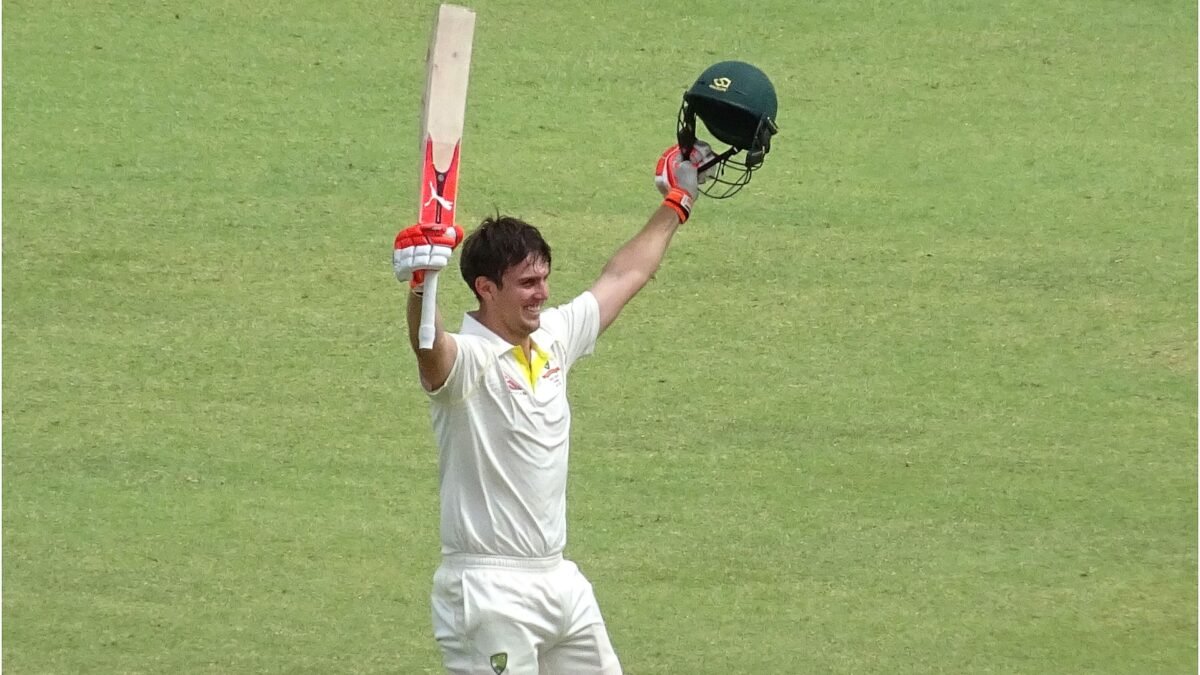
England clinched the Twenty20 series in Australia with a game to spare on Sunday, holding their nerve to beat the hosts by seven runs in a thrilling fourth T20 international at the Sydney Cricket Ground, despite a magnificent century from Australia captain Mitchell Marsh.
Chasing 182 to win, Australia finished on 174 for seven, with Marsh unbeaten in spirit but dismissed for 119 off 57 balls in the final over. According to Reuters, England took an unassailable 3-1 lead in the five-match series after a match that swung wildly in both directions and was only settled by the last few deliveries of a gripping contest in Sydney.
The win, sealed by 25-year-old fast bowler Henry Crocombe in only his third T20 international, completed a remarkable turnaround in a match England had appeared to be losing at several stages, and it gave the tourists consecutive white-ball series victories on Australian soil after their one-day international series win earlier in the tour.
England captain Harry Brook won the toss and chose to bat first on a wearing Sydney pitch, a decision that looked questionable within five overs as Australia’s seamers reduced the tourists to 32 for four. But a middle-order recovery led by Sam Curran, who struck an unbeaten 50 off 28 balls, lifted England to 181 for seven, and their bowlers then defended the total in the face of one of the great lone-hand innings in T20 international cricket.
Marsh, who had struggled for runs earlier in the series, produced a 49-ball century studded with nine sixes and nine fours, yet received almost no support from his team-mates. No other Australian batter passed 18, and when Crocombe removed Marsh caught behind with nine runs still needed, the game and the series were England’s.
England recover from 32 for four
England’s innings began disastrously. According to Sky Sports, Phil Salt fell for seven, Aneurin Donald for seven, Brook for nine and Tom Banton for three as Australia’s seamers Spencer Johnson and Riley Meredith exploited the variable pace and bounce of a two-paced surface. Johnson finished with two for 39 and Meredith with two for 44, and at 32 for four inside five overs England were in danger of being bowled out cheaply.
Jordan Cox and James Coles steadied the innings with a gritty 44-run partnership, according to Reuters, and Coles went on to make 33 off 29 balls while Cox contributed 23 off 19. Their stand laid the foundation for a competitive score on a tricky pitch, but it was the lower order that transformed England’s total.
Curran, batting at number seven, was the pick of England’s batters. He top-scored with an unbeaten 50 off 28 balls, supported initially by 23 from Liam Dawson, and then by a brutal cameo from Jamie Overton, who bludgeoned 20 not out from nine balls. According to Sky Sports, Curran, Dawson and Overton combined to smash 77 from the final five overs, clearing the rope on eight occasions to go with three boundaries, with Curran bringing up his half-century off the last ball of the innings.
It was, according to Cricbuzz, the first time in men’s T20 cricket that five players batting at number five or lower have each scored 20 or more runs in the same innings, a statistic that captured how deep England’s batting ran on the night. England’s 181 for seven looked a long way short of par when the innings began, but on a wearing pitch it proved to be exactly enough.
There was also an edge to the contest before a ball was bowled in the second innings. According to cricket.com.au, Marsh was involved in a heated exchange with allrounder Jamie Overton in the final over of England’s innings, and the Australian captain channelled that aggression into his batting as he got Australia’s chase off to a flying start.
Marsh’s magnificent lone stand
Marsh opened the batting and immediately took the attack to England. He got off the mark with a six down the ground and then clobbered back-to-back fours over cover to take 14 runs from left-arm spinner James Coles’ opening over, according to cricket.com.au. His second six came courtesy of a free hit in the second over, after Crocombe had removed Jake Fraser-McGurk for a second-ball duck.
His fifty came in the ninth over off 26 balls, including a beautiful straight drive off Crocombe, according to Reuters, and the century followed off 49 balls, with three huge sixes through the onside off the expensive Overton. It was Marsh’s second T20 international hundred, and according to cricket.com.au he was seemingly on the verge of tears as he reached it, such was the emotion of the moment after a lean series with the bat.
Yet the innings increasingly became a one-man show. Sam Harper, stumped by Cox off Adil Rashid for 18, was the next-highest scorer. Nikhil Chaudhary and Tim David each made 12, Lachlan Shaw struggled to six off 14 balls, and Marsh at one stage turned down singles during Shaw’s painful stay at the crease. According to Reuters, none of Marsh’s team-mates reached 20, and his team-mates contributed only 45 runs off 64 balls while he scored 119 off 57, according to TNT Sports.
England’s spinners clawed back some momentum in the middle overs. Rashid’s four overs went for a miserly 14 runs, according to Reuters, and a fizzing leg-break was too good for Harper, who was stumped by Cox. Rashid finished with one for 14, and Curran’s one for 26 was also important, but Marsh kept Australia in the contest almost single-handedly.
With 30 required off the last two overs, England looked to have seized the moment when Jack Edwards skied a ball down the ground. But a costly drop by Tom Banton at long-on was punished immediately, according to Reuters, as Marsh smashed a six next ball to swing the momentum once again. According to cricket.com.au, Marsh then went six, four, six to finish the 19th over, reducing the equation to 12 runs off the last over with the Australian captain on strike and the Sydney crowd roaring him on.
Marsh himself acknowledged afterwards how close Australia had come. “We were one or two boundaries away. I am really disappointed we couldn’t take it to the last game, but proud of the fight,” he said, according to Sky Sports. “I hadn’t got going throughout this series so just wanted to contribute. You don’t get too many chances to be a hero.”
Crocombe holds his nerve in the final over
With 12 required off the last over, Brook turned to Crocombe, the 25-year-old Surrey seamer playing only his third T20 international and his fifth cap for England overall, having made his debut in the last month. It was a bold call, and it produced one of the most dramatic finishes of the series.
According to Sky Sports, Crocombe conceded three singles from his first three balls, leaving nine required off his last three deliveries with Marsh on strike. He then claimed the key scalp, with Marsh caught behind by Cox off a slower-ball cutter, before adding Joel Davies leg-before-wicket to clinch the victory. Reuters described the delivery to Davies as a perfect yorker, and Crocombe finished with figures of three for 28.
“That is the toughest situation I have ever been in by a long way,” Crocombe said afterwards, according to Sky Sports. “It was all about clarity. Being a bit predictable is not always the worst thing. Going back to bowling my strengths and knowing what I wanted to do. Clear thinking is the best way to go about it. For me it is my first time being involved against Australia and you can see how much it means to everyone.”
Brook, who had spoken to Crocombe before the over, said he had told the young bowler simply to back himself. “That was an incredible game of cricket,” Brook said, according to Sky Sports. “We thought at the halfway stage that we easily had enough, but a man of Marsh’s capabilities, power and strength, he nearly got them over the line. The lads stuck in there extremely well. I asked them to put their bodies on the line for every single run and they delivered that. I wanted him to have some clarity at the start of his mark before he started his run. We knew he was going to go slow and wide. I just said back yourself and he delivered really well.”
Marsh was named Player of the Match despite finishing on the losing side, a rare honour that underlined the scale of his innings. His 119 off 57 balls, with nine fours and nine sixes, was described by cricket.com.au as an all-time innings, and by Cricbuzz as one of his best T20 international knocks in an Australia shirt. Yet it was not enough, and Australia’s series was gone with a match still to play.
How the series was won
England’s series victory was built across four matches, and the tourists had to come from behind to claim it. Australia won the first T20 international by three wickets in Melbourne, but England responded with an eight-wicket win in the second match at Carrara, followed by a seven-wicket victory under the Duckworth-Lewis-Stern method in the third match in Brisbane, and then the seven-run triumph in Sydney.
The fifth and final match of the series will be played in Canberra on Wednesday, 2 December, with England holding an unassailable 3-1 lead. According to Sky Sports, the tourists will be without captain Harry Brook and wicketkeeper Jordan Cox for that match, as both now join up with England’s Test squad in South Africa.
The T20 series win followed England’s one-day international series victory earlier in the tour. Australia won the first ODI by seven wickets in Perth, but England won the second by 135 runs in Adelaide and the third by 97 runs in Hobart, where Ben Duckett’s 133 sealed the series. The Times described the Sydney result as wrapping up consecutive white-ball series wins in Australia for England, a notable achievement on a tour that has tested the depth of the squad.
England are the number one-ranked T20 side in the world, according to cricket.com.au, and this series win reinforced that standing. But the manner of it mattered as much as the result. England won three matches in a row after losing the opener, they won from difficult positions in Sydney and Brisbane, and they blooded new players such as Crocombe and Coles in high-pressure moments against Australia.
Analysis
This match will be remembered as the night Mitchell Marsh played one of the great losing innings in T20 international cricket and still ended up on the wrong side of the result. That paradox is what makes the game worth studying, because it reveals something important about both teams and about the format itself.
First, the innings itself. Marsh’s 119 was not a flat-track bully’s hundred. It was made on a two-paced, wearing Sydney pitch, against an attack that had just shown how difficult batting could be by reducing England to 32 for four. He scored 119 of Australia’s 174 runs, a share of more than two-thirds of the total, and he did it with nine sixes and nine fours while his team-mates managed 45 runs between them off 64 balls. When one batter scores more than twice as many runs as the rest of the team combined, the innings has ceased to be part of a team performance and has become a solo act, and solo acts in cricket almost always end the same way: the soloist runs out of partners, or runs out of overs, or runs out of luck.
Marsh nearly beat all three. He was still there with 12 needed off the final over, and after Banton’s dropped catch in the 19th over he had reduced the equation with three blows off Overton that suggested the game was swinging his way. What stopped him was not a failure of nerve or technique, but the simple arithmetic of T20 cricket: when one man carries an entire chase, the opposition only needs to remove that one man, and the chase collapses. Crocombe understood that. His final over was not complicated. He bowled slower-ball cutters, stayed wide of Marsh’s hitting arc, accepted three singles, and then produced the one delivery that mattered. Clarity, as he called it afterwards, beat power.
Second, the match exposed the difference between England’s depth and Australia’s dependence. England’s innings was the mirror image of Australia’s. Five players batting at number five or lower scored 20 or more, the first time that has happened in men’s T20 cricket, according to Cricbuzz. When England’s top order failed, the middle and lower order rebuilt and then accelerated, adding 77 runs in the final five overs. When Australia’s top order failed, there was Marsh and almost nobody else. The Australian captain had spoken before the match about his side’s young players and about not fearing failure, and there is real promise in players such as Chaudhary, David and Edwards, but on this night the gap between promise and production was stark. Australia’s top three had not passed 40 in any of the first three games of the series, according to cricket.com.au, and that fragility eventually caught up with them.
Third, the result underlines how far England’s white-ball rebuild has come. This was not a full-strength England side, and it was not a side that played perfect cricket. The top order misfired badly in Sydney, Banton dropped a catch that nearly cost the game, and Overton was expensive at the death. Yet England still won, because their bowling attack had variety and discipline when it mattered, because Rashid’s four overs for 14 runs strangled the middle of the chase, and because a 25-year-old playing his third T20 international was trusted with the final over and delivered. That is the mark of a team with confidence in its systems rather than in individual stars. Brook’s captaincy deserves credit here: the decision to hand Crocombe the final over, and the calm instruction to back himself, was the kind of call that defines a captain’s reputation.
Fourth, the defeat raises real questions for Australia. Losing a home T20 series to England is not a disaster on its own, but losing it in this fashion, with the captain scoring a century in vain, will sting. Australia’s batting has been brittle throughout the series, and their bowling, so dominant in the first match in Melbourne, has been unable to contain England’s lower order in the last three games. The selectors will also have to weigh Marsh’s own form: his century was magnificent, but it came after three quiet games, and his admission that he had not got going in the series suggests a captain who was carrying the pressure of his own form as well as his team’s. The final match in Canberra now becomes a dead rubber, but it is also an opportunity for Australia’s younger players to show they can win without their captain carrying them.
Why It Matters
For England, this series win matters for reasons that go beyond the trophy and the 3-1 scoreline. Winning a white-ball series in Australia, against the country that remains the benchmark in the format’s shorter forms, is a statement of intent. Doing it after losing the first match, and doing it with a squad that has been rotated and refreshed, suggests depth rather than luck. The emergence of Crocombe, who had never played against Australia before this tour and now owns one of its defining moments, is exactly the kind of development that strengthens a team for the tournaments that lie ahead. England’s number one ranking in T20 cricket is not an accident, and results like this one are why.
For Australia, the series matters as a warning. Home series defeats in white-ball cricket are rare for Australia, and this one was sealed by a side that was missing several of its established stars. The batting frailty that has run through the series cannot be ignored, and the dependence on Marsh’s individual brilliance is a vulnerability that better teams will exploit. The final match in Canberra offers a chance to restore some pride, but the series has already been decided, and the questions it raised will follow the team into their next assignments.
For the rivalry itself, the match was a reminder of why England-Australia contests still matter so much. The SCG crowd witnessed a century that will be replayed for years, a final over that swung on a single delivery, and a finish decided by seven runs. Marsh was emotional as he reached his hundred, Crocombe was honest about the pressure he felt, and Brook was generous in his praise of an opponent who had nearly beaten his side single-handedly. That is what sport at its best looks like: two teams, one extraordinary individual performance, and a result that could have gone either way until the final ball.
For the wider game, the match also illustrated how T20 cricket has evolved. A total of 181, which would once have been considered modest, proved defendable on a used pitch. Spinners, led by Rashid, were the most economical bowlers on either side. And the decisive moment came not from a six or a boundary, but from a slower ball and a yorker, delivered by a young bowler who trusted his strengths. Power still matters in T20 cricket, as Marsh’s nine sixes proved, but on this night it was discipline, clarity and depth that won the series.
What to watch next
The fifth T20 international in Canberra on Wednesday, 2 December, will be a dead rubber, but it will not be meaningless. England will be without Brook and Cox, who leave to join the Test squad in South Africa, which means opportunities for the rest of the squad and a chance for the tourists to complete a 4-1 series win. Australia, meanwhile, will want to avoid a heavy defeat that would turn a disappointing series into a rout, and their younger players will be playing for places in the side.
Beyond Canberra, both teams will take lessons from this series into their next commitments. England will take confidence from their depth and from the emergence of new match-winners. Australia will take the memory of Marsh’s innings, and the knowledge that one extraordinary performance is not enough when the rest of the team cannot support it. The series is over, but the questions it raised, and the answers it provided, will shape both teams for months to come.
Sources
- Reuters — England clinch T20 series win in Australia despite Marsh century
- Sky Sports — England clinch T20 series win vs Australia: Mitch Marsh hundred in vain for hosts as Henry Crocombe delivers decisive blow
- cricket.com.au — England surge to series win despite Marsh’s emotional ton
- Cricbuzz — Marsh’s 119 in vain as England seal T20I series
- ESPNcricinfo — Australia vs England, 4th T20I, Sydney, scorecard

About the Author — Abdul Mannan
Related Articles

Ohio State Routs Michigan 45-0 in Record Shutout as Jeremiah Smith Sets Big Ten Touchdown Mark
Jeremiah Smith caught three touchdowns and set the Big Ten single-season record as Ohio State thrashed Michigan 45-0…

Brentford Thrash Manchester United 4-0 as Pochettino’s Home Debut Turns Into a Nightmare at Old Trafford
Brentford thrashed Manchester United 4-0 at Old Trafford in Mauricio Pochettino's first home game in charge, leaving the…

Ilia Malinin Shatters Nathan Chen’s World Record and Wins NHK Trophy in Tokyo
Ilia Malinin scored 114.81 points in Tokyo to break Nathan Chen's short-programme world record, then won the NHK…