
EU Leaders Debate Who Should Speak for Europe at Ukraine Peace Talks After US Envoys Win It a Seat

European Union leaders met in Dublin on Friday to settle a question that has haunted the continent for almost five years: who speaks for Europe when the war in Ukraine is negotiated. The debate came hours after American envoys told President Volodymyr Zelenskyy that Europe would finally have a seat at the table in the next round of peace talks — and it exposed, within a single day, just how far Europe still is from agreeing on a single voice.
The leaders of the 27-nation bloc gathered at a summit in the Irish capital to discuss whether Europe should be represented by one person or a team, and who should take on the role, according to the Associated Press. Senior European Union officials and politicians have been suggested as candidates, the agency reported, but there was no consensus as the meeting began. What the job would actually involve was also unclear and contested.
Yet there was broad agreement on one point, from London to Kyiv: Europe has to be in the room. The question is no longer whether Europe attends the talks. It is who sits in the chair.
“This needs to be resolved,” Irish Prime Minister Micheál Martin said as he arrived at the summit. “I would hope that today’s discussions bring clarity around this. It needs to be, in my view, finally decided upon within the next week or two.”
The urgency is real. The next round of negotiations is expected within weeks, and the United States has made clear that it wants a name, not a committee, across the table from Moscow. If no decision is reached in Dublin on Friday, the question will be pushed to a special European Union summit on 26 and 27 November, according to The Insight International.
A seat won in Moscow, confirmed in Dublin
The breakthrough, such as it was, came in two stages. On Thursday, United States presidential envoys Steve Witkoff and Jared Kushner met President Vladimir Putin in the Kremlin in Moscow. After the meeting, Witkoff told Russian state television that the Europeans would join the next round of talks.
“The Europeans will join at the next meeting, which we consider to be a very important moment because they are our partners and it’s important to us that they take part,” Witkoff said, according to the Associated Press.
The two envoys then flew to Ireland and met Zelenskyy late on Thursday at a military air base outside the Irish capital, where the Ukrainian president was attending a meeting of the European Political Community. After the meeting, Zelenskyy said Europe would send a negotiating team to the next round.
“Next time, next meeting, Europe will be in the negotiating team,” Zelenskyy told reporters, according to The Insight International. “They will have a voice.”
Kushner was blunter still. “We cannot conclude this deal without the Europeans being at the table,” he said, adding that Putin was “willing to give it a try.” In a post on X late on Thursday, Kushner said Russia and Ukraine had “agreed to expand the next round of negotiations to include our European partners,” CNN reported.
Zelenskyy also told reporters that the envoys had said the two sides were preparing what would be the largest prisoner exchange since Russia’s full-scale invasion in 2022, according to The Insight International. The exact numbers have not been announced. Kushner had earlier described the planned swap as the “biggest humanitarian release of prisoners,” saying the figures would be finalised the following day.
The Kremlin, however, has played the whole development down. In a briefing after the Moscow talks, Kremlin aide Yuri Ushakov did not confirm that European representatives would attend the next round, and said the Europeans’ current stance on Ukraine amounted to “a recipe for endless war,” according to the Associated Press.
Kremlin spokesperson Dmitry Peskov went further on Thursday, saying that for Europe to join the peace talks it must first name a representative. “The Europeans squabble like spiders in a jar,” Peskov said, according to the Associated Press.
That remark, delivered with characteristic contempt, landed as both an insult and a challenge — and it is the challenge that the Dublin summit is struggling to answer.
Kallas claims the role
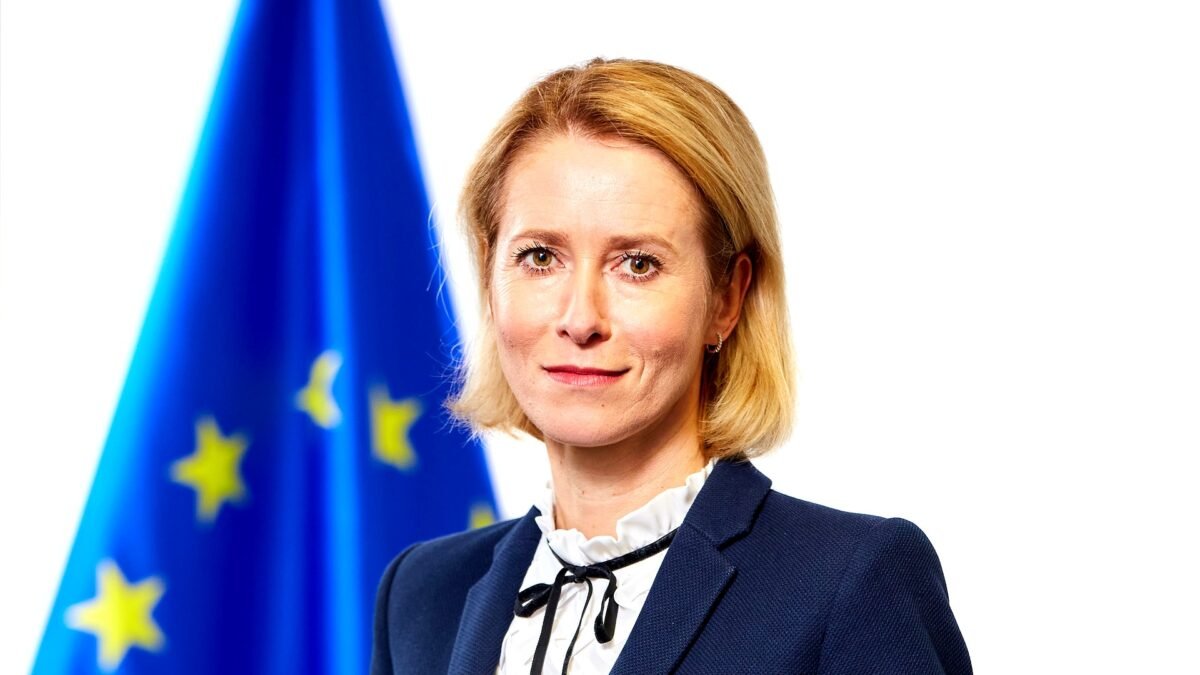
The most striking moment of Friday came not from a head of government but from the European Union’s own foreign policy chief. Kaja Kallas, the High Representative of the European Union for Foreign Affairs and Security Policy, laid claim to the envoy role herself on Friday, according to the Associated Press.
“I’m the one who is representing Europe in the foreign and security policy,” Kallas said.
She made no secret of the obstacle in her path. “I know that the Russians don’t want me, but, you know, do we have a say, who is representing Russia?” she said. “We can’t send any person that has no institutional role like the Americans are sending.”
Kallas, a former prime minister of Estonia who took up the European Union’s top diplomatic post in December 2024, is the obvious candidate in one sense: the job she already holds is, in effect, Europe’s foreign minister. But she is also, from Moscow’s point of view, the least acceptable one. Estonia was occupied by the Soviet Union, and Kallas has been one of the most outspoken critics of Russia in European politics. The Kremlin has made no secret of its hostility towards her.
The other leading contender inside Brussels is European Council President Antonio Costa, who chairs the meetings of the European Union’s national leaders and represents them abroad. Luxembourg’s Prime Minister Luc Frieden said Costa was the natural choice, according to The Insight International.
Costa himself framed the role as a collective effort rather than a personal one. “European security cannot be discussed without a European voice at the table,” he said in Dublin on Thursday, according to the Associated Press. “That European voice needs to be a team effort between European nations, the European Union and NATO.”
But Costa carries his own baggage. Earlier this year, he faced criticism within the European Union after his office set up a back-channel with Moscow that was kept secret from other leaders, according to the Associated Press. For governments that already worry about freelance diplomacy, that episode is not forgotten.
Another name that has been floated is Alexander Stubb, the president of Finland. He has warm relations with President Donald Trump and met Witkoff and Kushner in Oslo in October, according to the Associated Press. Stubb is also, notably, the leader of the country that Russia is now demanding should leave NATO — a demand examined below.
Meloni, Macron and Merz: three answers, no agreement
If the contest were only between Kallas and Costa, Dublin might have settled it. But the disagreement runs deeper, into the question of what kind of representation Europe wants at all.
Italian Prime Minister Giorgia Meloni has pressed hardest for a single representative with a clear mandate. Supporters of that approach argue that the absence of a united European voice has allowed individual countries, or small groups of them, to engage in freelance diplomacy. “There are too many different groupings discussing the issue,” Meloni said, according to the Associated Press.
Meloni has criticised a series of apparently uncoordinated initiatives, including an October call to Putin by Stubb and Norwegian Prime Minister Jonas Gahr Støre that she said could undermine European interests, according to the Associated Press. She has increasingly pushed the idea of a common European Union representative who could speak with “a single, authoritative voice,” and she has requested a decision by Friday in Dublin, to be formalised in December in coordination with non-European Union partners in Europe such as Britain and Norway, according to WTOP News.
French President Emmanuel Macron took a different line. “Above all, what is needed is for Europe to have a clear and united vision of what it wants for Ukraine and for itself,” he said, according to the National Press Room. “I believe that the content determines the format.” In other words, decide what Europe wants first; the question of who carries the message can wait.
Macron was blunt about the stakes at the European Political Community meeting on Thursday. “Without Europeans, there is no support for Ukraine,” he said, according to the Associated Press. “There is no more US support.” He added: “At the end of the day, we will be the ones to define and decide for our future security as Europeans.”
German Chancellor Friedrich Merz argued that the priority was Putin’s willingness to negotiate at all, not the name on Europe’s badge. The argument, in effect, is that choosing an envoy before Moscow has shown it will talk in good faith is putting the cart before the horse.
Martin, the host, said European representation “can’t just be European Union” because the Coalition of the Willing — a group of more than two dozen countries that have pledged military support to help maintain a future peace in Ukraine — “has involved far more than the European Union.” “It’s a European continentwide issue,” he said, pointing to Norway and the United Kingdom’s support for Ukraine.
British Prime Minister Andy Burnham, meanwhile, rejected the idea that Europe was being sidelined during the negotiations, saying “there are European voices in the room,” according to WTOP News.
Not everyone in Dublin shares the optimism. Polish Prime Minister Donald Tusk was openly sceptical of the whole process. “In my opinion, calling them negotiations is an exaggeration,” Tusk said on Thursday, according to the Associated Press. “We will not build a new security architecture simply because the Russian president, or someone in the United States, wishes it.”
Tusk’s scepticism reflects the mood of European Union countries formerly dominated by the Soviet Union, which have watched the American-led process with deep unease. For them, the danger is not only that Europe is excluded from the talks, but that a deal is struck over their heads — one that trades away Ukrainian territory and European security in the name of a quick peace.
The American ultimatum: name one person
The pressure to decide is coming not only from Moscow but from Washington. After this week’s American-brokered talks between Ukraine and Russia in the United Arab Emirates, Kushner said that “if Europe could identify one person to speak on their behalf, that would be a bigger achievement than getting the Russians to include them in the negotiation,” according to the Associated Press.
The remark echoes the famous question often misattributed to former United States Secretary of State Henry Kissinger: “Who do I call if I want to call Europe?” Half a century after Kissinger is supposed to have asked it, the question is still unanswered — and it is now being asked, in earnest, by the country that is running the peace process.
The question of who represents Europe is an old one, and Europe itself is loosely defined. Is it the 27-nation European Union, the 32-nation NATO military alliance made up mostly of European countries, the 29-nation Schengen zone, or the 47-nation European Political Community? That ambiguity has frustrated Washington in the past and present, according to the Associated Press.
France, Germany and the United Kingdom — the region’s top three economies, collectively known as the European trio, or E3 — have so far been the most engaged European body in the negotiations, according to the Associated Press. But an E3 envoy would leave out the other 25 European Union nations and rankle smaller nations like those that border Russia and Belarus on the bloc’s eastern flank, which face constant hybrid threats, including influence campaigns and disruptive drones.
According to EUobserver, European Council President Costa has agreed to discuss the creation of a potential European Union envoy for the peace process on Friday. The report, citing a European Union source, said this would be an initial debate about the structure and mandate of the role, while aiming to leave the nomination of individual candidates until the next summit, in December. The future negotiator’s name would therefore not be announced on 13 November.
A source in Brussels told the Russian state news agency TASS that the European Union had yet to hold any substantive discussions about a potential candidate for talks with Russia, and that the bloc currently has “no negotiator, no mandate for talks and no negotiating position that includes possible compromises.”
That assessment, if accurate, is a measure of how far Europe has to travel. The seat has been offered. The envoy has not been chosen, the mandate has not been written, and the negotiating position has not been agreed.
Russia’s price: a new European security order
While Europe argued in Dublin about who should speak for it, a report from Germany laid bare what Moscow is asking for in return. According to the German newspaper Bild, Russian negotiators used this week’s talks in Abu Dhabi to float far-reaching conditions that would reshape security arrangements from the Black Sea to Finland’s border with Russia.
The informal proposals, shared with European representatives in Abu Dhabi, seek what Bild called “a new European security order,” according to the newspaper. The plan is said to have originated in Putin’s circle, although Bild stressed that the document is only one of several unofficial drafts, and that it remains unclear whether Putin has endorsed this version.
Under the proposals, Russia would retain all Ukrainian territory it currently occupies and receive the entire Donbas region, including the parts of Donetsk and Luhansk still held by Kyiv, according to Bild. Ukraine would have to remain permanently non-aligned and abandon its bid to join NATO, while the possibility of European Union membership would be left open. The plan would also ban NATO military bases in Estonia, Latvia and Lithuania, and require Finland to leave the alliance and return to its pre-membership status. It would demilitarise the ports of Mykolaiv and Odesa, banning their use as naval bases.
No official in Helsinki, the Baltic capitals, NATO headquarters, Moscow or Kyiv has publicly confirmed or denied the account, according to Clash Report.
Finland’s response was swift and furious. Finland’s NATO membership is not on the table as part of a potential peace deal, the country’s defence minister said on Friday. “Such matters are in no way a matter for negotiation,” Defence Minister Antti Häkkänen said in Helsinki, according to the broadcaster Yle. “Russia knows that. It is absolutely outrageous to even suggest such a thing.”
Finland spent decades outside NATO to accommodate Russian sensitivities. After Russia’s full-scale invasion of Ukraine in early 2022, its political leadership broke with decades of neutrality and joined the alliance in April 2023. The idea that it should now be asked to leave, as the price of a peace it did not ask for, is regarded in Helsinki as an insult as much as a demand.
The Bild report also underlines why the question of who speaks for Europe matters so much. The demands Moscow is floating do not concern Ukraine alone. They concern the security of Finland, the Baltic states, the Black Sea coast and the whole architecture of European defence. A negotiator who speaks only for the European Union would have no authority over Norway or Britain; a negotiator who speaks only for the E3 would have no authority over the Baltic states. And a negotiator who has no agreed mandate at all would have no authority over anyone.
That is the trap Europe is walking into in Dublin: it has been invited to the table, but the other side has already written a list of demands that no single European envoy, however senior, could accept without a mandate that Europe has not yet given them.
Two days of talks, no breakthrough
The context for all of this is the two days of trilateral talks in Abu Dhabi earlier this week — the first direct American-mediated negotiations between Russia and Ukraine in nine months. Kyiv and Moscow said there had been some progress, but that major differences remained, including on territorial issues, according to the Associated Press.
Russia holds about one-fifth of Ukraine, and Kyiv refuses to give up the rest of the Donbas region in its east. Putin has shown no signs of being ready to moderate his territorial demands, which include a buffer zone in parts of Ukraine that Russia has not formally claimed as its own.
After the Moscow meeting on Thursday, Putin said Russia’s position on the war, including its demand for territory, had not changed, according to The Insight International. He also said that what Russia considers its state border should be the only meaningful demarcation point with Ukraine — comments that appeared to signal his determination to pursue his aim of taking full control of all four Ukrainian regions that Moscow says it annexed in 2022.
Putin also warned that the European idea of sending Western troops into Ukraine once a peace deal was concluded would trigger a resumption of the war, because Russia would see that as a threat to its own security. “We would very much like you, gentlemen, and the US administration as a whole, to work with your European allies so that they can finally make up their minds as to what they want: peace or war in Ukraine,” Putin told the envoys, according to the Associated Press.
One proposal did emerge from Moscow. Putin told the envoys that Russia was proposing a joint Russian-Ukrainian humanitarian mission to Kostiantynivka in eastern Ukraine, which he said Moscow controlled — an assertion Ukraine has taken issue with in the past, saying it retains a presence there. Putin said the mission could be modelled on an initiative that allowed residents to leave the Russian-controlled town of Oleshky in southern Ukraine at the end of last month, and for aid to be brought in for those who chose to remain. Russia needed five days to clear the area near Kostiantynivka of mines, Putin said, adding that there were 400 to 500 city residents still there. Ushakov said the American envoys had welcomed the idea and would be in touch with Russia about it.
Kyiv has expressed concerns that Moscow might wish to use ceasefires for such missions to enable its military to regroup, according to the Associated Press. The head of the Russian delegation in Abu Dhabi, Vladimir Medinsky, had already said after the talks that every inch of “Russian land” would be returned “one way or another.”
As envoys from Washington, Moscow and Kyiv met in Abu Dhabi, several European countries, including the United Kingdom, France and Germany, attended discussions nearby, according to the Associated Press. Europe was in the building. It was not in the room. That is the indignity the Dublin summit is trying to end — and the reason the question of who speaks for Europe has suddenly become urgent.
War goes on while diplomats talk
While the diplomacy accelerated, the war did not pause. On Friday, a car explosion in southern Moscow injured a former aide to a pro-Russian Ukrainian politician, according to Russian authorities — the second apparent attack in two days.
Sergei Zavorotny, who served as an adviser to the former pro-Russian prime minister of Ukraine, Mykola Azarov, was taken to a city hospital for medical care, the Investigative Committee of Russia for the city of Moscow said in a statement, according to CNN. The explosion happened on Kirovogradskaya Street in the Chertanovo district. Russian media reported that the car belonged to Zavorotny, and that he was hospitalised with serious injuries.
On Thursday, a car explosion in St Petersburg killed a Russian air force colonel, the local Investigative Committee said, according to CNN. The colonel was identified by The Sun as Dmitry Lobodin, a senior figure in the air force who served as the chief navigator of the 6th Guards Air Force and Air Defence Army. It was the second such attack in the city in just three months.
Ukrainian authorities have not commented on either explosion, according to CNN. Russia has blamed Ukraine for earlier assassinations of military officials. Neither blast has been attributed to any perpetrator by officials, and no motive has been established.
The overnight exchange of strikes continued as well. Two people were killed in Odesa and a 17-year-old in Zaporizhzhia, while four people died in Volgograd, according to Deutsche Welle. Zelenskyy said Russia had fired 115 missiles at Ukraine in the first week of November alone, according to The Insight International.
Zelenskyy also confirmed that restrictions had been reimposed on Starshield, the military version of SpaceX’s Starlink satellite communications service, which he said was hampering Ukraine’s efforts to intercept Russian drones. “So far we know very little on the Starshield restrictions,” he said, according to the Associated Press. “But some things are already clear: if someone in America is making decisions that basically treat Ukrainian territory as if it is not Ukrainian, then it tells us where things are going.” SpaceX declined to comment, according to the Associated Press.
Zelenskyy said he found the American approach of discussing a new European security order with Russia “a bit strange,” according to the Associated Press. Given what Bild reported Moscow to be proposing in Abu Dhabi, that understatement is easy to understand.
Analysis: Why It Matters
The seat was the easy part
Getting Europe into the room was never going to be the hard part. The hard part was always going to be deciding what Europe is, for the purposes of a negotiation. The Dublin summit has now proved that in public, in a single day. Witkoff and Kushner delivered the invitation; Peskov delivered the condition; and Europe, offered the chair it has demanded for years, discovered that it had not agreed who should sit in it. That is not a failure of diplomacy. It is a failure of preparation — and it is one that Moscow and Washington have both noticed. A side that cannot name its negotiator cannot be taken seriously as a negotiating partner, and both capitals will draw the obvious conclusion.
Kallas against Costa: two Europes, two mandates
The contest between Kallas and Costa is not a personality clash. It is a contest between two different ideas of what Europe is. Kallas represents the European Union as an institution: she is its foreign minister, she has the legal role, and she has the clearest claim under the treaties. But she is also, from Moscow’s perspective, the least acceptable candidate — an Estonian who has spent her career warning that Russia cannot be trusted. Costa represents the member states: he chairs their meetings, he carries their collective authority, and he is the man the national leaders actually answer to. But his authority is borrowed, and his back-channel with Moscow earlier this year has left some capitals wondering whose interests he serves. Neither candidate can do the job without the other’s blessing, and neither has it. Until Europe decides whether its voice is institutional or intergovernmental, the argument will go around in circles.
Moscow’s price for letting Europe in
The Bild report, if it is accurate, changes the meaning of the whole debate. Russia is not being asked to accept Europe at the table out of generosity. It is being asked to accept Europe at a table where it has already placed a list of demands that no European could accept: Finland out of NATO, no alliance bases in the Baltics, the whole of Donbas, the demilitarisation of Ukraine’s Black Sea ports, and a veto over the security order of the entire continent. Whether or not Putin has endorsed that list, its existence tells Europe something important. Moscow’s price for a European seat is not a concession on Ukraine. It is a rewriting of the map of Europe. That is why the question of who speaks for Europe cannot be separated from the question of what Europe is prepared to defend — and why a negotiator without a mandate would be worse than no negotiator at all.
The Kissinger question, fifty years on
Henry Kissinger is supposed to have asked, in the 1970s, “Who do I call if I want to call Europe?” Historians doubt he ever said it in those words, but the question has outlived the man, and it is now being asked again by the country that runs the peace process. Kushner’s remark — that naming one person would be a bigger achievement than getting the Russians to include Europe — is the modern version of the same complaint. The uncomfortable truth is that Europe has had fifty years to answer it and has not. The Lisbon Treaty created a High Representative precisely to solve the problem, and Kallas now holds that office. But the office was designed for a world in which Europe spoke about foreign policy, not one in which it negotiates the end of a war on its own continent. The Dublin debate is, in the end, an argument about whether that office is enough — or whether Europe needs something it has never built: a single, mandated, accountable negotiator for war and peace.
A table that keeps growing while the war goes on
There is a final, sobering point. The table keeps getting bigger — Abu Dhabi, Moscow, Dublin, the next round, the one after that — while the war goes on underneath it. Two car bombs in two days, 115 missiles in a week, a satellite system throttled at the moment Ukraine needs it most: the violence is not waiting for the diplomats to agree on a seating plan. Every week that Europe spends arguing about who speaks for it is a week in which Moscow and Washington decide the shape of the settlement without it. The Dublin summit matters not because it will end the war, but because it will decide whether Europe is a party to the peace or an audience for it. If the leaders leave Dublin without a name, a mandate and a date, the answer will be the second.
What to Watch Next
- The Dublin outcome: whether the European Union leaders emerge from Friday’s summit with a named representative, a team, or only a promise to decide later — and whether the decision is pushed to the special summit on 26 and 27 November.
- Kallas against Costa: whether the High Representative’s public claim to the role forces the leaders’ hands, or whether Costa’s position as the member states’ chairman prevails — and whether Stubb emerges as a compromise.
- Moscow’s response: whether Ushakov or Peskov confirm that Europe will be admitted to the next round, and on what terms — and whether the Kremlin endorses, denies or ignores the Bild report on its “new European security order.”
- The Bild demands: whether Finland, the Baltic states or NATO respond further to the reported demands for Finland to leave the alliance and for no NATO bases in Estonia, Latvia and Lithuania — and whether any official confirms the proposals.
- The next round: when and where the next round of talks takes place, who attends, and whether Europe is inside the room or, as in Abu Dhabi, in the building next door.
- The prisoner exchange: the numbers and the date of the largest prisoner swap since Russia’s full-scale invasion in 2022, which the envoys said was being prepared.
- The war on the ground: the investigations into the Moscow and St Petersburg car bombings, the Starshield restrictions and their effect on Ukraine’s air defences, and whether the pace of Russian missile strikes eases as talks continue.
Sources
- Associated Press, “Europe pushes for seat at Ukraine peace talks but lacks unified voice” (via EuropeSays)
- The Insight International, “EU leaders weigh who will speak for Europe after US envoys promise it a seat at Ukraine talks”
- Associated Press, “Putin Agrees for Europe to Join Ukraine Peace Talks, Witkoff Says” (via EuropeSays)
- Bild (via EuropeSays), “Russia demands Finland leave NATO in Abu Dhabi talks”
- CNN, “Moscow car explosion injures former aide to pro-Russian Ukrainian politician”
- The Independent, “Ukraine-Russia war latest: Exiled Kyiv political aide hospitalised after second Russian car bomb attack”

About the Author — Abdul Mannan
Related Articles
Pope Leo XIV Returns to Chiclayo for Homecoming Mass as a Million Pilgrims Gather in His Former Diocese
Pope Leo XIV returns to Chiclayo, the Peruvian city where he served as bishop for eight years, for…
China Stages Unannounced Pacific Drills Around Taiwan in ‘Silent Intimidation’ as Xi Demands Reunification
China massed more than 100 naval and coast guard vessels in an unannounced exercise around Taiwan, Taipei says,…
Putin Offers No Compromise in Moscow Talks With US Envoys as Ukraine Peace Push Moves to Dublin
Vladimir Putin told US envoys Steve Witkoff and Jared Kushner in Moscow that Russia will not compromise on…