
Rubio Faces America’s Allies in Paris as G7 Tests Whether Trump’s Midterm Defeat Changes Anything on Ukraine and Iran

Foreign ministers from the world’s seven leading industrial democracies gather in Paris on Monday for two days of talks that will offer the first direct test of whether President Donald Trump’s sweeping defeat in last week’s midterm elections has changed anything about how the United States conducts its foreign policy.
According to Reuters, the meeting of the Group of Seven (G7) — Britain, Canada, France, Germany, Italy, Japan and the United States, plus the European Union — will give Washington’s closest allies their first chance to measure, face to face, whether the Democrats’ capture of both chambers of Congress on 3 November has narrowed the White House’s room for manoeuvre on the two wars dominating the agenda: Russia’s war in Ukraine and the United States’ war with Iran.
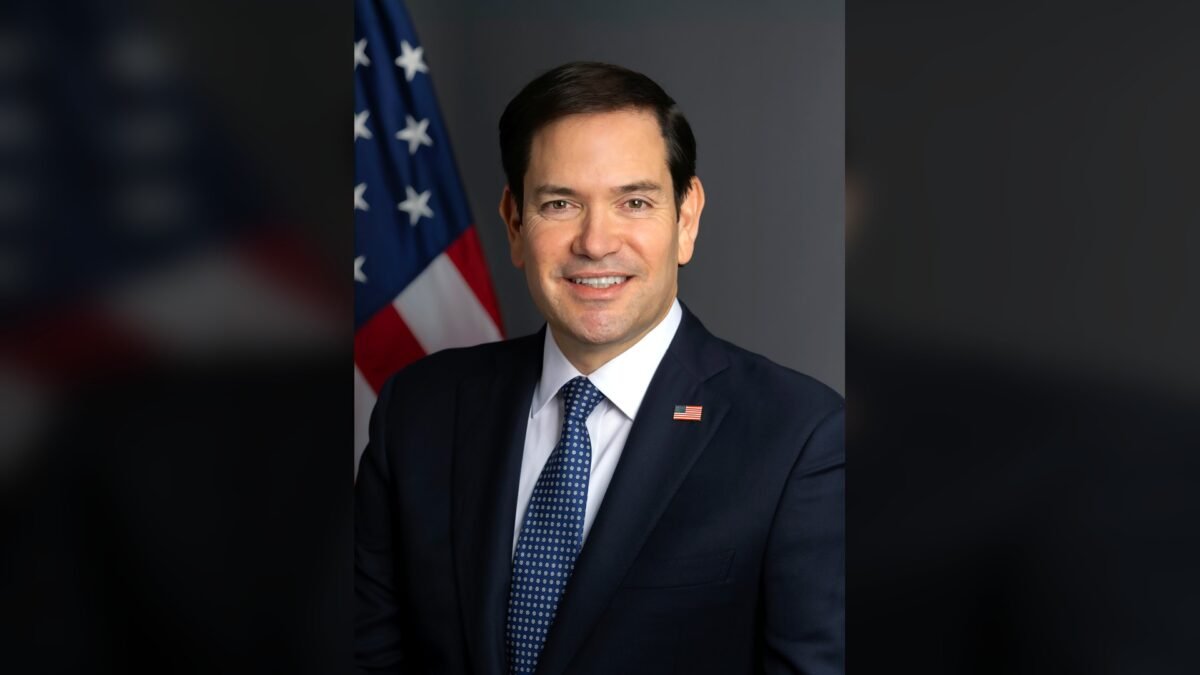
At the centre of the room will sit Marco Rubio. The US secretary of state is attending both days of the Paris meeting, according to the Associated Press, and the trip is his first abroad since the midterms. It is also, in the judgement of four G7 diplomats who spoke to Reuters, the moment when allies will discover whether the election result has altered the administration’s approach to Ukraine, the Middle East and its relationships with its closest partners — or whether, as those diplomats warned, foreign policy remains, in their words, “very much under Trump’s control”.
The diplomats signalled to Reuters that the Democrats’ gains could narrow the White House’s room for manoeuvre, but they cautioned against expecting a return to traditional American multilateralism. The gathering, they said, would instead reveal how far the allies can still shape decisions that are ultimately made in Washington.
Ukraine first, with Abu Dhabi looming
Ukraine sits at the top of the agenda, according to Reuters, and the timing is deliberate. The Paris meeting opens a day before US-mediated trilateral talks between Ukraine, Russia and the United States are due to begin in Abu Dhabi on Tuesday, 10 November, and run into Wednesday, 11 November.
According to the Associated Press, President Trump’s envoys Steve Witkoff and his son-in-law Jared Kushner are set to meet both Ukrainian and Russian officials in the Emirati capital to discuss potential compromises. French Foreign Minister Jean-Noël Barrot told RTL radio that, on this occasion, Europeans will be represented, and that France will take part in the Abu Dhabi talks — a marked change from earlier rounds, when European governments complained of being kept outside the room.
Reuters reported that officials from France, Britain, Germany, NATO and the European Commission are also aiming to be in Abu Dhabi, although they are not expected to take part in the trilateral format itself. The distinction matters: Europe wants a seat at the table where the terms of any settlement are shaped, even if the formal negotiations remain a three-way affair.
The European pressure in Paris will be directed at securing what the French hosts describe as a fair settlement for Ukraine — one that does not force Kyiv to accept disadvantageous conditions. According to Agence France-Presse, as reported by France 24, European powers intend to press the United States to seek such a settlement and to deter Washington from further military action against Iran.
That pressure comes against a sombre military backdrop. Diplomats who spoke to Reuters painted a bleak picture of the situation in Ukraine: while the front line has largely stabilised, making major breakthroughs unlikely for either side, Russia has shifted its tactics towards systematically targeting energy infrastructure in an effort to trigger a nationwide winter blackout.
The shift was on full display over the weekend. According to Reuters, Russian strikes on Sunday hit electricity substations in Ukraine’s Dnipropetrovsk and Zhytomyr regions, and Ukrainian power company DTEK said more than 600,000 people in the Dnipropetrovsk region were left without electricity after an overnight attack on energy facilities. A further 250,000 customers lost power in the Kharkiv region, according to local officials, and the Zaporizhzhia nuclear power plant — Europe’s largest, currently under Russian control — lost its last external power connection and was forced back onto emergency diesel generators, the International Atomic Energy Agency said.
Reuters reported that shortages of Patriot interceptors and other air-defence systems are now Kyiv’s most urgent military vulnerability, and diplomats said one objective of the G7 meeting would be to sustain pressure on Russia while mobilising additional military, financial and energy support for Ukraine. The war, which began with Russia’s full-scale invasion in February 2022, is grinding towards its fifth anniversary.
Europe’s own divisions are also on the table. According to Reuters, Italian Prime Minister Giorgia Meloni warned on 5 November that Europe risks becoming irrelevant in efforts to end the war in Ukraine if member states continue pursuing separate diplomatic tracks rather than agreeing on a common representative and a common strategy. The warning, diplomats said, is likely to come up in Paris.
Iran: allies sceptical, Washington unmoved
Iran is expected to feature prominently in the discussions, according to Reuters, and here the gap between Washington and its allies is at its widest. The news agency reported that Washington’s G7 allies have repeatedly voiced scepticism over the war and fear that further US military action could worsen rather than resolve the crisis.
President Trump has not ruled out new strikes. According to AFP, as reported by France 24, the president has kept the option open, including against a site known as Pickaxe Mountain, which Washington suspects of housing a nuclear facility — a claim Tehran denies. At the same time, Mr Trump told CNN on Sunday that fresh strikes were “highly unlikely” if negotiations over a strong agreement continued to make progress, while warning that three US aircraft carriers were “locked and loaded”.
Mr Rubio, speaking before flying to Paris, was more cautious than the president. According to the Associated Press, he said the two sides were not “at the verge of a breakthrough”, and he repeated his view that the Iranian demands were “simply not just unacceptable” — language he had used a day earlier, when he called some of the demands “outrageous and ridiculous”. He added that he expected allies to have “a lot of questions” about the conflict and the next steps.
Qatari and other mediators have proposed an interim solution to break the deadlock over the conflict with Iran, according to the Associated Press, after months of fighting that has sent fuel prices soaring and disrupted shipping in the Strait of Hormuz and the Red Sea. The war, which began in late February 2026, is now in its ninth month.
The economic pressure campaign around the conflict continued to tighten over the weekend. According to Al Jazeera, as reported by The Hindu BusinessLine, the United States has asked Iraq to close almost all of its commercial border crossings with Iran, leaving only two operational, as Washington intensifies its effort to isolate Tehran. Iraqi Foreign Minister Fuad Hussein disclosed the request in an interview with Al Jazeera, and said the continued disruptions and the maritime blockade in the Strait of Hormuz had cost Iraq some 60 billion dollars.
Iran’s foreign minister, Seyed Abbas Araghchi, issued a fierce warning in response, according to the same report, telling the White House to accept Tehran’s proposal to end hostilities on all fronts or face severe military retaliation. Mr Araghchi also said diplomatic efforts to broker a cessation of hostilities had hit an impasse, which he linked to the political volatility in Washington after the midterm elections.
A meeting moved, a communique abandoned
The Paris gathering itself carries the marks of a continent under strain. The meeting had long been scheduled to take place in Marseille, the southern port city, but was moved to Paris at the last minute. According to Reuters, the move was made for security reasons after weeks of protests across France. French officials publicly cited scheduling reasons for the change, according to AFP, and Marseille will instead host the launch of a 14-port network against drug trafficking.
The protests that prompted the move have swept France for weeks. In late October, some 320,000 people marched across the country in a third weekend of youth-led demonstrations, according to reporting at the time, and unrest has spread across Europe. The G7 talks in Paris coincide with major protests across the continent, including in the French capital, according to the Associated Press.
Expectations for the meeting are deliberately low. The French hosts have already signalled that the gathering will not produce a joint communique, according to the Associated Press — the same outcome as the larger G20 foreign ministers’ meeting that Mr Rubio hosted in Atlanta just over a week ago, which produced little consensus on any major global issue.
The contrast between the two gatherings is instructive. The G20, which includes Russia and China, is a forum of the world’s 20 largest economies. The G7, by contrast, is made up entirely of US allies. Yet, as the Associated Press noted, the differences among those allies are likely to confound the top diplomats once again.
Ministers from Ukraine, Saudi Arabia, Egypt, South Korea and Brazil are also attending parts of the Paris meeting, according to Reuters, alongside the G7 members and the European Union. The French hosts have invited Brazil, Egypt, Saudi Arabia and Ukraine to take part in some of the discussions, according to the Associated Press, and the agenda stretches well beyond the two wars: Africa, China, Cuba and Haiti are all listed as priorities by the French Foreign Ministry, alongside a session on artificial intelligence and a separate session on support for Ukraine.
On the sidelines on Monday, the French Finance Ministry is hosting a donor conference to raise funds to repair the dome protecting the nuclear reactor that exploded at Chernobyl in 1986, after it was damaged in a Russian strike last year, according to AFP.
Lebanon and the ICC: two more fault lines
The talks could also expose differences between Paris and Washington over Lebanon, according to Reuters. France is pushing for discussions on a new UN-backed security framework to replace the current arrangements in southern Lebanon, and has floated options including a French-Italian international force. While French officials privately acknowledge American reluctance to embrace some of those ideas, diplomats told Reuters that the G7 offers an opportunity to narrow the differences as the expiry of the existing arrangements at the end of the year draws nearer.
Another fault line runs through the International Criminal Court. According to the Associated Press, the Trump administration has rattled its G7 partners on issues including support for Ukraine and NATO and opposition to the court. All of the G7 members except the United States belong to the court, and all except Japan — which has a separate treaty alliance with the US — are members of NATO.
The administration has imposed severe sanctions on the ICC and a number of its employees, saying the court is trying to investigate Americans. Allies have been told, according to the Associated Press, that “if they don’t want us to take these actions against the ICC, then they should convince the ICC to wake up and realize that they do not have jurisdiction over citizens of countries that are not members,” in Mr Rubio’s words on Sunday.
The ICC dispute is one of several in which the administration has pressed its allies to accept American positions rather than negotiate them. It is also a reminder that the Paris meeting is taking place in a year when the old assumptions about the alliance have been repeatedly tested — by the Iran war, by the approach to Ukraine, and by the administration’s open scepticism towards the institutions its partners built.
Rubio, the man in the middle
All eyes in Paris will be on Mr Rubio himself. According to Reuters, the secretary of state is viewed as a potential contender for the Republican presidential nomination in 2028, and his visit is his first appearance before allies since the elections. Unlike at the last G7 foreign ministers’ meeting in March, when he attended for only one day, he is due to be present for both days this time.
According to the Associated Press, Mr Rubio is seen by many as presenting a gentler side to Mr Trump’s often brusque approach to both friends and foes. But there has been speculation — which he has denied — that he might choose to leave the administration early to prepare for a 2028 presidential run.
Asked about allies wanting to know what comes next after the elections, Mr Rubio told reporters that the countries he is meeting this week understand American politics and “they, too, have experienced divisions in government and divisions in their own system,” according to the Associated Press. There has been little sign, the news agency noted, that the Democrats’ gains will affect Mr Trump’s strategy, and his first major personnel decision since the election has installed a hard-line supporter, Stephen Miller, as chief of staff. Mr Miller has advocated extreme positions on both domestic and foreign policy.
Mr Rubio also offered a note of cautious optimism on Ukraine before leaving Florida. According to the Associated Press, he said postwar security guarantees for Ukraine and the rest of Europe had been a top concern for allies, and that “there’s been some advances made in what that architecture could look like post-conflict.” He added: “Nothing’s been finalized yet, and maybe some progress can be made in Abu Dhabi.”
The meeting is one of the final acts of the French G7 presidency, which saw President Emmanuel Macron host Mr Trump for the leaders’ summit this summer in the lakeside resort of Evian, according to AFP. Washington will take over the G7 presidency from France in 2027 — a handover that will put the United States in charge of setting the agenda for the group it has spent much of this year challenging.
Analysis: Why It Matters
The midterms changed the arithmetic, not the president
The central question hanging over Paris is whether an election defeat changes a foreign policy. The honest answer, on the evidence available so far, is that it changes the arithmetic around the president without changing the president. The Democrats’ capture of both chambers of Congress gives them real powers from January — over spending, over investigations, over the confirmation of officials — and it plainly narrows the White House’s room for manoeuvre, as the diplomats who spoke to Reuters acknowledged. But foreign policy in this administration is, in their own phrase, “very much under Trump’s control”, and the first personnel decision after the defeat was to install Stephen Miller, the hardest of hard-liners, as chief of staff. That is not the move of a president preparing to trim his sails. The allies in Paris are therefore engaged in a delicate exercise: testing how much space the election has opened up, while knowing that the man who decides has not signalled any change of direction. The value of the meeting lies less in what it decides than in what it reveals about how much room the allies believe they still have.
Ukraine: the test is whether Europe gets a voice, not a veto
The Abu Dhabi talks opening on Tuesday are the real prize, and Paris is best understood as the staging post. What matters is not whether Europe is invited to sit in the room — France has secured that much — but whether European participation changes the substance of what is offered to Kyiv. The pattern of the past year has been that Washington negotiates, Europe worries, and Ukraine discovers the terms late. Mr Rubio’s remark that “some advances” have been made on postwar security guarantees, and that “maybe some progress can be made in Abu Dhabi”, is the most encouraging signal the allies have had, but it is deliberately vague: nothing, he stressed, has been finalised. The danger the Europeans see is a settlement that trades Ukrainian territory or sovereignty for a ceasefire that leaves Russia free to rebuild — the “Yalta 2.0” that President Zelenskyy has warned against. The weekend’s strikes on the power grid sharpen the point: Russia is using the winter as a weapon, and every week of delay in air-defence supplies costs Ukrainian civilians heat, light and water. If Paris produces a concrete commitment on Patriots and on energy support, it will have mattered. If it produces only language, the Abu Dhabi talks will proceed on Washington’s terms alone.
Iran: the allies’ scepticism is now the policy gap
On Iran, the G7 is not divided over tactics so much as over the premise. Washington’s allies have, in Reuters’ words, “repeatedly voiced scepticism over the war”, and their fear is that further military action will worsen a crisis that diplomacy has so far failed to resolve. The president’s own messaging underlines the incoherence: on Sunday he told CNN that fresh strikes were “highly unlikely” if talks progressed, while also boasting of three carriers “locked and loaded” and of 38 bridges that could be knocked down “in literally one hour”. Mr Rubio, meanwhile, says the sides are not close to a breakthrough and calls Tehran’s demands unacceptable. The allies’ problem is that they are being asked to support a policy whose objectives keep shifting — from destroying a nuclear programme, to forcing a deal, to deterring further attacks — without a clear account of what success looks like. The Iraqi border-closure request and the Qatari interim proposal show the campaign widening even as the diplomacy stalls. Paris will not resolve that contradiction, but it will show whether the allies are willing to say so in the room.
Europe’s own disunity is part of the story
It would be a mistake to read Paris as a simple contest between a united Europe and a wayward America. Giorgia Meloni’s warning that Europe risks irrelevance if it keeps pursuing separate diplomatic tracks is the most pointed criticism of the week — and it came from inside the European camp, not from Washington. The G7 has always been a forum where European governments disagree with each other as much as with the United States, and the Ukraine question has exposed that: France wants a European seat at the table, Italy worries about the absence of a common strategy, and the smaller states fear being presented with a fait accompli either way. The move from Marseille to Paris, forced by weeks of protests at home, is a reminder that several of these governments are themselves politically fragile. A G7 that cannot agree among its European members cannot credibly press Washington. The real test of the next two days may be whether the Europeans leave Paris with a single position to take to Abu Dhabi — or with seven.
A communique-free meeting is a verdict, not an accident
That the French hosts have already announced there will be no joint communique should be read for what it is: an admission, made in advance, that the group cannot agree on paper. A communique is the lowest-cost product of a summit — a text everyone can sign — and its absence means the disagreements are too sharp even for that. The G20 meeting in Atlanta produced the same result a week ago. Two communique-free meetings in a row, in two different groupings, suggest something structural rather than circumstantial: the era in which the world’s leading democracies could reliably produce a shared statement of purpose is, for now, over. That does not make the Paris meeting pointless — the conversations, the bilateral encounters and the signals sent to Moscow, Tehran and Kyiv all matter — but it does mean the G7’s public voice is weaker than at any point in its fifty-year history. When the history of this period is written, the silence of the communiques may be as telling as anything said in the rooms.
What to Watch Next
- The Abu Dhabi talks, Tuesday and Wednesday: Whether Witkoff and Kushner produce anything concrete with Ukrainian and Russian officials — and whether the European delegations present in the Emirati capital are allowed into the substance of the discussion, or kept to the margins.
- Any announcement on air defence for Ukraine: Whether the G7 meeting produces a specific commitment on Patriot interceptors or energy support, rather than general language, as Russia’s campaign against the power grid continues into the winter.
- Signals on Iran after Paris: Whether the allies’ scepticism produces any public restraint on further US strikes, or whether the president’s “highly unlikely” remark hardens into a pause — and what Tehran offers in return.
- The Lebanon question: Whether Paris and Washington narrow their differences over a new UN-backed security framework for southern Lebanon before the existing arrangements expire at the end of the year.
- The 2027 handover: How the United States, which takes over the G7 presidency from France in 2027, signals its intentions for the group — and whether the allies begin to plan for a year in which Washington sets the agenda.
Sources
- Reuters — “G7 allies to assess impact of Trump’s midterm setback at Paris talks”
- Associated Press — “Rubio will discuss Iran, Ukraine, AI and more with G7 allies in France”
- France 24 — “Europe to press US on Ukraine peace and Iran at Paris G7 ministers talks”
- Reuters — “Russia says hit power substations in Ukraine and three ships in Black Sea”
- The Hindu BusinessLine — “US presses Iraq to close nearly all commercial border crossings with Iran”
- Bytes Europe — “G7 Ministers meet on efforts to end Ukraine conflict, halt new Iran war”

About the Author — Abdul Mannan
Related Articles

At Least 21 Dead as Migrant Boat Capsizes off Senegal’s Coast on the Atlantic Route to Europe
At least 21 people have died after a pirogue carrying migrants capsized off Kébémer in north-western Senegal, with…
Four Killed and 88 Injured as Two Passenger Trains Collide South of Cairo in Egypt’s Al-Ayyat District
Two passenger trains collided near Al-Ayyat in Giza province on Sunday, killing at least four people and injuring…
Three Tankers Ablaze in the Strait of Hormuz as Missiles Target Riyadh in Sharp Escalation of the Iran War
Iran's Revolutionary Guard says three oil tankers exploded and caught fire in the Strait of Hormuz early on…