
Barclays Circles Metro Bank as £1.2 Billion Takeover Interest Emerges a Week After Challenger Put Itself Up for Sale

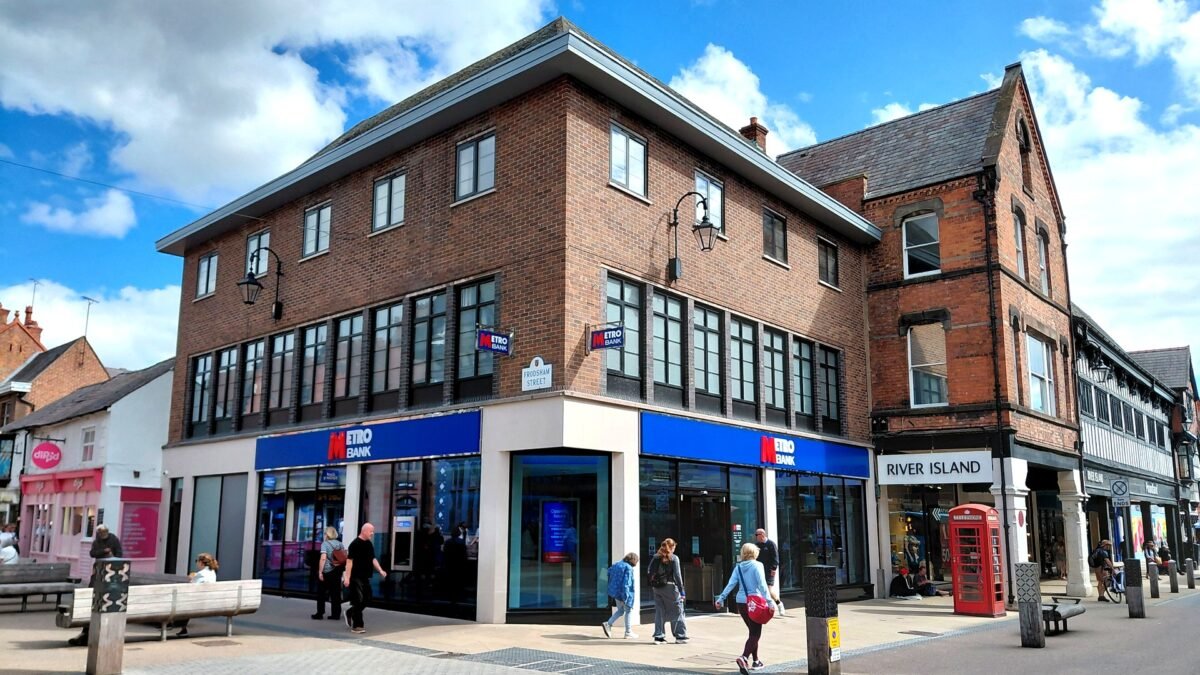
Barclays is among the early suitors circling Metro Bank after the challenger lender put itself up for sale, Bloomberg News reported on Friday, in a deal that could value the bank at about £1.2 billion and hand one of Britain’s biggest lenders nearly three million new customers and 78 high street branches.
Metro Bank is attracting early takeover interest from Barclays and the private equity firms Lone Star Funds and Centerbridge Partners, Bloomberg reported, citing people with knowledge of the matter. The report was carried by Reuters on Friday morning. Deliberations are at an early stage, Bloomberg said, and additional potential buyers could emerge. None of the parties involved has confirmed the report, and Metro Bank, Barclays, Lone Star Funds and Centerbridge Partners did not immediately respond to a request for comment from Reuters.
The Sun, reporting the same Bloomberg story, put the potential price tag at £1.2 billion. That figure should be treated with care: the Bloomberg report itself gave no confirmed price and no timetable, as the Europe Says summary of the report noted. The Times, in a separate piece on the sale published earlier in the week, put the price tag at about £1.3 billion. The gap between the two figures is a reminder of how early this process is. What is not in doubt is that a bank which nearly collapsed three years ago is now, in the words of one City analyst, “in play”.
Metro’s shares did not rally on the news. The stock stood at 175.6p in a delayed quote at 8.45am on Friday, down 1.13 per cent from Thursday’s close of 177.6p, in a range of 171.2p to 177p. Nothing in the trading so far shows that the report itself drove the fall. The muted reaction is itself informative: investors have had a week to price in a sale, and the identity of the buyer matters far more than the fact of a process.
For Metro’s roughly 2.7 million customers, nothing changes today. The bank said when it launched the sale process that its accounts, cards, app and branches would continue to operate as normal, and The Sun reported on Friday that no major changes have been announced for customers. Deposits are protected by the Financial Services Compensation Scheme, which has covered up to £120,000 per person, per banking licence, since 1 December 2025. Any buyer would need regulatory approval before taking control, a process that takes months rather than days.
The sale process so far
Metro Bank announced its formal sale process on Thursday 12 November 2026, inviting offers for the whole company as part of a strategic review. The announcement was made under Rule 2.4 of the Takeover Code, which requires a company to disclose when it is in an offer period. Crucially, the bank said at the time that it was not in active discussions with any potential offeror and had received no approach. That distinction matters: Metro put the “for sale” sign up itself, rather than responding to an unsolicited bid.
The Takeover Panel allowed interested parties to remain unnamed and disapplied the usual 28-day “put up or shut up” deadline, which would otherwise have forced any suitor to make a firm offer or walk away within four weeks. Morgan Stanley is acting as lead adviser, and a non-disclosure agreement and standstill apply to the process. The company has promised further announcements “as appropriate, including as to timetable”.
The market’s first verdict was enthusiastic. Metro’s shares closed at 178.6p on Wednesday 11 November, the day before the announcement. They jumped about 9.7 per cent to 196p on the Thursday, and ended the following Friday at 189.8p, after touching an intraday 52-week high of 199.8p. At Friday morning’s 175.6p, the shares have given back most of that gain, and sit below the level they traded at before the sale was announced. That drift is not a verdict on the sale itself. It is a measure of how much of the takeover premium was already priced in during the first 48 hours, and how little hard information has emerged since.
The timing of the announcement surprised the City. Barely three months ago, according to The Times, the talk in the City was whether Metro was ready to embark on an acquisition spree of its own after a drastic turnaround led by its chief executive, Daniel Frumkin. Instead, the bank has chosen to test its own value in the market. The question now is not whether Metro is for sale, but who wants it, at what price, and for which part of it.
A bank that nearly died
Metro Bank’s story is one of the most colourful in British banking. It was founded by the American entrepreneur Vernon Hill and the British marketer Anthony Thomson, and granted its licence by the Financial Services Authority on 5 March 2010, the first high street bank to be granted such a licence in more than 150 years. Its first branch opened in Holborn, central London, on 29 July 2010, with longer opening hours, seven-day trading and a deliberately cheerful, customer-first style that was meant to shame the established banks into treating their customers better. Hill, who was rarely photographed without a Yorkshire terrier, always named Duffy, built the brand around its branches, which it calls “stores”.
The bank floated on the stock market in 2016, and at its peak carried a market value of £3.5 billion. Then, in January 2019, it admitted that it had classified a portfolio of commercial loans incorrectly for capital purposes, meaning it had not held enough capital to meet regulatory requirements. The error applied to around 10 per cent of its loan book, or about £900 million of lending that had been rated as less risky than it really was. Metro announced a £350 million share issue and said it would scale back its growth plans. Its share price fell 40 per cent in the month after the announcement and 75 per cent in less than four months, and large depositors began withdrawing cash.
Hill left in 2019. Daniel Frumkin, hired only three months earlier from a bank in Bermuda to become chief transformation officer, became chief executive in February 2020. The real crisis came in October 2023, when news of Metro’s attempts to raise £600 million in fresh funding caused customers to panic. A frantic weekend followed in which Frumkin battled to keep the bank afloat, and was credited with avoiding a Bank of England rescue by winning the support of the Colombian billionaire Jaime Gilinski Bacal, who already held a 9 per cent stake.
The rescue package agreed that October was worth £925 million: a £325 million capital raise, made up of £150 million of new equity and £175 million of new loss-absorbing debt, plus £600 million of debt refinancing. About 90 per cent of shareholders approved it. Gilinski, a former investment banker, provided £102 million of equity at 30p a share and ended up with a 53 per cent stake, taking control of the bank through his investment vehicle, Spaldy Investments. It was, by any measure, a near-death experience.
Frumkin’s turnaround since then has been drastic. He cut more than 1,000 jobs, pivoted the bank away from residential mortgages and towards business banking and specialist, higher-yielding lending, and sold about £2.5 billion of prime residential mortgages to NatWest in July 2024. The numbers now tell a different story from the one investors were reading three years ago. Metro recorded a pre-tax loss of £212.1 million in 2024. In 2025 it made a pre-tax profit of £87.2 million, the highest in its history, on revenue of £593.3 million, with underlying pre-tax profit of £98.1 million and net income of £69.7 million. Total assets stood at £16.5 billion and total equity at £1.48 billion. In the first half of 2026, pre-tax profit rose 41 per cent to £61 million, the most profitable half-year in the bank’s history, according to The Sun’s report of the results.
The bank says it now runs with the lowest cost of deposits of any UK high street bank, and it has set itself return-on-tangible-equity targets of above 13 per cent in the final quarter of 2026, above 15 per cent in 2027 and above 18 per cent in 2028. Those targets, if met, would put Metro among the better-performing British lenders. The scars remain: in November 2024 the Financial Conduct Authority fined Metro £16.7 million because, between June 2016 and December 2020, its systems did not properly monitor more than 60 million transactions worth over £51 billion for money laundering. But the fine related to the old Metro. The bank being sold today is a smaller, leaner, profitable institution with a controlling shareholder who wants out.
Why Barclays would want it
Barclays is the most logical trade buyer, and its interest fits a strategy its chief executive, C.S. Venkatakrishnan, known as Venkat, has been building in plain sight for three years. Barclays’ UK retail strategy has two pillars, as Venkat set out on the bank’s third-quarter results call in October: first, to reposition the business into a multi-brand franchise that extends its reach and lets it tailor services to different kinds of customers; and second, to establish Barclays as the premier UK bank, with the best customer service among its peers.
Metro would serve both pillars. Its 2.7 million customers and 78 branches would add scale to a retail franchise that Barclays has already been expanding by acquisition. In February 2024 Barclays agreed to buy Tesco Bank’s retail banking business for £600 million, a deal completed on 1 November 2024 that brought in £4.2 billion of credit card receivables, £4.2 billion of unsecured personal loans, £6.8 billion of customer deposits and around 2,800 employees, alongside a 10-year agreement to market Tesco-branded cards, loans and deposits. Tesco Bank now accounts for 20 per cent of Barclays’ card acquisitions and is a key lever in its deposit strategy, and Barclays expects £0.2 billion of cost synergies from the deal, mostly in 2027 and 2028. A year earlier it bought Kensington Mortgages; balances there have more than tripled since the acquisition.
Venkat said on the same results call that Barclays had increased its Premier mass-affluent customers by 27 per cent since the end of 2023, driving deposit growth of 23 per cent in that segment, and that the bank’s UK corporate franchise was being resegmented to focus on capital allocation and technology. In the third quarter of 2026 the group reported income up 3 per cent and a return on tangible equity of 11.7 per cent, maintaining its trajectory towards its 2026 financial targets.
What Metro offers Barclays, above all, is deposits. The bank’s own pitch to buyers is that it holds cheap, sticky retail and small-business deposits, gathered through branches that stay open seven days a week and through a relationship-banking model aimed at small businesses. Barclays, like every large bank, is fighting for cheap funding, and Metro’s loan-to-deposit ratio of just 71 per cent leaves room to lend more against the deposits it already holds. A deal could also offer savings by removing overlapping costs and technology investment. When Santander acquired TSB last year, according to the M&A Critique analysis of the sector, it targeted cost savings of around 50 per cent. On that kind of arithmetic, at least £200 million of savings from a Metro deal would be worth more than £1 billion in today’s money after tax, even after allowing for restructuring costs of perhaps £300 million.
There is a counter-argument, and it was made before Bloomberg’s report even landed. Gary Greenwood, an analyst at Shore Capital, wrote last Thursday, as quoted by Reuters, that a larger bank “may be reluctant to pay up for Metro Bank’s expensive branch network”. Metro’s branches are big, prominent and costly to run, and they are the heart of its brand. A buyer that does not want them is buying a problem. A buyer that does want them is buying a cost base that Barclays, which has been closing branches of its own, would have to justify to its shareholders.
The other suitors and the price question
Barclays is not the only name in the frame. Bloomberg also named Lone Star Funds and Centerbridge Partners, two private equity firms, as parties that “could consider moves”. No firm offers have been made, and deliberations are at an early stage. The presence of private equity matters because it changes the shape of the deal. A private equity buyer would not need to worry about branch overlap or about merging two banking licences. It would buy the whole company, keep it running, and sell it on or float it again in a few years.
Greenwood’s view, quoted by Reuters, was that “an all-cash sale to private equity appears the cleanest outcome, allowing Gilinski to exit his controlling position”. That is the key to understanding the sale. The biggest winner from any deal would be Gilinski himself. His Spaldy Investments holds about 53 per cent of the bank, a stake built at 30p a share in the rescue. At Friday’s price of around 176p, that stake is worth roughly six times what he paid for it, before any takeover premium. A trade buyer such as Barclays would need to satisfy Gilinski, who controls the company, and would face the question of whether to pay for branches it may not want. A private equity buyer would simply be buying Gilinski out, cleanly and in cash.
The price is the least settled part of the story. The Sun reported a potential £1.2 billion takeover. The Times put the price tag at about £1.3 billion. Bloomberg’s report, as summarised by Europe Says, gave no confirmed price and no timetable, and noted that nothing in the report had been verified by the parties. Metro’s own market value is close to both figures, so they imply a small premium rather than the kind of large premium that would suggest a bidding war. The shares’ jump to 196p on the day the sale was announced, and their drift back to 175.6p since, suggest the market expects a deal at roughly the current price, not a dramatic auction.
Other names have been mentioned in the past. Shawbrook, a listed rival worth about £1.4 billion, was reported to have eyed Metro before, according to the M&A Critique analysis. A merger with another challenger bank would be the most intriguing alternative, creating a bigger challenger with combined scale. But challengers merging with challengers is a harder deal to finance than a sale to a large bank or a private equity firm, and no such approach has been reported in this process.
The regulatory path is also part of the price. Any buyer would need approval from the Bank of England’s Prudential Regulation Authority and the Financial Conduct Authority before taking control, and the Takeover Panel’s rules would govern the timetable once a firm offer is made. The disapplication of the 28-day deadline means there is no forced pace, but it also means the process could drift. Metro has promised further announcements as appropriate. Until one arrives, the market is trading on a newspaper report of early-stage interest, and nothing more.
What it means for Metro’s customers
For the 2.7 million people who bank with Metro, the honest answer is that nothing has changed yet, and that the most likely changes, if a sale happens, are months away. Accounts, cards, direct debits and standing orders continue exactly as before. Branches stay open. The bank remains authorised and regulated, and its deposits are protected up to £120,000 per person, per banking licence, under the Financial Services Compensation Scheme.
The longer-term question is what happens to the brand and the branches. If Metro is bought by a rival bank such as Barclays, The Sun reported, the brand could be phased out entirely and vanish from the high street. The Sun pointed to Halifax, taken over by Lloyds Banking Group in 2009, as an example of a brand being wound down, with its app shut down at the start of this month and the bank set to vanish from the high street. There could also be a risk of some branches closing if a takeover goes through, particularly in locations where the acquiring bank already has a branch of its own.
That risk should not be overstated. Barclays has bought retail banking businesses before without closing the thing it bought on day one: Tesco Bank’s business continues to be operated under Barclays’ ownership, and the Tesco brand is marketed under a 10-year agreement. Kensington Mortgages continues as a brand within Barclays. A private equity buyer would have even less reason to close branches quickly, since the branches are the asset it is buying. And any buyer would need to weigh the cost of the branch network against the value of the deposits and the customers that walk through the doors. Metro’s branches are expensive, but they are also the reason its deposits are cheap.
What customers should watch is not the headlines about price, but the announcements about structure: whether a buyer is a bank or a private equity firm, whether the Metro brand survives, and whether the branch network is kept, cut or sold. Those decisions will be made after a deal is agreed, not before, and they will be subject to regulatory approval. For now, the only certainty is that the bank that nearly failed in 2023 is being courted, and that its customers’ money is protected while the process runs.
Analysis: Why It Matters
Selling from strength, not distress
The most important fact about this sale is that Metro is not being sold because it has to be. Three years ago it was. In October 2023 the bank was hours from a crisis that could have ended in a Bank of England rescue, and it survived only because one billionaire wrote a cheque over a weekend. Today it is profitable, growing, and setting itself return targets that would embarrass larger rivals. A sale now is a choice, not a rescue, and that changes everything about the price. A distressed seller takes what it can get. A profitable seller with a controlling shareholder who can afford to wait can hold out for the right number, or walk away. The disapplication of the 28-day deadline is the clearest sign of that confidence: Metro is in no hurry, and it wants bidders to know it.
The branch network is the argument, and the objection
Every analysis of this deal comes back to the same 78 branches. They are Metro’s identity: big, bright, open seven days a week, staffed by people rather than machines, built on the belief that customers would pay for service with their loyalty. They are also the reason the bank’s costs are high and its returns were, for years, poor. A buyer who values the branches is buying a distribution network that the big banks have spent a decade dismantling. A buyer who does not value them is buying 78 expensive leases and a redundancy bill. Shore Capital’s warning that a larger bank may be reluctant to pay up for the network is not a footnote; it is the central commercial question of the deal. The answer will determine whether the buyer is Barclays, which has branches of its own and would face overlap, or a private equity firm, which would keep the network and try to make it pay.
Barclays is buying deposits, not branches
Look past the branches and the logic of Barclays’ interest becomes clear. Barclays has spent three years repositioning its UK retail bank as a multi-brand franchise, buying Tesco Bank for its cards and deposits and Kensington Mortgages for its specialist lending. Metro fits the same pattern: cheap deposits, small-business customers, and a loan book that can be grown against the deposits it already holds. The Tesco deal showed how Barclays thinks about these acquisitions. It paid £600 million for £6.8 billion of deposits and £8.3 billion of unsecured lending, and it expects the deal to be accretive to returns. Metro would be a bigger, more complex version of the same trade, and the £0.2 billion of cost synergies Barclays expects from Tesco, mostly in 2027 and 2028, shows how patient it is prepared to be. The prize is not the branches. It is the funding base beneath them.
Gilinski’s exit is the deal’s real timetable
Strip away the corporate language and this sale has one decisive shareholder. Jaime Gilinski Bacal owns about 53 per cent of Metro through Spaldy Investments, a stake he built at 30p a share when the bank was fighting for its life. At current prices that stake is worth roughly six times his investment, and a takeover premium would add more. His investment was always a rescue with an exit in mind. The formal sale process is, in substance, Gilinski’s exit process. That is why the private equity route looks cleanest to analysts: it lets one man sell his controlling stake for cash, without the complications of merging two banks, integrating two technology platforms, or closing overlapping branches. Any analysis that treats this as a contest between rival banks misses the point. The contest is between buyers who can give Gilinski a clean exit and buyers who cannot, and that favours cash.
Consolidation is now the City’s default answer
Metro is not an isolated case. British banking is consolidating, and the pace has quickened. Santander bought TSB last year. Barclays bought Tesco Bank. Shawbrook, Aldermore and the other challengers are all, in the City’s phrase, “in play” or “being looked at”. The logic is the same in each case: scale spreads the cost of technology and regulation, deposits are worth more when interest rates are higher, and small banks cannot afford the investment that large banks can. Metro was founded to challenge that logic, to prove that a small bank with good service could beat the giants. Sixteen years later, the giants are buying the challenger. That is not a verdict on Metro’s idea. It is a verdict on the economics of British banking, and it is one that the founders of the next challenger bank will have to answer.
What to Watch Next
- A firm offer, or silence. The Takeover Panel disapplied the 28-day deadline, so there is no forced timetable. The first real test is whether any named party makes a firm offer, and at what price.
- Whether Barclays confirms its interest. Bloomberg’s report rests on unnamed people with knowledge of the matter. A statement from Barclays, or a leak of a formal approach, would turn speculation into a process.
- The private equity angle. Lone Star Funds and Centerbridge Partners are named as potential suitors. Watch for signs of a private equity-led bid, which analysts regard as the cleanest outcome for Gilinski’s exit.
- Metro’s share price. The shares jumped to 196p on the sale announcement and have drifted back to around 176p. A sustained move above 200p would suggest the market expects a bidding contest; a drift lower would suggest it expects a deal at the current price, or none at all.
- The branch question. Any buyer will have to say what happens to Metro’s 78 branches. Watch for statements on the branch network, which is both the bank’s biggest asset and its biggest cost.
- Regulatory signals. A deal of this size would need approval from the Prudential Regulation Authority and the Financial Conduct Authority. Early indications from the regulators about competition and financial stability would shape the timetable.
- Metro’s own results. The bank has set return-on-tangible-equity targets of above 13 per cent in the final quarter of 2026 and above 15 per cent in 2027. Hitting them strengthens its hand; missing them weakens it.
Sources
- Reuters — “Metro Bank draws early takeover interest from Barclays and PE firms, Bloomberg News reports”
- The Sun — “Barclays eyeing huge £1.2billion takeover of high street banking rival with 3million customers”
- Europe Says — “Bloomberg Reports Barclays Interest in Metro Bank”
- The Times — “Metro Bank lifted the high street. Will a buyer close its branches?”
- London Stock Exchange (Barclays RNS) — “Completion of the acquisition of Tesco’s retail banking business”
- Wikipedia — “Metro Bank (United Kingdom)”

About the Author — Abdul Mannan
Related Articles

Wall Street Sell-Off Spreads to Asia as S&P 500 Hits Seven-Month Low and Nikkei Plunges 5%
Wall Street fell about 2% on Thursday, with the S&P 500 and Nasdaq at seven-month lows, before the…

Anthropic Closes Record Nasdaq Debut at $97.17, Up 17%, After Opening Pop Briefly Valued It at $2 Trillion
Anthropic closed its first day on the Nasdaq at $97.17, up 17% on its $83 IPO price, after…

Walmart Beats Forecasts as Revenue Hits $188.8 Billion and Raises Full-Year Outlook — But Shares Slip
Walmart beat Wall Street's forecasts for its fiscal third quarter, reporting revenue of $188.8 billion and raising its…