
Healey Uses Bank Tax to Fund £100 Energy Payments in First Budget Built for ‘Breathing Space’

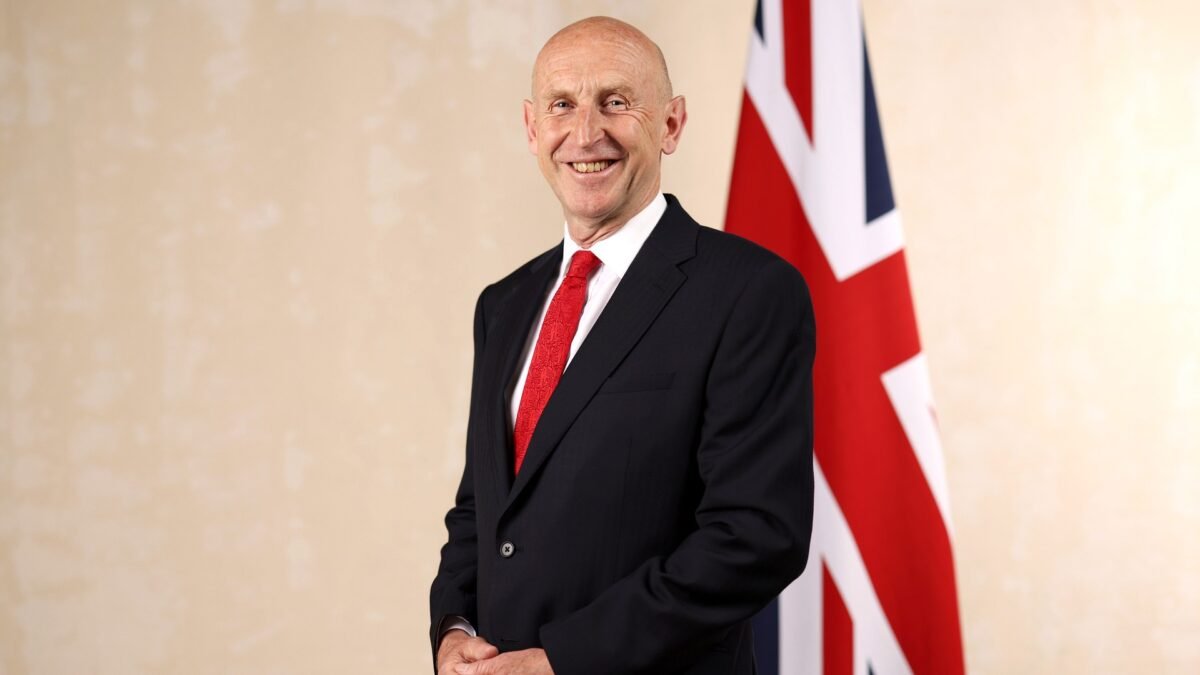
Chancellor John Healey used his first Budget on Wednesday 28 October 2026 to offer immediate help with energy bills, paid for in large part by a temporary increase in the tax paid by banks, while promising a longer programme of reform to energy markets, business rates and the powers held by England’s regional mayors. According to Reuters, the package was deliberately cautious: it avoided broad tax rises and large spending cuts, spent some of the government’s fiscal buffer, and left the most difficult decisions on welfare, defence and public spending to a Spending Review next year.
The headline measure for households was a one-off payment of £100 for about 20 million households in council tax bands A to D, paid directly into bank accounts this winter. According to the Chancellor’s speech, published by GOV.UK, the scheme will cost £2.6 billion and is intended to ease pressure during the coldest months and carry families through to spring. The Scottish, Welsh and Northern Ireland governments will receive their share of the funding, and Mr Healey called on the devolved administrations to provide equivalent help. The payment sits alongside an extension of the temporary cut in value added tax on electricity bills through winter and spring until July, which the Chancellor said would take £50 off the annual price cap. The VAT cut had already been applied to 29 million households in the new government’s first week, according to the speech.
Mr Healey, who became Chancellor on 20 July 2026 after Andy Burnham became Prime Minister, succeeding Rachel Reeves, framed the Budget as a response to what he repeatedly called “global economic storms”. In his speech he pointed to trade tensions dragging on global growth, Russia’s invasion of Ukraine approaching the end of its fifth year, and the war in the Middle East. According to GOV.UK, oil had risen from around $70 a barrel to well over $100, while gas prices had nearly tripled since February. The Chancellor said inflation, which had been expected to fall to the 2% target earlier in the year, had risen instead, driven by higher oil and gas prices. Reuters reported that Britain’s regulated domestic price cap had risen by 4% in October and that some forecasts expected a rise of around 20% in January, taking a typical annual bill to more than £2,000. The Budget, in Mr Healey’s phrase, was therefore built on fiscal discipline but designed to give households and businesses “breathing space”.
The fiscal arithmetic set out by the Office for Budget Responsibility was central to that argument. According to the Chancellor’s speech, the OBR expects the economy to grow by 1.2% this year, followed by 1.0% next year, 1.6% in 2028, 1.8% in 2029, 1.7% in 2030 and 1.6% in 2031. The forecast for this year was an upgrade from the 1.1% expected in March, while the forecast for next year was cut sharply from 1.6%. Borrowing is forecast to fall from 4.2% of gross domestic product this year to 3.4% next year, then to 2.9%, 2.1% and 1.8% in the following years. Government debt is put at 83.2% of GDP this year, rising slightly before falling to 81.7% by 2031-32. The OBR also confirmed that headroom against the government’s stability rule — the buffer that allows day-to-day spending to be covered by tax receipts — would be £15 billion in 2029-30, rising to £22 billion in 2030-31. Mr Healey said he had chosen to use some of the headroom established last year to absorb the impact of the war in Iran and protect family budgets, and that the Budget put Britain on track to eliminate the current budget deficit and move into surplus within three years. He also warned that the OBR expected Britain to spend £14 billion more on debt interest this year, a figure he linked directly to higher borrowing costs across the Group of Seven economies.
Energy was the thread that ran through the whole statement. Beyond the £100 payment and the VAT extension, Mr Healey announced that standing charges on household gas bills would be removed from next year, through the regulator Ofgem, with similar reforms to follow for electricity bills. According to Reuters, those fixed daily charges cost a typical household about £108 a year, regardless of how much gas is used. The Treasury said the cost would be shifted onto the price of gas consumed, saving about 60% of account holders an average of £45 a year, while heavier users could pay more. The Chancellor described gas standing charges as unfair and outdated. He also said the government would scrap the Gas Shipper’s Obligation, a levy on bills that funds hydrogen projects, and back those projects directly from government instead, under a new Cost Control Framework intended to drive down every element of energy bills. Older renewable-energy projects would be moved onto fixed-price contracts to loosen the link between household bills and international gas prices, new clean-power projects would be bought and built only when they lowered bills and could connect to the grid, and cheaper, faster grid connections would be built through GB Grid.
The energy package also contained a decision that drew attention for what it signalled about the government’s priorities. According to the Chancellor’s speech, the Energy Secretary had approved the Jackdaw gas field the previous week, a step Mr Healey called a pragmatic, common-sense decision that would protect hundreds of jobs and add an estimated £2.9 billion to the UK economy. He insisted at the same time that the government remained unshakeably committed to net zero by 2050, and said cheaper energy was now the government’s first priority, with clean power the key to achieving it. A new Energy Wealth Fund was also launched. For businesses, a new British Industrial Competitiveness Scheme will take 25% off electricity bills for 10,000 firms at the heart of British industry, going live in April with backdated payments for energy costs this year, according to the speech.
To pay for the household help, the Chancellor turned first to the banks. According to Reuters, the bank surcharge on profits above a set threshold will rise from 3% to 6% for 15 months from January, doubling the surcharge for a fixed period. Mr Healey told the House of Commons that Britain’s banks made a huge contribution through the tax they paid and the jobs and investment they supported, and that he celebrated and was grateful for their role. He then said he was looking to the banks to help fund breathing space for families. The increase was smaller than some in the City had feared before the Budget, and bank shares rose after the announcement. According to The Times, NatWest and Lloyds Banking Group each rose by more than 3%, while the FTSE 100 ended the day up 0.2% at 10,706.21 after falling earlier in the session. Yields on UK government bonds, which had edged higher before the speech, retreated afterwards, and the pound pared earlier losses against the dollar, according to The Times. Sharecast reported a similar market response, noting that NatWest rose by 4% and Lloyds by 4%, and that the increase in the surcharge was not as steep as feared.
Motorists and workers received smaller, more targeted measures. The 5p cut in fuel duty, first introduced in 2022, will be extended through winter and spring until July, and fuel duty rates will remain frozen for a sixteenth year, according to Reuters and the Chancellor’s speech. The higher mileage rate for people who use their own car for work will rise from 25p to 35p a mile, and the increase to the standard mileage rate introduced earlier this year will be made permanent. The National Minimum Wage and the National Living Wage will both rise by 3.9%, according to Reuters, affecting 2.3 million of the lowest-paid workers, according to the Chancellor’s speech. To help with the weekly shop, tariffs on more than 100 supermarket products will be suspended. Pensioners will benefit from a new Pension Tax Allowance, under which pensioners with income up to the value of the full new State Pension will not pay income tax in this Parliament, according to the speech. Former mineworkers were promised that every penny of their pension fund surplus would now go to miners, with work continuing towards the full transfer of the guarantor’s fund. The cliff edge in Carer’s Allowance, under which a person could lose the whole allowance by earning a penny over the threshold, will be removed. A sum of £15 million was announced for organisations such as Dolly Parton’s Imagination Library and BookTrust, which give books to children. Self-employed fathers and partners will become eligible for paid parental leave for the first time.
Small businesses were a second focus. According to Reuters, the threshold for Small Business Rate Relief for retail, hospitality and leisure businesses will rise from £12,000 to £18,000, taking 70,000 businesses out of paying business rates altogether. Mr Healey told MPs that meant half of shops, restaurants and gyms would pay no business rates at all, while other businesses in those sectors would have their rates frozen in real terms so that none faced an above-inflation rise for two years. The relief will be funded in part by higher taxes on gambling. According to the speech, Machine Games Duty will rise from 20% to 25% for higher-stakes machines, while pubs and seaside arcades will be protected. Adult gaming centres and vape shops will be carved out of business rates reliefs. Online marketplaces such as Amazon, eBay and Temu will be made responsible for collecting VAT owed by retailers selling on their platforms from October 2027, a change Reuters said would help fund the business rates cuts for physical shops. A £10 million alcohol duty relief for around 2,000 small British brewers and cider makers was also announced.
On savings and investment, the Chancellor reversed a plan inherited from his predecessor. According to Reuters, he kept the amount that can be invested in a tax-free cash Individual Savings Account at £20,000 for all investors, instead of cutting it to £12,000 for people under 65. He said he would work with the sector to create a new Starter ISA to reward first-time investors. At the same time, the rates of tax on income from property and savings will rise by a further two percentage points from April 2027, with no change to tax on income from dividends or employment, according to the speech. Mr Healey said 88% of people would pay no more tax on their savings. The threshold for Business Asset Disposal Relief in capital gains tax will fall from £1 million to £500,000, with no change for three in four claimants, according to the speech. A new Founder’s Relief will apply a 10% rate to lifetime gains of up to £10 million for the founders of the most successful firms. The trading allowance, the amount that can be earned from a new venture tax-free, will triple from £1,000 to £3,000, and a Young Entrepreneurs Allowance will cover a year of living costs for young founders.
Devolution was presented as the Budget’s structural reform. According to the Chancellor’s speech and Reuters, England’s regional mayors will be able to keep 20% of business rates revenues from next year and a share of income tax receipts from 2028. By the end of the decade, 100% of business rates will be retained locally. Mayors and other strategic authorities will gain powers from 2028 to introduce an overnight visitor levy. New Good Growth Funds for mayors, incubator capital for areas without mayors, flexible funding for local economies and a further £1.5 billion of devolved loans for mayoral authorities were announced, backing projects including the Black Country Metro extension, regeneration at Gateshead Quayside, the reopening of Doncaster Airport, the Trent Sports District and the Bakerloo line extension. Mr Healey called it the most radical act of devolution in a generation and the biggest wave of devolution in a generation, arguing that local leaders should not have to come to Whitehall for permission to build a tram or a concert hall, and that areas which helped businesses grow should keep more of the proceeds.
Defence and Ukraine formed a substantial part of the closing sections. According to the speech, Mr Healey and the Prime Minister had spoken to President Volodymyr Zelenskyy on the morning of the Budget to set out the commitments. The Budget provides £10 billion of additional economic and military support for Ukraine, based on loans, export finance guarantees and £500 million of urgent military funding for this winter. Reuters summarised the package as £500 million of emergency funding, £7 billion of economic support over three years and £3 billion in export finance capacity. Mr Healey said Britain would stand with Ukraine for as long as it took and that the whole House and the whole country were united on the point. On British defence, he said the Defence Investment Plan would be fully funded, including through capital reprioritisation across Whitehall, and confirmed that the Spending Review next year would set out how Britain would meet its NATO commitment to spend 3.5% of GDP on defence by 2035, with a target date of 2030 for 3%. A new Innovative Defence Finance Taskforce will examine more innovative financing, treaty negotiations will begin on a multilateral defence mechanism or bank with Finland, Poland and the Netherlands, and the National Wealth Fund and the British Business Bank will deploy up to £5 billion over four years on defence, dual-use technology and sovereign capability.
Housing and homelessness also received new money. According to the speech, a further £430 million will keep open a route off the streets for rough sleepers for the rest of this Parliament, not just this winter. Mr Healey called rough sleeping a moral mission and said more than 170,000 children would sleep in temporary accommodation that night. An additional £1.5 billion was provided for the Social and Affordable Housing Programme, taking total government backing for council housing to £40 billion, according to the speech, with cheaper borrowing for councils extended and land sold to social housing providers made VAT-free. Building regulations will see no major changes in this Parliament except where critical for safety, and biodiversity requirements will be removed for more brownfield sites. A new First Time Buyer ISA will replace the Lifetime ISA, the Lifetime ISA penalty will be dealt with so that a buyer whose home costs more than the limit gets back at least what was put in, and from next spring a new Your First Home equity loan scheme, funded with £4.7 billion of government-backed lending according to Reuters, will help first-time buyers without family wealth behind them.
Welfare reform was deliberately left unfinished. Mr Healey said the government would bring down the welfare bill in what he described as a Labour way, but declined to set out new announcements until reviews by Alan Milburn and Stephen Timms were published. According to the speech, their final reports will be published next month, with the government’s response before the end of the year, a White Paper and legislation to follow next year. From 2030, the triple lock on the State Pension will be adjusted so that the pension rises every year in line with earnings and inflation, a change the Chancellor said would save £15 billion a year by the end of the 2030s and £50 billion by 2050, alongside a new National Care Service. The Budget also announced investment in artificial intelligence and public-service reform, including an extra £500 million for AI safety and security, £140 million for a Sovereign AI Unit, a new British Data Centre Covenant requiring data centre operators to invest in local communities, create jobs and protect water supplies in return for priority grid connections, and a review of NHS productivity and AI. The National Wealth Fund and the British Business Bank will receive a further £20.4 billion over the coming years, according to the speech, supporting 140,000 jobs, and more than £1 billion of new life sciences investment was announced alongside a £2.5 billion Rolls-Royce investment in next-generation turbine engine technology in the United Kingdom.
The opposition response was sharp. Conservative leader Kemi Badenoch described the Budget as “not good enough, not strong enough, not bold enough”, according to The Times, and said the United Kingdom remained overspent, overborrowed and overtaxed and was drowning in what she called an out-of-control welfare system. She said Mr Healey had received a “hospital pass” from his predecessor, and argued that Britain was borrowing simply to pay the interest on its debt. She also questioned the scale of the package and said the new tax on savers would penalise the prudent, according to reports of the debate. Before the Budget, industry groups had warned that a heavier tax burden on banks could reduce lending and investment or push activity elsewhere, and the Conservative shadow chancellor had argued that a raid on financial services would stifle growth. Those warnings help explain why the market reaction mattered so much on the day: a levy that had been feared as larger, and permanent, arrived smaller and time-limited, and shares in the banks it taxed rose rather than fell.
Analysis: Why It Matters
1. A Budget designed to be felt before it is judged
The most important choice in this Budget is its order of operations. Help arrives first, in cash, this winter; reform arrives later, in regulation, next year and beyond. A £100 payment does not solve an energy crisis, and the Chancellor did not pretend that it did. Its value is different: it is visible, it is universal within its council tax bands, and it does not require a household to apply, claim or understand a new scheme. The same logic applies to the VAT extension and the fuel duty freeze. Each measure is small on its own, but together they create a winter in which the government can say it acted, while the larger question — why British energy bills remain so exposed to world gas prices — is addressed through slower machinery: fixed-price contracts for older renewables, grid reform, the removal of levies from bills, and a new framework for controlling costs. That sequencing is politically understandable and economically honest only if the second half actually happens. A payment that is not followed by reform becomes an annual expectation. Reform that is promised but not delivered becomes a future Budget’s excuse. The test of this Budget will therefore not be felt in January, when the payment lands, but in the winters after next, when households discover whether the standing-charge change, the VAT position and the price cap have genuinely moved.
2. The bank levy is a political bargain, not just a revenue measure
Taxing banks to fund household relief is an old idea with a new justification. Mr Healey framed it as reciprocity: the public supported the banks during the financial crisis, and the banks would now support families during an energy shock. The economics are narrower than the rhetoric. A 15-month surcharge, rising by three percentage points, raises a limited sum relative to the size of the energy package, and the government itself presented it as time-limited and tied to immediate support. Its real significance lies in what it avoided. A larger or permanent increase might have raised more money but would have sharpened the argument, made forcefully before the Budget by City groups and the Conservatives, that higher taxes on financial services reduce lending, deter investment and weaken London’s competitiveness. By choosing a smaller, temporary rise, the Chancellor bought market calm — visible in rising bank shares — at the price of leaving the underlying fiscal gap largely untouched. That is a defensible trade in a week when borrowing costs are high and confidence is fragile, but it also means the Budget does not answer the question of how Britain pays, over a full Parliament, for higher defence spending, a larger housing programme and the rising cost of debt. The levy settles the politics of this winter. It does not settle the arithmetic of the decade.
3. Energy reform promises more than the £100 — but delivery is the test
The energy measures deserve closer attention than the headline payment, because they attempt to change the structure of bills rather than merely soften them. Removing gas standing charges helps lower users most, since the fixed charge forms a larger share of a small bill, but shifting the cost onto unit prices means heavier users may pay more, a trade-off the Treasury itself acknowledged. Moving older renewables onto fixed-price contracts, scrapping the hydrogen levy on bills, and building grid connections faster all point in the same direction: insulating households from the world gas price that has driven the current shock. The difficulty is that none of these changes lowers a bill overnight. Grid connections take years, contracts must be renegotiated, and Ofgem must implement the standing-charge removal in a way that does not create new distortions. The approval of the Jackdaw gas field, presented as a contribution to energy security, sits alongside the net-zero commitment and will be read by critics as a signal that security and affordability now outrank the pace of transition, and by supporters as evidence that the government is willing to use domestic supply while cleaner capacity is built. Both readings can be true at once. What matters is whether, in two or three years, the Cost Control Framework and the other reforms produce bills that are measurably lower and less volatile. If they do, the £100 will look like the first step in a coherent programme. If they do not, it will look like the whole programme.
4. Devolution is the Budget’s longest bet
The most durable part of the Budget may be the least discussed on the day. Allowing mayors to retain a growing share of business rates, and later a share of income tax, changes the incentives facing local government. A mayor who helps a business grow will keep more of the revenue that growth creates, and will be able to borrow and plan against a more predictable local income. That is a genuine transfer of power, not merely a transfer of money, and it aligns with Mr Healey’s argument that growth must happen in every postcode rather than being directed from Whitehall. The risks are equally real. Areas with strong business bases will gain faster than areas without them, and the promise of incubator capital for places without mayors will need to be substantial to prevent devolution from widening the very gaps it is meant to close. An overnight visitor levy, new borrowing powers and locally retained taxes also create new political responsibilities: local leaders will own both the successes and the failures of the projects they fund. The Budget’s list of named projects — from Doncaster Airport to the Bakerloo line extension — suggests the government understands that devolution must be seen in concrete places, not abstract powers. The measure of success will be whether, by the end of the decade, the 100% retention of business rates has produced better transport, housing and jobs in the places that need them most, rather than simply rewarding the places that already had them.
5. Caution now, choices deferred to the Spending Review
For all its detail, this was a Budget that postponed its hardest decisions. Welfare reform awaits the Milburn and Timms reports. The full cost of meeting NATO defence commitments will be set out next year. The future of public-service spending, departmental efficiency and the balance between investment and day-to-day expenditure will be decided in the Spending Review. Even the fiscal buffer was used sparingly: headroom fell to £15 billion in 2029-30, but is forecast to rebuild to £22 billion the following year, a profile that gives the Chancellor room without abandoning discipline. That caution is consistent with the circumstances Mr Healey inherited: high debt interest, a downgraded growth forecast for next year, bond markets watching every fiscal event after the turmoil of recent years, and a new government still in its first 100 days. Caution, however, is not the same as resolution. The OBR’s downgrade for 2027, the £14 billion increase in debt interest, and the scale of the defence and housing commitments all point to a Spending Review in which the government will have to choose between raising more revenue, slowing some ambitions, or finding much larger efficiencies. The Budget’s achievement was to get through a difficult moment without alarming markets or imposing broad tax rises. Its limitation is that the difficult moment has not passed; it has been scheduled.
What to Watch Next
- How the £100 payment is delivered: the timing, the method of payment into bank accounts, the treatment of households in the devolved nations, and whether the government tool for checking council tax bands copes with demand after The Times reported that it crashed following the announcement.
- Ofgem’s standing-charge timetable: when gas standing charges are actually removed in 2027, how the cost is shifted onto unit prices, and what the equivalent reform for electricity bills looks like when it is set out.
- The OBR and market response in full: the detailed Budget documents and the OBR forecast, gilt yields and the pound in the days after the speech, and whether the calm market reaction on Budget day is sustained.
- The Milburn and Timms welfare reports: their publication next month, the government’s response before the end of the year, and the White Paper and legislation promised for next year, including the adjustment to the triple lock from 2030.
- The Spending Review and the 10-Year Plan: how the government funds the Defence Investment Plan, meets the NATO spending path, and balances higher defence and housing spending against the commitment to eliminate the current budget deficit within three years.
Sources
- GOV.UK — Budget 2026 speech, Chancellor John Healey, 28 October 2026
- Reuters — Key measures in UK finance minister Healey’s first budget, 28 October 2026
- Reuters — UK budget: Healey sets out response to ‘global economic storms’, 28 October 2026
- Reuters — UK’s Healey says he will help households by scrapping fixed gas charges, 28 October 2026
- The Times — Budget 2026 live: John Healey delivers tax and spending plans, 28 October 2026

About the Author — Abdul Mannan
Related Articles

Two Men Charged Over Alleged Iran-Linked Plot at RAF Fairford as Court Hears of Petrol-Filled Vans
Two men have been charged under the National Security Act 2023 over an alleged Iran-linked plot at RAF…
Reynolds Says UK and EU Are Discussing Free Movement as an Option for a Closer Future Relationship
Business Secretary Jonathan Reynolds has confirmed UK and EU officials are discussing future options for the relationship, including…
London’s Oxford Street Goes Traffic-Free as Buses and Taxis Are Banished From Its Busiest Stretch
Almost a kilometre of London's Oxford Street went permanently traffic-free on Monday, closing the stretch between Selfridges and…