
Tankers Hit Again in the Strait of Hormuz as Iran Claims Fresh Mine Strikes and Trump Turns to Qatar’s Emir

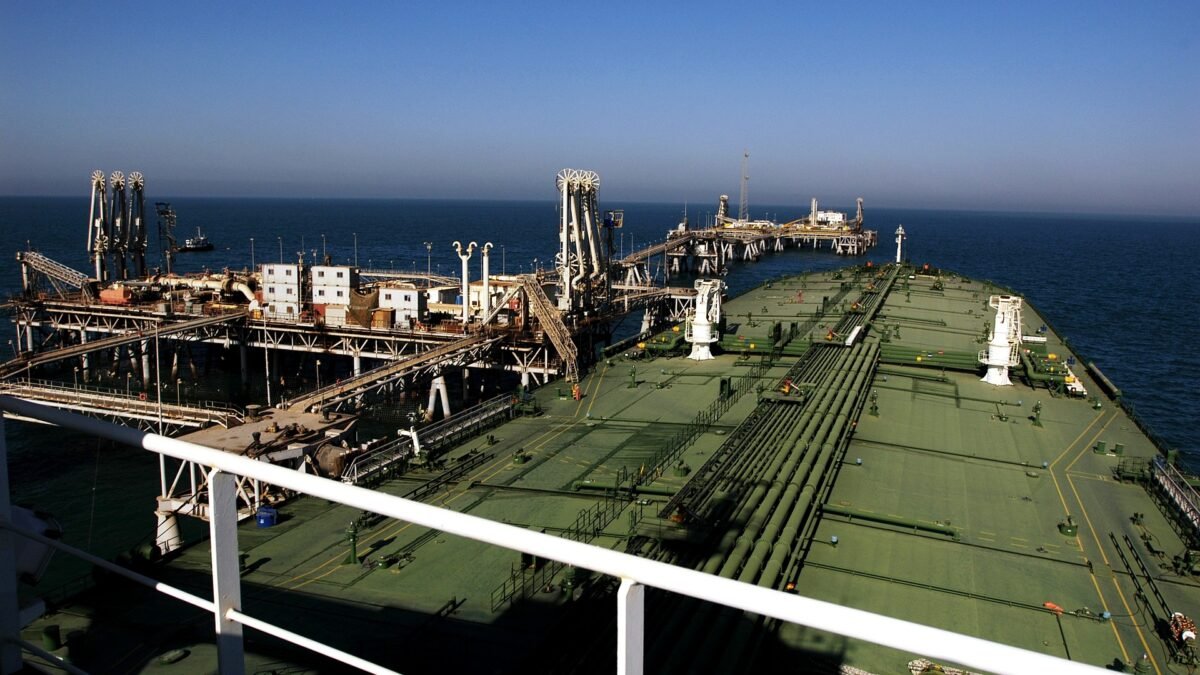
Iran claimed on Friday that two more oil tankers struck naval mines and caught fire in and around the Strait of Hormuz, the latest in a quickening series of such claims that have kept the world’s most important oil waterway at the centre of a war now in its ninth month. The claim, carried by Iranian state-linked media, could not be independently confirmed, and maritime officials told reporters they had no confirmation of any new incident — a gap between claim and proof that has become the defining feature of the shipping war in the Gulf.
According to Reuters, Iran reported on Thursday that three more tankers had been damaged in the strait, and the Revolutionary Guards said two tankers had struck mines and another had caught fire that day. Britain’s maritime security agency, the United Kingdom Maritime Trade Operations, known as UKMTO, reported separately that a vessel had been struck by two unidentified projectiles late on Wednesday, and said at least five vessels had reported incidents since Sunday. The pace, Reuters reported, is close to the record set in October, when the agency said 35 vessels were hit — the most of any month since the war began.
The fresh claim on Friday came in a statement from the navy of the Islamic Revolutionary Guard Corps, posted at 07:58 GMT and carried by the Mehr news agency. It said one tanker was struck east of the strait and a second inside the waterway itself, and alleged that both vessels had switched off their transponders and were sailing routes Tehran regards as unauthorised, with American support. The statement declared that the strait remained closed “by God’s grace and the efforts of the IRGC Navy” and warned that American efforts to push tankers through the area would bring only “further humiliating failures”. It added that the strait would stay closed until all seven of Iran’s conditions were met — conditions Tehran has not publicly spelled out in full.
CBS News reported that there was “no confirmation of any incidents from maritime officials” in connection with Friday’s claim. That caution matters. The Guards have issued a string of mine claims since the war began, and several have later been challenged. The Joint Maritime Information Center said on 18 October that there was “no substantiation” for an Iranian claim that two supertankers had struck mines the previous day, and the United States Central Command has said at various points during the conflict that no ships have hit mines in the Strait of Hormuz, according to the shipping publication gCaptain. None of that proves the latest claim false — only that it is, for now, a claim rather than an established fact.
What the maritime record actually confirms
What can be confirmed independently paints a picture that is serious enough on its own, without relying on Tehran’s announcements. UKMTO’s warning on Wednesday concerned a tanker hit by two unidentified projectiles about 58 miles north of Madinat ash-Shamal, on Qatar’s northern coast. The agency did not name the vessel, and no group claimed responsibility. Maritime reporting later identified the ship as the MT Velos Sapphire, a Greek-operated, Marshall Islands-flagged product tanker of about 75,000 deadweight tonnes, struck by two projectiles roughly 50 nautical miles north of the same Qatari town, according to Riviera Maritime Media and Business Recorder, citing Reuters.
Open-source maritime trackers have also named a second recent hit. A tanker struck by two projectiles in its engine room about 16 miles north-east of Lima, in Oman, late on Tuesday was identified by the maritime intelligence firm Vanguard Tech as the Grit, a crude carrier of 298,555 deadweight tonnes registered in Barbados and under Chinese ownership since June. Its transponder had been switched off for more than a month, and TankerTrackers.com said the vessel had recently carried Iraqi crude to the Gulf of Oman. Lloyd’s List Intelligence reported a separate strike on 2 November on the Era S., a Panama-flagged bulk carrier under Turkish management. And Qatar Gas Transport Company, known as Nakilat, said its liquefied natural gas carrier Al Mayeda was hit on 30 October while sailing in the Gulf by what it described as “unidentified objects”.
The International Maritime Organization had documented 129 incidents in the Strait of Hormuz and the wider Middle East region as of 6 November, resulting in 25 seafarer fatalities since the conflict began, Riviera Maritime Media reported. The numbers underline a point that shipping analysts have made for months: whatever the truth of any single Iranian claim, the waterway has become genuinely dangerous for commercial shipping, and crews know it. According to the SOFX news service, most crews now decline to report strikes at all, leaving the true total unclear.
Oil markets read the midterms
Oil prices have plunged in recent days as traders wagered that President Donald Trump, chastened by voters in Tuesday’s midterm elections, may be less likely to restart the large-scale strikes he launched alongside Israel in February, Reuters reported. Prices bounced back slightly on Thursday but remained down more than $20 a barrel over the past week. Brent crude was trading near $99 on Friday, rebounding after its steepest weekly drop since 2020, according to the House of Saud news service.
The market’s logic is straightforward, and it is also a gamble. A president who has just lost control of Congress is, in the market’s reading, less likely to order a new bombing campaign that could send fuel prices soaring. But the same reporting that describes the market’s relief also describes a president who may still order exactly that. Two sources told Reuters they believed Mr Trump was still likely to order resumed hostilities. “He is planning to bomb Iran. Don’t listen to what he’s saying. He held off because of the midterms. We asked him to hold off until the midterms,” one of the sources said. The other said Mr Trump did not have anything to lose politically now that the midterms were over.
The tension between those two readings — markets betting on restraint, insiders warning of escalation — is the central uncertainty hanging over the Gulf this weekend. It is also the reason the tanker claims matter beyond the ships themselves: each new claim, confirmed or not, tests whether the market’s calm survives contact with events on the water.
The political fight in Washington
The midterm results have turned the Iran war into an open argument inside the Republican Party, and the argument spilled into public view this week. Vice President JD Vance said in a long social media post on Wednesday that the war was to blame for his party’s defeat, a strikingly direct attribution of an electoral rout to a foreign war by a sitting vice president. A White House adviser told Reuters that some officials and staff inside the White House viewed Mr Vance’s post as a foreign policy break from the president and a public recognition of the war’s economic consequences.
Iran’s leaders seized on the result. Parliament Speaker Mohammad Baqer Qalibaf, who had been Mr Vance’s opposite number at previous peace talks, mocked the vice president in a social media post, accusing him of letting Mr Trump double down like a “losing gambler” by planning more American strikes. “Skip the TED talk. Why not say this to your boss?” Mr Qalibaf wrote, urging Mr Vance to press Mr Trump to end the conflict if he believed the war was a mistake.
Mr Trump, asked about Mr Vance’s comments on Wednesday, defended the decision to launch the war, saying it was important to prevent Iran from obtaining a nuclear weapon, a justification he has repeatedly cited. He said the vote was not about him because he was not on the ballot, and pointed to high petrol prices. On Wednesday, Iran’s Supreme Leader, Ayatollah Mojtaba Khamenei, said there should not be “even the slightest inclination towards submission” to the United States, which he said would remain hostile towards Iran no matter which party was in power in Washington.
The exchange captures the trap both sides are in. In Washington, the war’s defenders must explain a midterm defeat that the vice president himself has blamed on the conflict, while the president signals he may yet escalate. In Tehran, leaders who present the election result as a rejection of the war must also explain to their own public why the strait remains closed, the blockade remains in place, and the shipping attacks continue.
Diplomacy: Qatar in the middle
Against that backdrop, the diplomatic track has not stopped, even if it has not yet produced anything. Iranian officials have been meeting Qatari mediators since last week to discuss proposals to end the hostilities, Reuters reported, but neither side has announced any breakthrough on the major issues that have prevented a peace agreement so far. Qatar said on Tuesday that the United States and Iran were committed to mediation efforts and were reviewing proposals aimed at bridging their differences, adding that there had been developments in talks with both sides. A senior Iranian official said this week that the two sides remained far apart.
On Thursday, Iran’s Foreign Minister, Abbas Araghchi, telephoned his Saudi and Qatari counterparts to discuss regional stability, according to Middle East Eye and Iranian state media — a signal that the diplomatic channel remains open even as the Revolutionary Guards issue fresh mine claims. On Friday, Mr Trump spoke by telephone with Qatar’s Emir, Sheikh Tamim bin Hamad Al Thani, about diplomatic efforts to ease tensions, and the two leaders discussed Qatar’s mediation efforts to form a comprehensive agreement to end the regional conflict, according to the CBS News live blog.
Tehran’s two-day offer to reopen the strait, mediated by Qatar, remained on the table as of Friday, though no agreement had been reached. Peacemaking efforts have revolved around the future status of the strait, an American blockade on Iranian ports, sanctions on the Islamic Republic and a resumption of negotiations over Tehran’s nuclear programme, Reuters reported. The Qatari mediators have been working for more than a week on a draft under which Iran would halt attacks on ships and Washington would lift the blockade of Iranian ports, according to reporting by The Washington Post cited in other coverage. Tehran has said that if the Americans meet its conditions, it could reopen the strait within two days, and that nuclear talks could also resume.
The gap, however, is wide. Iran is also seeking the lifting of sanctions affecting its oil sales and a ceasefire that would extend to Lebanon, where Israel’s parallel war against Hezbollah continues. Washington and Tehran give very different accounts of where ships can safely go in the meantime: the Americans say the strait’s southern routes are mine-free and usable, while Iran has repeatedly warned ships not to take that route.
A selective pass system
One of the week’s more striking developments was Iran’s announcement that it would exempt four countries from its transit restrictions in the strait. On 3 November, Ahmad Hayat-Moghaddam, vice-chairman of Iran’s parliamentary National Security and Foreign Policy Committee, told the semi-official ISNA news agency that Iran had “currently exempted India, China, Iraq and Qatar from transit restrictions in the Strait of Hormuz”, adding that ships from those countries “pass freely, and the Americans do not intercept them either”. China and India together account for roughly 55 per cent of all Gulf crude passing through the strait — China at 42 per cent and India at 13 per cent — according to Kpler analyst Muyu Xu, as reported by Al Jazeera on 6 November. Saudi Arabia, the Gulf’s largest oil exporter, was not on the list.
The announcement carries a caveat that has received less attention than the headline. It came from a parliamentary official speaking to a domestic news agency — not from the Revolutionary Guards, who control naval operations in the strait, and not from the Foreign Ministry, which manages Iran’s diplomatic messaging on the war. No official written order, Guards decree or published document from the Persian Gulf Strait Authority Tehran established in May has been released to codify the exemptions. Wolfgang Pusztai, an Austrian security analyst and former defence attaché to Libya, told Al Jazeera on 6 November that the arrangement contained a practical ambiguity Iran had not resolved: whether “ships of these countries” referred to flag state, ship owner, operator or some other criterion remained entirely undefined.
The week’s events have already tested the exemption in practice. TankerTrackers.com noted that roughly 30 per cent of the cargo aboard the tankers on Iran’s non-compliant target list was Iraqi, and wrote that Iraq “is not immune to the IRGC” — a pointed observation given that the Grit, the tanker struck off Oman on Tuesday, had recently carried Iraqi crude. The exemptions may formalise what had been an ad hoc arrangement since the early weeks of the war, but on the water, the Guards’ enforcement remains the reality that matters, not parliamentary declarations in Tehran.
Background: eight months of war at sea
The current war began on 28 February, when the United States and Israel launched strikes across Iran in an operation Washington calls Operation Epic Fury and Israel calls Operation Roaring Lion. The opening strikes killed the then Supreme Leader, Ayatollah Ali Khamenei, and several senior officials. Iran closed the strait, through which about a fifth of the world’s oil and liquefied natural gas normally passed, and Washington imposed a blockade on Iranian ports.
Since then the conflict has settled into a grinding pattern: American and Israeli strikes on Iranian military infrastructure, Iranian missile and drone attacks on Israel and on American-linked targets across the Gulf, and a slow-motion war on shipping in the strait itself. In March, the United States said it had destroyed 16 Iranian mine-laying vessels near the strait. In early April, a ceasefire of sorts was agreed, but hostilities have flared repeatedly since, and the strait has remained largely closed for more than eight months.
The most recent American action came earlier this week. On Monday, the United States carried out strikes on Iran’s Qeshm Island in the Strait of Hormuz, a strike first reported by The Wall Street Journal and confirmed by an American official to The Jerusalem Post. The strikes, which appeared to be limited, were described as a defensive measure aimed at preventing Iran from freely attacking commercial vessels in the waterway, and officials stressed they did not signal a resumption of large-scale military operations. Iranian state media reported explosions on Qeshm and on the nearby island of Hengam, and the Guards claimed to have shot down three American drones near the strait, including an MQ-9 Reaper — a claim that had not been independently confirmed.
On Sunday, Mr Trump announced a new naval mission, called Project Freedom, to guide vessels stranded by the war through the strait, starting on Monday. A spokesman for United States Central Command, Captain Tim Hawkins, told Al Jazeera on Wednesday that the strait remained open to commercial shipping. The White House said on Tuesday that the United States had not yet escorted any oil tankers or vessels through the strait. According to The New York Times, unnamed Pentagon officials said thousands of American forces aboard more than a dozen ships stood ready to resume operations on Mr Trump’s order.
Analysis: Why It Matters
1. The strait is the war’s centre of gravity
Eight months into this conflict, the Strait of Hormuz has become its centre of gravity — more than the missile exchanges, more than the air campaign, more even than the question of Iran’s nuclear programme. That is because the strait is where the war meets the world economy. About a fifth of the world’s traded oil and liquefied natural gas normally passes through a channel barely 21 miles wide at its narrowest point. Every tanker that turns back, every insurer that raises its premiums, every crew that refuses to sail is a small economic shock, and the shocks accumulate. The International Maritime Organization’s count of 129 incidents and 25 dead seafarers is the human ledger of that accumulation. The war’s military outcome remains unresolved, but its economic outcome is already visible in shipping lanes, insurance markets and fuel prices.
2. Claims are now a weapon in themselves
The most important feature of this week’s events is not whether any particular tanker actually struck a mine. It is that the claim itself has become a weapon. Tehran does not need to prove a mine strike to achieve its purpose: it needs only to make the strait look unsafe enough that shipowners, insurers and crews stay away. The pattern is visible in the record. The Guards announce a strike; maritime authorities cannot confirm it; the claim circulates anyway; and the strait’s reputation as a no-go zone hardens. Washington’s counter-claims — that no ships have hit mines, that the southern routes are clear — struggle against the same fog, because a denial cannot be photographed and a burning tanker, real or alleged, can. In a war fought partly through shipping data and insurance premiums, the side that controls the perception of risk controls the strait, whatever the seabed actually contains.
3. The midterms changed the politics, not the facts
Mr Vance’s public blaming of the war for the Republican defeat is the most significant political development of the week, and it is worth being precise about what it does and does not change. It changes the domestic politics of the war: a vice president has now said, in public, that the conflict cost his party Congress. It does not change the military facts in the Gulf, the state of the strait, or the positions of the two sides at the negotiating table. Indeed, the reporting since the election points in two directions at once — markets betting on restraint, insiders telling Reuters the president still plans to bomb Iran. The honest reading is that the election has made American policy less predictable, not more peaceful. A president who has lost Congress has less to lose politically from escalation and more reason, in his own telling, to act while he still can. The market’s relief may prove to be the week’s most expensive misreading.
4. Qatar is the only bridge left standing
With direct communication between Washington and Tehran reduced to threats and public statements, Qatar has become the indispensable intermediary — the only capital both sides will talk to, and the only one with a draft agreement on the table. That gives Doha real leverage, but it also exposes the limits of mediation. The Qatari draft reportedly trades an Iranian halt to attacks on shipping for an American lifting of the port blockade, with nuclear talks to follow. But the issues that divide the sides — the strait’s future status, sanctions on Iranian oil, a ceasefire covering Lebanon — are not technical details to be bridged by clever drafting. They are the war’s core purposes. Qatar can keep the conversation alive, and Mr Trump’s Friday call to the Emir shows he values the channel. Whether the channel can deliver an agreement is a different question, and this week’s evidence — “far apart”, no breakthrough — suggests not yet.
5. The exemption list reveals Tehran’s real strategy
Iran’s decision to exempt India, China, Iraq and Qatar from its transit restrictions is more revealing than it first appears. On its face it is a concession, a way to keep the world’s two largest oil importers on Tehran’s side. In practice it is a tool of leverage: by deciding who may sail and who may not, Iran asserts the very sovereignty over the strait that the war is being fought to deny it. The exclusion of Saudi Arabia — the Gulf’s largest exporter and Iran’s great regional rival — is the point. So is the ambiguity over whether the exemption follows the flag, the owner or the operator, which leaves the Guards free to enforce it as they please. The Grit’s fate, a Chinese-owned vessel carrying Iraqi crude and struck off Oman, shows the gap between the announcement and the enforcement. Tehran is not reopening the strait. It is rationing it, and rationing is a form of power.
What to Watch Next
- Whether Friday’s mine claims are confirmed or contradicted. UKMTO advisories, satellite imagery and shipping data in the coming days will show whether two tankers were actually damaged. Confirmation would mark a sharp escalation; a firm denial would underline how much of this war is fought through unverified claims.
- Mr Trump’s decision on resumed strikes. Two sources told Reuters the president still plans to order new bombing, and Pentagon officials told The New York Times that thousands of troops aboard more than a dozen ships stand ready. Any resumption would transform the shipping war overnight.
- Project Freedom’s first escort. The United States has announced its naval mission to guide stranded vessels through the strait but has not yet escorted a single tanker. The first convoy, if it sails, will be the clearest test yet of whether the strait can be reopened by force of arms.
- The Qatari mediation and Iran’s two-day offer. Tehran says it could reopen the strait within two days if Washington meets its conditions. The mediators are expecting responses within days. Watch for any movement on the port blockade or sanctions, which are the real bargaining chips.
- Oil prices and the next UKMTO tally. Brent crude’s slide of more than $20 a barrel reflects a market betting on restraint. A confirmed tanker strike, a new American bombing run or a collapse of the Qatar talks would reverse that bet fast — and the next monthly UKMTO count will show whether October’s record pace of attacks is holding.
Sources
- Reuters — “Tankers hit in Hormuz as Iran keeps up pressure after US vote”, 5 November 2026
- SOFX — “Iran Claims Sea Mines Hit Five Tankers Near Strait of Hormuz Following US Midterms”, 6 November 2026
- House of Saud — “IRGC Claims 2 More Tankers Hit Mines in Hormuz, Oil Near $99”, 6 November 2026
- Newscord — “IRGC Says Two Oil Tankers Hit Mines, Catch Fire Near Strait of Hormuz”, 6 November 2026
- Ummah Atlas — “Iran Says Four Tankers Hit Mines in Strait of Hormuz, US Announces New Naval Mission”, 4 November 2026
- Seoul Economic Daily — “US Strikes Iran’s Qeshm Island in Strait of Hormuz”, 3 November 2026

About the Author — Abdul Mannan
Related Articles
Türkiye Ratifies Mecca Defence Pact With Saudi Arabia and Pakistan, Binding Three Nations to Mutual Defence
Türkiye's parliament has ratified the Mecca Joint Defence Agreement with Saudi Arabia and Pakistan by 279 votes to…
Yemen Government Forces Seize Strategic Heights in Al-Jawf as Taiz Siege Deepens and UN Warns 260,000 Displaced
Yemeni government forces say they have seized strategic mountain heights in al-Jawf as the month-long siege of Taiz…
Trump Says US Will End $4 Billion in Annual Military Aid to Israel by Year’s End in Deal With Netanyahu
President Donald Trump says the United States will end nearly $4 billion in annual military aid to Israel…