
Imran Khan Taken to PIMS Overnight for Sixth Eye Injection Before Lengthy Adiala Meeting as Lawyers Warn His Blood Pressure Is Alarmingly High

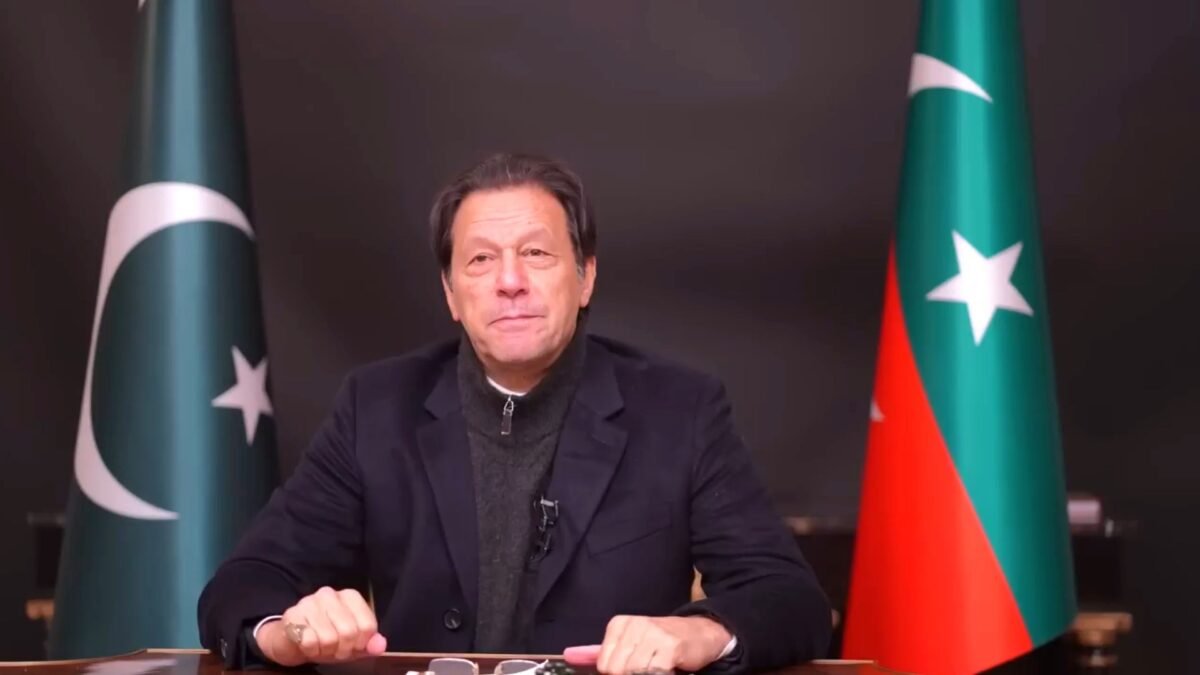
Jailed former prime minister Imran Khan was taken from Adiala Jail to the Pakistan Institute of Medical Sciences (PIMS) in Islamabad in the middle of the night for a sixth injection into his right eye, and was back in his prison cell before dawn, hours before his lawyers sat with him for a meeting that lasted most of the afternoon. The two events, one medical and one legal, unfolded within a day of each other, and together they have put the health of Pakistan’s most popular opposition leader, and the state’s handling of it, back at the centre of the country’s politics.
According to a statement issued by the PIMS administration, Khan was brought from Central Jail Adiala in Rawalpindi to the hospital during the night between 10 and 11 November for a medical check-up and follow-up eye treatment, on the advice of his treating ophthalmologist. The hospital’s ophthalmology team administered an intravitreal anti-VEGF injection into his right eye, the sixth such injection he has received as part of treatment for right central retinal vein occlusion, a condition in which a blockage in the main vein draining blood from the retina can cause bleeding and fluid to build up and damage vision. The hospital said his vital signs were normal, that he remained clinically stable before, during and after the procedure, and that he was discharged at about 2:30am with instructions for further care and follow-up. He had spent around 40 to 50 minutes at the hospital, according to reports based on the hospital’s statement, and was moved back to Adiala under tight security.
The visit was the latest step in a course of treatment that began in January this year, after Khan reported a sharp deterioration in the sight of his right eye. He received his first anti-VEGF injection at PIMS on 24 January 2026, according to reports, with further injections reported in February, March, April and June. The condition, known as CRVO, was diagnosed after he began experiencing blurred vision in his right eye in October 2025, according to a report submitted to the Supreme Court by court-appointed amicus curiae Barrister Salman Safdar in February. The hospital has not publicly disclosed a fresh visual-acuity assessment following the latest procedure, so the extent of any further improvement or deterioration in his sight remains unclear.
One report, citing sources who spoke to Reuters, said Khan also had blood-pressure issues that were treated during the night before he was returned to his cell. That detail matters, because blood pressure has become the second, and arguably more alarming, strand of the health story. His lawyers have been telling the courts for days that his blood pressure is uncontrolled and dangerously high, and on Wednesday evening, after seeing him in person, one of them described it as alarmingly high.
A four-hour meeting the court had to order
The hospital visit came a day after the Islamabad High Court directed that Khan’s lawyers be allowed to meet him and his wife, Bushra Bibi, in Adiala Jail. On Tuesday, a division bench of Chief Justice Sardar Muhammad Sarfraz Dogar and Justice Muhammad Asif was hearing the couple’s appeals against their convictions in the £190 million Al-Qadir Trust case when the question of access dominated the proceedings. Barrister Salman Safdar told the court he had last met Khan on 3 November after a gap of seven months, and Bushra Bibi after eleven months, and that such limited access made it hard to take instructions and prepare a proper defence. Sardar Latif Khosa told the bench he had repeatedly asked for permission to see Khan and had been refused. The court directed the Islamabad advocate general to arrange the meetings within two days, and the attorney general said they could be arranged if the lawyers assured the court that arguments in the appeals would begin at the next hearing. The appeals were adjourned for ten days.
The meeting took place on Wednesday afternoon. It had been scheduled for 3pm and was initially expected to last an hour, the length the court had ordered as a minimum. In the event, it ran far longer. Safdar said in a post on X that it continued from 4pm to 7pm, while Khosa told reporters afterwards that it had lasted three to four hours. Jail sources cited by Express News put it at more than two hours. Whatever the precise figure, the lawyers spent an afternoon, rather than an hour, with their clients in the conference room at Adiala Jail, with Bushra Bibi present throughout.
Khosa, speaking to reporters after the meeting, said the talks were friendly and focused mainly on legal matters, including the pending cases and appeals. He said Khan appeared alert and in good spirits, although he continued to complain about his eyesight and his blood pressure. He also said Khan’s blood pressure was fluctuating and reaching an alarming level, and described it, in words reported by several outlets, as alarmingly high. He said the lawyers would release a detailed account of the meeting the following day, adding that the facts about Khan’s condition, as they had observed it and as he had described it to them, would then become clear. No such detailed account had appeared by the time this article was published.
Safdar, in his post on X, said that under Khan’s instructions he would continue to represent both Khan and Bushra Bibi in the main appeals in the Al-Qadir Trust case, while Khosa would assist in Bushra Bibi’s pending petition concerning her eye complication and relief. He said the couple had given comprehensive instructions on their legal matters during the meeting, and that their legal and medical problems had been discussed in detail.
The health of both prisoners was raised at length in Tuesday’s court hearing, before the meeting took place. Safdar told the court that Khan had said his eyesight had improved, but that his blood pressure remained uncontrolled, warning that persistently high blood pressure could raise the risk of a brain haemorrhage. He said Khan had told him his blood pressure had risen above 190. Separate reports from the family in early November put the reading at 192, according to Khan’s sister Rubina Khan, who lives in Britain. Those figures come from the family and the defence, not from any hospital reading, and they have not been independently verified. What is on the record is that the lawyers have repeatedly raised the blood-pressure question in court, and that the hospital, for its part, has said his vital signs were normal during the overnight visit.
Safdar also raised concerns about Bushra Bibi’s eyesight in court on Tuesday. He said she had undergone an eye operation about six months earlier and was due for another procedure on 15 November. He questioned the adequacy of her post-operative care, saying she had been sent back to her prison cell on the same day as her surgery, which he said had been carried out on an emergency basis. He asked the court to set up a medical board and to order that her full medical records from Adiala Jail be produced, and said that if the bench was not prepared to grant bail, it should consider temporary release for four to six weeks so she could receive treatment. The Islamabad advocate general told the court that Bushra Bibi was being treated in prison and had been given the medical facilities she required, and submitted details of her treatment, saying a medical board had examined her on 8 November. Chief Justice Dogar observed that the couple’s health matter was pending before the Federal Constitutional Court, a point Safdar disputed, saying no case concerning Bushra Bibi was before that court.
The 28th Amendment came up. Nobody will say what was said about it.
One detail from the meeting has drawn as much attention as the health warnings. According to Khosa, the proposed 28th Constitutional Amendment came up during the conversation. He declined to say what was discussed about it. Several outlets reporting the meeting noted the same point: the amendment was discussed, and Khosa would not comment on it.
The proposal, as reported on 8 November by The News and Geo News, would redraw Pakistan’s administrative map by increasing the number of provinces from four to twelve, with Punjab divided into four provinces, Khyber Pakhtunkhwa and Balochistan into three each, and Sindh into two. A nationwide referendum would be held first, and a 28th Constitutional Amendment would follow, possibly in the first half of 2027, with preparatory work beginning earlier. The reports stressed that no final decision had been taken, that the boundaries and administrative structures remained undecided, and that the government had not announced the plan or attached its name to it. The planning minister said on 30 October that the government was not drafting an amendment to create new provinces, according to one analysis of the reports.
The constitutional arithmetic alone makes the proposal a formidable undertaking. An amendment needs the support of two-thirds of the total membership of each house of parliament. Where it alters a province’s limits, Article 239(4) of the Constitution adds a second lock: the assembly of the province concerned must also approve it by two-thirds of its total membership. That means 248 of 371 votes in the Punjab Assembly, 112 of 168 in Sindh, 97 of 145 in Khyber Pakhtunkhwa and 44 of 65 in Balochistan, on top of 224 of 336 in the National Assembly and 64 of 96 in the Senate. A referendum, which the prime minister may initiate under Article 48(6) by referring a matter of national importance to a joint sitting of parliament, can build political pressure. It cannot cast those votes.
That a jailed former prime minister spent part of a rare, court-ordered meeting with his lawyers discussing a proposal to remake the federation is, in itself, a measure of how seriously the idea is being taken in political circles, and of how little is publicly known about it. The PTI has not taken a public position on the proposal. Neither has the government confirmed that it is anything more than an idea under discussion. The silence from both sides, and Khosa’s refusal to elaborate, leaves the most basic questions unanswered: whether Khan supports the idea, opposes it, or regards it as a distraction. What is clear is that the proposal is now part of the conversation at the very top of the opposition, and that the next time it surfaces, it will do so with the knowledge that it has been discussed inside Adiala Jail.
The Shifa order that has not been carried out
The overnight PIMS visit also revived a dispute that has been running for nearly three months. On Wednesday, PTI chairman Barrister Gohar Ali Khan demanded that Khan be moved immediately to Shifa International Hospital in Islamabad for full medical examinations, tests and treatment. In a statement posted on X, Gohar said the party had learned from media reports that Khan had been taken to PIMS on Tuesday night for an eye injection, and that the party had not been informed beforehand. He referred to a Supreme Court order dated 18 August 2026, which he said directed that Khan be shifted to Shifa International Hospital for examination and treatment, and that a medical board be formed including Khan’s personal physician and a family member. He said the order had gone unimplemented for nearly three months and urged that it be carried out in full.
The demand was echoed by other party figures. PTI Peshawar district president Irfan Saleem said the hospital’s statement had raised further questions about Khan’s health, safety and treatment while in custody. The party’s position, as stated by Gohar, is that Khan should be examined by doctors of his own choosing, at a hospital of his own choosing, under an order the country’s highest court has already made.
The government’s position, as presented in court and in the hospital’s own statement, is that Khan is receiving the treatment he needs. PIMS said he was examined, treated and discharged in a stable condition. The Islamabad advocate general told the court that Bushra Bibi was receiving the medical facilities she required in prison. Adiala Jail authorities have previously submitted reports to the Supreme Court stating that healthcare facilities were being provided to the former prime minister. The two accounts are not, on their face, irreconcilable: a prisoner can be clinically stable during a hospital visit and still be the subject of a genuine dispute about who should be treating him, where, and with what degree of independent oversight. But the gap between them is wide, and it is widening, because each side’s account is now being delivered through different institutions — a hospital press release on one side, a lawyer’s statement to reporters on the other — with no independent medical assessment published that both sides accept.
Khan’s sister, Dr Uzma Khan, went back to the Supreme Court on Tuesday, for the third time, to ask for an early hearing of a contempt case accusing the government of defying the August order to move him to a private hospital in Islamabad. Her lawyer, Uzair Karamat Bhandari, filed an application asking the court to list the contempt petition next week. The petition, filed on 22 August, names Prime Minister Shehbaz Sharif, Islamabad’s chief commissioner, the interior secretary, Punjab’s inspector general of prisons and the Adiala jail superintendent, and asks for weekly meetings between Khan and his family, including his sisters and his cousin, and for telephone calls with his sons, Kasim and Sulaiman, twice a week. On 18 August, a three-member bench of the Supreme Court had directed the government to move Khan to Shifa International Hospital within two days. Nearly eight weeks passed without a date being fixed for the contempt case, according to the latest application. The family’s concern, as stated in the petition, is that the order has not been carried out, and that Khan’s health is deteriorating while the case waits.
Three years in prison, and a defence conducted through keyholes
Khan has been in prison since August 2023. He is serving a sentence in the £190 million corruption case, in which an accountability court in Islamabad sentenced him in January 2025 to 14 years’ imprisonment with a fine of Rs1 million, while Bushra Bibi was sentenced to seven years with a fine of Rs500,000. The case concerns the Al-Qadir Trust and the alleged misuse of funds returned to Pakistan from Britain. The couple are appealing against those convictions, and it is those appeals that the Islamabad High Court was hearing on Tuesday. In December 2025, according to reports, Khan and Bushra Bibi were also sentenced to 17 years in prison in the Toshakhana-II case, concerning the alleged misuse of state gifts.
Access to the couple has been restricted since December 2025, when authorities stopped weekly meetings between Khan and his family or legal team. The meeting on Wednesday was the first time in months that his lawyers had been able to sit with him for a sustained conversation. Safdar told the court on Tuesday that his previous meeting with Khan, on 3 November, had come after a gap of seven months, and that he had last seen Bushra Bibi eleven months earlier. He said the earlier meeting had provided instructions but had not been enough to prepare the appeals properly. Khosa told the court he had repeatedly sought a meeting and had not been allowed one. It took a direction from the High Court, and an assurance that arguments in the appeals would begin at the next hearing, to open the door.
That sequence is worth pausing over. A defence lawyer should not need a court order to see his client, and a court should not need to trade access for a promise to begin arguments. Yet that is how this case has proceeded for months. The result is a defence conducted in fragments: a 40-minute meeting here, a seven-month gap there, instructions gathered in snatches and then tested in court. The appeals were adjourned for ten days on Tuesday, with the court directing that case paper books be given to the defence. When the hearing resumes, the lawyers will have had the benefit of a four-hour consultation and a hospital visit in between. Whether that is enough to prepare appeals of this scale is a question the next hearing will begin to answer.
The wider crisis the meeting sits inside
The events at Adiala Jail are not happening in isolation. They sit inside a wider political crisis that has been building for a month, centred on Khyber Pakhtunkhwa, the province governed by Khan’s party until the federal government suspended its elected government.
On 11 October, President Asif Ali Zardari approved Prime Minister Shehbaz Sharif’s advice to impose an emergency and governor’s rule in Khyber Pakhtunkhwa under Articles 232 and 234 of the Constitution, citing a deterioration in the security situation, a rise in militant attacks, and what the federal government described as the provincial administration’s failure to cooperate effectively in the fight against terrorism. Executive powers were transferred to Governor Faisal Karim Kundi, assisted by an advisory council, and emergency measures were imposed in 12 districts. The arrangement was initially put in place for six months. The move removed Chief Minister Sohail Afridi and his cabinet from office. PTI lawmaker Junaid Akbar said Afridi was arrested along with the party’s provincial president. The party has called the intervention a political takeover.
The legal fight over the emergency has run into a wall. On 5 November, the Federal Constitutional Court barred the Peshawar High Court from hearing cases on arrests under the Maintenance of Public Order ordinance, and a day later stripped it of jurisdiction over Khyber Pakhtunkhwa cases filed after 12 October. On 7 November, the Peshawar High Court removed all petitions challenging the emergency and governor’s rule from its cause list, telling petitioners, including PTI chairman Barrister Gohar Ali Khan, opposition leader Mahmood Khan Achakzai and the provincial bar council, to approach another forum. On 10 November, lawyers across Khyber Pakhtunkhwa went on strike against the Constitutional Court’s decision, boycotting court proceedings on the call of the provincial bar council, which said it would also apply to become a party in the relevant case. On Monday, the opposition alliance Tehreek-e-Tahafuz-e-Ayin-e-Pakistan demanded a transparent judicial review of the constitutional grounds for the emergency and governor’s rule, warning that such measures undermine provincial autonomy, the public mandate and parliamentary democracy.
Meanwhile, the province’s security situation has continued to deteriorate. On Wednesday, at least 11 policemen, including a deputy superintendent of police, were killed in an ambush in Kohat district when militants attacked a police team heading to raid illegal gold mining in the Gambat area. Four police officers guarding polio vaccination teams were kidnapped on Monday, and on Tuesday gunmen on a motorcycle shot dead two police officers protecting polio workers. The provincial administration’s answer is a new security plan unveiled this week, including faceless anti-terrorism courts to protect witnesses, prosecutors and judges, and Rs70 billion a year in extra funding for the police and the Counter Terrorism Department.
The crisis has also begun to strain the federal coalition. On Tuesday, Bilawal Bhutto-Zardari, whose Pakistan Peoples Party is an ally of the federal government, urged Prime Minister Sharif to rebuild trust with his coalition partners and then with the opposition, warning that the country could not survive an oil-driven economic catastrophe without a “political reset”. Speaking in Karachi at a ceremony marking the completion of one million houses for victims of the 2022 floods, he said politics would “definitely have to be reset” to meet one of the worst economic crises in history, and invited the prime minister to restore the trust of his allies first, then that of the opposition parties, “instead of picking new fights with them”. His remarks followed weeks of sharp exchanges between federal ministers and Maulana Fazlur Rehman, the veteran leader of the Jamiat Ulema-i-Islam-Fazl, who has decided to strengthen his ties with the opposition alliance led by Khan’s party.
The institutional friction extends to the judiciary itself. On Wednesday, the Election Commission of Pakistan accused retired Supreme Court judge Mansoor Ali Shah of giving a selective and one-sided account of the 2023 ruling on elections in Punjab and Khyber Pakhtunkhwa and of the case over the PTI’s reserved seats. And on Tuesday, Prime Minister Sharif left for Antalya in Turkiye on a three-day visit to attend the leaders’ summit of COP31, the United Nations climate conference, where he met Iranian President Masoud Pezeshkian, with the two leaders reaffirming the close and longstanding ties between Pakistan and Iran. The war between the United States, Israel and Iran, which began on 28 February, has hit Pakistan hard: Iran effectively closed the Strait of Hormuz, through which nearly a fifth of global oil trade passes, Pakistan ordered emergency austerity measures in March, including a four-day working week for government employees and a two-week closure of schools, inflation reached 11.7 per cent in May, a two-year high, and Sharif has said the weekly oil import bill had almost tripled to $800 million.
Analysis: Why It Matters
Two medical stories, and no referee
The most striking feature of the last 48 hours is that two entirely different accounts of one man’s health are now in circulation, and there is no institution both sides trust to settle the difference. The hospital says Khan’s vital signs were normal and he was clinically stable. His lawyers say his blood pressure is alarmingly high and fluctuating, and that he fears a brain haemorrhage. Both accounts could, in a narrow sense, be true at the same time: a patient can be stable during a 50-minute hospital visit and still have uncontrolled blood pressure the rest of the time. But that is not how the two accounts are being received. Each side’s supporters treat their own version as the truth and the other as a cover story. The reason is that the medical facts are being delivered through partisan channels — a hospital press release on one side, a lawyer’s remarks to reporters on the other — rather than through an independent assessment that both sides have agreed to accept. The Supreme Court’s August order for a medical board including Khan’s personal physician and a family member was, in effect, an attempt to create such a referee. That it has not been carried out, nearly three months later, is the single most important fact in this story. Until an independent board examines Khan and publishes its findings, every hospital visit will produce two stories instead of one, and the dispute will keep escalating.
Access is a right, not a concession
The second point is about the meeting itself, and what it took to arrange it. Khan’s lawyers had to go to the High Court to see their client, and the court had to extract a promise that arguments would begin at the next hearing before the meeting was allowed. That is not how a functioning legal system treats the right to counsel. A lawyer’s access to a client in custody is not a favour the state grants in exchange for procedural cooperation; it is a precondition of a fair trial. The seven-month gap between Safdar’s meetings with Khan, and the eleven-month gap before he saw Bushra Bibi, are extraordinary by any standard. They help explain why the appeals in the £190 million case have moved so slowly, and why the court’s own proceedings keep circling back to the question of access rather than the substance of the convictions. The four-hour meeting is welcome, but it should not have required a court order, and the fact that it did is a measure of how far the normal workings of the justice system have been bent in this case.
The 28th Amendment in the room
The third point is the one Khosa would not discuss. That the proposed 28th Amendment came up in a jail meeting between a former prime minister and his lawyers tells us something important about where the proposal sits in Pakistan’s politics. It is not a fringe idea circulating on social media. It is being discussed by the country’s most consequential opposition figure, in a meeting his lawyers fought for months to obtain, on the same afternoon they were taking instructions on his appeals. Whatever Khan thinks about the proposal — and Khosa’s silence means we do not know — the fact of the discussion suggests the PTI leadership regards it as real enough to warrant the attention of its founder. The proposal’s supporters say it would bring government closer to citizens and distribute development more fairly. Its critics, including those who have done the constitutional arithmetic, point out that it would need two-thirds majorities in four provincial assemblies as well as in parliament, and that a referendum cannot substitute for those votes. The debate is only beginning, but the Adiala meeting has already given it a new dimension: the question is no longer only whether the proposal is viable, but what the opposition’s most popular leader thinks of it, and why his lawyers will not yet say.
Health as politics, and the cost of delay
The fourth point concerns the political uses of a prisoner’s health. For the PTI, Khan’s eye condition and his blood pressure are evidence of a state that is indifferent to, or actively endangering, the life of its most prominent critic. For the government, the hospital’s statements are evidence that the state is providing proper care and that the health warnings are exaggerated for political effect. Both readings are available because the underlying facts are contested, and the facts are contested because the one mechanism designed to resolve them — the Supreme Court’s order for a transfer to Shifa and an independent medical board — has not been implemented. Delay, in this context, is not neutral. Every week that passes without an independent assessment adds another layer of suspicion, another court application, another family statement, another round of claims and counter-claims. The cost is not only political. A man of 74 with a diagnosed retinal condition and a history of high blood pressure is being treated in a system in which his own doctors cannot see him, his family cannot reach him, and his lawyers need a court order to speak to him. Whatever one thinks of the cases against him, that is a situation in which a medical emergency, if it came, would arrive without warning and without a trusted record of what came before it.
What the next ten days will decide
The fifth point is about timing. The next ten days will answer several questions at once. The appeals in the £190 million case resume, with the defence now armed with instructions taken in a four-hour consultation. Bushra Bibi is due for another eye procedure on 15 November, three days from now, and the court will have to decide whether her treatment can be carried out properly in custody. The lawyers have promised a detailed account of Wednesday’s meeting, and if it appears, it will be the first first-hand description of Khan’s condition from people who have actually seen him in months. The Supreme Court may list the contempt petition over the Shifa order next week, as the family has asked. And the debate over the 28th Amendment will continue, with the knowledge that it has now been discussed inside Adiala Jail. Any one of these developments would be significant. Together, they make the next ten days the most consequential stretch in this case since the summer. The hospital visit and the jail meeting were not the end of a story. They were the beginning of its next chapter.
What to Watch Next
- The lawyers’ promised detailed account of Wednesday’s meeting, and whether it gives a fuller picture of Khan’s blood pressure, eyesight and general condition than the brief remarks made to reporters.
- Whether the Supreme Court lists the contempt petition over the unimplemented 18 August order to move Khan to Shifa International Hospital, and what the government says in response.
- Bushra Bibi’s eye procedure due on 15 November, and whether the court orders a medical board or temporary release for her treatment.
- The resumed hearing of the £190 million appeals in ten days, and whether the defence, now properly instructed, begins its arguments as promised to the court.
- Any further public statement from PIMS or the jail authorities on Khan’s blood pressure, and whether an independent medical board is finally constituted.
- Whether the PTI or the government takes a public position on the proposed 28th Amendment and the twelve-province plan, and whether the proposal advances beyond the discussion stage.
- The situation in Khyber Pakhtunkhwa, where the emergency and governor’s rule remain in force, the courts are barred from hearing challenges, and the opposition alliance is demanding a judicial review.
Sources
- Islamabad Post — Imran taken to Pims overnight for check-up ahead of court-ordered jail meeting
- Newsora24 — Imran Khan’s lawyers discuss 28th amendment at Adiala jail
- The Standard — Imran Khan brought to PIMS for further eye treatment
- Pakistan Point — Three-hour-long meeting with Imran Khan and Bushra Bibi discusses health and legal matters
- Ave News — Pakistan hospital discharges Imran Khan after eye treatment
- Islamabad Post — Pakistan may create 12 provinces through referendum ahead of constitutional amendment

About the Author — Abdul Mannan
Related Articles
Eleven Policemen Killed in Kohat Ambush as Militants Target Anti-Gold-Mining Operation
Eleven policemen, including a deputy superintendent, were killed and 12 injured when gunmen ambushed a police team heading…

Pakistan Cuts Petrol Price by Rs8 to Rs338 a Litre and Diesel by Rs7 to Rs371
Petrol falls to Rs338 a litre and diesel to Rs371 as Pakistan's new daily pricing system passes a…
Islamabad High Court Orders One-Hour Lawyer Meetings for Imran Khan and Bushra Bibi as Counsel Warns of Brain Haemorrhage Risk
The Islamabad High Court has ordered one-hour meetings between Imran Khan, Bushra Bibi and their lawyers at Adiala…