
Apple’s First Foldable iPhone Duo Sells Out Within Hours as Preorders Open at $1,999

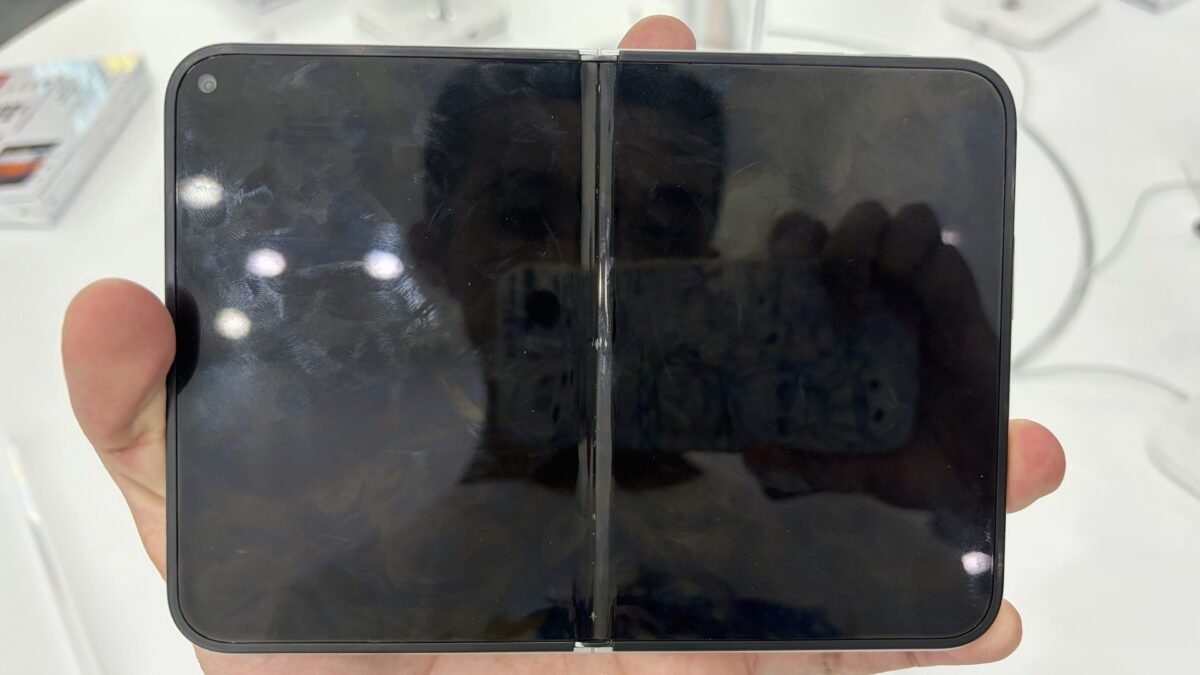
Apple opened preorders for its first-ever foldable smartphone on Friday morning, and demand overwhelmed supply within minutes. The iPhone Duo, unveiled in September at a starting price of $1,999, went on sale at 5 a.m. Pacific Time on Apple’s website and the Apple Store app, with the first orders promised delivery on October 23. Within an hour of orders opening, estimated delivery dates had slipped all the way to next year.
According to reports from 9to5Mac, every color and storage combination of the iPhone Duo showed an estimated ship date of late January by 8:30 a.m. Eastern Time on Friday. Cult of Mac reported a rapid cascade throughout the morning: delivery estimates slipped to mid-November within minutes of the preorder window opening, reached mid-December roughly half an hour later, and hit late January after about an hour. The pattern is the classic signature of a product launch where constrained supply meets heavy demand — and for a first-generation foldable priced at $2,000, the speed of the sellout surprised even seasoned Apple watchers.
Resellers wasted no time. Listings for the iPhone Duo appeared on eBay within hours of the preorder opening, with some scalpers asking as much as $5,200 for the device — more than two and a half times its retail price, according to 9to5Mac.
A Foldable, Finally — and the Priciest iPhone Ever
The iPhone Duo marks Apple’s entry into a category its rivals have occupied for years. Samsung and Huawei have sold foldable phones since 2019, Google debuted its first Pixel Fold in 2023, and Samsung introduced its newest foldable, the Galaxy Z Fold 8, only last month. Apple, as is its habit, waited — and when it finally moved, it did so at a premium.
The device was unveiled on September 9 at Apple’s “Surprise and Shine” event, alongside the iPhone 18 Pro and the Apple Watch Series 12 and Ultra 4, by chief executive John Ternus. “iPhone Duo … a whole new way to iPhone. Pre-orders start today,” Ternus wrote on X on Friday, according to Cult of Mac.
Closed, the Duo is a normal-sized phone with a 5.4-inch outer display. Opened, it unfolds into a 7.6-inch Super Retina XDR inner display — about 50 percent larger than the iPhone 18 Pro Max’s screen, according to Apple’s news release. Both panels run at up to 120Hz, and the inner display is engineered with a custom polymer layer and a nano-texture finish aimed at softening the center crease, a persistent complaint with earlier foldables from other brands. Peak outdoor brightness reaches 3,000 nits, according to regional reporting.
Under the hood sits Apple’s A20 Pro chip with 12 gigabytes of RAM, paired with Apple Intelligence and the new Siri on iOS 27. The camera system includes a dual 48-megapixel setup on the back, a Center Stage front camera, and a FaceTime camera under the inner display, according to 9to5Mac. Notably, the Duo abandons Face ID entirely; Apple has instead integrated a Touch ID fingerprint sensor along the device’s edge. The phone ships in two colors — Star White and Night Sky — in a Grade 5 titanium frame, and it is eSIM-only worldwide, with no physical SIM slot.
Apple says the larger screen unlocks Split View multitasking, letting two apps run side by side, with seamless app switching and an interface that reacts as the device folds, reorients when turned sideways, and switches between the inner and outer displays automatically. StandBy mode works on either display, even when the phone is not charging. The company says the unfolded Duo is its thinnest iPhone yet, and a dual-battery architecture delivers up to 31 hours of video playback on the inner display. Support for the Apple Pencil is coming later this year, which would make the Duo the first iPhone to work with a stylus.
The Price Ladder
At $1,999 for the 256GB base model, the iPhone Duo is the most expensive iPhone Apple has ever sold. The storage ladder climbs steeply: $2,199 for 512GB, $2,599 for 1TB, and $3,199 for the 2TB flagship configuration. That base price is a $700 premium over the iPhone 18 Pro Max’s $1,299, and $100 more than Samsung’s Galaxy Z Fold 8 at $1,899, according to USA Today.
Buyers who do not want to pay in full can finance the device through Apple’s 24-month plan at $83.29 a month or lease it from $57.99 a month through Apple Upgrade, according to The Sun. Carriers are offering aggressive incentives: preorders are live on Apple’s site as well as through Verizon, T-Mobile, AT&T, Amazon, Best Buy, and Xfinity, with trade-in savings ranging from $885 to $1,885 depending on the device and carrier, The Sun reported. In the United Arab Emirates, the Duo starts at Dh8,499 for the 256GB model and tops out at Dh13,599 for 2TB, according to UAE Vartha.
Shoppers who place preorders are being put into a queue and can check out when their turn arrives, The Sun reported — a system designed to manage the stampede that materialized on Friday morning. Apple also took its online store offline briefly on Friday morning before orders opened, its usual move on a launch day, according to The Orbit Post.
A Global Rollout, in Waves
The first wave of iPhone Duo shipments arrives Friday, October 23, in more than 70 countries and regions, including the United States, Canada, the United Kingdom, Australia, China, Japan, India, France, Germany, and Singapore, according to reporting by TechFeatured. Another 28 countries follow on October 30. Apple is bringing its online store back in waves by region, so some customers may not see the preorder option immediately, 9to5Mac noted.
Alongside the phone, Apple is selling a Duo Case for $79 and a Duo Folio with Kickstand for $129, according to Cult of Mac.
Why the Shelves Emptied So Fast
A sellout on launch morning can mean one of two things: explosive demand, or paper-thin supply. With the iPhone Duo, the evidence points to both — with supply the dominant factor.
Going into the launch, there were multiple reports that the Duo would be severely supply-constrained as Apple was still ramping up production. A report from Nikkei Asia last month said Apple was making just a few hundred iPhone Duo units per day — dramatically behind the ramp of a normal iPhone launch, according to 9to5Mac. Foldable phones are inherently harder to manufacture than conventional slabs: the flexible display, the precision-engineered hinge, and the custom materials all add complexity, and first-generation yields are almost always poor.
There are counter-signals. China’s Securities Times reported that Apple had increased iPhone Duo supply-chain orders by 30 percent, with total 2026 supply now targeted near 10 million units versus earlier estimates of 6 to 7 million — though Apple has not confirmed this, according to Evolt News. Supply-chain reports are notoriously unreliable this early in a product cycle, and some may reflect hype management rather than factory reality.
What is not in doubt is that the first month of any foldable’s production is painful. Samsung’s own early foldables had notorious supply and durability issues. Apple’s caution — delaying the Duo’s availability more than a month after the September unveiling while the iPhone 18 Pro shipped immediately — was itself a signal that factories were not ready at scale.
Analysis: Why It Matters
Seven years after Samsung launched the Galaxy Fold, the world’s most profitable phone maker has finally conceded that the foldable form factor is real. That is the real story of the iPhone Duo’s launch morning — not the price, not the sellout, but the validation. Apple does not enter categories early; it enters them when it believes it can define them. The company waited through five generations of Samsung foldables, multiple generations of Huawei and Honor devices, Google’s Pixel Fold, and Motorola’s Razr revival. Its verdict is now rendered: the book-style foldable is not a gimmick. It is a legitimate third form factor between the phone and the tablet.
The second story is what Apple chose to change — and what it refused to. Dropping Face ID for an edge-mounted Touch ID sensor is the most consequential hardware tradeoff Apple has made on a flagship iPhone in years. The under-display FaceTime camera is another admission: this device is engineered around the fold first and Apple’s biometric philosophy second. For a company that spent nearly a decade insisting facial recognition was the future of authentication, the Duo’s fingerprint sensor is a quiet confession that form-factor realities can override platform dogma. It also creates a genuine accessibility question: with the unlock sensor, camera control, and on-screen toolbars all stacked along the right edge, left-handed users face a materially worse experience — a critique that has already surfaced in early coverage.
The third story is the price, and it deserves to be taken at face value. $1,999 is not a mistake; it is a thesis. Apple is telling the market that the foldable is not competing with the iPhone 18 Pro Max at $1,299 — it is a new tier entirely, closer to a laptop than a phone. That is audacious in a year when consumers are visibly exhausted by smartphone price creep. But the morning’s sellout — even if supply-constrained — suggests the premium tier has buyers. The question for Apple’s holiday quarter is not whether the Duo can sell at $1,999; it is whether Apple can make enough of them to matter to the quarter. A few hundred units a day in September does not feed a 70-country launch.
The fourth story is the competitive one, and it is delicious. Samsung’s social media team trolled the Duo within hours of the September keynote — a sign the Korean giant sees Apple’s entry as both a threat and an opportunity. The threat is obvious: Samsung owns the foldable category today and would like to keep it. The opportunity is less discussed but arguably bigger: when Apple enters a category, the category grows. Smartphone foldables have hovered at a low single-digit share of global shipments for years; Apple’s entry — with its marketing muscle and ecosystem lock-in — could finally push foldables into the mainstream, and Samsung would benefit from that tide as much as anyone. The Galaxy Z Fold 8, at $100 cheaper, suddenly looks like the value play in a category it invented. Expect Samsung’s marketing to lean into seven years of foldable experience versus Apple’s first attempt.
Finally, there is the software story, which may outlast the hardware hype. iOS 27’s fold-aware interface — Split View, seamless app switching, the reactive interface that follows the fold — is Apple’s first serious tablet-scale multitasking model on a device you can put in a pocket. Combined with Apple Pencil support later this year, the Duo is quietly auditioning to replace the iPad mini for a certain class of user. If developers embrace the foldable form factor the way they eventually embraced the iPhone’s large screens, the Duo’s most important legacy may not be the hinge at all — it may be that it forced the App Store to think in two screen sizes again.
What to Watch Next
- Supply ramp: The January backorder dates tell the story of October. Watch whether Apple can bring deliveries forward through November — a faster supply ramp would turn the Duo into a genuine holiday-quarter contributor rather than a halo product.
- Durability verdicts: First-generation foldables live or die on the hinge and the crease. Early hands-on reports praise the Duo’s near-invisible crease; the first durability tests and real-world damage reports will decide whether that holds.
- The 28-country wave: On October 30, the second wave of countries gets the Duo. Allocation between the 70-country first wave and the rest will show where Apple’s supply priorities lie.
- Developer adoption: The fold-aware iOS 27 experience is only as good as the apps that support it. Watch whether major apps — and especially Apple’s own — build true Split View experiences in the coming months.
- Samsung’s response: The Galaxy Z Fold 8 launched last month; the Z Flip line is due for its annual cycle. Expect Samsung to answer the Duo with aggressive pricing and a “seven years of foldables” marketing blitz.
Sources
- USA Today — “The iPhone Duo is now available for preorder. Features, color, price”
- The Sun — “Apple’s iPhone Duo preorders are NOW open — here’s where you can reserve your $1,999 device”
- 9to5Mac — “iPhone Duo sells out immediately, now backordered until next year”
- Cult of Mac — “iPhone Duo preorders open ahead of October 23 launch”
- TechFeatured — “iPhone Duo Pre-Orders Are Open: Benchmarks, Prices, and 5 Things to Know Before You Tap Buy”

About the Author — Abdul Mannan
Related Articles

Intel Promises 700 TOPS for Humanoid Robots With Razor Lake-AX Chip Due in 2028
Intel SVP Cho Min-sung confirmed at a Seoul conference that the Razor Lake-AX processor will launch in 2028…
Google’s Willow Chip Cuts Magic-State Errors 40-Fold in Quantum Computing Breakthrough
Google demonstrated magic state cultivation on its Willow quantum chip, cutting errors about 40-fold with record 99.99% fidelity…

Tesla Unveils Flying Second-Generation Roadster With Rocket Thrusters, Nine Years After the Promise
Tesla unveiled its redesigned second-generation Roadster at a SpaceX test site in Texas, demonstrating cold-gas thrusters that let…