
‘We Are Winning’: 150,000 Student Supporters Fill Belgrade Days Before Serbia’s Crunch Election

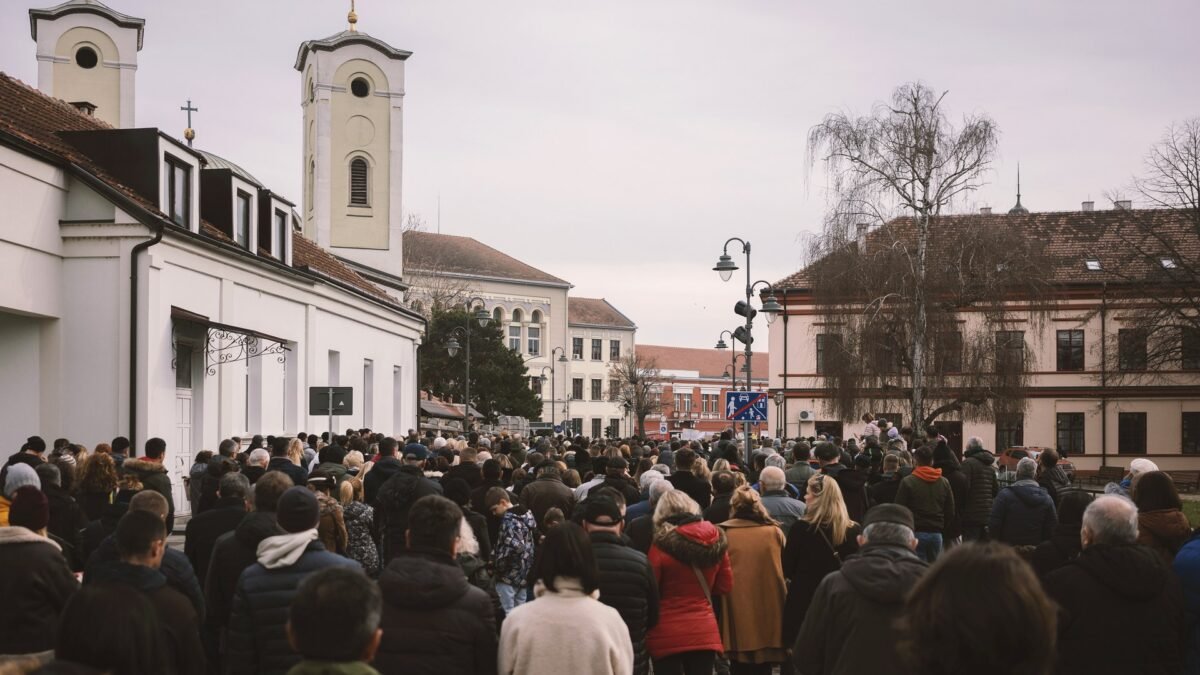
About 150,000 supporters of Serbia’s student-led opposition movement filled the streets of central Belgrade on Thursday, in the largest demonstration yet of the force now challenging more than 14 years of rule by Aleksandar Vučić and his Serbian Progressive Party (SNS) in Sunday’s snap parliamentary election, according to the AFP news agency and The Guardian.
The rally, the final major gathering of the movement’s campaign before the vote on 25 October, turned Slavija Square and the surrounding streets into a sea of Serbian flags and placards reading “Students are winning”. Demonstrators chanted, blew whistles and marched behind the “Students Win” electoral list — a leaderless slate of 250 candidates, backed by the student protest movement, that is seeking to end the dominance of Vučić’s right-wing populist SNS in what is widely seen as the most consequential election in the country’s recent history.
Vučić, for his part, held a rival rally across town on the same evening, accusing the student movement of being part of a foreign-funded attempt to seize power — a charge the students dismiss, according to Al Jazeera. Days before the vote, the stage is set for a contest that will decide whether nearly two years of street protest can be converted into governing power.
A movement that refused leaders is leading a ballot
The “Students Win” list is unlike anything Serbia’s electoral system has seen in decades, according to Reuters. Its 250 candidates include university professors, actors, farmers and a popular rapper, and the list is headed by a cardiologist, Ilija Srdanović — though the movement has said that does not necessarily mean he would become prime minister should the list win.
There is no formal leader at all: the movement has made a point of rotating its public faces to shield individuals from government smear campaigns, Reuters reported, while maintaining a tightly controlled media message. Over the past weeks, students and their supporters have run a methodical countrywide door-knocking campaign — described to Reuters by a dozen students and teachers — combining peaceful marches with grassroots organisation that political veterans in Belgrade admit they have rarely witnessed.
Ahead of Sunday’s vote, student groups have undergone training on election fraud and plan to station teams at polling stations, according to Reuters — an indication that the movement expects the contest itself, and not just the campaign, to be fought on the ground.
Two years that built a storm
The movement’s origins lie in the collapse of a concrete canopy at the recently renovated railway station in Novi Sad in November 2024, which killed 16 people. Days after the disaster, a few dozen people blocked traffic in Novi Sad and Belgrade for one minute for each person killed. Students quickly became the centre of the protests, blockading university faculties and demanding a transparent investigation — and, soon, an end to the corruption many believed lay behind the station’s shoddy construction, according to Reuters.
As Serbia mourned, sympathetic residents brought the students homemade meals, mattresses and pillows. What began as a demand for accountability hardened into a nationwide anti-corruption movement. In late January 2025, Miloš Vučević — then prime minister and a close ally of Vučić — resigned a day after tens of thousands of people blocked one of Belgrade’s main junctions, joined by farmers driving their tractors into the capital, Reuters reported.
Two months later, in March 2025, the students led hundreds of thousands of people through Belgrade in what Reuters described as the biggest anti-government march in a generation. By then the movement had a symbol: a red handprint, representing the blood that protesters say is on the government’s hands.
Vučić, 56, has dominated Serbian politics first as prime minister and then as president since 2014. According to Reuters, he stepped down as president in September to run again for prime minister in the snap election — a move that puts his own political future directly on the ballot.
While he has overseen a period of strong economic growth and falling unemployment, critics blame him for democratic backsliding, the silencing of critics and the media, and for hampering Serbia’s stalled European Union accession by failing to undertake necessary reforms. Rights groups, activists and students told Reuters that police have beaten protesters and threatened people who voice opposition online. The government has repeatedly denied the allegations of corruption and violence and of attempts to discredit the opposition.
The polls say one thing; the odds say another
The only poll published this month, by New Serbian Political Thought (NSPM) on 20 October, showed the students’ list edging ahead of Vučić’s SNS with 44.5% of the vote to 42.7% — although betting odds still favour Vučić, according to Reuters.
Whatever the true numbers, the conditions around the vote are contested. A joint statement by 24 Serbian civil society organisations warned days before the election that conditions for “free and fair elections” were lacking, according to AFP. The statement said its assessment was supported by documented findings from independent Serbian organisations working across different fields, not by isolated incidents or opposition claims.
On Wednesday, Belgrade prosecutors questioned six people arrested on suspicion of plotting “violence, riots and attacks” on election day, AFP reported. Reports of threats and intimidation targeting student demonstrators have grown in recent months, though the rallies themselves have remained largely peaceful since they began nearly two years ago.
“I’ve been following this fight since the very beginning,” a 35-year-old student rally attendee told AFP in Belgrade on Thursday. “Today is the last rally, and it’s important that we all come here to send a message of love and peace and that we see each other on the 25th at the polling stations.”
Analysis: Why It Matters
From the square to the slate
The most remarkable fact about Sunday’s election is not the size of Thursday’s rally but the journey it completes. Two years ago, the students had no candidates, no platform and no intention of entering politics; they had a one-minute silence for each of the 16 people killed in Novi Sad. Today they field 250 candidates, run a national ground operation and have trained poll-watchers for election day. Few protest movements anywhere in Europe have managed that transition without fracturing — and the rotation of leaders, the discipline of the message and the refusal of any single personality cult are the reasons, according to those who have watched the movement up close. Sunday is the examination of whether discipline in the street becomes discipline at the ballot box.
Vučić has bet everything on himself
By resigning the presidency to run again for prime minister, Vučić has turned this election into a personal referendum. It is a high-risk, high-reward calculation: if the SNS holds on, he returns with a renewed mandate and the opposition’s greatest wave spent; if the students win, the man who dominated Serbian politics for 12 years has lost to people with no experience of government at all. Personal referendums are famously unpredictable — they energise the opposition’s turnout as much as the incumbent’s — and Thursday’s sea of flags in Slavija Square suggests the opposition needs little energising.
The canopy and the growth numbers
Every election under Vučić has been fought on the economy, where his record of growth and falling unemployment gives him genuine arguments. But Novi Sad changed the terms of the argument. The canopy collapse turned an abstract complaint about corruption into a concrete tragedy with 16 names — and the students’ red-handprint symbol keeps it visible at every rally. The movement’s entire moral authority flows from that single event: it is hard to dismiss as partisan a protest that began with a minute of silence per victim. Whether voters punish the government for it on Sunday, or credit it for the economic record, is the central unknown of this election.
The real battle may be after the count
The poll giving the students 44.5% against 42.7% for the SNS comes with the caveat that betting markets favour Vučić — and in Serbia, the opposition’s deepest fear is not losing the count but being robbed of it. The 24 civil society organisations’ warning about electoral conditions, the arrests over alleged election-day violence plots, and the movement’s deployment of poll-watchers all point to the same conclusion: the decisive hours may be Sunday night and Monday, when the results come in. What the SNS does with a narrow loss — or what the streets do with a narrow, disputed win — is where this story could turn genuinely dangerous.
A foreign-policy vacuum waiting to be filled
Vučić is, as Reuters noted, a significant international figure: a leader who balances closer ties with China, a major investor, and Russia, Serbia’s traditional ally and principal supplier of natural gas, while keeping the door open to EU membership even with the accession process stalled. The students offer almost nothing on this front — they have been silent on joining the EU and on relations with Kosovo, and pro-European opponents criticise them for saying they would not impose sanctions on Russia. If the movement wins, Brussels, Moscow, Beijing and Washington will all be dealing with a government whose foreign policy they cannot predict. That uncertainty is itself a geopolitical fact: the Balkans have rarely rewarded a power vacuum, and everyone in the region knows it.
What to Watch Next
- Sunday’s result and the margin. A decisive win either way settles Serbia’s direction for years. A result within a few percentage points — the polls suggest exactly that — sets up the most dangerous scenario: a contested count.
- Turnout. The students’ entire strategy depends on converting rally crowds into voters, including younger Serbians who have historically stayed home. Turnout figures on Sunday evening will be the first real signal.
- Election-day conduct. With six people arrested over alleged election-day violence plots and civil society warning about conditions, watch for reports from polling stations — and from the students’ own fraud-watch teams.
- Vučić’s response to a defeat. Twelve years of dominance do not surrender easily. Whether the SNS accepts a loss, demands recounts or disputes the result will define Serbia’s stability in the weeks ahead.
- International reaction. The EU, in particular, will have to decide quickly how to engage with a student-led government that is silent on accession — and how to respond if the election is disputed.
Sources
- Reuters: As Serbia votes, students emerge as greatest threat to Vučić’s long rule
- Reuters: Serbia’s President Vučić resigns, paving way for early elections
- AFP (via ByteEU): Around 150,000 rally in Belgrade as Serbia heads to pivotal poll
- DW/AFP (via Zamin.uz): 150,000-strong rally in Belgrade ahead of Serbia’s election

About the Author — Abdul Mannan
Related Articles
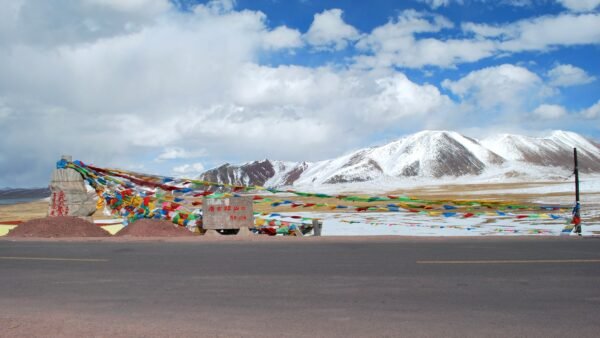
Magnitude 7.0 Earthquake in Tibet Kills at Least 16 as Homes Collapse
A magnitude 7.0 earthquake struck Baqên county in northern Tibet late on 22 October, killing at least 16…
US and Israel Draw Up Plans for Renewed Iran Strikes After Midterms, NYT Reports
US and Israeli military planners have drawn up a short, intensive strike campaign against Iran for after the…
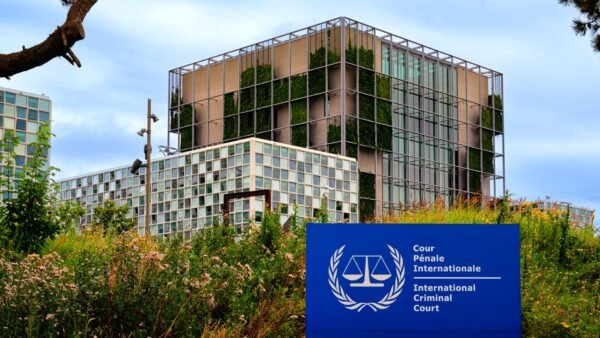
European Parliament Awards 2026 Sakharov Prize to International Criminal Court Amid US Sanctions
The European Parliament has awarded the 2026 Sakharov Prize to the International Criminal Court and its officials, a…