
Lucy Powell Tells England’s Schools to Stop Teaching GCSEs Early in Major Curriculum Overhaul

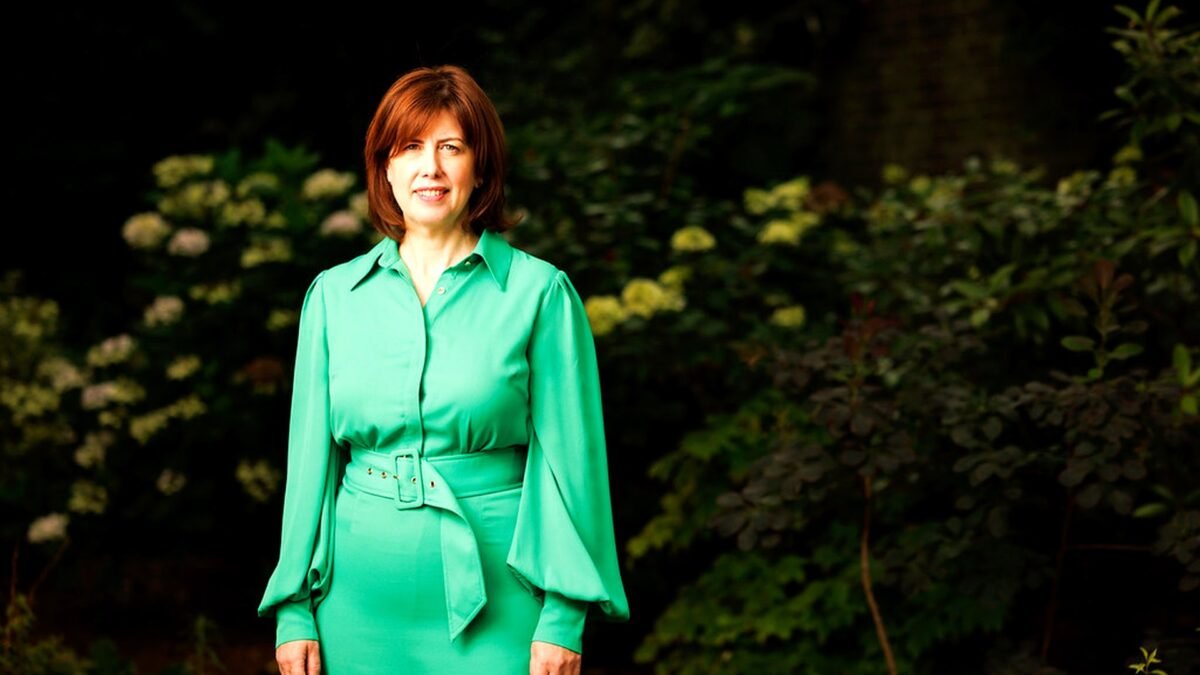
England’s secondary schools are to be told to stop teaching GCSE courses to pupils before Year 10, as part of the biggest shake-up of the national curriculum in a generation, the government announced on Sunday.
Education Secretary Lucy Powell said the new national curriculum, due to be published in full later this year, will restore the first three years of secondary school — known as key stage 3, covering Years 7 to 9 — as a distinct three-year phase, and will state in black and white that schools should not start GCSE specifications early for large groups of pupils, routinely require children to narrow their subject choices earlier, or routinely enter them for examinations ahead of time.
The move is aimed at ending what Ms Powell called the rise of “early exam factories”: schools that begin GCSE teaching in Year 9, and in some cases even earlier, so that the first years of secondary education have effectively become the first year of a three-year examination course rather than a broad introduction to subjects taught by specialists.
“The early years of secondary school should be a time when children are excited to go to school and engage in the specialist and much broader teaching on offer, and where they find their passion and develop a love of learning,” Ms Powell said, according to the Department for Education (DfE). “Instead, we’ve seen worrying trends of disengagement and high levels of persistent absence, with the disadvantage gap stubbornly large and too many leaving school without the knowledge and skills they need to thrive.”
“What’s more, the pressures of GCSEs and an overcrowded curriculum are resulting in too many children receiving a narrower offer during key stage 3 and being rushed towards exams without grasping the fundamentals or developing deeper understanding. I’m putting a stop to that.”
The announcement, published by the government on Sunday 8 November, is the latest and most eye-catching element of a curriculum overhaul built on Professor Becky Francis’s independent Curriculum and Assessment Review, to which the government responded in November 2025. It also draws on the Milburn Review and the first Independent Inquiry into White Working-Class Educational Outcomes, both of which examined why so many young people switch off from school in their early teens.
The new curriculum is expected to be introduced in schools from September 2028, according to The Times, although the DfE says the full document will be published later this year. The Guardian has reported that publication may slip into early 2027. Either way, nothing changes in classrooms overnight — but schools planning options and timetables for future year groups will need to take note now.
How widespread is early GCSE teaching?
Very widespread. According to a survey of teachers by the National Foundation for Educational Research (NFER), reported by Schools Week in September 2026, 56 per cent of 1,678 teachers from 1,439 schools said their school started GCSE teaching in “most if not all” subjects in Year 9, while 3 per cent said GCSE content began as early as Year 7. A DfE school snapshot survey the previous year found that in 35 per cent of schools, Year 9 pupils were expected to start key stage 4 study in all subjects.
The government’s own announcement notes that some schools start GCSE teaching as early as Year 7, and a survey by Public First for the International Baccalaureate found that more than half of teachers say GCSE courses are dominating the first three years of secondary school, despite the content not being intended to begin until Year 10. A separate report cited in coverage of the announcement put the figure at 57 per cent of teachers who said GCSE preparation was the leading influence on the key stage 3 curriculum.
Schools adopted the practice for understandable reasons. The reformed GCSEs introduced a decade ago carry a large volume of content — in English, for example, pupils must study 15 poems in detail — and spreading courses over three years gives teachers more time, reduces pressure in Years 10 and 11, and can lift results. Many top-performing state schools, including grammar schools, routinely teach GCSE content in Year 9 and often enter pupils for some examinations a year early, according to The Times.
But the government argues that the cost has become too high. Pupils are choosing their options ever earlier — in some cases in Year 8 — and then dropping subjects such as art, music, drama, languages and design before they have had a proper chance to discover whether they enjoy them. Ms Powell told The Times that in some cases children are taking their GCSE options in Year 8 and then starting GCSEs, or actually sitting the examination, in Year 9. “We don’t want to see that,” she said.
What exactly will change?
Under the plans, the new national curriculum will say that schools should not begin GCSE specifications early for large cohorts, should not routinely require children to narrow their options earlier, and should not routinely enter children for examinations early. The emphasis, the DfE says, is on the routine, whole-cohort practice — not on individual cases.
Teachers will keep the flexibility to stretch high-achieving pupils, or groups of pupils who are ready to go further, without narrowing their options. Ms Powell said she was not opposed to individual pupils sitting some GCSE examinations early if they were ready. “I don’t want it to be a core part of the school structure or to be crowding out the full breadth and the full engagement of key stage 3,” she said, according to The Times. She added that she has a “very bright year 9 child” herself who could probably sit one or two GCSEs this year, “but he doesn’t need to. There’s plenty of time in key stage 4 to sit those exams.”
Crucially, however, the new expectation will not be compulsory. The guidance will not be a mandatory part of the curriculum, so schools could legally ignore it, The Times reported. Ms Powell insisted, though, that “schools are expected to adhere to the national curriculum and teach the national curriculum”, and said the instruction would be set out “in black and white” in the document.
The change is only workable, the government argues, because GCSEs themselves are to be slimmed down. Ms Powell plans to cut the amount of content in GCSE courses so that they can be taught comfortably within the two official years, and total examination time will fall by two and a half to three hours for the average pupil, according to The Telegraph. English, mathematics, science and geography will all be reformed, as will other subjects with the heaviest content. Pupils in England currently sit up to 31 hours of GCSE examinations, according to The Times — comparable to Singapore, but significantly more than Ireland, at 16 hours, and Canada, at ten.
The new key stage 3 is also intended to be richer in its own right. The DfE says there will be higher expectations for oracy and confident speaking, reading fluently and reading for pleasure, and numeracy, alongside a more engaging offer in drama, physical education, music and modern foreign languages, plus technical and digital skills. Drama will become a distinct module within English at key stage 3 for the first time, Ms Powell told The Times, and modern foreign languages will be made more conversational and engaging. There has been a collapse in the number of children sitting a modern foreign language GCSE since the requirement to study one was dropped in 2004, under Tony Blair’s government.
Ms Powell summed up the philosophy in a line that is likely to be quoted back at her for some time. Focusing on examinations too early, she said, means pupils miss out on a wide breadth of skills and subjects, including modern foreign languages, drama, physical education, oracy, reading and cooking. “Even if you’re a maths genius [you] should be learning to cook as well,” she said.
Alongside the curriculum, the DfE is introducing a new enrichment framework to help schools make more space for experiences beyond the classroom, from practical experiments to debate, and a key stage 3 Alliance, co-chaired by Becks Boomer-Clark, chief executive of Lift Schools, is intended to champion the phase. “The first three years of secondary school are a critical phase in their own right, yet for too long they have been treated as little more than a preparation ground for GCSEs,” Ms Boomer-Clark said, according to the DfE. “This is not about lowering academic expectations, quite the opposite; it’s about giving young people the time to build really secure foundations in knowledge, while also having the space to explore, discover new interests and develop confidence in what they can achieve.”
The attendance crisis behind the reform
The government’s case rests heavily on what happens to children between the ages of 11 and 14. The proportion of pupils persistently absent from school almost doubles across the early secondary years, reaching one in four children by Year 9, according to the DfE — up from around 13 per cent in Year 6. Persistent absence is one of the strongest predictors of a young person later becoming NEET — not in education, employment or training — and for white working-class children, persistent absence rates are 75 per cent higher in secondary school than in primary school, the department said.
The figures are starker still in research cited by The Times. A University College London report found that almost 40 per cent of white working-class children were persistently absent, missing on average at least one day per fortnight, compared with a national average of 20 per cent. The DfE said its changes were aimed in particular at improving outcomes for white working-class pupils, for whom disengagement in the transition to secondary school is markedly worse, according to an independent inquiry.
“Key stage 3 is the point where — especially white working-class boys — we see the biggest amount of disengagement and absentee rates,” Ms Powell said, according to The Times.
Sir Hamid Patel, chief executive of Star Academies and co-chair of the Independent Inquiry into White Working-Class Educational Outcomes, welcomed the move. “Throughout our research for the Independent Inquiry into White Working Class Educational Outcomes, we found huge challenges in KS3,” he said, according to the DfE. “It is a time when a love of learning should be developed and when young people should experience a broad and balanced curriculum that exposes them to new ideas and new experiences — but instead too many white working class children are switching off and opting out. It is to be welcomed that the government is showing real commitment to renewing this important phase.”
Baroness Estelle Morris, the inquiry’s other co-chair, said its report had highlighted problems at points of transition, including the move from primary to secondary school, and had demonstrated how white working-class young people and their families disengage from the education system through the key stage 3 years. “This is why I welcome the government’s commitment to begin to address these issues,” she said. “The work of the inquiry is not yet over and we will soon come forward with fresh plans to drive change for white working class young people in the education system.”
A long-running argument
The argument about what the first three years of secondary school are for is not new. In 2015, Ofsted described key stage 3 as potentially “wasted years”, warning that pupils aged 11 to 14 lacked clear motivation. In 2019, the inspectorate said it would look at whether schools that taught GCSE options over three years were failing to give pupils the chance to study a range of subjects such as art, music or languages before they left school. Many schools continued with the practice regardless.
The roots of the three-year GCSE lie in the reforms of the previous Conservative government. Former Education Secretary Michael Gove prioritised English, mathematics and science, raised grade boundaries, made examinations harder and limited resits, and made GCSEs linear, so that they are sat all in one go at the end of Year 11 instead of over the course of key stage 4. The volume of content in the reformed qualifications gave schools a powerful incentive to start early, and league-table pressure did the rest: a school that starts GCSEs in Year 9 can claim an extra year of teaching time, and an extra year to lift its results.
That logic is precisely what Ms Powell is challenging. The government’s position is that the trade-off — breadth and engagement in exchange for more examination preparation — has been a bad one, and that it falls hardest on the pupils with the least support at home. The Guardian reported that the DfE has set out the line the new curriculum will take, and that the reforms are designed to tackle disengagement, the disadvantage gap between pupils from richer and poorer backgrounds, and the rising number of young people who end up not in education, employment or training.
There is also a structural question that will decide how far the change reaches. Academies, which account for 84 per cent of secondary schools in England, are currently exempt from following the national curriculum and can instead teach a “broad and balanced” syllabus as long as it includes English, mathematics and science. From September 2028, however, they will have to follow the national curriculum, alongside maintained schools, according to The Times. That is the moment when the guidance will bite for the great majority of schools — and also the moment when the government will discover whether its non-compulsory instruction is obeyed in practice.
Reaction so far has been broadly supportive but cautious. The Liberal Democrats’ education spokeswoman, Munira Wilson, said school was “more than drilling kids for exams”, but cautioned against “micromanaging” teachers. Teaching unions and school leaders have yet to respond in detail, and their reaction will matter: headteachers who have built their timetables around three-year GCSEs will want to see the slimmed-down specifications before they dismantle them, and they will ask how a broader key stage 3 can be staffed in subjects such as drama, music, languages and physical education, where specialist teachers are already hard to recruit.
Analysis: Why It Matters
The three-year GCSE was a rational response to a system that rewarded it
It is worth being fair to the schools that Ms Powell is now asking to change. Nobody introduced three-year GCSEs out of laziness. They did it because the qualifications became too full to teach in two years, because examination results are the currency by which schools are judged, and because parents — understandably — want their children to do well. A headteacher who could give her pupils an extra year of teaching time, and an extra year to practise the 15 poems or the science required practicals, was acting in her pupils’ interests as the system defined them.
That is the central tension in this announcement. The government is asking schools to give up a practice that, in narrow examination terms, works, and to trust that a slimmer curriculum, published later this year, will make the sacrifice unnecessary. The promise to cut examination time by two and a half to three hours for the average pupil, and to trim the content of the most overcrowded subjects, is therefore not a footnote to this policy. It is the policy. If the revised GCSEs still cannot be taught comfortably in two years, schools will quietly keep starting early — and because the new expectation is not compulsory, they will be able to do so without breaking any rule.
The history here is instructive. Ofsted warned about three-year GCSEs in 2019 and nothing much changed, because the incentives did not change. Ms Powell’s bet is that this time the incentives will change: slimmer specifications, a curriculum that explicitly says what schools should not do, and — from September 2028 — academies brought inside the national curriculum for the first time. That is a more serious package than a warning from an inspectorate. Whether it is serious enough will be judged by what happens in staff rooms, not in press releases.
The real prize is not examination results. It is attendance
The most important numbers in the government’s announcement are not about GCSE content. They are about absence. One child in four is persistently absent by Year 9, up from about one in eight in Year 6. For white working-class children, the figure approaches two in five. Persistent absence is one of the strongest predictors of becoming NEET, and the DfE itself frames the reform as part of a wider effort to tackle disengagement, the disadvantage gap and the rising number of young people outside education, employment or training.
That framing matters, because it redefines what the curriculum is for. For a decade, the argument about key stage 3 has been conducted mainly in terms of examination outcomes: does starting early raise grades? The government is now arguing that the question is the wrong one. The right question, in its view, is whether an 11-year-old who is bored, narrowly taught and already being prepared for examinations she will sit at 16 will still be turning up at 14. A curriculum that keeps children in school is worth more than a curriculum that squeezes an extra grade out of the children who were going to stay anyway.
There is a genuine evidence base for that claim. The transition into secondary school is a well-documented cliff edge: new building, new teachers, new expectations, and — for many children — a sudden narrowing of the subjects that made primary school enjoyable. The Milburn Review and the White Working-Class Education Inquiry both pointed to the same pattern, and the UCL figures on absence among white working-class children are stark. But it is also fair to note that the link between early GCSE teaching and absence is asserted rather than proven. Absence has many causes — illness, mental health, poverty, transport, caring responsibilities — and a richer key stage 3 will not, on its own, fix them. The government is making a bet that engagement is a large part of the answer. It is a reasonable bet, but it is a bet.
The “not compulsory” problem
The weakest point in the announcement is the one the government itself acknowledges: the new expectation will not be compulsory. Schools will keep the freedom to teach GCSE material to younger pupils they judge able to cope, and the curriculum will say schools “should not” start GCSEs early for large cohorts — not that they must not. Ms Powell’s insistence that “schools are expected to adhere to the national curriculum” is a statement of intent, not a legal duty.
That matters because the schools most likely to keep starting early are the ones with the strongest results — the grammar schools and high-performing comprehensives that The Times notes already teach GCSE content in Year 9. If those schools carry on, and their results hold up, other schools will face an obvious question from their own governors and parents: why are we giving up a year of teaching time when the school down the road is not? Guidance works when it is followed by everyone. Voluntary guidance, in a competitive system, is followed by the schools that can afford to follow it.
There are two forces that could make the guidance stick anyway. The first is Ofsted, whose renewed focus on a broad and balanced curriculum is likely to be relevant when inspectors judge whether a school’s key stage 3 is genuinely broad. The second is the September 2028 change that brings academies — 84 per cent of secondary schools — inside the national curriculum. For the first time, the great majority of schools will be teaching to the same document, and a headteacher who ignores its central instruction will be doing so in full view. Neither force is a ban, but together they may be enough. The risk is that they are not, and that in five years’ time another education secretary is making the same announcement.
What breadth actually means — and what it costs
It is easy to agree, in the abstract, that 11- to 14-year-olds should have a broad education. It is harder to deliver one. The subjects Ms Powell wants to protect — drama, music, modern foreign languages, physical education, cooking, oracy, reading for pleasure — are precisely the subjects that have been squeezed hardest over the past two decades, and not only by early GCSEs. Languages have been in decline since the requirement to study one was dropped in 2004. Music and drama have lost specialist teachers. Physical education competes for timetable space and facilities.
A broader key stage 3 needs more than permission. It needs teachers, and the government has not yet said how it will recruit them. It also needs a timetable, and the timetable is a zero-sum game: every hour given to drama or cooking is an hour taken from something else. The DfE’s answer is that slimming down overcrowded content will create the space, and that better sequencing will make the remaining content easier to teach. That is plausible, but it will only be proven when the full curriculum and the revised GCSE specifications are published, and schools can see for themselves whether the sums add up.
There is also a question about what happens to the children who genuinely are ready for more. Ms Powell has been careful to protect them, and her own example — a bright Year 9 son who could sit a GCSE or two now but does not need to — is a neat illustration of the distinction she wants to draw: between stretching an individual child and restructuring a whole year group around examinations. The distinction is real, but it is also delicate. In practice, the line between “stretching a group who are ready to go further” and “starting GCSEs early for a large cohort” will be drawn by headteachers, one timetable at a time, and it will be drawn differently in different schools.
A test of whether this government can change a system it did not design
Step back, and this announcement is about more than GCSEs. It is a test of whether a government can change the behaviour of a school system whose incentives were set by its predecessors and are now largely out of ministers’ direct control. Most secondary schools are academies. Most are judged by examination results. Most are led by headteachers who have learned, over years, that starting GCSEs early is the safe, rational choice.
Ms Powell’s approach — guidance rather than compulsion, slimmer content rather than a ban, a September 2028 horizon rather than an immediate order — is a recognition of those constraints. It is also a gamble that persuasion and redesign can achieve what compulsion could not, and that a system built around examinations can be talked into valuing something else. The phrase “early exam factories” is deliberately provocative, and it is meant to make the practice sound indefensible. But the practice survived an Ofsted warning in 2019, and it survived because it made sense to the people running schools.
The measure of this reform will not be the applause it receives this week. It will be the proportion of schools still starting GCSEs in Year 9 in 2029, the persistent absence figures in Year 9 in 2030, and whether the children who currently switch off at 13 are still in school — and still learning — at 15. If those numbers move, Ms Powell will have done something no education secretary has managed in a decade: changed what happens in the first three years of secondary school. If they do not, the next announcement will sound very much like this one.
What to Watch Next
- The full national curriculum, due to be published later this year, with the Guardian reporting early 2027 as a possibility — the exact wording on early GCSEs, and whether it is firmer than the “should not” language announced so far.
- The revised GCSE specifications, including the promised cut of two and a half to three hours of examination time for the average pupil — schools will want proof that the slimmed-down courses genuinely fit two years before they abandon three-year models.
- How academies respond, given that 84 per cent of secondary schools are currently exempt from the national curriculum and will only be brought inside it from September 2028.
- Ofsted’s approach, and whether inspectors treat early GCSE teaching as a mark against a school’s breadth and balance when they judge its curriculum.
- Responses from teaching unions and headteachers’ associations, which have yet to give a detailed verdict on whether the plans are workable in practice.
- Persistent absence figures in Years 7 to 9 over the next two years, and whether a broader key stage 3 is followed by any improvement in attendance among white working-class pupils in particular.
- Whether the full curriculum is published later this year as the DfE has promised, or slips into early 2027 as The Guardian has reported — and how schools planning options for the 2027 intake respond in the meantime.
Sources
- Department for Education / GOV.UK — “Curriculum overhaul to re-engage pupils in vital early secondary years” (8 November 2026)
- The Guardian, via World Right Now — “Powell moves to end early GCSE teaching in schools” (8 November 2026)
- The Times — “No early teaching of GCSEs in new curriculum, schools told” (8 November 2026)
- Sky News, via Bro Radio — “Schools to stop teaching GCSEs early in curriculum overhaul” (8 November 2026)
- British Bulletin — “Secondary Schools Told To Stop Teaching GCSEs Before Year 10” (8 November 2026)
- Teach17 — “Schools Told to Stop Teaching GCSEs Early: 17 Things to Know About the Key Stage 3 Shake-Up” (8 November 2026)

About the Author — Abdul Mannan
Related Articles
King Charles Leads Remembrance Sunday at the Cenotaph as Record Nine Former Prime Ministers Join Twelve Second World War Veterans
King Charles III led the nation in a two-minute silence at the Cenotaph on Remembrance Sunday, as a…

‘Windrush’ Accusations as Turkish Business Owners Face Removal After Sharp Rise in Home Office Settlement Refusals
Home Office figures show ECAA settlement grants fell 78 per cent in a year as hundreds of Turkish…
Five European Leaders Call for Closer EU-UK Ties as Barnier Warns Burnham There Will Be No Cherry-Picking on the Single Market
Five European leaders have urged closer ties with Britain ahead of the 20 November Brussels summit, as Michel…