
Mahmood Set to Soften Settlement Plan as Care Workers Win Exemption

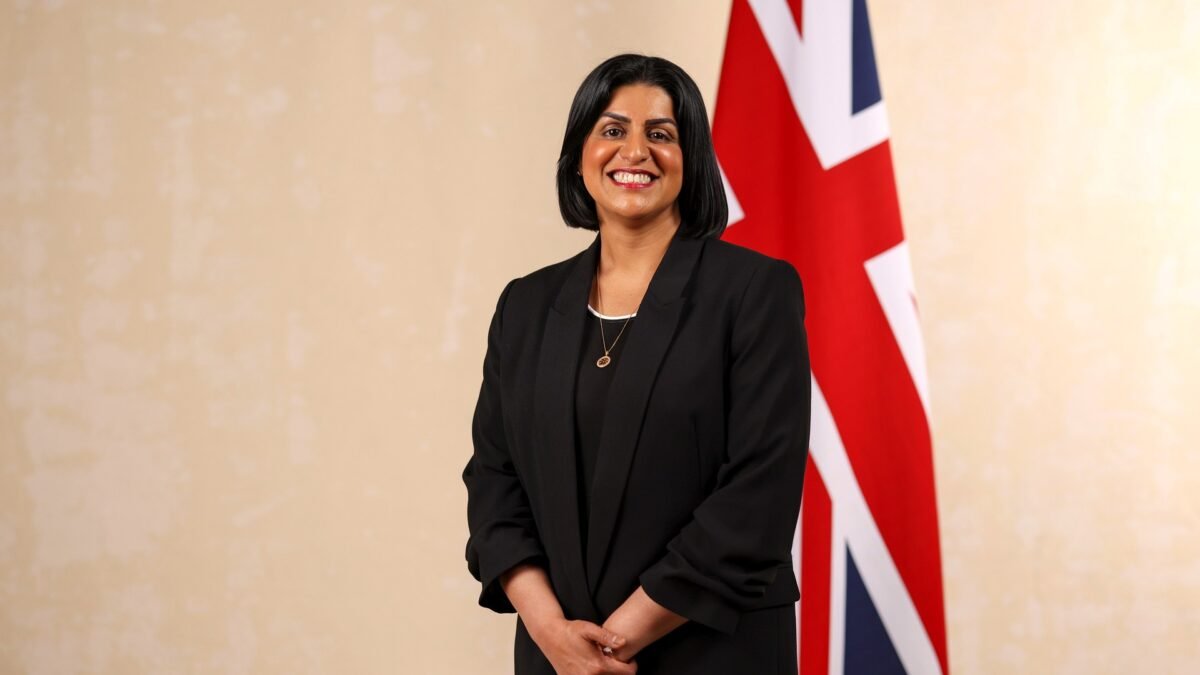
Home Secretary Shabana Mahmood is expected to announce her final decision on Britain’s settlement rules next week, and the package she puts before Parliament is set to look very different from the one she first unveiled a year ago, according to the BBC. The most significant change is likely to be an exemption for social care workers already living in the United Kingdom, sparing the lowest-paid part of the workforce from a wait for permanent residence that would have stretched to 15 years.
Mahmood’s original proposal, published for consultation in November 2025, would have doubled the standard qualifying period for indefinite leave to remain — the status that gives a person the right to live, work and study in Britain indefinitely and to claim benefits if eligible — from five years to 10. For lower-paid migrants, including most care workers, the wait would have risen to 15 years. The BBC understands that social care workers already in the country are now likely to be exempt from the longer wait, while most other workers will still have to live and work in Britain for a decade before they can apply for settlement, with the period reducible if they contribute to their local communities or earn higher incomes.
The announcement, expected in the coming week, will land after months of open warfare inside the Government over a policy that has become one of the defining tests of Andy Burnham’s premiership. The Home Office will not comment on Mahmood’s final decisions until they are presented to Parliament, but the direction of travel is now clear enough that one government source told The Sun it would be “more surprising if we stick with the proposals” as originally drawn up.
The stakes are enormous. The Home Secretary herself has said that about 1.6 million migrants are forecast to qualify for settlement between now and 2030, including hundreds of thousands of lower-paid workers and their dependants, with a peak of 450,000 people due to settle in 2028. She has also acknowledged that the cost to taxpayers of low-wage care workers alone would run to £10 billion. The consultation on the reforms drew 200,000 responses, a volume that underlines how many lives the decision will touch.
The plan is being fast-tracked to Parliament next week, shortly before MPs begin their recess, in a move reported by Internewscast as an attempt to head off a backbench revolt before it can gather momentum while MPs are in their constituencies. Dozens of Labour MPs have signalled that they could oppose the legislation, and opposition is thought to stretch well beyond the 100 MPs who signed a protest letter against the proposals. Government whips have been sounding out Labour MPs in an effort to contain the rebellion, and the Prime Minister is reported to be considering whether to relax the proposed timeframe himself in an attempt to avert what one report called a Labour civil war.
The climbdown, if confirmed, would mark a striking reversal for a Home Secretary who has staked her reputation on the toughest immigration stance of any Labour minister in a generation. Mahmood first announced the “earned settlement” model at Labour’s annual conference in September 2025, arguing that permanent residence should be a prize earned through contribution rather than a right that arrives automatically after five years. The consultation paper that followed, titled A Fairer Pathway to Settlement, set out a system in which the length of the wait would depend on how a migrant behaved and what they contributed: a 10-year baseline for most routes, 15 years for skilled workers in jobs below degree level, 20 years for people who had claimed benefits for more than a year, and up to 30 years for people who arrived illegally. Refugees with poor protection would qualify after 20 years.
Under the proposals, the wait could be shortened by factors the Government described as contribution and integration: a year off for speaking English to an advanced standard, five years off for earning more than £50,270 a year for three years, seven years off for earning more than £125,140, and five years off for working in certain public service jobs such as medicine and teaching. Every applicant would need English at B2 level — a requirement the Government has already confirmed will apply to settlement applications made on or after 26 March 2027 — a clean criminal record, no unpaid NHS, tax or other government debts, and a record of earning above £12,570 a year for between three and five years.
The most contentious element was never the longer wait for future arrivals. It was the decision to apply the new rules retrospectively, to everyone already living in Britain who had not yet secured indefinite leave to remain. That single choice is what turned a technical reform into a political crisis. People who had come to Britain in good faith, taken jobs, paid tax and built lives on the understanding that settlement would follow after five years discovered that the goalposts were moving — in some cases by a decade — while they were already most of the way there.
Housing Secretary Angela Rayner, before she rejoined the Cabinet, described the proposals as “un-British” because they sought to change the rules for people who had come to the UK in good faith. She has since pressed the case inside government for care workers to be shielded from the tighter settlement rules, warning of a sudden staffing exodus from a sector that already struggles to recruit. The Guardian reported this year that Burnham himself was considering intervening to make sure care workers were exempted and to prevent that exodus.
The Prime Minister’s own position has been carefully calibrated. Asked last week whether he would commit to bringing in all of Mahmood’s reforms, Burnham said he strongly supported the principle that indefinite leave to remain was a “right to be earned”, but stopped short of committing to the plans in full. “We’re in a position where we’ve been consulting on those reforms, and we will come forward with our decisions soon,” he said. “But I strongly support the Home Secretary when she says that settlement is a right to be earned through contribution, and that will be the principle that guides our reforms.”
That formulation — backing the principle while reserving judgement on the detail — has allowed Burnham to keep both wings of his party in play while the final package was negotiated. It has also left Mahmood exposed. A Conservative spokesperson said in September that “Shabana Mahmood has caved in to pressure from Angela Rayner and her open borders MPs and will shred her own plans to reform indefinite leave to remain,” calling the softening “a slap in the face to British taxpayers who will have to subsidise low-skilled, low wage migrants.” Shadow Home Secretary Chris Philp accused her of preparing to “surrender to the open-borders Left, led by Angela Rayner”.
The row over settlement is only one half of a wider confrontation inside the Government over Mahmood’s immigration programme. The Guardian reported on Friday that the Home Secretary has infuriated ministerial colleagues by refusing to disclose her department’s estimate of how much homelessness could rise as a result of her separate shake-up of the asylum system, announced last November. That package included ending permanent leave to remain for refugees, removing the Government’s duty to support people who would otherwise become destitute, and ending the use of asylum hotels.
According to the Guardian, sources say Mahmood has repeatedly refused to reveal how much she expects homelessness to rise, despite being asked on multiple occasions what the Home Office’s assessment was of the impact on homelessness and community cohesion. “Shabana has been asked on multiple occasions what the Home Office assessment was of the impact her changes would have on homelessness and community cohesion, but she point-blank refused to engage with it,” one person with knowledge of the standoff said. Home Office ministers are due to meet counterparts from other departments over the next few days in an attempt to work out a compromise.
The Home Office says it cannot put a number on the impact yet because the policy details are still being worked out, and insists the new system will be designed to minimise any impact on destitution and homelessness. A spokesperson said the policy had gone through the normal cross-government process, with information shared through the formal collective agreement procedure, and insisted that ending the use of asylum hotels would not leave people homeless, pointing to reforms the department says have already saved taxpayers more than £1 billion since the election.
But the department’s own impact assessment, released this month, concedes that homelessness could rise. “There is a risk that, if repayments materially reduce disposable income, some individuals could experience financial hardship or destitution,” the document said. “This may increase demand for homelessness services and rough sleeping support, creating additional cost pressures for local authorities.” An ally of Mahmood pointed to the same assessment, which says thresholds and repayment rates will be designed to ensure people retain enough income to meet basic living standards, and notes that because the design of the repayment mechanism has not yet been developed, it is not possible to assess the scale of the risk at this stage.
The dispute has sharpened since Burnham came to power, not least because the Prime Minister has promised to give every rough sleeper a route off the streets by Christmas, backed by hundreds of millions of pounds. Ministers working on that pledge fear that moving people out of asylum hotels, and changing the support available to them, could push more people onto the streets and make the target harder to reach, adding pressure on councils and charities already under strain. Rayner, as Housing Secretary, is said to be especially worried that moving asylum seekers out of hotels and into houses of multiple occupation could reignite the anti-immigration protests that flared in Epping, Essex, in 2025.
The first requests for details about the impact of Mahmood’s asylum changes were made by Ali McGovern and Miatta Fahnbulleh when they were ministers under Keir Starmer, supported by the then housing secretary Steve Reed. The pair secured a meeting with Alex Norris, then a Home Office minister and now the Justice Secretary, but felt few of their questions were answered. They were preparing to write a formal letter to the Home Office to demand the information when Fahnbulleh resigned from government in a move that helped bring about Starmer’s departure from Downing Street. The letter was never sent.
The settlement proposals have also drawn fire from outside Parliament. Campaigners warning of the risk of another Windrush scandal have written to Mahmood and Health Secretary Yvette Cooper urging the Government to scrap the reforms, calling them “unfair”, “punitive” and “an iteration of Windrush era policies”. The signatories, who include Labour MPs Bell Ribeiro-Addy, Clive Lewis, Rachael Maskell and Diane Abbott, as well as Labour peer Baroness Ruth Lister, said the changes would increase workforce instability in the health and care sector, which in turn risked worsening the health and wellbeing of everyone in the UK. They argued that, failing a full withdrawal, no reform should be implemented until impact assessments could be scrutinised, retrospective application should be ruled out, and a public service exemption should apply to all health and care workers and their dependants.
Trade unions have applied similar pressure. At the Trades Union Congress, delegates backed a motion calling for any changes affecting workers already in the UK to be withdrawn. Giving evidence to MPs on the Commons Home Affairs Committee in September, Mahmood said technical details for the new migration system were being worked on and she expected to announce policy later this year. The Home Affairs Committee had already warned in March that a 15-year route for care workers could push people out of the sector or leave them exposed to poverty and exploitation, while the House of Lords Justice and Home Affairs Committee reported in June in opposition to retrospective application.
The politics of the issue are shaped by the sheer scale of the migration wave the reforms are designed to address. The changes would apply to about 2.6 million people who arrived after 2021, in the period sometimes called the “Boriswave”, when immigration controls were drastically lifted and minimum salary requirements for the health and care visa were dropped. Current forecasts show 1.6 million of them are due to settle between 2026 and 2030. Mahmood’s concern, as set out when she launched the consultation, was the number of people who would become eligible for permanent residence — and with it access to benefits — after a period of very high net migration under the previous government.
That framing is also the Government’s answer to Reform UK, which has surged in national opinion polls and has pledged to abolish indefinite leave to remain altogether, forcing long-term residents — including people who have lived and worked in Britain for decades — to reapply for visas every five years. Mahmood has argued that her changes would restore order to the immigration system and puncture the appeal of hard-right parties. Keir Starmer, when he was prime minister, described Reform’s policy as “racist” and “immoral”, and Labour has presented its own approach as a dividing line: settlement earned through contribution, rather than settlement abolished.
The small-boats figures add to the pressure. More than 9,000 migrants have crossed the Channel in small boats since Burnham became prime minister on 20 July, according to The Sun, with 500 believed to have arrived on a single day last week. The Government’s own figures underline that the border question, which dominated the last election, has not gone away — and that every concession on legal migration is watched by critics on both flanks.
The settlement decision also arrives in the shadow of Chancellor John Healey’s first Budget, delivered on Wednesday, which the Resolution Foundation described as “scattergun”, warning that it would fail to prevent energy bills from rising above the levels seen during the last energy shock. The think tank forecast that typical annual energy bills would reach £1,750 after government support in 2026-27, above the £1,685 paid during the 2022-23 price jump after Russia invaded Ukraine, and that typical disposable income would fall by £1,050 between now and the end of the parliamentary term in 2028-29. Healey’s package included scrapping standing charges on gas bills and payments of £100 for up to 20 million households, but the Foundation said cost-of-living support was being spread too thinly. The Budget’s reception has left the Government with little room for another self-inflicted political wound, which is one reason the settlement climbdown is being handled with such care.
What happens next is a matter of days. The final decisions are expected to be presented to Parliament in the coming week, and the meetings between senior ministers that will settle the detail are already under way. The Home Office has said a government source described the talks as a stand-off between the Treasury and the Home Office, a description that captures the two competing pressures on the decision: the fiscal cost of settlement on one side, and the workforce and political cost of a hardline retrospective rule on the other.
Analysis: Why It Matters
A climbdown that reveals the limits of “earned” settlement
The likely exemption for care workers is more than a technical tweak. It concedes the central objection to the earned-settlement model as originally designed: that a system built around earnings and contribution would punish, above all, the people whose contribution is hardest to measure in pounds. Care workers are among the lowest-paid people in the sponsored workforce, yet their work is the most obviously socially valuable. A 15-year wait for settlement would have told them that their contribution counted for less than a banker’s, and the political system — from the care sector to the Cabinet table — has refused to accept that message. The exemption, if confirmed, does not resolve the tension; it simply moves it. Every other low-paid group, from cleaners to warehouse staff, will now ask why their contribution counts for less than a care worker’s, and the Government will have to answer that question in Parliament.
The retrospective principle is the real battleground
Strip away the argument about 10 years versus 15, and what remains is the question of whether a government can change the terms of a deal after people have already relied on it. That is why the retrospective element has drawn opposition from the widest coalition: Labour backbenchers, trade unions, Windrush campaigners, two parliamentary committees and, reportedly, the Prime Minister’s own allies. Retrospectivity is rare in British law precisely because it offends a basic sense of fairness, and the Government’s own consultation drew 200,000 responses, many of them from people whose plans were upended overnight. If the final package softens or drops the retrospective application, it will be because that coalition made the political cost of proceeding higher than the cost of retreat. If it does not, the first legal challenges are likely to be filed within days of the rules being laid.
Burnham’s authority is on the line, not just Mahmood’s
This is the first great internal test of Burnham’s premiership, and it is being fought on ground of his own choosing. He backed the principle of earned settlement while refusing to endorse the detail, a position that bought him time but also left him owning the outcome. A full climbdown would hand his critics — on the right, who will call it surrender, and on the left, who will call it proof the policy was never workable — a ready-made attack line. A hardline outcome would risk the backbench rebellion the whips are working to prevent, and would put his Christmas rough-sleeping pledge in direct conflict with his own Home Secretary’s asylum reforms. The likeliest outcome, a negotiated softening that protects care workers and trims the retrospective edge, is also the one that leaves both sides able to claim a win — which is usually how prime ministers survive their first crises.
The care sector cannot absorb another shock
Whatever Parliament decides, the practical question is whether the care workforce holds together. The sector already faces chronic vacancies, and the Home Affairs Committee warned in March that a 15-year settlement route could push people out of it or leave them exposed to poverty and exploitation. An exemption for care workers already in Britain would remove the immediate threat of an exodus, but it would not settle the position of future recruits, who would still face the longer wait unless the exemption extends to them. Care providers, local authorities and the NHS will be reading the fine print of next week’s announcement for exactly that distinction. A two-tier system — protection for those already here, a long wait for those who come next — would solve the political problem while storing up a recruitment problem for the years ahead.
Immigration is now the Government’s permanent emergency
There is a larger pattern here. Every major decision of this Government — the Budget’s energy support, the asylum hotel closures, the settlement reforms — is now filtered through the same lens: how it plays with voters who see immigration as the defining issue, and with a Reform UK that has turned that issue into a standing threat to Labour’s coalition. Mahmood’s reforms were designed to neutralise that threat by showing that Labour could be tough on legal migration as well as illegal crossings. The fact that the toughest element has had to be softened before it even reaches Parliament suggests the strategy has a structural weakness: policies designed to impress voters who will never vote Labour anyway can end up alienating the voters and MPs who do. The settlement row will not be the last time this Government discovers that tension. It is, if anything, the template for the arguments to come.
What to Watch Next
- The Parliamentary statement: Mahmood’s final decisions are expected to be presented to Parliament next week. Watch for whether the care-worker exemption covers workers already in Britain only, or future recruits as well — and whether the 10-year baseline survives intact for everyone else.
- The retrospective question: the single most consequential detail is whether the new rules still apply to the roughly 2.6 million people already in Britain without settled status. Any softening here would be the biggest concession of all, and the likeliest trigger for legal challenges if it is not made.
- The backbench arithmetic: with more than 100 Labour MPs having signed a protest letter and dozens more signalling opposition, watch whether the rebellion materialises when the legislation is laid — and whether the fast-tracked timetable before recess succeeds in defusing it.
- The homelessness assessment: Home Office ministers are due to meet other departments in the coming days over the asylum shake-up. Watch for whether the department finally publishes its estimate of how much homelessness could rise, and whether that figure forces a rethink of the asylum hotel closures.
- The care workforce numbers: in the weeks after the announcement, watch vacancy and retention figures in social care, and the response of providers and unions. The sector’s verdict will be delivered in staffing levels long before it is delivered in Parliament.
Sources
- BBC News (via NewsATW) – Mahmood expected to announce changes to rules around indefinite leave to remain
- The Guardian (via Europe Says) – Mahmood infuriates fellow ministers by failing to reveal impact of UK migration shake-up
- The Sun – Shabana Mahmood’s tough immigration crackdown faces major climbdown amid fears of huge Labour rebellion
- Internewscast – Watered-Down Migrant Plan Fast-Tracked to Quell Tory Rebels
- Care Appointments – Settlement reforms risk repeat of Windrush scandal, campaigners tell Government

About the Author — Abdul Mannan
Related Articles

Miliband Tells Lavrov ‘We All Know You Are the Aggressor’ as G20 Family Photo Is Scrapped
Britain's Foreign Secretary confronted Russia's Sergei Lavrov face to face at the G20 in Atlanta, telling him 'we…

Burnham Vows to Cut Welfare Bill ‘As Soon As We Possibly Can’ as Healey Defends Budget After OBR Warning
The prime minister says the government is "working flat out" to bring down the welfare bill after the…

Fewer 18-Year-Olds Apply Early to Oxford, Cambridge and Medicine as Disadvantaged Applicants Also Slip, UCAS Figures Show
UCAS figures for the 15 October deadline show 39,020 UK 18-year-olds applied to Oxford, Cambridge and medicine, dentistry…