
Miliband Tells Lavrov ‘We All Know You Are the Aggressor’ as G20 Family Photo Is Scrapped

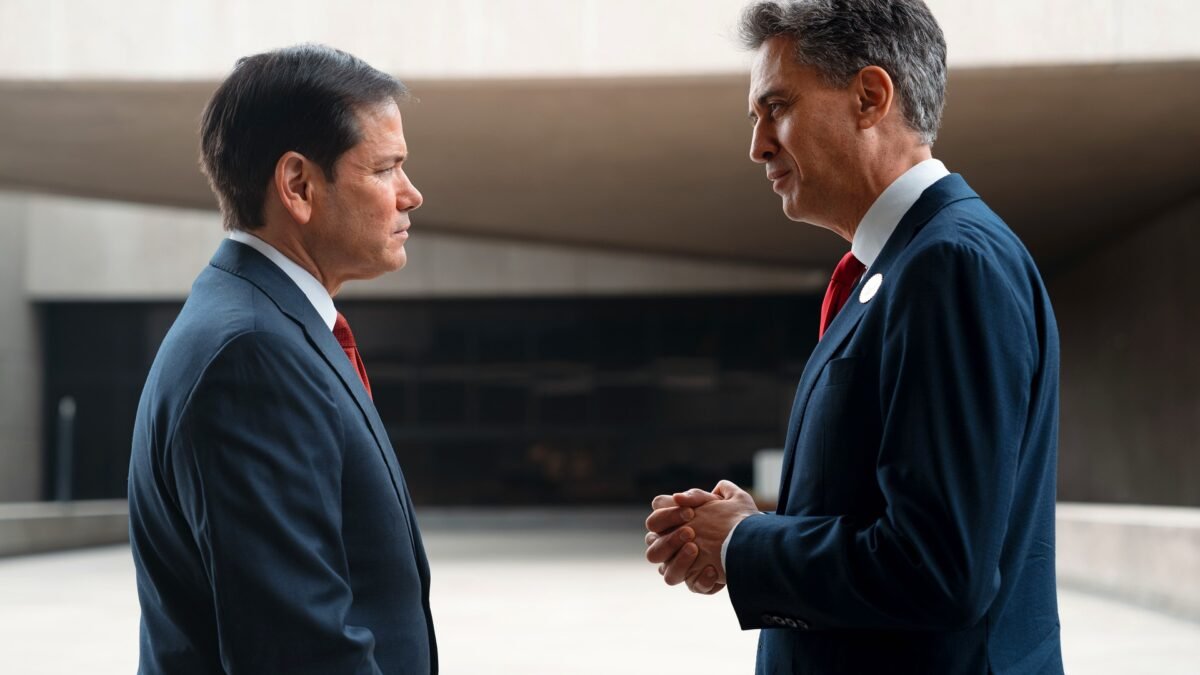
Britain’s Foreign Secretary, Ed Miliband, confronted Russia’s Sergei Lavrov face to face at the G20 foreign ministers’ meeting in Atlanta on Friday, telling him directly that “we all know you are the aggressor” in Ukraine, hours after European ministers refused to stand for the traditional G20 family photograph with the Russian envoy.
According to the Press Association, Mr Miliband used his intervention at the meeting of foreign ministers from the world’s leading economies to accuse Moscow of killing innocent civilians and to insist that Russia was not winning a war it had expected to finish quickly. The exchange, in front of diplomats from the world’s biggest economies, was the sharpest public confrontation between a British foreign secretary and Mr Lavrov in years.
“Let me say this directly to the Russian foreign minister – we all know who the aggressor in this war is,” Mr Miliband said, according to the Press Association’s account of the session. “Let’s talk about what happened at Dnipro railway yesterday. Only yesterday your drones attacked and killed 15 people. And there are countless examples like this of you killing innocent civilians throughout this war.”
Reuters had reported at least 14 people killed in the drone attack on the railway station in the Ukrainian city of Dnipro on Thursday, an attack that Mr Miliband placed at the centre of his case against Moscow.
“We all know you are the aggressor. We all know you started this war four and a half years ago with the full-scale invasion of Ukraine,” Mr Miliband continued. “And Putin thought then he would win this war easily. But you are not winning this war. Thanks to the courage of the Ukrainian people and the solidarity of countries round this table, you are not winning.”
He closed the passage with a direct challenge to Mr Lavrov himself: “If you had the courage to tell the truth and to do what is right you would tell Putin that he is not winning this war and will not win.”
The confrontation came on the first day of the two-day G20 foreign ministers’ meeting in Atlanta, Georgia, hosted by the United States Secretary of State, Marco Rubio. The gathering is intended to prepare the ground for a G20 leaders’ summit hosted by President Donald Trump at his golf club in Miami in December.
The photograph that never happened
Before Mr Miliband’s intervention, the meeting had already produced its most visible diplomatic incident: the traditional G20 “family photo” – the group photograph of foreign ministers that has been a fixture of such gatherings for years – was scrapped after Mr Miliband and other European ministers refused to be pictured alongside Mr Lavrov.
According to the BBC, two officials confirmed the cancellation of the photograph, which had been scheduled for Friday morning and would normally have included representatives of every nation in attendance. A United States official told the BBC the photograph was cancelled “after it became clear some of the delegations were unwilling to participate in a joint photo”.
Reuters reported that foreign ministers skipped the traditional group photograph ahead of their meeting after European representatives objected to Russia’s presence, and that the US State Department’s agenda for the meeting had not included the so-called family shot. Ministers, including Mr Lavrov, began the first session without having posed for photographers.
Sky News reported that a third of the participants, including Australia and Canada, had made clear they opposed the idea of being photographed alongside Mr Lavrov, citing Reuters and a Western diplomat. According to Sky News, Mr Rubio cancelled the planned photocall because he decided the controversy would be a distraction from the substance of the meeting.
Germany’s foreign minister, Johann Wadephul, put the European position bluntly before the first session on Friday. “In no case will there be a family photo with European partners and Mr. Lavrov together because … there is no normalcy with Russia,” he told reporters, according to Reuters.
A British government source told the Press Association: “We were not going to take part in any official picture with the Russian foreign minister.” The source added that Mr Miliband was in Atlanta “focused on the global challenges that are driving up costs for people at home”, and that “the UK has a longstanding policy not to have direct, bilateral engagement with Russian ministers since the invasion of Ukraine and we are not about to change that.”
Dame Emily Thornberry, chairwoman of the House of Commons Foreign Affairs Committee, told BBC Radio 4’s PM programme that she could understand why some countries would want to speak to officials from Moscow, but that “you wouldn’t want to have your photo taken at the moment with the Russians”. She added: “What you need to do is use this as an opportunity to make it perfectly clear that Europe is united behind Ukraine and that Russia has got to stop the war.”
The episode underlined how far the Ukraine war continues to dominate even gatherings whose agendas stretch far beyond it. Other items topping the agenda in Atlanta included the US-Israeli war against Iran, which has disrupted oil supplies through the Strait of Hormuz and driven a sharp rise in fuel prices, according to the Press Association.
A sideswipe at Washington
Mr Miliband’s remarks were addressed to Mr Lavrov, but parts of them were plainly aimed at a second audience: the United States. In what the Press Association described as a veiled sideswipe at President Trump, who recently waived sanctions against the Kremlin, Mr Miliband stressed the need for all countries to apply pressure and deprive the Russian leader, Vladimir Putin, “of the revenues that perpetuate this barbaric war”.
According to Reuters, European G20 members back Ukraine, which has objected to Mr Trump’s recent decisions on Russia, including a deal to buy diesel and to waive some sanctions. The Press Association reported that there has been growing discomfort among allies at the shift by Washington towards Moscow, noting that Mr Trump has declined to blame Russia for the war and has called for Ukraine’s leader, Volodymyr Zelenskyy, to be replaced as he presses for a settlement.
Mr Miliband also told the meeting: “If we are serious about our values and our interests we must also work harder to secure just and lasting peace in Ukraine. Russia’s war continues to cause colossal global harm, including the deaths of thousands of innocent civilians and disruption that hits energy and supplies and worsens food insecurity.”
“An assault not only on Ukraine but on us all, trampling international law, sovereignty and self determination – core principles on which we all depend,” he said. “This war is not simply a test for Europe or for Nato – it requires all of us to apply economic and diplomatic pressure to deprive Putin of the revenues that perpetuate this barbaric war.”
Mr Lavrov, Russia’s foreign minister since 2004 and a close, long-standing ally of Mr Putin, has been the public face of Moscow’s diplomacy throughout the war. His invitation to Atlanta by the American hosts had already drawn criticism from some countries before the meeting began, with several governments questioning why Russia’s top diplomat should be given a seat at a table convened by the United States at a moment when Washington is itself softening its stance towards Moscow.
Ukraine, which is not a member of the G20, was not invited to the Atlanta meeting, according to the BBC’s reporting – a fact that sharpened the sense among Kyiv’s supporters that the gathering’s choreography mattered as much as its communiqués. The country whose territory is at the centre of the dispute was absent from the room; the minister representing the state that invaded it was present, and the photograph that would have shown them all standing together was the first casualty.
Mr Miliband was appointed Secretary of State for Foreign, Commonwealth and Development Affairs on 20 July 2026, when Prime Minister Andy Burnham named him to the post, according to the official No 10 record of his appointment. Atlanta was his first G20 foreign ministers’ meeting in the role, and his intervention set the tone for Britain’s approach: confrontation with Moscow in the room, and no pretence of normality outside it.
Analysis: Why It Matters
1. A photograph is never just a photograph
It is easy to dismiss a cancelled group photograph as theatre, the kind of ceremonial detail that matters only to protocol officers. That would be a mistake. In summit diplomacy, the family photo is the single image that travels furthest: it appears on front pages, in news bulletins and in the history books, and it is read, everywhere, as a statement about who belongs in the room and on what terms. A photograph of Mr Lavrov standing shoulder to shoulder with the foreign ministers of Britain, Germany, France and Canada would have been used by Moscow as evidence that Russia’s isolation is over, whatever the words spoken inside the meeting. By refusing it, the Europeans denied the Kremlin that image – and they did so in a way that cost them nothing in substance, because the meeting itself went ahead. The symbolism was the point, and both sides understood it. That is why Mr Wadephul’s formulation – “there is no normalcy with Russia” – matters more than it first sounds: it is a doctrine, not a mood. As long as the war continues, the Europeans are saying, Russia may be present, but it will not be presented as a normal partner.
2. The real divide in Atlanta was not between East and West
The most significant fault line exposed in Atlanta did not run between Russia and its critics. It ran between the United States and its own allies. Washington invited Mr Lavrov, Washington set the agenda, and Washington cancelled the photograph – but the Europeans forced the cancellation, and Mr Miliband’s speech was in part a rebuke of the host’s own drift. When he spoke of depriving Mr Putin “of the revenues that perpetuate this barbaric war”, he was talking, unmistakably, about the diesel deal and the sanctions waivers that the Trump administration has recently granted Moscow. The discomfort is structural, not personal: the United States is pressing for a settlement in Ukraine, and a settlement, in Washington’s current framing, requires dealing with Moscow rather than isolating it. Europe, which lives with the consequences of the war in energy prices, food insecurity and the arrival of refugees, is not prepared to pay for that settlement with the appearance of normalisation. Atlanta made that disagreement visible in a way that communiqués are designed to hide. The photograph was the surface; the substance is a transatlantic argument about what a peace would be worth, and who would pay for it.
3. Miliband’s words were chosen for the record, not the room
Mr Miliband did not need to tell Mr Lavrov that Russia started the war; Mr Lavrov knows, and the room knew. The speech was crafted for audiences beyond Atlanta: for Kyiv, which needed to hear a British foreign secretary say in public what it has been saying for four and a half years; for the British public, for whom the cost of the war arrives in energy bills and food prices; and for Washington, which needed to hear an ally say plainly that sanctions relief for Moscow is a mistake. The Dnipro example was deliberate. By naming a specific attack, on a specific day, with a specific death toll, Mr Miliband turned an abstract argument about aggression into a concrete charge that could not be answered with generalities. The phrase “you are not winning this war” was repeated three times in the space of a few sentences – a rhetorical hammering that suggests it was written to be quoted, and to be quoted in full. Foreign secretaries do not improvise speeches like that. They deliver them knowing the cameras are not the only record; the transcript is, and the transcript will be read in Kyiv, in Moscow and in Washington.
4. This has happened before – and the precedent is not encouraging
Atlanta was not the first G20 gathering to lose its family photograph over Mr Lavrov. At the G20 foreign ministers’ meeting in Bali in July 2022, only months after the full-scale invasion, there was no group photograph either: G7 ministers boycotted the welcome reception, Mr Lavrov walked out of two sessions, and the meeting ended without a joint communiqué. The parallel is instructive, and sobering. Four years on, the choreography is the same – the refused photograph, the walkouts and confrontations, the absence of a communiqué – but the context has changed in one crucial respect. In 2022 the West was united in isolating Russia; in 2026 the United States, the host of the meeting, is the country pulling in the opposite direction. The Europeans are now defending a consensus that Washington is no longer sure it wants to keep. That makes the symbolism of Atlanta both more defiant and more fragile than Bali: defiant, because the Europeans held the line without American leadership; fragile, because a line held by some of the room is not the same as a line held by all of it.
5. The December summit is now the real test
Everything in Atlanta was, in a sense, a rehearsal. The foreign ministers’ meeting exists to prepare the leaders’ summit, and the leaders’ summit – hosted by Mr Trump at his Miami golf club in December, with Mr Putin invited – is where the questions Atlanta raised will have to be answered. Will Mr Putin attend? Will there be a leaders’ family photograph, and who will refuse to stand in it? Will the Europeans hold the same line when the stakes are a summit with their own heads of government, rather than a ministers’ meeting in Georgia? And will the Trump administration’s pursuit of a settlement produce a document that Ukraine can accept, or one that it is pressed to accept? Mr Miliband’s intervention was, in part, an attempt to shape the answer to those questions in advance – to make it harder, in December, to present a photograph of Mr Putin standing among world leaders as though nothing had happened. Whether that works will depend on whether other governments are willing to pay the same price in December that the Europeans paid in Atlanta: the price of an awkward absence where a smiling photograph should have been.
What to Watch Next
- The Atlanta communiqué: whether the foreign ministers’ meeting produces a joint statement, and whether it mentions Ukraine, Russia or the war at all. The Bali precedent – no communiqué – suggests the bar is low, and silence would itself be a result.
- Washington’s response: whether the Trump administration answers the European criticism of its diesel deal and sanctions waivers, or presses ahead with its settlement push regardless. Any further easing of pressure on Moscow would deepen the transatlantic split Atlanta exposed.
- Mr Putin’s December decision: whether the Russian president accepts Mr Trump’s invitation to the G20 leaders’ summit at his Miami golf club, and, if he does, how European leaders respond to the prospect of standing beside him.
- The leaders’ photograph: whether the December summit produces a family photo at all, and which leaders, if any, refuse to take part. The Atlanta refusal sets a precedent that will be hard to walk back.
- Ukraine’s position: whether Kyiv, which was not invited to Atlanta, is given a seat – or at least a voice – at the December summit, and how it responds to any settlement framework emerging from the American-led process.
Sources
- Reuters – “G20 foreign ministers skip photo-op amid objections over Russia” (30 October 2026)
- BBC News – “G20 ‘family photo’ cancelled after protests over presence of Russian minister” (30 October 2026)
- Sky News – “G20 photocall cancelled after Ed Miliband and other foreign ministers refuse to be pictured with Russia’s Sergei Lavrov” (30 October 2026)
- Press Association – “‘We all know you are the aggressor’ in Ukraine, Miliband tells Russian envoy” (30 October 2026)
- The Strategist (Australian Strategic Policy Institute) – “G20 foreign ministers’ meeting: almost pointlessness but irreplaceable in the margins” (background on the July 2022 Bali meeting)

About the Author — Abdul Mannan
Related Articles

Burnham Vows to Cut Welfare Bill ‘As Soon As We Possibly Can’ as Healey Defends Budget After OBR Warning
The prime minister says the government is "working flat out" to bring down the welfare bill after the…
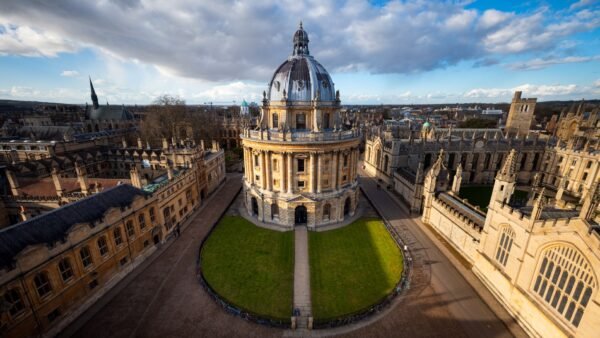
Fewer 18-Year-Olds Apply Early to Oxford, Cambridge and Medicine as Disadvantaged Applicants Also Slip, UCAS Figures Show
UCAS figures for the 15 October deadline show 39,020 UK 18-year-olds applied to Oxford, Cambridge and medicine, dentistry…
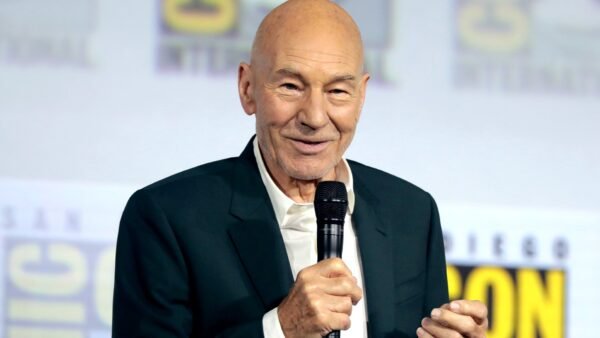
Sir Patrick Stewart Dies Aged 86: Star Trek’s Captain Picard and X-Men’s Professor X Remembered
Sir Patrick Stewart, the Yorkshire Shakespearean actor who became Captain Jean-Luc Picard and Professor Charles Xavier, has died…