
Theresa May Tells Burnham ‘Brexit Is Done — Move On’ as Former Prime Ministers Split Over EU Rejoining Talk

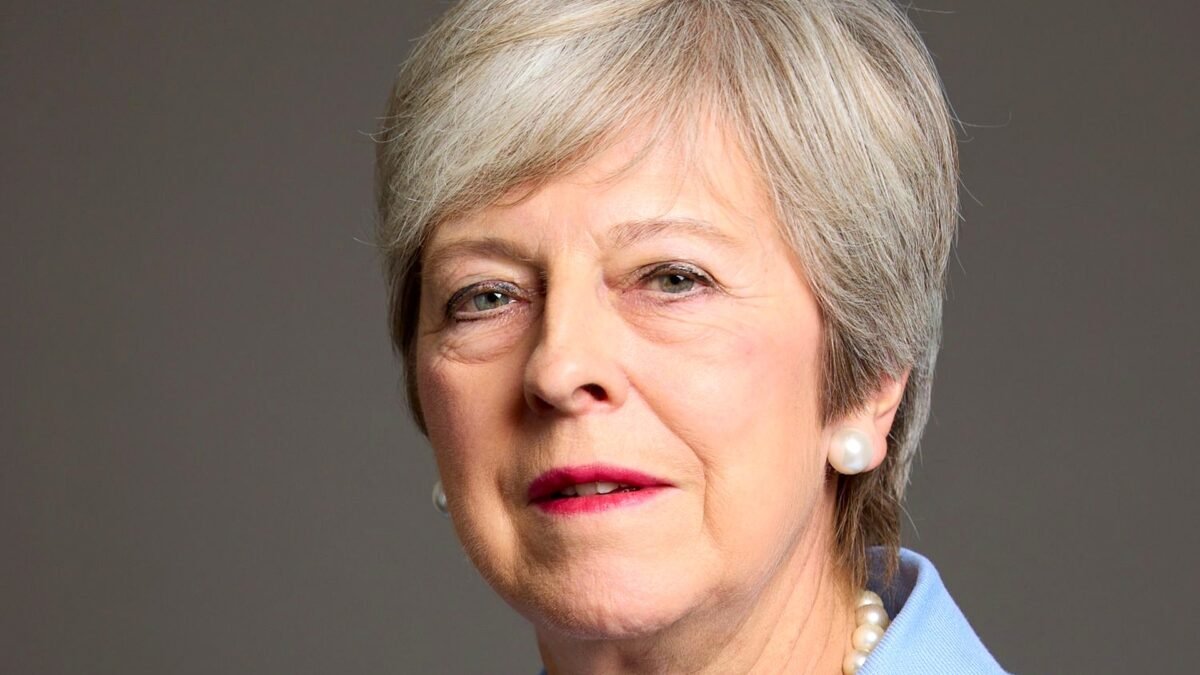
Former prime minister Theresa May has told Andy Burnham to accept Brexit and move on, saying she is “aghast” at the idea that the prime minister could be considering taking Britain back into the European Union.
In a rare and strikingly blunt intervention, Baroness May used an interview with the BBC’s Sunday with Laura Kuenssberg programme to warn that reopening the question of EU membership would swallow the government whole, just two days after Mr Burnham signed the closest agreement with Brussels since Brexit and opened a year-long debate about Britain’s future relationship with the bloc.
“Brexit is done. Just accept Brexit and move on,” she said, according to the BBC.
Her message was aimed directly at a prime minister who, in the space of a week, has gone from declaring that the Brexit settlement “has not worked” to signing three new deals with the EU in Brussels, to telling European leaders he wants to “brainstorm” with them about how the relationship could develop further — including, possibly, all the way back to membership.
Baroness May, who spent three years as prime minister trying and failing to get a Brexit deal through Parliament, said the sheer scale of any negotiation to rejoin would dominate the government. “What I saw was that the extent of those negotiations, the hours that have to be put in — it’s across the whole of government,” she said. “It’s not just prime ministerial time, cabinet ministers’ time, officials’ time, to-ing and fro-ing on those negotiations. Because you have to negotiate hard in order to make sure that you’re getting out what you want.”
“And that’s one of the reasons why I look slightly aghast at what Andy Burnham is talking about, further negotiations of going into the EU. And also we, as a country, we voted for Brexit. When I was prime minister I was very clear, we should deliver on that vote. So I’m afraid my message to him really is, you know, people voted for Brexit. Brexit is done. Just accept Brexit and move on.”
She also warned that a second referendum would infuriate voters. “I almost think this is what Andy Burnham is saying to the British people, sort of patting them on the head,” she told the programme. “He wants to pat them on their head and say, you know what, remember that vote? Well, you got it wrong, didn’t you? So have another go and come out with the right answer. Or what he thinks is the right answer. But as I say, let’s just get on with making sure the UK is as strong economically, in security terms, and in terms of opportunities for people as it can be.”
Three former prime ministers, three different warnings
Baroness May was not the only former prime minister to weigh in on Sunday. Tony Blair, who led the country from 1997 to 2007 and has long been one of Brexit’s fiercest critics, also urged caution — but for very different reasons.
Mr Blair told The Sunday Times that Britain should only rejoin the EU if the bloc reforms and embraces technological innovation. “I was painted as saying Britain should just go back and rejoin — I’m not saying that — it’s heavily conditioned,” he said, according to reports of the interview.
“The problem if we go back and join Europe is that; I can’t say that the technology revolution is the single biggest thing, and then if Europe moves in the wrong direction on technology innovation, which they might do and presently probably are doing, that it’s a good idea for Britain to rejoin. That’s what’s changed in this last ten years.”
Mr Blair, who has described leaving the EU as a mistake, has in effect set a test of his own: rejoining would only make sense, in his view, if Europe changes direction on the rules governing new technology. It is a striking position from a man who was once seen as the most enthusiastic advocate of British membership, and it underlines how much the argument has shifted since 2016.
David Cameron, the prime minister who called the 2016 referendum and resigned the morning after losing it, has also counselled caution, describing a conversation about rejoining as “long and painful”, according to reports. Mr Cameron’s warning carries its own weight: his premiership was ended by the referendum he called, and his successor spent three years wrestling with its consequences.
Meanwhile Alan Johnson, the former cabinet minister who led Labour’s 2016 campaign to remain in the EU, told the Sunday Mirror that Mr Burnham should press on with closer ties but should not spend political capital on a second referendum. “Europe is still the biggest commercial market in the world — bigger than China, bigger than America. Right on our doorstep, we would be crazy not to look for closer ties. Particularly as the deal that Johnson did was so awful,” he said. But he warned that the prime minister’s time could become “devoted to this one single issue”, adding: “What I don’t want to see is another referendum.”
Farage: ‘naive’ — and no mandate
The fiercest criticism came from Reform UK leader Nigel Farage, who called Mr Burnham “naive” and dismissed the Brussels package as “not a reset, it’s a reverse”, according to ABC News.
Speaking at a press conference in Brussels on Friday, Mr Farage said: “Naive Andy Burnham has gone to Brussels and been hit by the stark reality I’ve warned about for decades. Flexibility is a fantasy. They’ve used this moment to strong-arm the British prime minister over tuition fee cuts for hundreds of thousands of EU students, and have absolutely no concern for the impact it will have on Britain. It’s the same old game, and he’s fallen for it out of sheer inexperience.”
Mr Farage has also attacked Mr Burnham’s democratic mandate, arguing that the prime minister took office without leading his party into a general election and won his parliamentary seat with only about 25,000 votes. “The biggest democratic vote in history is about to be unravelled by a man with no mandate,” he said earlier in the week, warning that reversing Brexit would undermine faith in democracy itself.
Conservative leader Kemi Badenoch has said rejoining the EU would not solve all of Britain’s problems, while the shadow Cabinet Office minister Mike Wood accused Mr Burnham of being “intent on dragging us closer to Brussels, whatever the cost for British taxpayers and British sovereignty”. The deputy Conservative leader, Alex Burghart, accused the prime minister of reopening a debate the country had settled.
What happened in Brussels on Friday
The row follows a summit in Brussels on Friday at which Mr Burnham signed three agreements with the European Union, in what he described as the biggest step towards closer ties with the bloc since Brexit. The deals cover food and drink trade, a link between the UK and EU emissions trading systems, and a youth mobility scheme that will allow 100,000 young Britons aged 18 to 31 to live, work, study and travel in the EU each year, with reciprocal access for Europeans in the UK. The scheme is expected to start in 2030.
The government says the package could add up to 0.5 per cent to GDP by 2040, about £17 billion a year, by cutting red tape for exporters and easing the movement of young workers. The summit was the second between the UK and the EU this year, and Mr Burnham was greeted warmly by European Commission President Ursula von der Leyen and European Council President António Costa, who told him: “You are always welcome in the European Union.”
But the summit was dominated by an unresolved row over tuition fees. Brussels has demanded that the fees paid by EU students at British universities be cut from about £38,000 a year to £9,970, as part of a package worth almost £500 million in subsidies, and has given Britain six months to reach agreement. Mr Burnham was caught off guard by the demand as he travelled to Brussels, and the issue was not settled at the summit. The food and farming deal is not expected to be implemented until March 2028, well after the six-month deadline for settling the fees dispute.
It was at the summit’s closing press conference that Mr Burnham went further than any prime minister since the referendum, saying he wanted to spend the next 12 months in an “informal brainstorming process” with European leaders about the future relationship — including the possibility of rejoining the bloc. He has since said he would like to see Brexit reversed in his lifetime, and in September he said the UK could “go all the way” back to full membership.
Foreign Secretary Ed Miliband then sharpened the signal on Sunday, telling the BBC that “of course all the options will be on the table” when the government looks at the future relationship, and that ministers would “look at the benefits and the costs of all the different options”. He said the world had changed “massively” since the 2016 referendum.
Mr Burnham is expected to update MPs in the Commons next week on the outcome of the summit, and the government will bring forward legislation to put the deals into law. He is also expected to set out his view of the options as part of a 10-year plan for Britain to be unveiled in December.
How Burnham got here
The prime minister’s push for closer ties with Europe has been building for a week. In a major speech at the Lord Mayor’s Banquet in London on Monday, he declared that “the Brexit we were given has not worked. We have lost more than we have gained,” comparing the post-Brexit settlement to the fairy tale of the emperor’s new clothes and arguing that the promise to “take back control” of borders, laws and the economy had not been delivered. He put the economic damage at between 4 and 8 per cent of GDP.
He also set out three tests for any future agreement with Brussels: it must be consistent with Labour’s 2024 election manifesto and its red lines, it must improve on the existing arrangements so they better match what voters believed they were supporting in 2016, and it must pass what he called his “Makerfield test” — delivering tangible improvements to the everyday lives of people in places such as his Greater Manchester constituency. “At every stage the British people will be the boss,” he said, ruling out major changes before the next general election, which is not due until 2029.
That framing matters, because Mr Burnham’s position has shifted markedly. During the Makerfield by-election that brought him into Parliament, he pledged not to reopen Brexit arguments and said he was not proposing that Britain consider rejoining the EU. Within weeks of becoming prime minister, he was telling a City audience that the Brexit settlement was a failure and floating the prospect of a return to the bloc. A senior Labour figure told the BBC that Mr Burnham should be wary of putting a rejoining pledge in the next election manifesto, warning it could alienate voters, even as interest in discussing the question has grown inside the party.
Mr Burnham is the seventh prime minister since 2016, and the first to reopen the question of EU membership in earnest. His predecessors either negotiated the exit, delivered it, or tried to make it work. He is the first to argue openly that it has failed — and to ask, in public, whether Britain should go back.
May’s own history with Brexit
Baroness May’s intervention is unusual. Since leaving office, the former prime minister has typically reserved her public statements for areas of cross-party consensus, and she rarely attacks a sitting prime minister by name. That she chose to do so on the BBC’s flagship Sunday politics programme, in an interview recorded for broadcast, is itself a measure of how seriously she views the turn Mr Burnham has taken.
Her authority on the subject is hard to dispute, even for her critics. She took over in Downing Street shortly after the 2016 referendum, having supported Remain in the campaign, and spent three years negotiating an exit deal with Brussels. That deal was rejected by MPs three times, her authority collapsed, and she was forced to quit in 2019, replaced by Boris Johnson, who then delivered a much harder form of departure. The basics of that hard deal — leaving the single market and the customs union — are the settlement Mr Burnham now says has failed.
Her warning is, in effect, a warning from experience: she is telling the current prime minister that the negotiation he is contemplating would consume his government in exactly the way it consumed hers. “Let’s just get on with making sure the UK is as strong economically, in security terms, and in terms of opportunities for people as it can be,” she said.
That argument will resonate with many voters who are weary of a debate that has dominated British politics for a decade. But it also sits awkwardly alongside the fact that the settlement she helped to shape — the hard Brexit delivered by her successor — is precisely the settlement Mr Burnham says is not working. Her case is that the answer is to make the existing arrangements work better, not to reopen the question of membership. His case is that the existing arrangements cannot be made to work well enough.
Analysis: Why It Matters
This is no longer a row about three technical deals on food, carbon and youth mobility. Sunday’s interventions have turned it into the full return of the Brexit debate — the argument that has defined, damaged and ended British political careers for a decade, and that many voters believed was settled.
What makes this moment different from the arguments of the past ten years is who is arguing, and from which side. The loudest voice telling Mr Burnham to stop is not a Brexiteer triumphalist but Theresa May, a former Remainer who spent her premiership trying to deliver Brexit and was destroyed by it. The most cautious voice on the other side is Tony Blair, the most prominent Remainer in British politics, who is now saying that rejoining would only make sense if Europe itself changes. And the voice urging Mr Burnham forward, but warning him against a referendum, is Alan Johnson, the man who led Labour’s Remain campaign in 2016. The old Leave-Remain map no longer describes the argument. The new argument is about whether, how, and at what cost Britain moves closer to Europe at all.
For Mr Burnham, the politics are treacherous in both directions. If he presses ahead with a rejoining debate, he hands his opponents — the Conservatives, Reform UK, and the newspapers that backed Brexit — a clear line of attack: that a prime minister who has never won a general election is preparing to overturn the biggest democratic vote in British history. Mr Farage has already made that case in the bluntest terms, and Baroness May’s “patting them on the head” line gives it a form that will be quoted back at the prime minister for months. If, on the other hand, he retreats from the debate he has started, he will disappoint the many Labour MPs and supporters who were delighted by his Brussels reset, and he will look like a leader who talks boldly in Brussels and folds at home.
The practical obstacles are at least as large as the political ones. Baroness May’s central point — that a negotiation to rejoin would absorb the whole of government — is not a debating flourish. Rejoining would mean accepting the euro in principle, restoring freedom of movement, accepting the jurisdiction of the European Court of Justice, paying into the EU budget, and adopting thousands of rules Britain has spent years diverging from. A former UK negotiator has warned there may be little scope to build incrementally on the latest deal before the choice becomes stark: closer cooperation or rejoining, with no comfortable middle ground. A senior Whitehall source has cautioned that friendly relations with European leaders would not necessarily determine decisions in Brussels — a warning sharpened by the tuition-fees ambush, in which the Commission used the summit itself to press a demand worth almost £500 million that British officials had not expected.
The tuition-fees row is the clearest evidence yet that the path ahead will not be smooth. Mr Burnham arrived in Brussels expecting to celebrate a “win-win” package and left having been strong-armed, in Mr Farage’s phrase, over university fees, with six months to settle a dispute that pits the finances of British universities against the EU’s demand for equal treatment. The former deputy chief negotiator Oliver Lewis called the episode a “humiliating spectacle” and said Mr Burnham had been “played like a fiddle”. That may be partisan exaggeration, but it captures a real dynamic: Brussels negotiates hard, and it negotiates in its own interests. The warmth of the welcome — Mr Costa’s “you are always welcome” — does not change that.
There is also the question of what the British public actually wants. Mr Burnham told journalists in Brussels that polls showed three-quarters of Britons wanted closer relations with the EU, and it is true that polling has consistently shown a majority favouring a closer relationship. But “closer relations” and “rejoining the EU” are very different propositions, and support for the former does not automatically translate into support for the latter — particularly when rejoining would mean, as Mr Farage put it in Brussels, committing to join the euro, restoring open-door immigration with the EU, and paying tens of billions of pounds for the privilege. The senior Labour figure who warned Mr Burnham against a manifesto pledge understands this distinction. So, in his own way, does Mr Blair, whose conditions on technology and reform are a way of saying that the EU of 2026 is not the EU Britain left in 2020, and that rejoining it would be a different decision from the one voters faced in 2016.
What happens next will be decided in a series of set-piece moments over the coming weeks. Mr Burnham will update MPs next week, when the government brings forward legislation to implement the Brussels deals — and when the opposition will have its first proper chance to challenge him in the Commons on the rejoining question. In December he will publish his 10-year plan, which is expected to set out his view of the options for the future relationship. The six-month deadline on tuition fees will run until around May next year. And the youth mobility scheme, the most tangible prize of the Brussels deal for ordinary young Britons, is not expected to start until 2030.
None of those moments will settle the argument. The Brexit debate, Baroness May’s intervention shows, is not over. It has simply been waiting for someone to reopen it. Mr Burnham has done so, and the former prime ministers — the woman who tried to deliver Brexit, the man who tried to stop it, and the man who called the referendum that started it all — have now all had their say. The question is whether the current prime minister is listening, and whether he can hold together a government, a party and a country that have spent ten years arguing about Europe and are about to spend several more.
Sources
- The Sun – “I’m aghast at Burnham’s talks to rejoin the EU”
- BritBrief – “May warns Burnham to move on from Brexit as PM seeks EU ties” (reporting the BBC interview)
- The Guardian, via Greensboro Times – “Theresa May ‘aghast’ at Andy Burnham’s talk about rejoining EU”
- News Made Clear – “Theresa May warns Andy Burnham against reopening EU membership debate”

About the Author — Abdul Mannan
Related Articles
Centrica Boss ‘Hugely Concerned’ as January Energy Bills Set to Jump £443 and Unpaid Debts Pile Up
Centrica chief Chris O'Shea warns more households will fall behind on energy bills when the price cap jumps…
Cancer Does Change You: Princess of Wales Opens Up in Deeply Personal BBC Documentary ‘Heal’
Catherine, Princess of Wales, speaks more openly than ever about her cancer journey in 'Heal', a BBC documentary…

Barnham Votes to Leave the UK in Symbolic Referendum Over Asylum Centre Plan at RAF Barnham
Residents of the Suffolk village of Barnham voted 257 to 16 to symbolically leave the UK in protest…