
Democrats Flip North Carolina Senate Seat as Ossoff Holds Georgia in Early Midterm Results

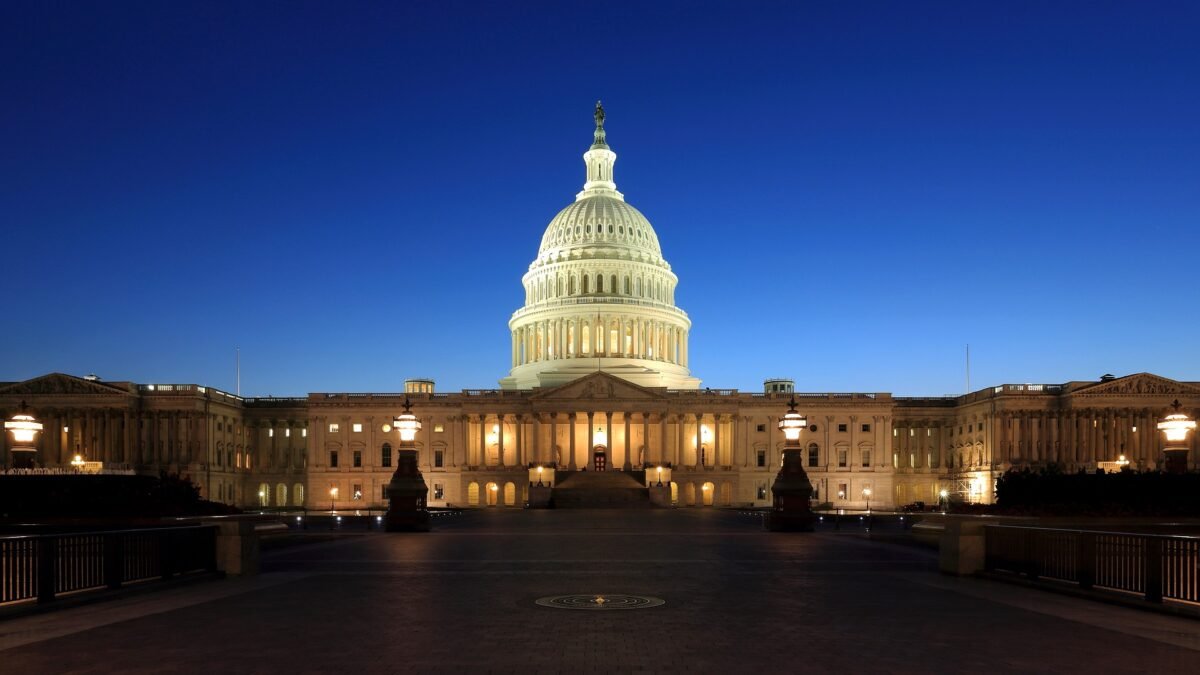
Democrats flipped their first Senate seat of the night in North Carolina and held on to Georgia on Tuesday, as the first results of the 2026 United States midterm elections pointed to a strong early night for the party in the first national vote of President Donald Trump’s second term, according to projections from multiple American news organisations.
Former North Carolina governor Roy Cooper defeated Michael Whatley, the former chairman of the Republican National Committee, in the state’s closely watched Senate contest, multiple outlets projected, delivering Democrats a much-needed flip in the upper chamber of Congress. In Georgia, incumbent Democrat Jon Ossoff was projected to defeat Republican challenger Mike Collins, a congressman backed by Mr Trump, in what USA Today described as the first major call of the midterm election.
The early results, reported as polls closed across the eastern United States on Tuesday evening, also brought a historic first in New Hampshire, where Democratic Representative Chris Pappas defeated Republican former senator John E. Sununu and will become the first openly gay man to serve in the United States Senate, according to multiple outlets. Democrats also claimed a striking upset in Florida’s 22nd congressional district, in the heart of Mr Trump’s Florida base, in a result that, if confirmed, would signal trouble for Republicans even in seats they had redrawn to favour their party.
Control of Congress, however, remained undecided as counting continued late into Tuesday night. Democrats need a net gain of just three seats to retake the House of Representatives, according to NBC News, and must flip at least four seats to win the Senate, according to The Times. The last polls were not due to close until 1am Eastern Time in Alaska, and in the last midterm elections four years ago the final Senate tally was not settled until the Saturday after election day and the House not until the following Wednesday.
Early results in some House contests had already signalled it could be a strong night for Democrats, USA Today reported, and the mood at the Washington headquarters of House Democratic Leader Hakeem Jeffries, who is poised to potentially become the next Speaker, was jovial as the networks called races for Democratic Representatives Kathy Castor and Jared Moskowitz in Florida, two seats Republicans had hoped to gain.
Cooper flips North Carolina — the Democrats’ first prize of the night
Mr Cooper’s victory in North Carolina was the Democrats’ first Senate flip of the night, and it came in the seat the party had long identified as its most likely pick-up. The former governor, who guided the state through the Covid-19 pandemic and three major hurricanes, is the first Democrat to win a Senate contest in North Carolina since 2008, when the late Kay Hagan defeated Elizabeth Dole, according to USA Today. Mr Whatley, a former chairman of the Republican National Committee, trailed by double digits for much of the campaign, the newspaper reported, despite the president’s best efforts to rally support in the last weeks of the race.
The Times reported that polling had consistently put Mr Cooper so far ahead that Republican funders stopped spending money on the race to focus their cash on more winnable seats. Mr Cooper succeeds Thom Tillis, a Republican senator who crossed Mr Trump and lost his endorsement after opposing spending in the president’s signature One Big Beautiful Bill, according to The Times.
The result carries a particular sting for the White House. Just as in Texas, The Times observed, Mr Trump helped to remove a sitting senator and put in his own hand-picked favourite, who proved less popular with voters than the retiring incumbent. Democrats had spent years trying to recruit Mr Cooper, who previously served as the state’s attorney general, believing his popularity and moderate brand would be formidable, USA Today reported.
North Carolina has been on the Democrats’ radar for years, and slipped more into the toss-up category largely due to President Donald Trump bleeding support amid anxiety over the economy, USA Today reported. The state was one of the night’s earliest tests of whether that anxiety would translate into votes, and the answer, on the first evidence, was yes.
Ossoff holds Georgia in the night’s first major call
In Georgia, Mr Ossoff’s projected victory was the first major call of the midterm election, with NBC News and Decision Desk HQ projecting that the incumbent Democrat would defeat Mr Collins, according to USA Today. Republicans once viewed Georgia as one of their best chances to flip a Democratic-held seat, the newspaper reported, but Mr Ossoff pulled away in polls as the campaign became a referendum on President Donald Trump.
The contest in the swing state, which President Trump won in 2024, was initially viewed as one of the tougher battles for the Democrats, The Times reported. Mr Ossoff, 39, was projected to win comfortably, the newspaper said, and has in the process become a breakout star of the midterms. Democrats praised him for going after Mr Trump on corruption and linking that message to the cost-of-living squeeze, according to The Times.
Mr Ossoff’s performance has already prompted talk of him as a contender for the 2028 Democratic presidential nomination, The Times reported. He has said repeatedly that he will not run and will instead serve his six-year term as a senator, the newspaper noted, while observing that analysts will note that a newly elected senator who said similar things — and a figure to whom Mr Ossoff has been compared — was Barack Obama.
His victory matters beyond Georgia. Of all the Democratic-held Senate seats on the ballot, Georgia was the one Republicans most expected to take, and its loss removes one of the party’s clearest routes to expanding its majority. It also means that the Democrats’ most vulnerable incumbent not only survived but, on the early evidence, won with room to spare.
Pappas makes history in New Hampshire; other Senate holds
Mr Pappas’s victory in New Hampshire carried a historic dimension of its own. The Democratic congressman defeated Mr Sununu, who comes from a popular political family in the state, and will become the first openly gay man to serve in the United States Senate, according to USA Today. Mr Pappas, who consistently won the historically purple 1st Congressional District, had faced a serious challenge, the newspaper reported, with national Republicans investing heavily in the race and polls showing a single-digit contest throughout the year.
His win holds a crucial Senate seat for Democrats as they hope to take the Senate majority, USA Today reported. The seat was open following the retirement of Democratic Senator Jeanne Shaheen.
Elsewhere, the early calls largely followed expectations. In Illinois, Lieutenant Governor Juliana Stratton will be the state’s next senator, according to NBC News and Fox News, USA Today reported. Ms Stratton, a member of the progressive flank of the Democratic Party, beat out more moderate, established Democrats in the primaries, the newspaper said, and had told USA Today in March that she would not support Senator Chuck Schumer as Democratic Senate leader. She will head to Capitol Hill 75 years after her father was unable to visit the building in 1951 because of segregation, according to the newspaper.
In Virginia, Democrats held on to a Senate seat as expected, with the incumbent Mark Warner defeating his Republican rival Bert Mizusawa, according to The Times. “Thank you, Virginia! I’m honored and grateful to continue serving as your United States Senator,” Mr Warner’s headquarters wrote on X shortly after the results were announced, the newspaper reported.
CNN projected that Democratic incumbents would win Senate races in Rhode Island, Delaware and New Jersey, The Times reported, with victories for Jack Reed, Chris Coons and Cory Booker respectively, all of which had been expected by pollsters.
Republicans, however, held at least one prized seat. In Florida, Republican Senator Ashley Moody fended off a challenge from Democrat Angie Nixon, according to projections from CNN and Decision Desk HQ, USA Today reported. Ms Moody, the state’s former attorney general, was appointed to the Senate seat to replace Marco Rubio when President Trump picked him as secretary of state, the newspaper said. Ms Nixon had energised the left and was among a number of Democratic Socialists on the ballot, according to USA Today.
A warning sign for Republicans in Florida’s 22nd district
Perhaps the most striking early House result came in Florida, where Democrats claimed victory in the state’s 22nd congressional district, which is home to Mr Trump’s Florida base, in what The Times described as a significant upset. Mr Trump carried the newly drawn district by more than ten points in 2024, the newspaper reported, and Republicans had reshaped its boundaries to make it more favourable to their party.
“A Democratic win would therefore represent not simply a congressional pickup, but a warning that even seats designed to strengthen the Republican majority may be vulnerable in the Trump era,” The Times wrote. The result, if confirmed by formal projections, would suggest that the Republican redistricting effort in Florida — designed to lock in the party’s House majority — may have backfired in at least one district.
Democrats also held seats Republicans had targeted in Florida. Representative Jared Moskowitz held on to his seat in the House despite running in a district newly drawn by Florida Republicans, multiple outlets projected, according to USA Today. Mr Moskowitz, a two-term congressman, fended off a challenge from Scott Singer, a Republican and former mayor of Boca Raton, in the state’s 25th Congressional District. His victory was a stinging defeat for the Republican Party, the newspaper said, given its efforts to redraw the seat in its favour. Applause and cheers broke out at Mr Jeffries’s headquarters when the networks called the races for Mr Moskowitz and Ms Castor, USA Today reported, under logos carrying the phrase “fighting for an affordable America”.
The races still to be decided: Texas, Michigan and Maine
Three Senate races that could decide control of the chamber remained uncalled as counting continued, and each carries a story of its own. In Texas, Democrats have their best chance of winning a statewide race since 1994, according to The Times, as James Talarico, a 37-year-old Democratic state representative and educator, seeks to defeat Ken Paxton, the Republican state attorney general.
The polls show the race is close, with Mr Talarico holding a slight edge, The Times reported, and he is likely to be ahead early in the night because a vast majority of Texans vote early, although election-day votes in rural areas will come in later and could narrow his lead. Total spending in the Texas Senate race is nearly $600 million, including the bitterly contested Republican primary, the newspaper reported. Elon Musk has donated about $212 million to groups aligned with Mr Paxton, while Mr Talarico has raised $134 million, according to The Times.
In Michigan, Abdul El-Sayed is vying to become the first Muslim senator in American history, The Times reported, in a contest against Mike Rogers, a Republican former congressman backed by Mr Trump, according to USA Today. A victory for Mr El-Sayed, who has been critical of Israel, could indicate shifting sentiment towards Israel among Democrats in the swing state, The Times observed. Mr El-Sayed faced public dissent from within his own party this week when Haley Stevens, an outgoing Democratic congresswoman in Michigan, pulled her support and endorsed Mr Rogers, the newspaper reported. On Tuesday evening he had a terse exchange with a Sky News reporter, telling him he wanted “zero” votes in the UK and asking him to stop following him around, according to The Times.
In Maine, the incumbent Republican Susan Collins is trying to hang on to her Senate seat of 29 years, The Times reported. Maine voted for Kamala Harris two years ago, and Ms Collins has been polling neck and neck with her Democratic opponent, Troy Jackson, a former logger, according to the newspaper. Mr Jackson joined the ballot late into the cycle after the initial Democratic candidate, Graham Platner, was forced to withdraw over a string of controversies. Ms Collins took the stage at her election-night party in Bangor shortly after polls closed, telling supporters that results would take a while to come in, according to USA Today.
Other Senate races were also being watched closely. In Kansas, Republican Senator Roger Marshall is facing a fierce challenge from Democrat Reverend Adam Hamilton, who leads the country’s largest Methodist church, USA Today reported. In Mississippi, incumbent Republican Senator Cindy Hyde-Smith is on defence as Democrat Scott Colom hopes Black voters and tensions with President Trump will flip a reliably red seat. In South Carolina, the state broke its voter turnout record for a gubernatorial election, the state’s election commission said on Tuesday night, with 56 per cent of registered voters having cast a ballot as of 6pm Eastern Time, surpassing the previous record set in 2002, according to USA Today. The Senate race there, between Democrat Annie Andrews and Republican Darline Graham, the sister of the late Senator Lindsey Graham, is tighter than expected, the newspaper reported.
Affordability dominated voters’ minds
If there was a single theme to the night, it was the cost of living. For voters across the country, gas prices and rising costs were top of mind as they streamed into polling stations on Tuesday, USA Today reported. In Scottsdale, Arizona, 28-year-old Lorena Quintana said it was the rising cost of living that drove her to vote. “I don’t want to drive around the valley to find the cheapest gas,” she told the Arizona Republic, part of the USA Today Network. “I want to be able to pay my rent, my gas and be able to afford kiwis and strawberries without it feeling like a luxury.”
In northeastern Georgia, Willie Lovine, a truck driver, said he had implored a co-worker to vote by citing the cost of diesel fuel, which he said had risen sharply during the war with Iran. “Diesel is $6 a gallon. If you vote that might change,” he told the Savannah Morning News, part of the USA Today Network. In Des Moines, Iowa, ToiAne Johnson, a 37-year-old single mother of eight who works two jobs, said her biggest concern was making ends meet. “I have to work two jobs just to maintain, at least try to maintain food on the table for my kids [and] a house for us,” she told the Des Moines Register, part of the USA Today Network.
The early exit polling pointed in the same direction. President Trump’s approval rating stood at 38 per cent among Americans who voted in Tuesday’s midterm election, according to preliminary results from an NBC News exit poll reported by USA Today. That figure, if it holds, would be a sobering one for a president whose party is defending both chambers of Congress, and it helps explain why Democratic candidates across the country built their campaigns around affordability.
The night was also the most expensive election in American history, according to The Times. The biggest single spender, according to official filings, is Mr Musk, the newspaper reported. The world’s richest man, who has had an at times tempestuous alliance with Mr Trump since his return to office last year, has donated more than $445 million to Republican-aligned political action committees and groups, according to the newspaper.
A chaotic Election Day: floods, ballot shortages and bomb threats
Election Day itself was not without disruption. Heavy flooding in Florida forced more than 20 polling stations to relocate, The Times reported. Ron DeSantis, the state’s governor, issued an executive order on Monday “to ensure that residents in those areas in affected counties still have the ability to vote” as half a year’s worth of rain fell in a day and a half, the newspaper said. More than 20 polling precincts across Brevard, Broward, Highlands, Indian River, Martin, Okeechobee, Palm Beach and St Lucie counties were moved, according to The Times.
In Michigan, some polling locations in Dearborn temporarily ran out of ballots late in the evening amid high voter turnout, USA Today reported. The city’s mayor, Abdullah Hammoud, urged voters to remain in line, posting on X: “PLEASE STAY IN LINE. DO NOT LEAVE.” He reminded voters that as long as they were in line before polls closed at 8pm, they had a legal right to cast a ballot. Dearborn is home to the largest Arab American community in the country and is believed to be critical in the Senate race between Mr El-Sayed and Mr Rogers, according to USA Today.
In Ohio, voting at Beverly Elementary School in Lucas County continued until 9.15pm Eastern Time after bomb threats to the school prompted closures on Election Day, USA Today reported. Poll workers safely evacuated voters and election personnel while law enforcement agencies cleared the scene, and normal voting resumed after it was determined that there was no danger, the county Board of Elections said, according to the newspaper. In North Carolina, a technical issue earlier in the day affected five precincts across four counties, The Times reported, and polling hours were extended in Columbus, Lenoir, Hertford and Wilson counties.
Some Republicans claimed the breakdown of ballot machines in a competitive district in New York was evidence of election fraud, The Times reported, although no evidence of fraud was presented. Distance, meanwhile, was no obstacle for the three Americans aboard the International Space Station, who cast their ballots in the midterms from orbit, according to The Times. “Yes, you can even vote from space!” Anil Menon, one of the three, wrote on X on Tuesday. Astronauts have been voting from space since 1997, when the Texas legislature passed a law allowing them to vote while in orbit, the newspaper reported.
Mr Trump spent the evening watching the results come in with members of his cabinet and other officials from the East Room of the White House, The Times reported. Before any of the polls had closed, he lashed out at Fox News on Truth Social, saying he had turned off the network’s election-night coverage because he “can’t stand” the voice of Jessica Tarlov, a co-host of the Fox News roundtable programme The Five. Thirty minutes after his initial post, he criticised the network for a second time over its polling, The Times reported.
Analysis: Why It Matters
1. The economy, not the culture war, decided the early night
The most important fact of the evening is also the simplest: voters went to the polls thinking about prices. The exit poll putting Mr Trump’s approval at 38 per cent, the voter interviews about rent, diesel and groceries, and the Democratic campaign slogan plastered across Mr Jeffries’s headquarters — “fighting for an affordable America” — all point in the same direction. The Democrats who won early, from Mr Cooper in North Carolina to Mr Ossoff in Georgia, campaigned on the cost of living and on corruption, not on the cultural battles that have dominated much of the last two years. That is a lesson the party will carry into the remainder of the night and into the next two years: when the economy is the question, the party that sounds like it is listening to household budgets wins the hearing.
2. North Carolina changes the arithmetic of the Senate
A single flip does not change control of the Senate, but it changes the arithmetic and the psychology. Democrats entered the night needing to flip at least four seats, a steep climb, and North Carolina was the seat they were always most likely to win. Taking it early removes the easiest piece from the board and puts the pressure squarely on the three harder contests still to come: Texas, Michigan and Maine. It also matters that the flip came against a former chairman of the Republican National Committee, a candidate chosen with the president’s blessing, in a state Mr Trump carried. If the pattern holds in the states still counting, the night could yet produce a genuine contest for the chamber rather than the comfortable Republican hold many forecasters expected.
3. Georgia shows the limits of the referendum strategy — for both parties
Mr Ossoff’s projected victory in Georgia is a reminder that a referendum on a president cuts both ways. Republicans believed the race would be a referendum on Mr Trump’s most vocal Democratic critic; instead, as USA Today reported, the campaign became a referendum on Mr Trump himself, and the incumbent pulled away. But the same logic should worry Democrats in the races still to be decided: a nationalised election rewards the party that owns the dominant issue of the moment, and that issue, on Tuesday’s evidence, was affordability. The party that mistakes a verdict on prices for a verdict on personalities will misread the night.
4. The Florida upset is a warning about redistricting
The claimed Democratic victory in Florida’s 22nd district deserves attention beyond its single seat. The district was drawn by Republicans, in a state Mr Trump carried by more than ten points, precisely to strengthen the Republican majority. If the Democratic claim is confirmed, it will stand as evidence that aggressive redistricting can misfire: maps drawn on the basis of one election’s margins can become traps when the political weather changes. For a party that has invested heavily in redrawing maps across the country, that is a cautionary tale worth more than the seat itself.
5. Whatever happens next, the president’s second half has changed
The deeper significance of the night lies in what it does to the remainder of Mr Trump’s second term. A House controlled by Democrats would mean investigations, subpoenas and the end of the president’s legislative freedom; a Senate that narrows, even without flipping, would make confirmations and the president’s agenda harder. The Times reported that some analysts already expect a president who loses Congress to turn to foreign policy, where he faces less legislative scrutiny, and noted that The Wall Street Journal has reported that the United States has warned its Gulf allies to prepare for a “short, intense” resumption of the war with Iran after the midterms. A recent Pew poll found only 33 per cent of Americans approve of military action in Iran, according to The Times. The election results, in other words, may not only decide who controls Congress; they may also shape whether the president reaches for a foreign crisis to regain the initiative he is losing at home.
What to Watch Next
- Control of the House: Democrats need a net gain of three seats. The early Florida results point their way, but the count in California, where polls close at 11pm Eastern Time, and in the remaining competitive districts across the country will decide whether the party retakes the chamber or falls short.
- Texas, Michigan and Maine: With North Carolina flipped, the Senate now turns on these three races. A Democratic win in any of them would keep the battle for the chamber alive; Republican holds in all three would end it.
- The scale of the Democratic night: The Times noted that whether the Democrats were right to talk of a blue wave would probably become clear overnight. The margins in the called races — and whether the Florida upset is confirmed — will tell the story.
- The president’s response: Mr Trump has already vented at Fox News on election night. Watch for his public response to the results, and for any move towards the Iran question, which The Wall Street Journal has reported is waiting until after the midterms.
- The final tallies: In the last midterms, the Senate was not settled until the Saturday after election day and the House not until the following Wednesday. Tight races in Texas, Michigan and Maine could take days, and any recounts or legal challenges would extend the uncertainty further.
Sources
- USA Today — Live election results: Ossoff wins in Georgia to hold Democratic Senate seat (live blog, 3 November 2026)
- The Times — Midterm elections results live: Democrats flip Republican seats in rebuke to Trump (live results, 3 November 2026)
- The Wall Street Journal — Midterm election results 2026: latest updates (live coverage, 3 November 2026)

About the Author — Abdul Mannan
Related Articles
New York Records First Measles Death in 30 Years as Child Dies in Lewis County Outbreak
A child in Lewis County has died of measles — New York's first measles death in more than…
Courts Rebuff Trump’s Bid to Set Aside California Ballots as Americans Vote in the Midterms
The Supreme Court rejected the Trump administration's last-minute bid to set aside more than 20,000 California mail ballots,…
Supreme Court Rejects Trump’s Last-Minute Bid to Set Aside 20,000 California Ballots on Eve of Midterms
The Supreme Court has rejected the Trump administration's last-minute attempt to force California to set aside about 20,000…