
Sir Patrick Stewart Dies Aged 86: Star Trek’s Captain Picard and X-Men’s Professor X Remembered

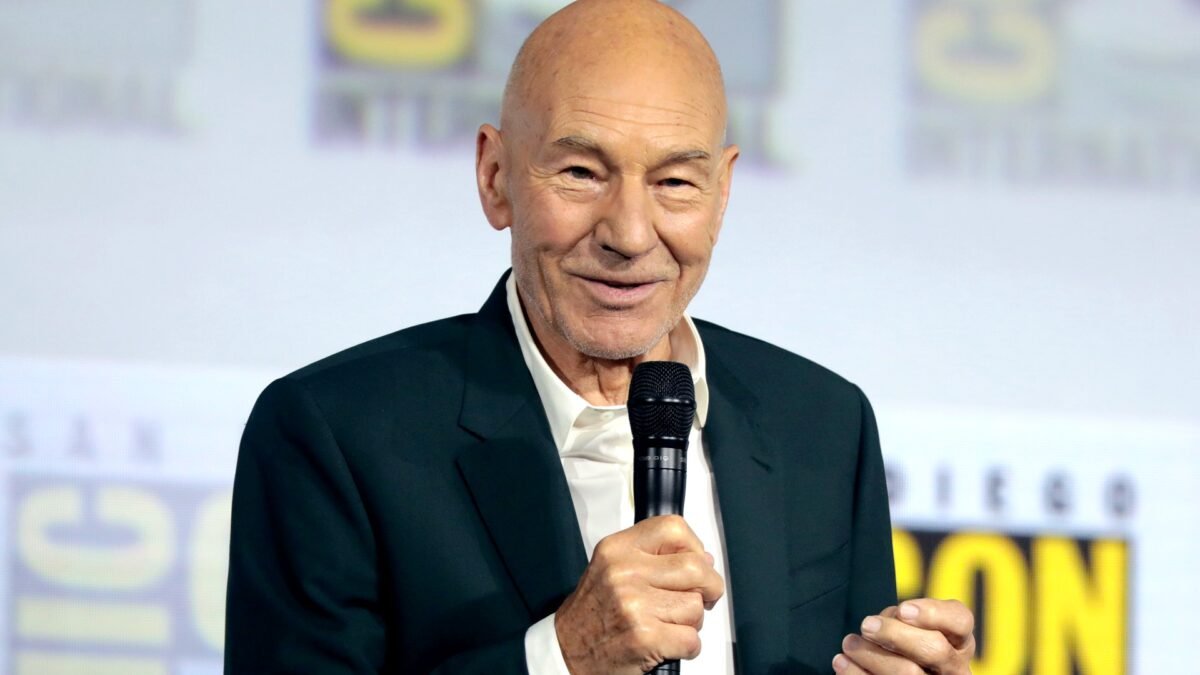
Sir Patrick Stewart, the Yorkshire-born Shakespearean actor who became known around the world as Captain Jean-Luc Picard in Star Trek and as Professor Charles Xavier in the X-Men films, has died at the age of 86, according to Reuters.
Stewart died on Wednesday, 28 October, at his home in Los Angeles, according to a statement shared on his official social media accounts and confirmed by his longtime spokesperson, Kelly Bush Novak, CNN reported. The announcement was made on Thursday, 29 October. Stewart was in the loving care of his wife, Sunny Ozell, the statement said, and had been surrounded by family and friends in his final hours.
The statement described what it called a brief and poignant journey with Alzheimer’s disease and Lewy body dementia. Neither diagnosis had previously been made public, USA Today reported. Both conditions are progressive disorders of the brain, and neither has a cure, according to CNN.
“We announce with great sorrow the passing of Sir Patrick Stewart yesterday at his home in Los Angeles, in the loving care of his beloved wife Sunny, following a brief and poignant journey with Alzheimer’s Disease and Lewy Body Dementia,” the statement said, as reported by Reuters.
Stewart was born on 13 July 1940 in Mirfield, in the West Riding of Yorkshire, the son of a textile worker and a regimental sergeant major in the British Army, according to Reuters and The Times. He left school at 15, won a scholarship to the Bristol Old Vic Theatre School, and joined the Royal Shakespeare Company in 1966, where he remained for 16 years and appeared in more than 60 productions. He was knighted by Queen Elizabeth II in 2010 for services to drama, Reuters reported.
His screen career changed course at the age of 47, when he was cast as the captain of the starship Enterprise in Star Trek: The Next Generation. The series ran from 1987 to 1994, and Stewart played Picard in 176 episodes across seven seasons, according to Reuters, before carrying the character into four feature films and, decades later, into the streaming series Star Trek: Picard, which ran from 2020 to 2023.
A second generation of cinema audiences knew him just as well as Professor Charles Xavier, the telepathic founder of the X-Men, a role he first played in X-Men in 2000 and returned to for more than two decades, including in Logan in 2017 and in Doctor Strange in the Multiverse of Madness in 2022, according to CNN and The Times. He had already filmed a return as Xavier for Avengers: Doomsday, due in cinemas on 18 December, and Marvel Studios described that appearance as his final on-screen performance in its tribute, according to reports of the studio’s statement.
Stewart is survived by his wife, Sunny, and his children, Daniel and Sophie. In place of flowers, his family asked for memorial contributions to the Johns Hopkins Alzheimer’s Disease Research Center Fund and the Alzheimer’s Foundation of America, according to reports of the family statement.
A career that began on the stage
Long before American television made him famous, Stewart had built a reputation in Britain as a classical actor of unusual authority. He became an actor at 18, according to Reuters, and his years with the Royal Shakespeare Company, beginning in the 1960s, gave him a grounding in Shakespeare that stayed visible in everything he did afterwards, from the way he carried a line of dialogue to the stillness with which he listened on screen.
His stage honours included Olivier Awards for his performances in Antony and Cleopatra in 1979 and in Hamlet in 2009, when he played Claudius opposite David Tennant, The Times reported. He was also nominated for a Tony Award for Macbeth, and he toured a one-man version of A Christmas Carol in which he played more than 40 characters. He won a Grammy Award for a spoken-word recording for children, and he received multiple Emmy, Golden Globe and Screen Actors Guild nominations for his screen work, according to reports of his career.
Early screen roles had already shown his range. He played the scheming Roman general Sejanus in the BBC’s celebrated historical drama I, Claudius in 1976, King Leondegrance in John Boorman’s Excalibur in 1981, and the loyal weapons teacher Gurney Halleck in David Lynch’s film of Dune in 1984. His first film role had come in Hedda in 1975. None of those parts, however, prepared audiences, or Stewart himself, for what happened when a science-fiction series looking for a new captain found a 47-year-old Shakespearean with a bald head and a voice that could make a briefing-room scene sound like a council of state.
Stewart himself debated whether to accept the Star Trek role. His close friend Ian McKellen advised him to stay in the theatre and turn the television job down, Reuters reported. Stewart took the job anyway, and the decision remade his life. He later said that, over the seven seasons of The Next Generation, the line between Picard and himself grew thinner and thinner, until he could no longer tell where the character ended and he began, according to Reuters, which quoted Stewart speaking to the Guardian in 2022. Much of what he believed and felt, he said, went into the show.
That remark matters, because it explains something viewers had sensed for years. Picard did not feel like a performance put on for the cameras. He felt like a set of convictions given a uniform: curiosity before fear, diplomacy before force, and a willingness to argue a moral case slowly and carefully when a quicker, louder answer was available. Stewart brought to the bridge the habits of a stage actor trained to hold a room with language rather than spectacle, and the combination proved unusually durable.
Two franchises, two kinds of authority
It is rare for one actor to define two separate fictional universes. Stewart did it twice, and he did it with two characters who could hardly have been more different in method, even though both were leaders.
Picard led from the centre of a starship, in public, with orders, protocols and a crew watching his every decision. Xavier led from a school, in private, with patience, persuasion and a belief that people feared by the world could still be taught to live in it. Picard’s authority was institutional. Xavier’s was personal. Stewart played both without ever making either man look like a slogan, and that restraint is a large part of why both characters outlived the films and series that introduced them.
In Logan, his performance as an ageing, ailing Xavier was widely regarded as one of the strongest of his screen career. The film asked him to play a man whose greatest power, his mind, was failing him, and Stewart played the decline without sentimentality and without losing the character’s gentleness. Viewed now, after the announcement of his own illness, that performance will be seen differently by many viewers, and it should be. It was fiction, and it was acted, but it drew on an understanding of frailty that Stewart, by then in his seventies, brought to the role with evident care.
His later return to Picard in Star Trek: Picard, beginning when he was 79, was a different kind of risk. Revisiting a beloved character after nearly two decades can easily become an exercise in nostalgia. Stewart and the makers of the series chose instead to show an older Picard, retired, uncertain, and forced to reckon with decisions made long before. He won a Critics Choice Super Award for the performance, The Times reported, and the series ran for three seasons. The return worked because Stewart did not try to play the younger man. He played the man time had made of him.
Beyond the two franchises, his screen work ranged widely. He voiced the CIA deputy director Avery Bullock in the animated series American Dad!, sent up his own gravitas in Ricky Gervais’s Extras, narrated Ted, and published a memoir, Making It So, in 2023, taking its title from Picard’s best-known instruction. He remained, throughout, a working actor rather than a retired icon, and he was still working into his eighties.
Tributes from two crews
Tributes came quickly from the casts of both franchises, and they shared a striking consistency of language. Colleagues described not only a fine actor but a kind and generous man, and they reached, again and again, for the qualities Stewart had given his characters: intelligence, grace, and a deep sense of humanity.
William Shatner, who played Captain Kirk in the original Star Trek series and shared the screen with Stewart in the 1994 film Star Trek Generations, wrote on X that Stewart was a friend, a colleague and a magnificent actor. “Captain Picard stood for the best of us, and so did the man who played him,” Shatner wrote, according to Entertainment Weekly. “I was filled with affection and admiration for him and his work. My heart goes out to Sunny and his family. He will be deeply missed.”
Jonathan Frakes, who played Commander William Riker opposite Stewart’s Picard, shared the family’s announcement on his Instagram story with the words, “Rest in peace my friend,” Entertainment Weekly reported. Wil Wheaton, who played Wesley Crusher, posted an old photograph of the two men together and captioned it, “Godspeed, captain.” George Takei was among the other Star Trek actors who paid tribute.
Hugh Jackman, who starred alongside Stewart across the X-Men films, wrote on social media: “We lost one of the greats of stage and screen today. And, in my book, a tremendous friend and man. I learned so much from him. I will miss you, Patrick Stewart, all of my days.” Kevin Feige, the president of Marvel Studios, recalled his awe on first seeing Stewart on the set of the original X-Men film, and described him as brilliant, charming, warm and generous, with a quiet strength and gravitas, and a wonderfully sharp sense of humour away from the cameras.
Marvel Studios itself said it was deeply saddened by his death, calling him “a singular talent, a generous collaborator, and a true gentleman” who had brought Professor Charles Xavier to life with extraordinary grace, intelligence and humanity, and had defined the character for generations of fans. The studio’s statement also confirmed that his appearance in Avengers: Doomsday would be his final on-screen performance.
The life beyond the roles
Stewart spoke openly, in later life, about a childhood shaped by violence he witnessed at home. His father, a Second World War veteran who had been among the last men evacuated from Dunkirk, subjected his mother to repeated violence, according to reports of Stewart’s own accounts, and Stewart later said he believed his father had suffered from untreated shell shock. He became a patron of Refuge, the domestic-violence charity, and supported Combat Stress, which treats veterans living with trauma, as well as campaigns on behalf of refugees, human rights and animal welfare. He was also widely known to fans for fostering pit bull dogs.
That advocacy was not a separate chapter of his life. It was the same story as his acting, told in a different register. The boy from Mirfield who found refuge in an amateur drama group at 12, who left school at 15 to work as a cub reporter on a local newspaper before being told to choose between journalism and acting, and who won his scholarship to drama school at 17, understood what it meant to be given a way out, and he spent much of his fame trying to give others the same. He served as Chancellor of the University of Huddersfield, and he never lost his devotion to Huddersfield Town, the football club of his home county. He married the singer-songwriter Sunny Ozell in 2013, in a ceremony officiated by McKellen.
The family statement remembered him, according to reports, as a son of Mirfield who had travelled from the Royal Shakespeare Company to the world’s biggest screens, and as a man who would be remembered for the dignity, compassion and humanity he brought to every role, in his art and in his life. It also remembered him as a motorsport enthusiast and a lifelong Huddersfield Town supporter. Those details belong in an obituary not because they are colourful, but because they are a reminder that the authority audiences admired on screen was rooted in an ordinary, specific life, lived in a particular town, with particular loyalties.
Analysis: Why It Matters
A Shakespearean who proved that popular fiction could carry serious acting
When Stewart accepted Star Trek, the move was widely seen, including by some of his friends, as a step down from the stage. His career answered that judgement completely. He did not leave Shakespeare behind when he sat in the captain’s chair; he brought Shakespeare with him, and the series was better for it. The lesson of his career is not that a classical actor can survive in popular entertainment. It is that popular entertainment, taken seriously by a serious actor, can become a place where ideas about leadership, duty and conscience are argued in front of millions of people who would never buy a theatre ticket. Stewart’s Picard gave a generation of viewers a model of authority that did not depend on shouting, and that model has outlasted the series itself.
Picard and Xavier offered two answers to the same question
Both of Stewart’s defining characters were asked, in different ways, how a powerful person should treat people who are weaker, stranger or more frightened than he is. Picard answered with institutions: rules, diplomacy, the Prime Directive, the long argument. Xavier answered with a school: patience, protection, the belief that difference is not a threat. The pairing matters because Stewart never let either answer harden into dogma. Picard could be wrong, and the best episodes showed him learning that. Xavier could fail, and the best films showed the cost of that failure. In an age when fictional leaders are too often written as either flawless heroes or cynical operators, Stewart’s versions of both men insisted on a third possibility: a leader who thinks, doubts, and still acts.
The disclosure of his illness changes how his final years will be read
The family’s statement is notable for what it does not do. It does not present Stewart’s illness as a long public campaign, and it does not ask for sympathy on the basis of suffering. It describes a brief journey, kept private, and it asks instead for donations to Alzheimer’s research and to support for carers. That restraint deserves respect, and it also has a public consequence. Alzheimer’s disease and Lewy body dementia are conditions that many families face in private, often without the language to describe what is happening to a loved one. When a figure as widely loved as Stewart is revealed to have lived with both, it gives those families a reference point that is neither clinical nor sentimental. It says, plainly, that this can happen to anyone, including a man whose voice and memory were the instruments of his art.
His final film now carries a weight nobody intended
Avengers: Doomsday was already going to be a significant release. It will now be watched as a farewell, and that is a complicated inheritance for a superhero film to carry. The danger is that Stewart’s last appearance becomes a moment of pure nostalgia, applauded for who he was rather than for what he does on screen. The better outcome, and the one his career points towards, is that audiences watch the performance itself: an actor in his eighties, returning to a character he first played a quarter of a century earlier, and finding something new in him. Marvel’s decision to describe the appearance as his final on-screen performance, rather than leaving the question open, is a small act of clarity that will help audiences grieve and celebrate at the same time.
What endures is not a catchphrase but a standard
Stewart will be remembered, inevitably, for “Make it so” and “Engage.” Those phrases are part of popular culture now, and there is nothing wrong with that. But the deeper legacy is quieter. It is the standard he set for how a leading actor behaves on a set, in an interview, and in public life: prepared, courteous, funny, and willing to use a famous voice for people who have none. The tributes from Shatner, Jackman, Feige and others keep returning to the same words, and that consistency, from people who worked with him over decades, is the most reliable evidence in any obituary. Audiences loved Picard and Xavier. The people who knew Stewart loved the man, and they loved him for many of the same reasons.
What to Watch Next
- Further tributes and memorial plans: Watch for statements from the Royal Shakespeare Company, Paramount and Marvel Studios, and for any announcement of a memorial service or public tribute. The family has so far asked for donations rather than flowers, and any further arrangements are likely to be announced through Stewart’s official accounts.
- Avengers: Doomsday and its reception: The film is due in cinemas on 18 December. Watch how Marvel handles Stewart’s final appearance in its marketing, and how critics and audiences respond to a performance that was filmed before his death was announced.
- The future of Star Trek without Picard: Stewart’s return in Star Trek: Picard closed a chapter that began in 1987. Watch for how the franchise honours that legacy in future series and films, and whether any tribute episode or dedication is announced.
- Alzheimer’s and Lewy body dementia awareness: The family’s request for donations to the Johns Hopkins Alzheimer’s Disease Research Center Fund and the Alzheimer’s Foundation of America may bring renewed attention to both conditions. Watch for statements from those organisations and for wider reporting on Lewy body dementia, which is less widely understood than Alzheimer’s disease.
- Stage and screen retrospectives: Expect theatres, broadcasters and streaming services to revisit Stewart’s stage work, his Shakespeare performances, his one-man A Christmas Carol and his memoir, Making It So. Those retrospectives will be the fullest public record of a career that was much larger than its two most famous roles.
Sources
- Reuters — Patrick Stewart, Shakespearean actor turned ‘Star Trek’ and ‘X-Men’ star, dies at 86
- CNN — Patrick Stewart, ‘Star Trek’ and ‘X-Men’ actor, dead at 86
- The Times — Sir Patrick Stewart, renowned stage and screen actor, dies aged 86
- USA Today — Patrick Stewart, ‘Star Trek’ and ‘X-Men’ icon, dead at 86
- Entertainment Weekly — “Star Trek” cast pays tribute to late costar Patrick Stewart: ‘Godspeed, captain’

About the Author — Abdul Mannan
Related Articles

Poundland Files Notice to Appoint Administrators as 12,000 Jobs Hang in the Balance
Poundland has filed a notice of intention to appoint administrators, giving the discount chain 10 working days of…
Healey Uses Bank Tax to Fund £100 Energy Payments in First Budget Built for ‘Breathing Space’
Chancellor John Healey's first Budget offers £100 energy payments to 20 million households, funded by a temporary rise…

Two Men Charged Over Alleged Iran-Linked Plot at RAF Fairford as Court Hears of Petrol-Filled Vans
Two men have been charged under the National Security Act 2023 over an alleged Iran-linked plot at RAF…