
MSF Says Israeli Strike Killed Two of Its Staff at Gaza Clinic as Israel Claims They Were Hamas Fighters

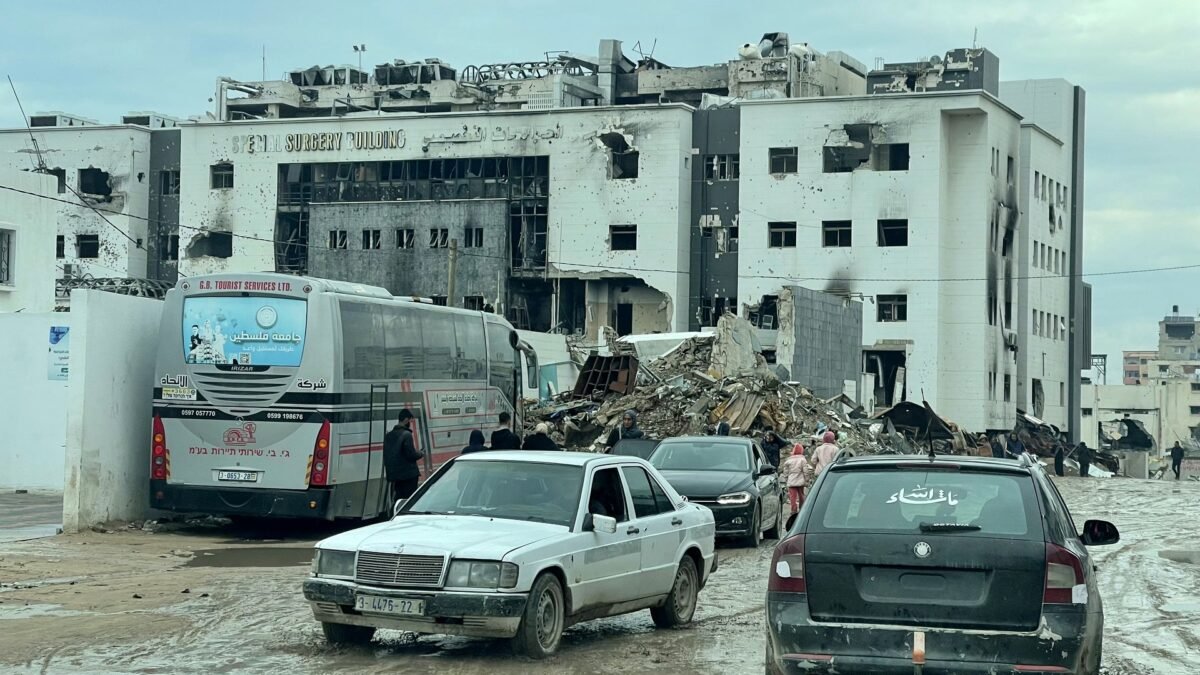
Two employees of Doctors Without Borders (MSF) were killed late on Friday in an Israeli strike on one of the medical charity’s clinics in Gaza City, according to MSF, which described the attack as a “direct hit” on its organisation. The Israeli military said the two men were members of Hamas working as security guards at the clinic, a claim that sits at the centre of a dispute over what happened that night. The deaths bring to 17 the number of MSF colleagues killed in Gaza since the war began, according to the charity.
MSF announced the deaths in a statement posted on X on Friday night, saying it was “devastated and outraged” by the killing of the two men, both of whom worked as watchmen at the clinic. The organisation said the clinic was clearly marked with its logos and that its location had been shared with the Israeli military, which knew where it was. The Israeli military confirmed it carried out the strike but said the two men were Hamas fighters and that the attack had not targeted a hospital. The two accounts of the same strike could not initially be independently verified, according to the German news agency dpa.
The killing of two more aid workers at a marked medical facility has renewed questions about the protection of humanitarian staff in Gaza, about the ceasefire that was supposed to have stopped the killing more than a year ago, and about the future of the aid organisations that still operate in the territory. The World Health Organization’s chief condemned the strike, and MSF said the incident was part of a pattern of attacks on its staff and facilities that it has documented since October 2023.
What happened on Friday night
According to MSF, the strike hit a building inside the compound of an MSF-Belgium clinic in western Gaza City, near the Al-Shifa Medical Complex, late on Friday evening, 27 November 2026. Local Palestinian reports said the strike took place at about 9:10 p.m. and that the two men were working the night shift when the building was hit. Eyewitnesses quoted by the Palestinian news agency Sawa said Israeli aircraft struck the building directly, killing the two workers and causing extensive damage to the structure and its facilities.
Local reports identified the two men as Ahmed Sufian Abu Hasira, aged 25, and Mo’ath Abu Subh, aged 34. Both were employed by MSF as watchmen, according to the charity. MSF said the two men were its colleagues and that their deaths brought the total number of its staff killed in Gaza to 17.
In its statement, MSF said: “We are devastated and outraged by the killing of two of our colleagues, both watchmen, in an Israeli strike on one of our Gaza clinics tonight. This is a direct hit on Doctors Without Borders, bringing the total number of our colleagues killed in Gaza to 17. Our premises were clearly marked with our logos and their location had been communicated to and was known by the Israeli military.”
The strike was part of a wider day of violence across Gaza. According to Al Jazeera, the attack on the MSF clinic brought the death toll from Israeli attacks across the strip on Friday to eight, despite the ceasefire agreement in effect since October 2025.
Friday’s violence also included a separate Israeli strike on a residential apartment in the Rimal neighbourhood of Gaza City, which Hamas said targeted the only surviving son of its leader, Khalil al-Hayya. Bassem Naim, a member of Hamas’s decision-making political bureau, said on Friday that al-Hayya’s son had survived the strike. Hamas linked the attack to Israeli threats against its leadership and accused Israel of undermining the ceasefire, according to live reporting of the day’s events.
Two sharply different accounts
MSF and the Israeli military agree on the basic facts that two men were killed in an Israeli strike at the clinic on Friday evening. They disagree sharply on who the men were and on what the strike was.
MSF says the two men were its employees, working as watchmen on the night shift at a clearly marked clinic whose coordinates had been shared with the Israeli military. The charity called the strike a “direct hit” on its organisation and said it was “devastated and outraged” by the deaths. In MSF’s account, the attack struck a humanitarian medical facility that the Israeli military knew about and had no reason to hit.
The Israeli military said it had killed two Hamas members who worked as security guards at the clinic and that the strike was carried out “in order to remove the threat they posed.” The military identified the two men as Ahmed Safian Muhammad Ali Abu Hazeera and Muayad Youssef Alizbach, and said Alizbach had served as a commander of an artillery unit in Hamas’s military wing. According to the military, both men had been involved in efforts to restore the military capabilities of militant groups in Gaza, in violation of the ceasefire. The military said it had taken steps to minimise the risk to civilians before carrying out the strike, denied that the strike had targeted a hospital, and said no medical infrastructure in the area had been damaged. It accused Hamas of infiltrating international organisations, according to reports of its statement.
The two versions of the men’s identities use different spellings of their names, which is common in transliterations from Arabic, and the question of whether the men were Hamas members, MSF employees, or both, could not be independently verified when the story was first reported. That uncertainty matters, because the two accounts lead to very different conclusions about the legality and the meaning of the strike. If the men were civilian humanitarian workers at a marked clinic, the attack would be a grave breach of the protections that international law gives to medical facilities and their staff. If they were armed fighters using the clinic as cover, the Israeli military would argue that they were a lawful target, though the status of the clinic itself would still be in question.
What is not in dispute is that a medical charity lost two more of its people at a facility it says was marked, mapped and known to the military, and that the organisation now counts 17 of its colleagues killed in Gaza. That figure alone, whatever the circumstances of each individual death, describes a war in which humanitarian workers have been killed at a rate without precedent in any recent conflict.
Reaction: WHO chief condemns the strike
The Director-General of the World Health Organization, Tedros Adhanom Ghebreyesus, condemned the killing of the two MSF employees in a post on social media. “Attacks on health facilities, health workers and humanitarian personnel in Gaza are outrageous and unacceptable,” he said, according to reports of his statement.
MSF’s own statement carried the same message in sharper language. The organisation said it was “devastated and outraged” and called the strike “a direct hit on Doctors Without Borders.” The choice of words was deliberate: MSF was not describing an accident or a near miss, but an attack on the organisation itself, at a site whose location it had shared with the Israeli military in advance.
The condemnation from the head of the WHO matters because it places the incident in the framework of international humanitarian law, under which health facilities, health workers and humanitarian personnel are protected and must not be attacked. The WHO has repeatedly condemned attacks on health care in Gaza throughout the war, and the organisation’s public statements carry weight with governments and with the United Nations bodies that monitor compliance with the laws of war.
No independent investigation of Friday’s strike had been announced when the story was reported, and it was not clear whether either side would open one. MSF has repeatedly asked the Israeli military’s legal authorities to investigate attacks on its staff and facilities, and has said it has seen no sign that criminal investigations have been opened. That history, set out in detail below, is part of why the charity’s reaction to this latest killing was framed as outrage rather than as a request for clarification.
A ceasefire under strain
The strike took place more than a year after Israel and Hamas reached a ceasefire agreement in October 2025 under a United States-backed plan. The heaviest fighting has subsided since then, but Israeli strikes have continued almost daily, and the implementation of the remaining provisions of the agreement has stalled, according to the Associated Press.
Gaza’s Health Ministry said Israeli violations of the ceasefire agreement had killed 1,705 Palestinians and injured 6,163 people since the deal took effect, through Thursday, according to the Associated Press. The figures, which come from the Hamas-run ministry, could not be independently verified, but they describe a ceasefire in which lethal force has remained a regular feature of life in Gaza more than a year after the agreement was signed.
The central dispute holding up the next phase of the ceasefire is the disarmament of Hamas. Israel has demanded that Hamas give up its weapons, while Hamas has resisted disarmament without a political settlement. On Thursday, 26 November, Israel’s Defence Minister, Israel Katz, threatened another evacuation of one million Gazans if Hamas does not disarm, according to live reporting of his remarks. The threat underlined how far the parties remain from agreement on the issue that was supposed to be settled in the ceasefire’s second phase.
The United States-backed Board of Peace, the body created under the ceasefire plan to oversee Gaza’s transition, has also run into trouble. Earlier in November, the board threatened to withdraw over Israeli obstacles, while Egypt pressed Hamas on the question of its weapons, according to live reporting. The combination of a stalled disarmament process, continuing strikes and a peace board in difficulty has left the ceasefire looking fragile, and Friday’s killing of two aid workers at a marked clinic will do nothing to strengthen it.
The wider region has remained tense at the same time. The United States has been blockading Iranian ports since April, with the blockade lifted during peace talks in the summer and resumed in July, and on Thursday the US military said it had disabled another merchant ship, the Palau-flagged M/V Pacific Archer, in the Gulf of Oman, the fifteenth vessel it has disabled since the blockade began. In Yemen, the Houthi-run health ministry said on Friday that a strike on a densely populated area in the south-west of the country had killed at least 11 people, including children. The region’s overlapping conflicts continue to feed each other, and Gaza’s ceasefire is only one of several fragile arrangements holding, for now.
Aid groups under pressure
The strike on the MSF clinic comes at a moment when international aid organisations in Gaza and the West Bank are already under severe pressure from a different direction: Israel has revoked the operating licences of more than a dozen international organisations, including MSF, after they failed to complete a mandatory registration process, according to the Associated Press. MSF warned that Israel’s requirements threatened its ability to provide essential medical services in Gaza and the West Bank.
The licence revocations and the strike point in the same direction. Together, they narrow the space in which humanitarian organisations can work in Gaza: on one side, administrative measures that can remove an organisation’s legal right to operate; on the other, the physical risk to staff working at marked facilities. For the people of Gaza, who depend on these organisations for a large part of their remaining health care, the combination is serious. Gaza’s health system has been devastated by more than three years of war, and international medical charities provide services that the territory’s own hospitals, many of them damaged or destroyed, cannot.
MSF has been one of the most persistent international medical presences in Gaza. It runs clinics and supports hospitals across the territory, and its staff include both international workers and a large number of Palestinian colleagues, who have borne the heaviest share of the losses. The organisation’s decision to continue operating in Gaza City, despite the risks, reflects the scale of the medical need there. The killing of two more of its staff at a clinic in the city will force the organisation, once again, to weigh that need against the safety of its people.
MSF’s long and deadly record in Gaza
Friday’s deaths were not an isolated incident in MSF’s experience of the war in Gaza. They were the latest in a series of attacks on the organisation’s staff and facilities that it has documented since October 2023, and the organisation has repeatedly said it has received no accountability for them.
Before Friday, 15 MSF staff members had been killed in Gaza by Israeli forces since October 2023, according to a statement issued by MSF Australia in August 2026. The fourteenth, Omar Hayek, a 42-year-old occupational therapist, was killed in August 2026 in Deir al-Balah while waiting for a bus to an MSF field hospital. MSF said at the time that all staff were wearing MSF vests, clearly identifying them as medical humanitarian workers, and that four others were injured in the same attack. The two deaths on Friday bring the total to 17.
The organisation’s international president, Dr Christos Christou, said in a speech in 2026 that MSF had endured 23 violent incidents since 7 October 2023, that its teams had been repeatedly told to move south and that when they did, their convoy was fired upon, killing two people. He said more than 260 humanitarian workers had been killed in the war, and that MSF had lost five colleagues in the period he was describing, before the later deaths. According to MSF Australia, about 1,700 healthcare workers had been killed in Gaza by August 2026.
Two earlier incidents illustrate the pattern MSF describes. In November 2023, an MSF convoy travelling south from Gaza City after receiving the necessary approvals encountered an Israeli roadblock and was refused passage. As it began returning north, Israeli fire struck the clearly marked vehicles, killing two passengers. Two days later, MSF staff and their families were sheltering at one of the organisation’s clinics in Gaza when an Israeli bulldozer demolished its vehicles and tanks later fired at them, destroying what MSF described as their only means of escape. In February 2024, a strike on an MSF shelter in Khan Younis killed two people and injured six.
In August 2026, the Israeli Military Advocate General decided to close, without opening a criminal investigation, the cases MSF itself had submitted for review, including the November 2023 convoy attack and the February 2024 shelter strike. MSF strongly condemned the decision, saying that two years of silence followed by closures that raised more questions than they answered was unacceptable, and that the decision made clear there was no prospect of accountability within the Israeli legal system for the killing of its staff. In February 2026, MSF petitioned Israel’s High Court of Justice to order an investigation into six incidents in which the Israeli military allegedly fired at its facilities and vehicles in Gaza, killing seven staff members and their relatives. Despite repeated appeals to the military’s top legal authorities, the group said it had seen no sign that a criminal investigation had been opened.
This history is the context in which Friday’s strike must be understood. MSF is not reacting to a single incident in isolation. It is reacting to the seventeenth death of one of its colleagues, at a facility it says was marked and known to the military, after years in which it says no investigation has been opened into the killing of its staff.
Analysis: Why It Matters
The killing of two MSF watchmen at a clinic in Gaza City matters for reasons that go beyond the two lives lost, grave as those are. The first reason is the dispute over who the men were. The Israeli military says they were Hamas fighters, one of them an artillery commander, and that the strike was a deliberate operation against a military threat. MSF says they were its employees, working the night shift at a marked clinic. Both accounts cannot be true in full, and neither could be independently verified when the story broke. That gap is itself the story: in Gaza, the facts of a killing are now routinely contested within hours, and the contest itself becomes part of the conflict.
For readers trying to make sense of the dispute, the honest position is to hold both accounts in view and to note what each side would need to show. If the Israeli military’s claim is correct, it would need to produce evidence that the men were active Hamas members and that the strike was directed at them rather than at the clinic. If MSF’s account is correct, the strike hit a protected medical facility whose location had been shared with the military through the deconfliction system that exists precisely to prevent such attacks. An independent investigation, with access to the evidence both sides hold, is the only way to resolve the question, and the history set out above suggests that such an investigation is unlikely to come from within the Israeli military’s own legal system. That is why MSF went to Israel’s High Court, and why the court’s answer will matter.
The second reason the strike matters is the deconfliction system itself. Humanitarian organisations share the coordinates of their facilities with the military so that those facilities are not hit. MSF says it did exactly that, and that its premises were clearly marked with its logos. If a facility that was marked, mapped and known can still be struck, then the system that is supposed to protect every other clinic, hospital and shelter in Gaza is in doubt. Other organisations will draw their own conclusions, and some may decide that the risk of staying outweighs the good they can do. That is how a single strike can shrink the humanitarian space across the whole territory.
The third reason is the ceasefire. A ceasefire is not only an agreement to stop large-scale fighting. It is a promise to the people living under it that the killing will stop. When more than 1,700 Palestinians have been killed since the agreement took effect, according to Gaza’s Health Ministry, and when aid workers are still being killed at marked clinics more than a year into the deal, the promise looks thin. The ceasefire’s remaining provisions, above all the disarmament of Hamas, are stalled, and the threats and counter-threats around them are growing louder. Each new killing makes the political case for continuing the ceasefire harder to sustain, on both sides, and each one gives those who never believed in the deal another reason to say it has failed.
The fourth reason is the pattern. Seventeen MSF staff killed, about 1,700 healthcare workers killed, more than 260 humanitarian workers killed: these are not numbers that describe a series of accidents. They describe a war in which the people who treat the wounded have themselves become targets, or at least have not been protected. International humanitarian law is clear that medical personnel and facilities are protected, and that attacks on them are prohibited. The law also recognises that fighters who use medical facilities for military purposes can lose that protection, which is why the dispute over the two men’s identities matters so much. But the law also requires that the facts be established, and that those responsible for unlawful attacks be held to account. The absence of investigations, which MSF has documented in detail, is a failure of the system that is supposed to give the law its force.
Finally, the strike matters because of what it says about the future of aid in Gaza. The licence revocations, the registration requirements, the physical danger to staff: taken together, they point towards a future in which fewer international organisations operate in Gaza, and those that remain do so with fewer staff and less capacity. Gaza’s health system cannot fill that gap on its own. The people who will pay the price are the patients: the wounded, the sick, the children who need treatment that only these organisations provide. That is the quiet consequence of a strike on a clinic, and it will be felt long after the argument over who the two men were has faded.
What to watch next
Several things will determine how this story develops. The first is whether any independent investigation is opened into the strike, and whether either side produces evidence for its account of the two men’s identities. MSF has asked Israel’s High Court to order investigations into earlier incidents, and the court’s handling of that petition will be watched closely.
The second is MSF’s own response. The organisation has continued to operate in Gaza despite the deaths of its staff, but each new killing forces a fresh assessment of the risks. Any decision to reduce its operations, or to withdraw from particular areas, would have immediate consequences for the patients who depend on its clinics.
The third is the licence question. The revocation of operating licences for more than a dozen international organisations, including MSF, remains unresolved, and the outcome will shape the future of humanitarian work in Gaza and the West Bank. A resolution that allows the organisations to continue operating would ease one of the pressures on them; a failure to resolve it would compound the damage done by the strike.
The fourth is the ceasefire itself. The disarmament dispute, the threats of further evacuations, and the difficulties facing the Board of Peace all point to a fragile agreement. Whether the parties can move to the next phase of the deal, or whether the ceasefire continues to erode under the weight of daily strikes and contested killings, will decide whether Gaza’s people get the peace they were promised, or more of the same.
And the fifth is the wider region. The US blockade of Iranian ports, the Houthi campaign against Saudi Arabia, the stalled diplomacy over the Strait of Hormuz: all of these are connected to the war in Gaza, and all of them affect the calculations of the parties to the ceasefire. A strike on a clinic in Gaza City does not happen in isolation. It happens in a region where several conflicts are running at once, and where the failure of one agreement can quickly become the failure of others.
Sources
- Al Jazeera — “Israel kills two MSF staff in targeted strike on Gaza clinic”
- Associated Press, via NewsCord — “Doctors Without Borders Says Israeli Strike Killed Two Guards at Gaza Clinic”
- dpa, via Ekkow — “Two MSF guards killed in Gaza strike, Israel cites Hamas links”
- Jews for Justice for Palestinians, reporting Haaretz — “Order IDF to probe Gaza aid worker deaths, Doctors Without Borders asks Israel’s top court”
- Médecins Sans Frontières Australia — “Statement on Israeli Military’s decision to deny a criminal investigation into MSF killings and injuries”

About the Author — Abdul Mannan
Related Articles
Erdogan Completes Ratification of Mecca Defence Pact as Pakistan, Saudi Arabia and Turkey Meet in Islamabad
Turkey's president formally approved the Mecca Joint Defence Agreement on Friday, completing ratification as defence and foreign ministers…

Houthis Strike Aramco’s Jazan Refinery, Killing One Worker, as Saudi Arabia Pounds Yemen in Escalating Oil War
A projectile struck Aramco's Jazan refinery on Thursday, killing a Nepalese worker and injuring several others, a day…
Two Italian Technicians Killed as Iranian Drones Strike Kuwait Air-Defence Site and Force Flight Diversions
Two Italian technicians were killed and two people wounded when Iranian drones struck an air-defence surveillance station in…