
NASA Unveils $10 Billion Moon Base Contracts and a Nuclear-Powered Rover to Scout the Lunar South Pole

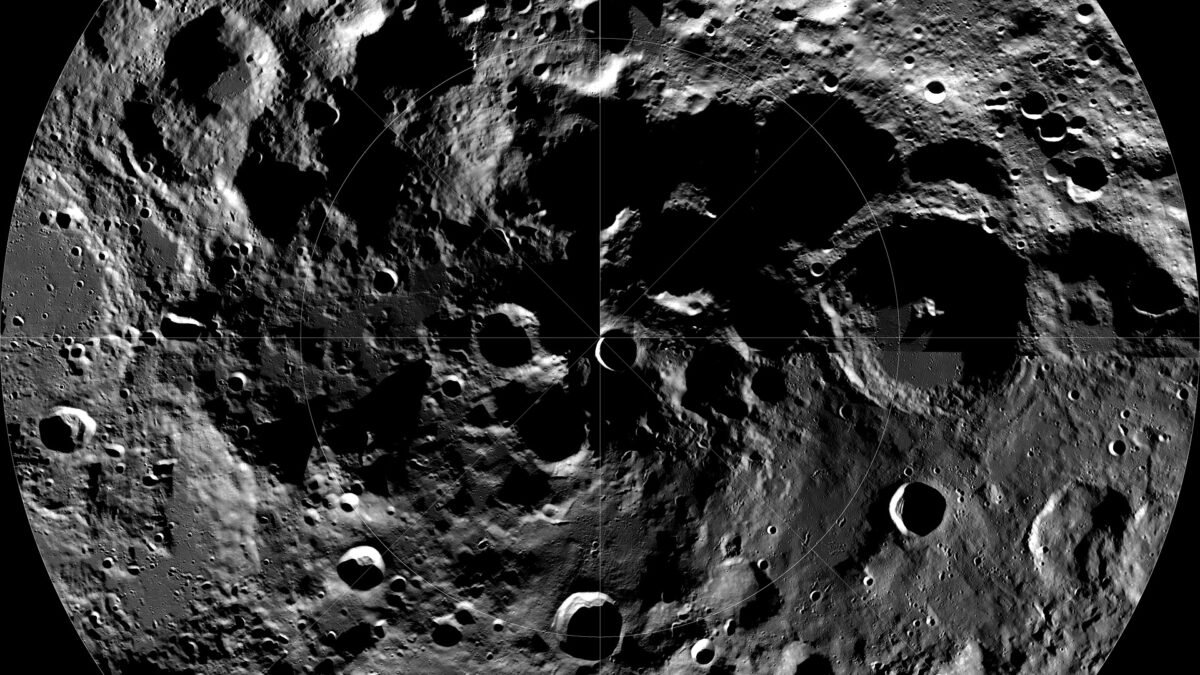
NASA has unveiled the most detailed blueprint yet for its planned permanent base on the Moon, awarding up to $10 billion in lunar delivery contracts and confirming that a nuclear-powered rover will scout the Moon’s South Pole before astronauts arrive, according to NASA. The announcements, made on Saturday at the Kennedy Space Center in Florida, mark the clearest statement so far that the agency intends to build a sustained human outpost on the lunar surface rather than simply repeat the brief visits of the Apollo era.
The centrepiece of the package is a new ten-year framework, known as CLPS 2, under which eight American companies will compete to carry NASA science, technology and infrastructure to the lunar surface. The agency also confirmed it is moving ahead with PROMISE, a six-wheeled, nuclear-powered rover that will land at the South Pole, drill into the lunar soil in search of water ice, and map the terrain where astronauts are expected to land later this decade. NASA is targeting a launch in late 2028 for the rover’s eighteen-month mission.
“We are building the Moon Base mission by mission,” said NASA Administrator Jared Isaacman in the agency’s announcement. “Today’s announcements expand nearly every part of that campaign, using the playbook that carried NASA through its greatest eras: fly often, learn, apply those lessons, and get more better and more capable with every mission. When our astronauts return to the Moon, they will arrive with the first elements of the Moon Base already waiting for them on the surface.”
The announcements were shared at the MAX POWER aerospace expo and air show at NASA’s Kennedy Space Center, and they cover nearly every element of the lunar campaign at once: cargo landers, a rover, launch and orbital transport services, communications satellites and surface power systems. Taken together, they amount to the largest single expansion of NASA’s lunar programme since the Artemis missions were restructured, and they set a timetable that runs from the first robotic deliveries through a crewed landing in 2028 and into a decade of commercial operations.
A $10 Billion Delivery Network
To strengthen the cargo lander network needed to support the Moon Base, NASA selected eight companies for the next phase of its Commercial Lunar Payload Services initiative, known as CLPS. The companies, which will be eligible to compete for future lunar surface delivery missions under the new CLPS 2 contract, are Blue Origin, Firefly Aerospace, Intuitive Machines, ispace-U.S., Lockheed Martin Space, Northrop Grumman Space Systems, SpaceX and Voyager Technologies, according to NASA.
Under the CLPS 2 framework, the companies will provide lunar delivery services, including managing, building and operating landers that transport NASA science, technology and infrastructure payloads to the Moon. The framework is a ten-year, multiple-award, indefinite-delivery, indefinite-quantity master contract with a combined maximum value of $10 billion. NASA stressed that the figure is a ceiling for future task orders rather than money already spent, a distinction that matters because the agency will award individual delivery missions competitively over the life of the contract.
NASA also increased the value of the current CLPS 1.0 contract from $2.6 billion to $4.2 billion to support the initial phase of its Moon Base objectives. The original CLPS contract will remain in place through November 2028, with an additional five-year period to complete awarded lunar deliveries through November 2033. The scale of the commitment reflects a deliberate shift in how NASA buys its way to the Moon: instead of designing and owning every spacecraft itself, the agency pays commercial companies a fixed price to deliver its payloads, accepting that some missions will fail in exchange for far lower costs and a much faster flight rate.
That model has a mixed record so far, and the agency’s own accounting makes the trade-off plain. The CLPS programme, created in 2019, was built on the premise that awarding companies task orders to design, build and deliver robotic landers would allow a higher flight cadence at a lower cost than the traditional NASA contracting approach, according to Aerospace America. Of the four CLPS missions completed to date, only one, Firefly Aerospace’s Blue Ghost, which landed on 2 March 2025, was deemed by NASA and the vendor to be a complete success.
The first CLPS mission, Astrobotic’s Peregrine lander, sprang a propellant leak shortly after its launch in January 2024 and never reached the lunar surface. A month later, Intuitive Machines became the first company to land a privately developed spacecraft on the Moon, but its Odysseus lander completed its week-long mission on its side after breaking one of its legs on touchdown. The company’s second lander, Athena, met a similar fate a year later, tipping over inside a crater near the lunar South Pole and transmitting little more than an hour’s worth of data. Yet the cost argument remains powerful: NASA’s portion of those four missions was a combined $386 million, whereas a single lunar mission under the agency’s traditional management approach could have cost up to $2 billion, according to Aerospace America’s review of task order announcements and public documents.
Carlos García-Galán, manager of NASA’s Moon Base Program, told the audience at the expo that the agency and its industry partners have shifted the way they think about Moon missions, treating them as a campaign made up of lunar landers, rovers and other hardware, as well as scientific instruments, according to Scientific American. “From 2019 to the end of this year, we will have 22 task orders of landers that are going to go to the moon,” he said. The new CLPS 2.0 phase, he added, will include a next generation of landers able to carry heavier loads of as much as six metric tons, once humans have started returning to the Moon regularly.
Meet PROMISE: A Nuclear-Powered Scout for the South Pole
The most striking single announcement of the day was the confirmation of PROMISE, short for Polar Rover for Observation, Mapping, and In-Situ Exploration. The six-wheeled rover will land at the Moon’s South Pole to characterise the surface and subsurface, assess resource potential, and provide data to enable landing site selection, as well as future infrastructure and exploration activities, according to NASA.
What sets PROMISE apart from every rover that has operated on the Moon before it is its power source. The nuclear-powered rover can operate during long lunar nights and within permanently shadowed regions thought to harbour ice, which NASA says is crucial for a sustained human presence on the Moon. A lunar night lasts about fourteen Earth days, and temperatures in the shadowed craters near the South Pole plunge far below anything a solar-powered vehicle can survive. By carrying its own nuclear power supply, PROMISE can keep working through the darkness and inside craters where sunlight has not fallen for billions of years.
The rover will be managed and built by NASA’s Jet Propulsion Laboratory in Southern California, a division of Caltech, using a combination of spare flight components and engineering test models from NASA’s Curiosity and Perseverance Mars rovers. Using proven hardware, software and Mars rover operation approaches significantly reduces cost and enables integration and testing of the complex rover on a shorter timeline, according to NASA, which said it has assessed the compatibility of the hardware with the lunar environment and determined it can tolerate the harsh conditions found near the Moon’s South Pole.
PROMISE will carry a drill to extract regolith, or lunar dust, to characterise ice and other resources from approximately three feet, or one metre, below the surface, along with spectrometers for analysing the chemical composition of surface material, temperature and radiation sensors, and visible-light cameras. It will also demonstrate a next-generation, radiation-tolerant computing system, NASA’s High Performance Spaceflight Computing, and advanced autonomy sensors and algorithms. NASA is targeting late 2028 to launch PROMISE and planning an eighteen-month mission for the rover.
NASA awarded Blue Origin a $94 million base contract, with an option period worth an additional $140 million based on performance, to deliver PROMISE to the lunar South Pole. The award expands a task order awarded in May 2026 to deliver two lunar terrain vehicles to the Moon, and Blue Origin will use its Mark 1 lander to deliver and deploy the rover as part of the Moon Base’s first phase. The mission will be led by project scientist James Keane, a planetary scientist at NASA’s Jet Propulsion Laboratory, according to Scientific American.
Nicky Fox, NASA’s associate administrator for science, said the rover would serve as a pathfinder for everything that follows. “This mission will kind of serve as a scout for the Moon Base operations, whilst also prospecting for resources near the lunar south pole,” she said, according to Scientific American. “Promise is just the beginning as we continue to lead the world into a new era of paradigm-shifting science and human space exploration for generations to come.”
The prize PROMISE is hunting is water. Data from NASA’s Lunar Reconnaissance Orbiter has indicated that water ice may make up as much as 22 percent of the surface material in some craters at the Moon’s South Pole, and the agency’s LCROSS mission confirmed in 2009 that water is present in a permanently shadowed crater. If that ice can be extracted in usable quantities, it could be split into hydrogen and oxygen for rocket propellant and breathing air, and purified for drinking water, turning the South Pole from a hostile destination into a place where a base can sustain itself. That is why every major lunar programme, American and Chinese alike, has converged on the same small patch of the Moon.
Freight Trucks in Deep Space
Delivering a base to the Moon will require a robust transportation network between Earth and the Moon, and NASA’s announcements included a substantial investment in the unglamorous logistics that make such a network work. Orbital Transfer Vehicles, which the agency describes as long-distance freight trucks carrying large loads across space, will move cargo between Earth orbit and lunar orbit, while lunar landers handle the final delivery to the surface.
To demonstrate those capabilities, NASA awarded six task orders as part of its Venture-Class Acquisition of Dedicated and Rideshare, or VADR, launch services contract. The awards were given to Arrow Science and Technology, Blue Origin and Impulse Space to integrate and transport Moon Base cargo, and the task orders have a combined value of approximately $1.3 billion, falling under the ten-year VADR contract, which has a maximum total value of $5 billion across all contracts.
Three mission types will allow NASA flexibility to fly science and technology demonstrations when they are ready. The first will include missions to reduce the risks of future long-term human spaceflight, verifying that communication and navigation methods work properly during the journey from Earth orbit to the Moon, and testing orbital transfer vehicle capability to support delivery of a CLPS lunar lander to a desired orbit. This mission type will deliver the CAPSTONE 02 spacecraft to deep space to test proximity manoeuvres, navigation and communications around the Moon.
The second category of missions will prepare the lunar South Pole for human exploration by sending a group of highly mobile drones to survey the surface before astronauts arrive, enabling safer, more informed human missions while demonstrating advanced robotic capabilities. Such missions will include the agency’s MoonFall drones, designed to scout areas beyond the reach of traditional rovers, as well as delivery of additional Moon Base assets necessary to support the programme’s first-phase objectives. The drones are designed to hop around the Moon’s South Pole and send data back to ground control before Artemis missions deliver humans to that relatively unexplored region, according to Scientific American.
The third mission type will test navigation technologies and demonstrate operations in multiple cislunar orbits, between Earth and the Moon, to demonstrate commercial orbital transfer capabilities intended to increase the amount of cargo that future landers can deliver to the lunar surface. Some missions will launch aboard Blue Origin’s New Glenn, Relativity Space’s Terran R and SpaceX’s Falcon 9 rockets, while in-space transportation spacecraft will be provided by Blue Origin, Firefly Aerospace, Impulse Space and Quantum Space, according to NASA.
Complementing those demonstrations, NASA selected SpaceX for the Cislunar Communications Deployment Demonstration under an existing lunar logistics contract. Through a specialised delivery mission task order, SpaceX will launch communications satellites aboard a Starship to cislunar space in 2028. The demonstration will help inform the development of future lunar communications networks that keep astronauts, mission controllers and the Moon Base connected. García-Galán also said NASA may tap Blue Origin’s Blue Ring spacecraft to boost communication abilities, and that SpaceX’s Starlink system will test longer-range communications abilities, with the possibility of eventually joining a commercial services contract for Moon Base assets, according to Scientific American.
Power and Communications for a Permanent Outpost
A base that must survive two-week nights cannot run on sunlight alone, and NASA’s announcements included the first contracts for the power and communications tower that will anchor the surface outpost. To extend infrastructure capabilities on the lunar surface, NASA plans to purchase commercial components for a Mini-Communications and Solar Tower, known as miniCAST, including solar arrays, batteries and wireless power-transfer hardware.
The agency awarded Honeybee Robotics, a Blue Origin company, for energy storage capability, Redwire for power generation, and Yank Technologies for wireless power transfer in support of miniCAST. The tower will combine power and communications capabilities to support future Moon Base activities, and engineers at NASA’s Marshall Space Flight Center in Huntsville, Alabama, will assemble and test the systems before they are delivered to the lunar surface. NASA expects work to begin within months, and the initial effort will involve components rather than a major integrated system. The agency also plans a separate solicitation for fully integrated power systems, anticipated in early 2027.
NASA also intends to release a directed call under its Next Space Technologies for Exploration Partnerships, or NextSTEP-3 B, solicitation to help close architecture-driven, high-priority data gaps for Moon Base development. The effort will help NASA gather information it needs to plan future missions, reduce risk and support technologies and infrastructure for sustained operations on the Moon’s South Pole, and the work could include small spacecraft missions, payloads on future Moon Base flights, or the purchase of data collected by commercial partners.
García-Galán said the programme has moved quickly since its current phase began. “In the eight months since Ignition, we’ve made incredible strides in accomplishing the near impossible: establishing a permanent outpost on the lunar surface,” he said. “We’ve consolidated numerous efforts into a streamlined program, evolving our human exploration architecture into an iterative and sustained campaign for Moon Base technology development and implementation. Most importantly, we’ve taken action, awarding new contracts and forging new partnerships to accelerate development.”
The Artemis Timeline Behind the Announcements
The Moon Base announcements sit on top of the Artemis programme, the crewed effort to return astronauts to the lunar surface for the first time since Apollo 17 in 1972. NASA plans to establish a permanent human presence on the Moon in the next decade, and the first steps along that way are the Artemis missions, each designed to return humans to the Moon as soon as 2028, according to Scientific American.
Earlier this year, four astronauts flew around the Moon and back as part of Artemis II, going farther from Earth than any human has gone before, according to Scientific American. Next is Artemis III, currently slated for early 2027, a flight designed to test two potential human landers for the Moon: Blue Origin’s Blue Moon lander and a version of SpaceX’s Starship. Both spacecraft are still unproven for the job, an issue NASA’s Office of Inspector General has previously raised as a potential roadblock to the space agency’s Moon ambitions. Artemis IV, planned for 2028, will be the first mission to put humans back on the Moon in more than fifty years.
The timing matters because the United States is not alone in targeting the South Pole. China has laid out a four-mission plan to land astronauts on the Moon before 2030, with its own programme converging on the same water-bearing craters, and its Chang’e robotic missions have already returned samples from the lunar far side. The new space race is quieter than the one of the 1960s, fought in contract awards and launch manifests rather than in speeches, but the logic is the same: the country that establishes itself at the South Pole first will set the practical terms for everyone who follows, from landing-site selection to the rules governing shared resources such as water ice.
That competition helps explain the urgency in NASA’s language. Isaacman’s emphasis on flying often and learning from every mission, and García-Galán’s stress on consolidating efforts into a streamlined campaign, both point to an agency trying to move at commercial speed rather than at the pace of its traditional flagship programmes. The $10 billion ceiling on CLPS 2 is not a single procurement but a decade-long invitation to industry to keep flying, and the PROMISE rover is the first of what NASA plainly hopes will be a steady stream of robotic pathfinders doing the dangerous, unglamorous work before crews arrive.
Analysis: Why It Matters
A base, not a visit
The most important word in NASA’s announcement is “sustained”. Apollo visited the Moon six times and left; the Moon Base programme is designed to stay. The difference shows up in every line of the announcement: a ten-year delivery framework instead of a single mission, a power and communications tower instead of a flag, a rover that drills for water instead of one that merely photographs rocks. A visit needs a lander and a rocket. A base needs logistics, power, communications and a resource supply, and NASA has now contracted for all four at once. That is the real news of the day, and it is why the $10 billion figure matters less as a sum of money than as a signal of intent: the agency is buying a decade of flights, not a single spectacular landing.
Water is the whole game
Everything about the South Pole comes back to ice. On the airless Moon, water is not just for drinking: split into hydrogen and oxygen, it becomes rocket propellant, which means a base at the South Pole could one day refuel spacecraft heading deeper into space instead of hauling every drop of fuel up from Earth at enormous cost. That is the difference between a research station and a staging post for Mars, and it is why NASA’s own release describes the Moon Base as building “on this foundation for the first crewed mission to Mars”. PROMISE’s drill is therefore not a science experiment in the abstract; it is a prospecting tool, answering the single question on which the economics of the entire programme depend: how much water is actually there, and can it be extracted?
Nuclear power changes what a rover can do
The decision to power PROMISE with a nuclear source is a quiet admission that solar power has reached its limits at the South Pole. The permanently shadowed craters that hold the ice never see sunlight, and even the sunlit ridges endure nights fourteen Earth days long. A solar rover must sleep through those nights and hope its batteries survive; a nuclear rover keeps working. Reusing spare hardware from Curiosity and Perseverance, both of which run on nuclear power on Mars, is also a telling piece of engineering pragmatism: NASA is not inventing a new rover so much as adapting a proven one to a harsher environment, which is exactly the kind of shortcut that a programme in a hurry needs to take.
The commercial gamble, doubled down
CLPS 2 is NASA doubling down on a model whose record is, by the agency’s own accounting, one complete success in four missions. The logic is that the failures were cheap, that each one taught the industry something, and that a fixed-price contract transfers the financial risk to companies rather than taxpayers. There is real evidence for that view: $386 million bought four lunar missions, and even the landers that tipped over returned data. But the new framework raises the stakes considerably. Six-tonne landers, a nuclear rover and a decade of deliveries are a much bigger bet than the early $70-150 million task orders, and the companies now in the pool include giants such as Lockheed Martin and Northrop Grumman alongside the start-ups that cut their teeth on the first round. Whether the commercial model scales from small science deliveries to the infrastructure of a permanent base is the open question that will decide whether the Moon Base is built on schedule or becomes another over-promised programme.
The race is now about infrastructure, not flags
China’s plan to land astronauts on the Moon before 2030 gives NASA’s timetable a hard external deadline, and the announcements read as a response to it. But the competition has changed since Apollo: nobody is racing to plant a flag first and go home. The contest now is over who builds the roads, the power grid and the fuel supply, because whoever builds them writes the rules for their use. NASA’s bet is that an open, commercial system, in which eight companies compete for deliveries and the agency buys services rather than owning hardware, will outpace a state-directed programme. The next three years, from Artemis III’s lander tests to PROMISE’s arrival at the South Pole, will show whether that bet was right.
What to Watch Next
- Artemis III in early 2027: the test flight of the two competing human landers, Blue Origin’s Blue Moon and SpaceX’s Starship, will determine whether either vehicle is ready to carry astronauts, and NASA’s Inspector General has already flagged both as unproven.
- The first CLPS 2 task orders: which companies win the first delivery missions under the $10 billion framework, and at what prices, will show whether the eight-company pool genuinely competes or settles into a comfortable oligopoly.
- Blue Origin’s Mark 1 lander: the unflown vehicle must deliver both lunar terrain vehicles and the PROMISE rover, making it the single most important piece of unproven hardware in the entire Moon Base plan.
- PROMISE’s drilling results: the rover’s measurements of ice content one metre below the surface, expected from late 2028 onwards, will decide whether the South Pole can support a self-sustaining base or remains a scientific outpost dependent on supplies from Earth.
- China’s crewed lunar programme: Beijing’s four-mission plan aims to land astronauts on the Moon before 2030, and any acceleration in its timetable will put direct pressure on NASA’s 2028 landing date.
Sources
- NASA — NASA Awards Moon Base Transportation, Technology, Science Projects (7 November 2026)
- Scientific American — NASA Reveals New Lunar Rover, PROMISE, to Launch to Moon in 2028 (7 November 2026)
- NASA — Moon Base programme
- Aerospace America — Analysis: Taking the Measure of NASA’s CLPS Program
- The Planetary Society — CLPS: NASA’s Commercial Moon Landing Missions

About the Author — Abdul Mannan
Related Articles
CERN Finds Evidence of a One-in-Ten-Billion Particle Decay After a 42-Year Search, Opening a Door to the ‘Zeptoverse’
After more than four decades of searching, physicists at CERN have found the first evidence from a single…
Britain Gets a New Pair of Eyes in Space as Military Satellite Titania Reaches Orbit
The Ministry of Defence says Titania, built in Hampshire by Dstl and BAE Systems, is now in orbit…

OpenAI Launches GPT-6 Cyber, a ‘Critical’-Rated AI That Finds and Builds Exploits — and Only Vetted Defenders May Use It
OpenAI's new GPT-6 Cyber model found 81 previously unknown high-severity flaws in Firefox and built working exploits for…