
Poundland Files Notice to Appoint Administrators as 12,000 Jobs Hang in the Balance

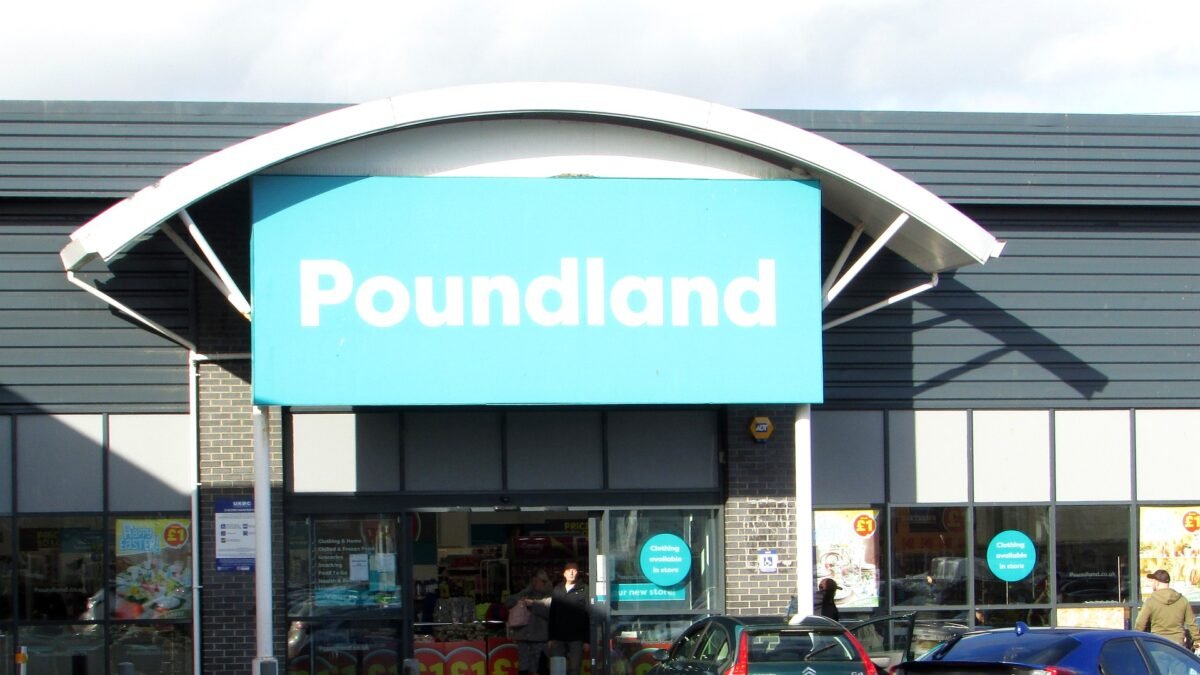
Poundland has filed a notice of intention to appoint administrators, putting one of Britain’s best-known discount retailers into a formal rescue window and leaving the future of about 600 stores and thousands of jobs unresolved. According to Reuters, the struggling retailer filed the notice in the High Court on Thursday 29 October 2026, giving the business temporary legal protection while it attempts to find a rescue deal.
The filing does not, by itself, place Poundland into administration. According to Reuters, the notice gives the business 10 working days of protection from creditor action. According to The Times, the step creates a ten working-day moratorium that blocks creditors from taking legal action over their debts. Administrators have not yet been appointed. The advisory firm AlixPartners has been lined up to run the process, according to the Retail Gazette, and Poundland’s managing director, Barry Williams, confirmed on Thursday that the retailer had filed a notice of intent to appoint administrators from AlixPartners, according to The Times.
Poundland has stressed that all of its stores remain open and trading as normal, according to the Press Association reporting carried by the Glasgow Times. That reassurance matters to shoppers and staff alike, because a notice of intention is often read, wrongly, as a closure announcement. In this case, the immediate legal effect is the opposite of a shutdown: it buys time. The question the next ten working days must answer is whether that time produces a buyer, a break-up, or an administrator taking control of a business that could not agree a sale as a whole.
The scale of what is at stake is described differently by different outlets, and the difference is worth stating plainly. The Times put the workforce at 12,000 employees across 600 stores in the United Kingdom and Ireland. The Press Association reporting put the figure at around 12,000 workers. Reuters, by contrast, reported that Poundland trades from more than 600 stores, including through the Dealz chain in Ireland, employing over 10,000 people. The shopworkers’ union Usdaw, through its general secretary Joanne Thomas, spoke of 11,000 jobs. Those figures reflect different counts and different moments, and none of them is a confirmed redundancy total. No final workforce reduction had been announced following the filing, and a successful sale of substantial parts of the business could preserve employment at the stores that are acquired. What is not in doubt is the order of magnitude: this is one of the largest retail insolvency processes in Britain by headcount in recent years, and it arrives weeks before the Christmas trading period on which discount retailers depend.
Williams set out the company’s position in a statement reported by The Times. “Despite enormous efforts it has not been possible to identify an acceptable offer for the business as a whole,” he said. He added that the sale process had attracted several established retail operators who had made formal offers, and that, collectively, those offers covered a significant part of the business and offered, in his view, the best available prospects for shareholders, creditors and the preservation of jobs. “We recognise any sale process creates uncertainty and particularly when set against a challenging UK economic environment,” Williams said. “We thank all stakeholders, and in particular our people for their support during this period.”
The filing followed the rejection of a management-backed rescue bid. Gordon Brothers, the United States investment firm that owns Poundland, rejected a takeover offer from the Irish real estate firm Martin Property Group, which management had named as its preferred bidder earlier in October, according to The Times and the Press Association. The bid is understood to have been worth more than £15 million, with only a portion of the sum paid upfront, according to reporting in The Guardian and the Financial Times carried by other outlets. The Times reported that the disagreement centred on the repayment upfront of a £30 million shareholder loan. Gordon Brothers took on about £30 million of debt when it bought Poundland, according to The Guardian, and it is understood to want that sum recovered. An improved bid from Martin Property Group has not been ruled out, according to the same reporting, which leaves a narrow route back to a solvent sale of the whole group if a revised offer is submitted within the protection period.
In a statement reported by local press, Gordon Brothers said the sale process had surfaced formal and indicative offers for significant viable parts of the business from established retail operators, alongside interest in the whole business. “These options will now be objectively evaluated, with a view to minimising uncertainty for Poundland’s people and all relevant stakeholders,” the company said. That wording is important. It presents a break-up not as a failure of the sale process but as an outcome the process itself produced. Whether staff, suppliers and landlords read it that way will depend on what happens to individual stores in the coming days.
The dispute over the Martin bid had already spilled into the boardroom before the filing. Three independent directors appointed to help oversee a sale resigned amid disquiet over the move towards insolvency, according to The Guardian and Financial Times reporting. The Times reported that the three directors, hired to steer the company through the sale process, quit suddenly earlier in the week amid concerns at what they believed were attempts by Gordon Brothers to steer Poundland towards insolvency. Sky News reported that the directors, Andrew Kirkpatrick, Stephen Welch and Dominic Young, had been appointed to Poundland’s board on 15 October, according to local reporting, and the Retail Insight Network reported that they had been appointed 12 days before resigning to manage a solvent sale. Williams had previously told staff that the rejection of the Martin bid was “unexpected, unwanted and wholly avoidable”, according to The Times. The directors’ departure, on that account, was not a routine governance change. It was a signal, visible to anyone watching the sale, that management and owner no longer agreed on the direction of travel.
The government moved quickly to establish what was happening. The business secretary, Jonathan Reynolds, has written to Gordon Brothers, and he instructed his chief strategic business adviser, David Bickerton, to “establish the facts” about Poundland’s position, according to the Financial Times reporting carried by The Guardian and trade outlets. The department contacted Gordon Brothers but, it is understood, not Poundland’s management, according to the same reporting. A government spokesperson said it would be a concerning time for Poundland employees, their families and communities, but that this was a commercial process and ultimately a decision for Poundland’s owners, so it would not be appropriate for the government to comment further, according to local reporting of the department’s position. One source close to the process described Bickerton’s task in plain terms, telling the Retail Insight Network that he was asking factual questions to establish what the situation was. An ally of Reynolds said he would always be concerned when a large number of hard-working people might not have a job, according to the same outlet.
The timing sharpened the political sensitivity. The filing landed the day after the first Budget of Chancellor John Healey, delivered on 28 October 2026, and reporting in The Guardian and the Financial Times noted that the Poundland move threatened to overshadow the Budget, amid longstanding complaints from companies about costs imposed by the government on businesses. Nothing in the verified reporting establishes that the Budget caused the filing, and the article does not claim that it did. The sale process had been running for weeks, the Martin bid had already been rejected, and the directors had already resigned. The significance of the timing is narrower and still real: a government presenting a Budget built around household costs found itself, within a day, writing to the owner of a chain whose customers are among the most exposed to those costs, asking for the facts about 12,000 jobs.
Reuters also noted a constituency detail that underlines why ministers paid attention. Poundland operates a distribution centre in Makerfield, in north-west England, which Reuters described as the constituency of Prime Minister Andy Burnham. The Retail Insight Network likewise reported that an insolvency could affect roles at the Makerfield distribution centre. Distribution jobs are easy to overlook in a story told through shopfronts, but they are central to any break-up: a buyer of stores without the warehouse and transport network behind them inherits a different business from a buyer of the whole operation.
The sale process that produced this week’s filing had been running through the autumn. Reuters reported that Gordon Brothers put Poundland up for sale in August, less than a year after buying the chain for a nominal sum from the Warsaw-listed Pepco Group. Trade reporting put the start of an accelerated sale process, run by the advisory firm Alvarez & Marsal, in September, with a reported asking price of £30 million. The two dates describe different stages of the same process rather than conflicting accounts of a single event: an owner exploring a sale, and then a formal accelerated process with advisers appointed. Gordon Brothers had initially explored selling Poundland and its Irish sister business, Dealz, together, according to the Retail Gazette, but was weighing a break-up of the two businesses after interest in the Irish chain from retailers and investors. Dealz accounts for roughly 50 of the group’s stores, according to reporting in The Guardian and the Financial Times.
Interest in parts of the estate, as opposed to the whole group, came from several established names. The Times listed Fortress Investment Group, the private equity firm that owns the rival Poundstretcher; CDS Superstores, the owner of The Range and Wilko; the German discounters Lidl and Aldi; and Modella, the owner of TG Jones, as parties that had expressed interest in parts of Poundland’s store estate. The Retail Gazette listed B&M, the owners of The Range, Poundstretcher, the owner of TG Jones and Martin Property Group as having shown interest over the preceding months. The Retail Insight Network reported that Fortress had dropped a bid to buy Poundland in its entirety and was instead seeking to acquire between 200 and 250 stores. Those accounts should be read as reported interest and, in Williams’s words, formal offers for parts, not as confirmed purchases. The distinction matters, because a collection of expressions of interest does not by itself save a single job until contracts are signed and stores are transferred.
The management bid itself had a history. The proposed management buyout included Williams and Andy Bond, the former Asda chief executive who ran Poundland from 2016 for several years after Pepco acquired it, according to the Retail Insight Network and the Retail Gazette. The management team was understood to be negotiating with an unnamed financial backer, and at one stage was reported to be in advanced talks over a deal that could safeguard up to 11,000 jobs. The Guardian reported that Gordon Brothers had hired Alvarez & Marsal in August to run a sale at a reported price of £30 million, despite improved trading. Bond’s involvement gave the management bid a particular resonance: it was not only the incumbent team seeking to keep the business whole, but a former leader of the chain returning in an attempt to buy it back from the owner that had acquired it for £1.
That £1 price is the detail that has defined public discussion of the Gordon Brothers ownership, and it needs context. Gordon Brothers acquired Poundland from Pepco Group in June 2025 for a nominal £1, according to Reuters and The Times, taking on about £30 million of debt in the deal, according to The Guardian. The Retail Gazette reported that Gordon Brothers provided up to £80 million of financing to support the turnaround, and the Retail Insight Network reported that Gordon Brothers agreed to invest £80 million under the rescue deal. Pepco retained a minority stake, according to local reporting on the transaction. At completion, the retailer operated more than 800 stores across the United Kingdom and Ireland, according to the Retail Gazette, and employed around 16,000 colleagues across more than 800 stores in the United Kingdom, the Isle of Man and Ireland, according to reporting on the sale. The estate that is now the subject of a rescue process, at about 600 stores, is therefore materially smaller than the estate Gordon Brothers bought, because a major restructuring intervened.
That restructuring closed about 149 stores with the loss of around 2,200 jobs, according to the Retail Insight Network and the Retail Gazette, after trading problems and unpopular clothing ranges pushed the retailer into loss. The restructuring plan reduced rents on a large number of leases and closed dozens of the 800 stores in the United Kingdom, cutting the total to between 650 and 700 locations at that stage, according to reporting on the shake-up. Poundland then refocused on its £1 products and relaunched its Pep & Co clothing brand after switching to ranges supplied by Pepco, according to the Retail Insight Network. The latest accounts cited by the Retail Gazette showed sales falling from around £1.8 billion to £1.6 billion in the year to September 2025, alongside a pre-tax loss of £85.2 million. Those accounts describe the business Gordon Brothers inherited, not the business it is trying to sell today, but they explain why a turnaround plan, rather than steady trading, was the premise of the ownership.
By the autumn of 2026, the trading picture had begun to improve, according to the company’s own reporting carried by trade outlets. Unadjusted like-for-like sales rose by 3.3 per cent in the quarter ending 27 September, increasing to 6.4 per cent after accounting for product categories removed during the restructuring, according to the Retail Gazette and The Industry Beauty. Like-for-like sales grew by 6.7 per cent in September, and the retailer expected profitability to reach the upper end of its expectations, according to the same reporting. The Retail Gazette reported that Poundland expected pre-tax earnings to be around £80 million better than the previous year, when it posted the £85 million pre-tax loss, and that the retailer had more than £30 million in cash with access to a £95 million lending facility from Gordon Brothers, of which £50 million had been drawn. Williams had insisted that the retailer was making progress with its turnaround, with the business seeking to rebuild customer trust through simpler pricing and ranges, according to the Retail Gazette. None of that reporting, on its own, proves that the business was viable as a whole. It does, however, complicate any simple story of a chain in terminal decline. A business can improve its sales and still fail to agree a price for its debts.
Two quieter pressures were reported alongside the sale. An insurer covering some of Poundland’s suppliers withdrew credit, according to the Retail Gazette, raising concerns over potential disruption to product supplies. One industry source told reporters that suppliers had already begun holding back deliveries, according to reporting carried by BigGo Finance, which would complicate any rescue if stock could not be secured for the Christmas period. The same source-based reporting said Gordon Brothers wanted to act quickly because Poundland was carrying heavy stock ahead of Christmas, and that a swift break-up, selling parcels of stores and inventory, would maximise returns for the restructuring specialist. Those are single-source industry accounts, not confirmed company statements, and they are presented here as such. But they point to the practical reason the timetable is measured in working days rather than months: in retail, a rescue negotiated after the Christmas stock has been committed, or after suppliers have stopped delivering, is a different and harder rescue.
Poundland’s history explains why the story has landed so widely. The chain was founded in 1990, according to Reuters, and grew by selling all of its items at the single price point of £1, a policy Reuters noted has long since been abandoned. Dave Dodd and Steven Smith founded Poundland in 1990, establishing the operation around a uniform £1 price point, according to the Retail Insight Network. Its first store was in Burton-upon-Trent, according to reporting on the chain’s history, and it now serves around 20 million customers a year, according to local reporting. In recent years, Reuters reported, it has struggled with competition from traditional supermarkets, the discounters Aldi and Lidl, and firms such as B&M. Reuters added a single, pointed comparison: the fellow United Kingdom discounter Wilko collapsed in 2023. The comparison is not a prediction. Wilko’s collapse and Poundland’s notice are different events, under different owners, at different moments. The reason the comparison recurs in coverage is that both chains occupied the same stretch of the high street, served similar customers, and discovered that low prices alone do not protect a retailer when costs rise, ranges go wrong, or ownership changes faster than trading can recover.
Analysis: Why It Matters
The Poundland filing should be read as a dispute about value that has run out of private negotiating room, not as a verdict on whether discount retail has a future. Every verified fact in the reporting points in the same direction: a business whose trading was improving, whose owner and management disagreed about the price of keeping it whole, and whose independent directors walked away when that disagreement hardened. The notice of intention is the legal mechanism that forces the next stage into the open, under a deadline, with an administrator waiting in the wings. What follows is an assessment grounded in those verified facts, not a prediction about which stores will survive.
A rescue window, not yet a collapse
The most important distinction in this story is the one most easily lost in a headline. A notice of intention to appoint administrators is not an administration, and it is not a liquidation. It is a court filing that creates breathing space: 10 working days in which creditors cannot take action, during which a sale can be completed, a revised bid can be considered, or an administrator can be appointed in an orderly way. The Times was explicit that the move heightens the likelihood of the business being broken up and sold off in parts, and that is a realistic reading of where the sale process had arrived. But likelihood is not certainty. Williams’s own statement leaves two routes open at once: no acceptable offer for the whole business, and formal offers for significant parts of it. The protection period exists precisely so that those part-offers can be evaluated without a creditor forcing the timetable.
For staff, that distinction is both reassuring and unsatisfying. Reassuring, because stores trading as normal means wages, rotas and Christmas shifts continue while negotiations proceed. Unsatisfying, because “at risk” is a holding category that tells an individual worker almost nothing about their own store. The variance in the reported headcount figures — 12,000, over 10,000, 11,000 — is a symptom of the same uncertainty. Different sources count the group differently, at different dates, with different treatment of Dealz, distribution and head office. Until an administrator or a buyer publishes a store-by-store list, any national total is an estimate of exposure, not a list of redundancies. Readers, and workers, should treat it that way, and should be wary of any account that converts “jobs at risk” into “jobs lost” before a single transfer or closure has been confirmed.
The deadline also changes the bargaining dynamics. A ten-working-day moratorium concentrates minds, but it also rewards the party that is best prepared. Gordon Brothers, with advisers appointed and a break-up valuation in mind, enters the window with options already priced. A management team seeking to revive a whole-business bid must improve its offer, secure its backer and satisfy an owner that has already rejected it once, all inside the same window. Bidders for parcels must move from indicative interest to binding offers for specific stores, stock and leases. The administrator, if appointed, inherits a business carrying heavy Christmas stock and facing supplier-credit pressure. Speed is therefore not a neutral virtue in this process. It favours prepared break-up over improvised rescue, unless the protection period is used to do the slower work of assembling a whole-business deal that was not ready when the notice was filed.
The £30 million fault line
At the centre of the dispute is a number that looks small beside a national retailer’s turnover and turns out to be decisive: £30 million. Gordon Brothers took on about £30 million of debt with the business, and the disagreement with management centred on repaying that sum upfront, according to The Times. The Martin Property Group bid was worth more than £15 million, with only a portion upfront, according to Guardian and Financial Times reporting. Put together, those two attributed figures describe a gap that is not about the principle of a sale but about its structure: an owner seeking to recover a specific loan in full and at once, and a bidder offering roughly half that value, staged over time.
From Gordon Brothers’ perspective, as reported through industry sources, a break-up could recover more. One industry source framed the choice bluntly, telling reporters that the firm could accept an offer worth at least half of the £30 million it secured for £1, or get significantly more by breaking the business up, and that only a sense of moral or public-relations duty could alter the outcome. Another strand of reporting put the break-up expectation at as much as £30 million, while warning that up to 500 stores could be left without a buyer. Those are estimates from unnamed sources, not audited valuations, and they point in opposite directions on purpose: a break-up maximises the return on the assets that are wanted, and leaves the unwanted remainder exposed. The owner’s fiduciary interest and the public interest in preserving jobs and high streets are not the same calculation, and the Poundland case makes the gap between them unusually visible.
From management’s perspective, the Martin bid represented continuity: one owner, one estate, one distribution network, and a team that had already overseen the restructuring and the early trading recovery. Williams’s description of the rejection as “unexpected, unwanted and wholly avoidable” is the language of a management team that believed a solvent whole-business sale was within reach and was surprised to lose it. The resignation of three independent directors, appointed to oversee a solvent sale, supports the reading that the disagreement was substantive rather than presentational. Directors do not ordinarily resign in a group, days after appointment, over a minor difference of emphasis. Their departure suggests they concluded that the process they had been appointed to oversee was no longer the process that was actually happening.
The government’s intervention should be understood in that light. Reynolds did not announce support, funding or a rescue. He asked for facts. That is the correct first step for a business secretary faced with conflicting accounts from an owner, a management team and departing directors, and it is also the limit of what a government can usefully do at this stage. A department cannot set the price of a shareholder loan, and a minister cannot compel an owner to accept a bid. What the government can do is establish, quickly and authoritatively, how many jobs and stores are actually affected, what the administrator’s plans are, and what support — through Jobcentre Plus, redundancy payments and retraining — will be available if stores do close. The test of the intervention will not be the letter to Gordon Brothers. It will be whether, when a list of affected stores exists, the state is ready with something more specific than concern.
Improving sales, fragile finances
The trading figures reported before the filing deserve more attention than they have received, because they challenge the assumption that Poundland failed in the shops. Like-for-like sales rose 3.3 per cent in the quarter to 27 September, and 6.7 per cent in September alone, with a higher adjusted figure once removed product categories were accounted for. The retailer expected pre-tax earnings to improve by around £80 million on the previous year. It held more than £30 million in cash, with a £95 million facility, half drawn. Those are the figures of a business whose customers were returning, not abandoning it. They are also, crucially, the figures of a business whose balance sheet, not its tills, decided its fate.
That distinction is the recurring story of British retail distress in the past decade. A chain can sell more, improve its ranges, close its worst stores and still be undone by the structure of its debts, its leases and its ownership. Poundland’s restructuring had already removed about 149 stores and 2,200 jobs and cut sales from £1.8 billion to £1.6 billion in the year to September 2025, with an £85.2 million pre-tax loss. The turnaround that followed was real but recent, and it was being conducted inside a sale process whose outcome would determine whether the improved trading accrued to a continuing owner or was harvested through a break-up. An owner that bought a business for £1 and financed its turnaround does not automatically share management’s interest in continuity. If the parts are worth more than the whole, the rational financial decision and the best outcome for staff can diverge, and no amount of like-for-like growth closes that gap by itself.
Supplier credit is the mechanism through which a fragile balance sheet becomes a trading problem. When an insurer withdraws cover for a retailer’s suppliers, those suppliers may demand payment upfront, shorten terms or hold back deliveries. The reporting that suppliers had begun holding back deliveries is single-sourced and should be treated cautiously, but the underlying dynamic is well established in retail insolvencies: confidence is a form of working capital, and once it goes, stock availability, not demand, becomes the constraint. For a discount retailer heading into Christmas, that dynamic is acute. The value of the business in a break-up is partly the value of its Christmas stock, already committed and already in warehouses and stores. The value of the business as a going concern depends on suppliers continuing to deliver into January. The notice of intention, by freezing creditor action, is designed to protect the second of those values. Whether it does so depends on whether suppliers believe a buyer will pay them.
Why the discount model is under pressure
Poundland’s difficulties cannot be reduced to a single owner or a single bid. The discount model that made the chain famous — everything for £1 — was built for a world of lower costs and more predictable supply. Reuters noted that the £1 policy has long since been abandoned, and the reason is visible in every part of the reporting: competition from supermarkets, Aldi and Lidl, and B&M; rising employment costs that affect every labour-intensive retailer; and the cost of getting goods onto shelves when supplier credit tightens. A discounter’s margin is the difference between a low price and a lower cost, and when costs rise across the whole sector, the discounter has less room to absorb them than a full-price retailer, because its prices are the promise.
The chain’s response, as reported, was to return to its value roots: simpler ranges, greater emphasis on the £1 price point, a refocus on the products customers expected. That strategy appears to have worked in sales terms. The problem is that a value strategy and a premium estate do not always fit together. Poundland entered the Gordon Brothers ownership with more than 800 stores, many on high streets and in shopping centres whose rents and footfall were set in a different retail era. Closing 149 stores addressed the worst of that mismatch. It did not resolve the question of whether the remaining 600 stores, as a single estate, could generate enough cash to service the debts and leases attached to them, at a price an owner was willing to accept. The sale process answered that question in the negative, at least at the price offered.
There is also a wider high-street context that the Poundland filing illuminates without explaining on its own. The union’s figure of around 250,000 retail jobs lost over five years, quoted by Joanne Thomas, is a sector-wide claim, not a Poundland figure, and it should be read as the union’s framing of a structural shift: fewer, larger, more automated stores; more online spending; and a long tail of town-centre units whose economics no longer work for the chains that once anchored them. Poundland mattered to many of those towns precisely because it was not a premium retailer. It sold essentials at prices that made a weekly shop possible for households under pressure. A break-up that saves the profitable stores and closes the marginal ones will therefore not be felt evenly. The stores most likely to be left without a buyer are, by definition, the stores in the places with the weakest alternatives.
What a break-up would mean in practice
If the protection period ends in administration and a break-up sale, the practical consequences will be decided store by store, lease by lease, and in the case of Dealz, country by country. A buyer of a parcel of stores acquires the lease, the stock and, in a transfer of the business, the staff who work there. A store with no buyer faces closure, redundancy consultation and a gap on the high street. A distribution centre with no buyer faces a different calculation again, because its value depends on the volume of stores it serves. The reporting that Gordon Brothers believes a break-up could recover more than the Martin bid, and could keep more jobs in place in the long term, is an argument about aggregate value. It is not a guarantee for any individual store, and the warning that hundreds of stores could be left without a buyer, from an industry source, is the other side of the same aggregate calculation.
Christmas makes the sequencing harder. A break-up negotiated in November must transfer stock that is already seasonal, staff who are already rostered for peak trading, and leases whose landlords may prefer a new tenant to an administrator. A swift sale of parcels and inventory, as one industry source described the owner’s preference, maximises the return on stock before its seasonal value falls. A slower, whole-business rescue preserves the network but risks missing the trading window that justifies the price. That tension is why the ten-working-day period matters more than the rhetoric around it. It is not a deadline for deciding Poundland’s long-term future in the abstract. It is a deadline for deciding who owns the stock that is already on the shelves.
For shoppers, the immediate message is continuity: stores open, trading as normal. For staff, the honest message is uncertainty with a deadline. The union’s call for the government to do everything it can to save jobs, with an emphasis on women and part-time workers who make up much of the retail workforce, frames the human stakes that aggregate valuations obscure. Poundland’s workforce is not an abstract headcount to be reconciled between 10,000 and 12,000. It is thousands of people, many on part-time contracts, many in towns where alternative retail work is scarce, facing a Christmas season in which they do not know who their employer will be in January. Any assessment of this filing that stops at the £30 million loan has missed the point of the story.
What to Watch Next
- The ten-working-day clock. The moratorium created by Thursday’s filing runs for 10 working days. Watch for a court filing appointing AlixPartners as administrator, a statement that a rescue deal has been agreed, or an application to extend the protection period. The absence of news in the first days will not mean nothing is happening; the decisive negotiations are likely to be private. The presence of a filing, when it comes, will reveal which route — whole-business sale, pre-pack, or break-up administration — has been chosen.
- An improved Martin bid, or a pre-pack. Trade reporting has described a pre-pack administration, in which a sale is arranged before an administrator is appointed and completed shortly afterwards, as one of the options considered during the sale process. Watch for any revised offer from Martin Property Group, backed by the management team, and for any announcement that a buyer for the whole group, or for Poundland and Dealz separately, has been agreed. A revised bid that addresses the £30 million loan question directly would change the story; a pre-pack to a parcel buyer would confirm it.
- Which stores, and Dealz. Watch for the first store-by-store information: which retailers have agreed to take parcels, how many stores each parcel contains, and whether Dealz in Ireland is sold with Poundland, separately, or retained. The Fortress interest in 200 to 250 stores, the CDS and Modella interest in parts, and the B&M and Lidl and Aldi interest reported by The Times are starting points, not conclusions. The list of stores without a buyer, if one emerges, will be the most important document in this process for staff and towns.
- Staff, the union and the government. Watch for a statement from Usdaw on consultation, for any government update following Bickerton’s fact-finding, and for confirmation of redundancy and support arrangements if closures are announced. The government’s letter to Gordon Brothers established a channel; the test will be whether it produces timely, store-level information for workers, rather than general reassurance. Watch also for any statement from Poundland’s management to staff, which has so far been the clearest source of information about the internal dispute.
- Christmas trading and supplier deliveries. Watch for signs of stock disruption — empty shelves, reduced ranges, or suppliers confirming that deliveries have resumed — and for any trading update covering the Christmas period. A rescue that preserves stores but cannot stock them is only a partial rescue. Conversely, normal trading through November and December, with suppliers delivering, would be the strongest evidence that the protection period is working as intended, whatever the eventual ownership outcome.
Sources
- Reuters — UK’s Poundland files administration notice to buy time for rescue, 29 October 2026
- The Times — Poundland heads for administration with 12,000 jobs at risk, 29 October 2026
- Retail Gazette — Poundland owners preparing to appoint administrators, 29 October 2026
- Glasgow Times / Press Association — Poundland to appoint administrators with thousands of jobs at risk, 29 October 2026
- Retail Insight Network — UK investigates Poundland owner over retailer’s potential administration, 28 October 2026

About the Author — Abdul Mannan
Related Articles

Healey Uses Bank Tax to Fund £100 Energy Payments in First Budget Built for ‘Breathing Space’
Chancellor John Healey's first Budget offers £100 energy payments to 20 million households, funded by a temporary rise…

Two Men Charged Over Alleged Iran-Linked Plot at RAF Fairford as Court Hears of Petrol-Filled Vans
Two men have been charged under the National Security Act 2023 over an alleged Iran-linked plot at RAF…

Reynolds Says UK and EU Are Discussing Free Movement as an Option for a Closer Future Relationship
Business Secretary Jonathan Reynolds has confirmed UK and EU officials are discussing future options for the relationship, including…