
Prosecution Calls Russell Brand a “Ruthless Sexual Predator” as Rape Trial Opens at Southwark Crown Court

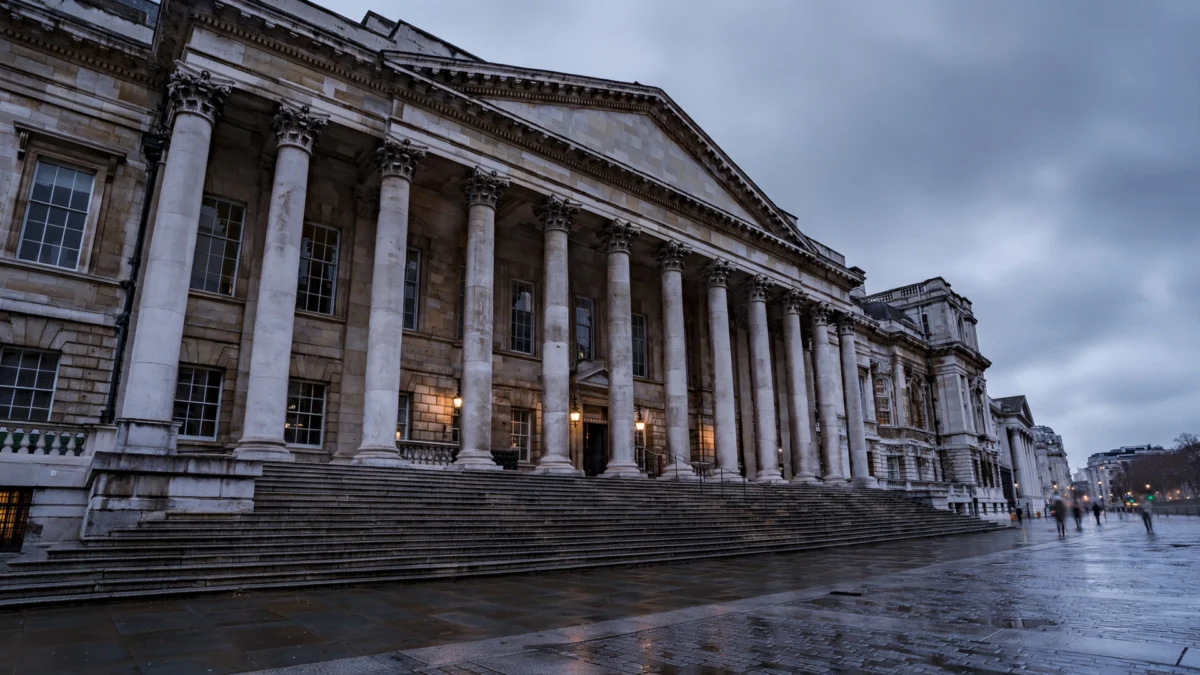
Prosecutors opened their case against Russell Brand at Southwark Crown Court in London on Wednesday, telling a jury that the comedian and actor sexually assaulted six women over a period of about a decade. Brand, 51, has pleaded not guilty to all seven charges against him, and the trial is expected to last about six weeks, according to Reuters.
The charges are three counts of rape, three counts of sexual assault and one count of indecent assault, relating to six women and alleged offences between 1999 and 2009, according to Reuters and The Associated Press. Brand denies every accusation. Nothing has been proven, and the jury will decide the case on the evidence heard in court.
Opening the prosecution case, prosecutor Riel Karmy-Jones KC told jurors that Brand acted as a “ruthless” sexual predator, in the prosecution’s words, and that the six women did not know one another and came forward independently. The prosecution told the court that the alleged offences took place in a range of settings, including a hotel room, workplaces, a bar and at Brand’s home address, according to AP. The prosecution said that some of the women protested, while others had no opportunity to react, and that Brand was not deterred either way, according to Reuters.
Karmy-Jones told the jury that Brand’s desire for sexual contact was, in the prosecution’s characterisation, “indiscriminate and voracious,” and that women were, in the prosecution’s words, “simply a means to an end.” She told jurors that Brand could be charming and funny when he wanted something in return, and then demanding and entitled, and that he was, according to the prosecution, “ruthless,” “calculating” and “manipulative.” Those descriptions are the prosecution’s case, not findings. The defence has yet to set out its response in full, and Brand maintains that all of his sexual encounters were consensual.
Brand arrived at court on Wednesday accompanied by his wife, Laura Gallacher, and spoke briefly to reporters before going inside. He said he felt blessed, and also concerned, but hopeful that the process would lead to good outcomes for everybody involved, according to Reuters and AP. He was on bail as the trial began.
The charges before the court
The seven counts before the jury span a ten-year period at the height of Brand’s rise from stand-up comedy to television presenting, radio, Hollywood film and international celebrity, according to AP. The prosecution told jurors that the allegations “punctuate” the decade in which Brand’s career was taking off, moving from pub and club gigs to television presenting, acting and Hollywood films.
Three of the counts allege rape. Three allege sexual assault. One alleges indecent assault. Each count relates to one of six women, and the prosecution says the women did not know each other at the time and do not know each other now, according to AP. That independence is part of the prosecution’s case: Karmy-Jones told jurors that the six women came forward independently of one another, and that their paths crossed Brand’s through employment, social events or gigs where he was performing.
Under British law, complainants in sexual offence cases are entitled to lifelong anonymity. The women are not named in court reporting, and AP says it does not name people who report alleged sexual violence. The court has not released any identifying details about them, and this article does not attempt to identify them.
The allegations are historical, meaning they concern events said to have taken place many years ago. The earliest alleged offences date to 1999, and the latest to 2009. Historic cases of this kind often turn heavily on testimony, on consistency, on any records kept at the time, and on what other witnesses remember. The jury will hear from the complainants and from other witnesses, and will weigh that evidence against the defence case.
A jury chosen with care
Before the prosecution opened, the court spent two days assembling a jury capable of deciding the case on the evidence alone. Jury selection began on Monday, October 12, and a panel of eight men and four women was sworn in on Tuesday, October 13, along with one reserve juror, according to reports of the proceedings.
Mr Justice Joel Bennathan, who is presiding over the trial, warned prospective jurors that Brand is a very well-known figure and that many of them would already have heard of him. He told them they must not carry out any research about Brand or the case, and that they must decide the case only on what they hear in court. According to Reuters, the judge excluded prospective jurors who said they had watched a documentary about the allegations broadcast about three years ago or had read a long newspaper article from the same period.
The care taken over jury selection reflects the central difficulty of trying a famous defendant: the jury must be impartial, but the defendant’s face and public image are familiar to millions. The judge’s instructions were designed to draw a firm line between what jurors may already know from public life and what counts as evidence in a criminal trial. The panel was told to ignore previous media coverage of Brand and the allegations, and not to discuss the case with anyone outside the jury room.
That warning matters beyond this trial. In the age of social media, jurors can encounter commentary about a case with a single search. Courts have responded with increasingly blunt instructions, and in some cases with contempt proceedings for jurors who research cases online. The Bennathan warning, reported by Reuters, was among the bluntest: jurors were told they must not research the defendant at all.
How the case reached court
The criminal case grew out of a joint media investigation published in September 2023 by Channel 4’s Dispatches programme, The Sunday Times and The Times, in which women accused Brand of rape, sexual assault and emotional abuse, according to AP and Reuters. Brand denied the allegations at the time.
The Metropolitan Police then began an investigation. Detectives said the inquiry remained open and encouraged anyone affected by the case, or anyone with information, to come forward. The Crown Prosecution Service, which decides whether criminal charges should be brought in England and Wales, authorised the first charges in April 2025. Those charges related to four women and alleged offences between 1999 and 2005, according to reporting at the time. Brand appeared at Westminster Magistrates’ Court and pleaded not guilty the following month.
In December 2025, prosecutors brought two further charges, one of rape and one of sexual assault, relating to two additional women and alleged offences in 2009, according to reporting at the time. Brand again pleaded not guilty. That brought the total to seven charges involving six women.
The trial was originally scheduled to begin in June 2026, but was moved to October, according to Reuters. The delay is not unusual in a case of this scale, where both sides need time to prepare, to disclose material and to arrange witness availability. The postponement also meant the case opened more than three years after the original media investigation, and more than a quarter of a century after the earliest alleged events.
Brand has consistently denied wrongdoing throughout. In a video statement after the first charges were brought, he said he had never engaged in non-consensual activity and welcomed the opportunity to defend the charges in court. He has repeated that denial since, including by pleading not guilty to every count.
Who Russell Brand is
Brand was born in Grays, Essex, in June 1975, and began his career as a stand-up comedian as a teenager. He rose to prominence in the early 2000s, presenting the Big Brother spin-off programme Big Brother’s Big Mouth on Channel 4, and then hosting his own show on BBC Radio 2 from 2006 to 2008, according to AP and Reuters. He became one of Britain’s best-known comedians of the decade, presenting the 2007 Brit Awards and Comic Relief, and hosting the MTV Video Music Awards.
He then moved into Hollywood films, with roles in Forgetting Sarah Marshall, Get Him to the Greek, a remake of Arthur and the musical Rock of Ages. In 2010, the same year Get Him to the Greek was released, he married the American singer Katy Perry; the marriage ended in divorce in 2012 after 14 months, according to Reuters.
Brand has long spoken publicly about his past struggles with drugs and alcohol, and about his recovery. In recent years he moved away from mainstream broadcasting, relocated to Florida, and built a large online following with videos mixing wellness, politics, religion and free-speech themes, according to AP and Reuters. He has millions of followers online, including a large audience on YouTube.
That second career is part of why the trial has drawn such wide attention. Brand is no longer only a former television presenter. He is an online personality with a loyal audience, and his case has become a touchstone in wider arguments about celebrity, accountability and free speech. Supporters argue that he is being targeted for his views. Critics argue that fame protected him for too long. The court will consider neither of those arguments. Its task is narrower: to decide whether the prosecution has proved, beyond reasonable doubt, that the charged offences happened.
How the trial will work
English criminal trials follow a fixed sequence. The prosecution opens first, setting out what it says happened and calling its witnesses. The defence then has its turn, and may call witnesses of its own, including the defendant if he chooses to give evidence. A defendant is not obliged to testify, and the jury is told not to hold silence against him.
The burden of proof rests entirely on the prosecution. The jury must be sure, beyond reasonable doubt, that Brand committed each offence before it can convict on that count. If the jury is not sure, it must acquit. Each count is considered separately, so the jury could convict on some counts and acquit on others.
The prosecution opened its case on Wednesday. Over the coming weeks, the jury is expected to hear from the complainants, from witnesses who may support or challenge their accounts, and from any expert or documentary evidence the two sides present. The defence case will follow, and the judge will then sum up the evidence and the law before the jury retires to consider its verdicts.
Trials of this kind are often slow and detailed. The jury must hear each allegation in turn, and must keep the counts separate in its mind. It must also weigh the difficulty of remembering events from many years ago against the seriousness of the charges. The judge will give directions on how to approach evidence about memory, delay and consistency, as judges do in historic cases.
Analysis: Why It Matters
The Brand trial matters for reasons that go well beyond one man’s career, and none of them prejudges the outcome.
Fame is the complication, not the evidence
The most obvious feature of this trial is the defendant’s fame, and the court has treated it as a risk to be managed rather than as evidence of anything. The judge’s jury-selection decisions, the warnings against online research, and the exclusion of jurors who had seen the earlier documentary all point in the same direction: the system is trying to create a space in which twelve people can decide a criminal case without being pulled by public opinion.
That is harder than it sounds. Brand’s case has been debated online for three years, and the arguments are often framed in political or cultural terms. But a criminal trial is not a referendum on a public figure. The jury’s question is not whether Brand is likeable, or whether his views are sound, or whether his past behaviour was admirable. It is whether the prosecution has proved specific offences against specific people at specific times. The discipline of the courtroom, with its rules on evidence and its insistence on proof beyond reasonable doubt, is designed to hold that line.
Historic cases test the justice system
The Brand trial is also a test of how the criminal justice system handles historic sexual offence allegations. Cases that reach court years or decades after the events alleged face two opposite problems. On one side, complainants may have delayed coming forward for reasons that are now well understood: fear, shame, power imbalances, or a belief that they would not be believed. On the other side, the passage of time can make a fair defence harder, as memories fade, records disappear and witnesses become unavailable.
Courts deal with that tension by relying on the jury’s careful assessment of the evidence, guided by the judge’s directions. The jury is asked to consider not only what witnesses say, but how they say it, whether their accounts are consistent with other evidence, and whether any gaps are the kind that time would explain or the kind that should raise doubt. The Brand jury will have to do that work six times over, once for each complainant, while keeping the counts distinct.
Anonymity protects the process
The lifelong anonymity granted to complainants in sexual offence cases is sometimes criticised as unfair, because the accused is named while the accusers are not. But its purpose is practical: to make it possible for people to report sexual offences without fear of public exposure. The rule applies in every case, not only famous ones, and it applies whether the jury convicts or acquits.
In a high-profile trial, anonymity also protects the jury’s task. If complainants were identified, public discussion would focus on them rather than on the evidence. The rule keeps the courtroom focused on what can be proved, and it preserves the complainants’ privacy regardless of the outcome.
The celebrity reckoning continues
Brand’s trial is the latest in a series of cases in which British courts have been asked to judge the conduct of famous men from the entertainment industry. Those cases have produced a mix of convictions and acquittals, and each one has been decided on its own evidence. But together they have changed the landscape in which the entertainment industry operates, and in which complainants decide whether to come forward.
The 2023 media investigation that led to the police inquiry was itself part of that shift. Investigative journalism, documentary film and the willingness of complainants to speak to reporters have become a route by which allegations reach the police. That route is not a substitute for a trial, and journalists’ findings are not verdicts. But in this case, as in others, it was the starting point for a criminal investigation that has now reached a courtroom.
A verdict settles the charges, not the argument
Whatever the jury decides, the Brand trial will not end the public argument about him. A conviction would be followed by sentencing and almost certainly by an appeal. An acquittal would mean the prosecution had not proved its case beyond reasonable doubt, not that the events alleged did not happen. That distinction is often lost in public debate, but it is the foundation of the criminal standard of proof.
The trial’s real significance may therefore lie in the process itself: that allegations made by six women, about events spanning a decade, have been tested in open court, with a defence, a jury and a judge, under rules that apply to every defendant. That is what the system promises, and it is what the next six weeks will deliver.
What to Watch Next
- The prosecution evidence: the complainants are expected to give evidence in the coming weeks. How their accounts hold up under cross-examination will shape the trial, and the court may hear supporting evidence from witnesses and records.
- The defence case: after the prosecution closes, the defence will set out its response. Whether Brand chooses to give evidence himself will be one of the most closely watched decisions of the trial, though he is under no obligation to do so.
- The judge’s directions: Mr Justice Bennathan’s summing-up and directions on memory, delay and the burden of proof will frame the jury’s deliberations. In historic cases, those directions carry particular weight.
- The verdicts, count by count: the jury must return a separate verdict on each of the seven counts. A mixed outcome, with convictions on some counts and acquittals on others, is possible and would reflect the jury’s assessment of each allegation on its own evidence.
- What follows the verdict: a conviction would lead to sentencing, and either side may seek to appeal on points of law. An acquittal would end the criminal proceedings. Either way, the case is likely to prompt further debate about fame, accountability and the handling of historic allegations in Britain.
Sources
- Reuters: Comedian Russell Brand was a sexual predator, UK prosecutors say
- Associated Press: Prosecution labels Russell Brand a ruthless sexual predator at opening of his sex assault trial
- AAP: Prosecution to open case in Russell Brand rape trial
- Newsmax: Jury sworn in for Russell Brand rape, sexual assault trial

About the Author — Abdul Mannan
Related Articles
Zelenskyy Meets Burnham in London as Britain Pledges Faster Missiles and Fresh Pressure on Russia
Volodymyr Zelenskyy meets Andy Burnham at Downing Street on Wednesday as Britain accelerates missile deliveries to Ukraine and…
MI5 Chief Warns of ‘New Era’ of Threats as Iran and Russia Ramp Up Hybrid Attacks on Britain
In his annual threat speech at Thames House, MI5's Director General Sir Ken McCallum said state threats have…

IMF Raises UK Growth Forecast for 2026 but Warns Energy Prices and High Borrowing Costs Will Drag on 2027
The IMF lifted its 2026 UK growth forecast to 1.3% but cut 2027 to 1.2%, warning that higher…