
Putin Proposes Three-Way Summit With Trump and Xi on Ukraine at APEC — Without Zelenskyy

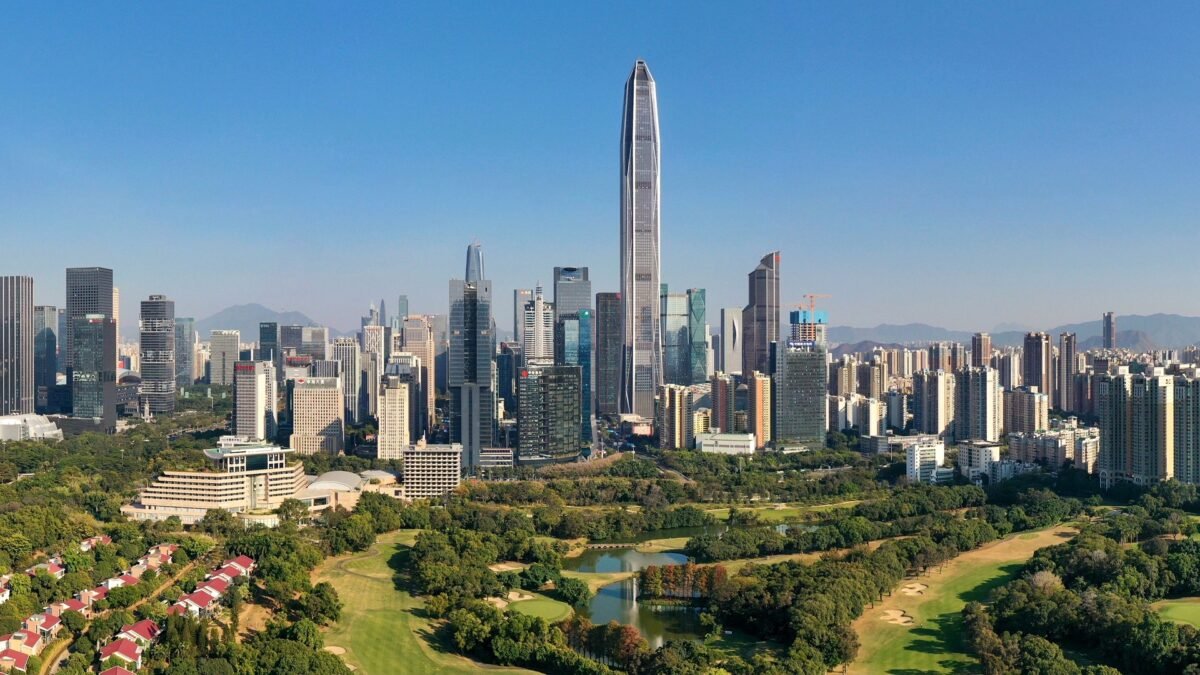
Russian President Vladimir Putin has proposed a three-way summit with US President Donald Trump and Chinese President Xi Jinping to discuss ending the war in Ukraine — a meeting that would decide the fate of the conflict without Ukraine itself at the table.
The proposal, first reported by The Wall Street Journal on Sunday and confirmed as under discussion by the Kremlin on Monday, envisages the three leaders meeting on the sidelines of the Asia-Pacific Economic Cooperation summit in Shenzhen, China, on November 18–19, where all three are expected to be present.
Kremlin spokesman Dmitry Peskov told reporters on Monday that the idea had indeed been raised, while cautioning that it remains hypothetical. “Given that all three heads of state may potentially take part in the summit in China, the subject of such a hypothetical meeting was indeed raised,” he said, according to Reuters. “It was raised, but no specific proposals or agreements were discussed or put forward by anyone, either regarding the meeting itself or the possible agenda and content of that meeting.”
According to the Journal, citing people familiar with the discussions, Putin first floated the idea during an October 9 phone call with Trump — the same call in which the two leaders reached an understanding for the United States to purchase Russian diesel fuel. A senior US official told the Journal that Trump had not agreed to the summit but could be receptive, given his long-stated desire to end the war. The White House has not commented publicly on the report.
Kyiv’s alarm
Ukraine reacted with undisguised hostility to the proposed format. Foreign Minister Andrii Sybiha wrote on X that “a trilateral meeting between the leaders of Ukraine, the US, and Russia could help end the war sooner. A trilateral meeting between the leaders of Russia, China, and the US would do only the opposite: encourage Putin to continue this war,” according to Reuters.
The Kremlin, while floating the three-way format, has acknowledged that no settlement is possible without Kyiv. “Of course, a final settlement is impossible without the participation of someone in Kyiv who is prepared to take responsibility,” Peskov said on Monday. Putin has repeatedly ruled out meeting Ukrainian President Volodymyr Zelenskyy directly until a final peace deal is ready, and has questioned Zelenskyy’s authority to sign an agreement since his five-year term expired under martial law — a position Ukraine has forcefully rejected, according to AFP.
US Secretary of State Marco Rubio confirmed on Monday that discussions about a possible meeting were under way, saying during a visit to Uzbekistan that Trump wanted the war to end. Rubio also warned of the conflict’s escalatory dangers, pointing to the risk of drones or failed sabotage operations spilling into neighbouring countries, as reported by RBC-Ukraine.
Warming ties between Washington and Moscow
The proposal lands at a moment of visibly warming relations between Trump and Putin. Earlier this month the two leaders agreed the US diesel deal, and on Friday Trump waived steep Graham Act sanctions and tariffs on buyers of Russian energy that had been due to come into effect — a move that sent oil markets swinging and drew criticism from Kyiv and from both parties in Washington, according to analysts cited by FXStreet.
Chinese officials, for their part, have indicated they would not oppose a meeting if the United States agrees, though the Journal reported that Beijing is concerned a Putin-Trump bilateral spectacle could overshadow China’s role as host at APEC. The APEC leaders’ gathering, scheduled for Shenzhen on November 18–19, is the first time the three men would all be in the same place since the proposal surfaced.
The last US-mediated peace talks between Ukraine and Russia took place in February, before the United States and Israel launched a war against Iran, according to Reuters — a reminder of how long direct diplomacy on Ukraine has been stalled.
Analysis: Why It Matters
A summit about Ukraine with no Ukrainians
The most striking feature of Putin’s proposal is not who is in the room but who is out of it. Modern European security has rested, at least in principle, on the idea that borders are not redrawn by great powers over the heads of the countries concerned. A trilateral summit of Russia, the United States and China negotiating the end of a European war without the invaded country present would be a rupture of that principle — which is precisely why Sybiha’s response was so swift and so sharp. Kyiv’s fear is not only about this one meeting; it is that the format itself becomes the precedent: Ukraine’s future discussed as a subject, not a participant.
Trump’s leverage — or Putin’s price
The context in which this proposal emerged matters enormously. The October 9 phone call that produced the summit idea also produced a diesel deal; Friday’s sanctions waiver followed days later. From Kyiv’s perspective, these look less like pressure on Moscow and more like concessions to it — which is exactly what Zelenskyy has said, warning that such moves embolden Putin and prolong the conflict. From Washington’s perspective, Trump may see the waiver and the diesel arrangement as the lubricant that buys Putin’s engagement in a deal. Both readings can be true at once, but the sequence — concession first, summit proposal second — is why European capitals are alarmed rather than reassured.
Beijing’s tightrope
For Xi Jinping, the proposal is a study in mixed blessings. Hosting a historic three-leader summit on Chinese soil would elevate Beijing’s standing as an indispensable diplomatic broker — the power without whose room no deal can be struck. But the Journal’s reporting that Chinese officials worry the meeting could hijack the APEC agenda reveals the risk: China wants the Shenzhen summit to be about regional economic architecture, not a stage for a Russian-American drama. Beijing will want the prestige of the venue without the chaos of the substance — a balance that may prove impossible if the proposal gains momentum.
The “hypothetical possibility” is doing a lot of work
Peskov’s careful language — “no specific proposals or agreements were discussed or put forward by anyone” — is worth reading closely. The Kremlin gets to float an ambitious idea, watch how Washington and Beijing react, and keep full deniability if it collapses. A senior US official’s “could be receptive” is equally hedged. This is how summits are born in the modern era: through trial balloons, anonymous briefings and deniable probes, each side testing the other’s appetite before committing. The proposal is real enough to be confirmed by the Kremlin spokesman on the record; it is vague enough that nobody has to own it yet.
The clock is ticking toward winter
Whatever the diplomatic choreography, the war itself continues. Russian strikes have continued to hit Ukrainian power infrastructure, Ukraine has launched one of its largest drone attacks on Russia this year, and winter — with its pressure on energy grids and front lines alike — is approaching. Every summit proposal, however speculative, now competes with the battlefield for influence over the terms of any eventual settlement. The closer November gets without a firm answer from Trump, the more the “hypothetical possibility” will look like either a genuine opening or a calculated distraction.
What to Watch Next
- Trump’s answer — the single decisive variable. The president has said only that “things are going very well”; whether he commits to the trilateral format before APEC will determine whether this becomes a summit or a footnote.
- Beijing on the record — China has not commented publicly. A formal Chinese position — welcome, tolerate, or deflect — will shape whether Shenzhen can even host such a meeting.
- Kyiv and Europe’s counter-move — expect intensified Ukrainian and European diplomacy aimed at forcing a seat at the table, or at killing the format before it hardens.
- The diesel deal and sanctions waiver fallout — bipartisan criticism in Washington and Zelenskyy’s warnings mean the concessions surrounding the proposal will face their own scrutiny.
- APEC preparations — with the summit less than a month away, the logistics of who meets whom in Shenzhen will start to lock in, turning the hypothetical into the concrete.
Sources
- Reuters — “Kremlin says Putin, Trump, Xi could hold three-way meeting in China next month”
- AFP (via Le Pays de France) — “Putin, Xi and Trump could meet at APEC summit: Kremlin”
- Dimsum Daily — “Putin proposes trilateral summit with Trump and Xi to discuss Ukraine in Shenzhen next month”
- This Newsroom — “Putin Summit With Trump and Xi: Ukraine Left Out”

About the Author — Abdul Mannan
Related Articles

Australian MP Helen Haines in Critical Condition After Suspected Targeted Vehicle Attack in Wangaratta
Australian independent MP Helen Haines is in a critical condition after being struck by a car outside her…
Egypt’s Parliament Delays Vote on Military Backing for Saudi Arabia as Houthi Attacks Intensify
Egypt's parliament postponed until Monday its vote on authorising military support for Saudi Arabia, as Sisi pledged Cairo…

Four Soldiers Killed, 39 Hurt in Wainwright Base Fire; Carney Declares National Mourning
Four service members were killed and 39 injured — 19 critically — when a wind-driven fire swept a…