
US Strikes Iran’s Qeshm Island in Secret Defensive Attacks on Eve of Midterm Elections

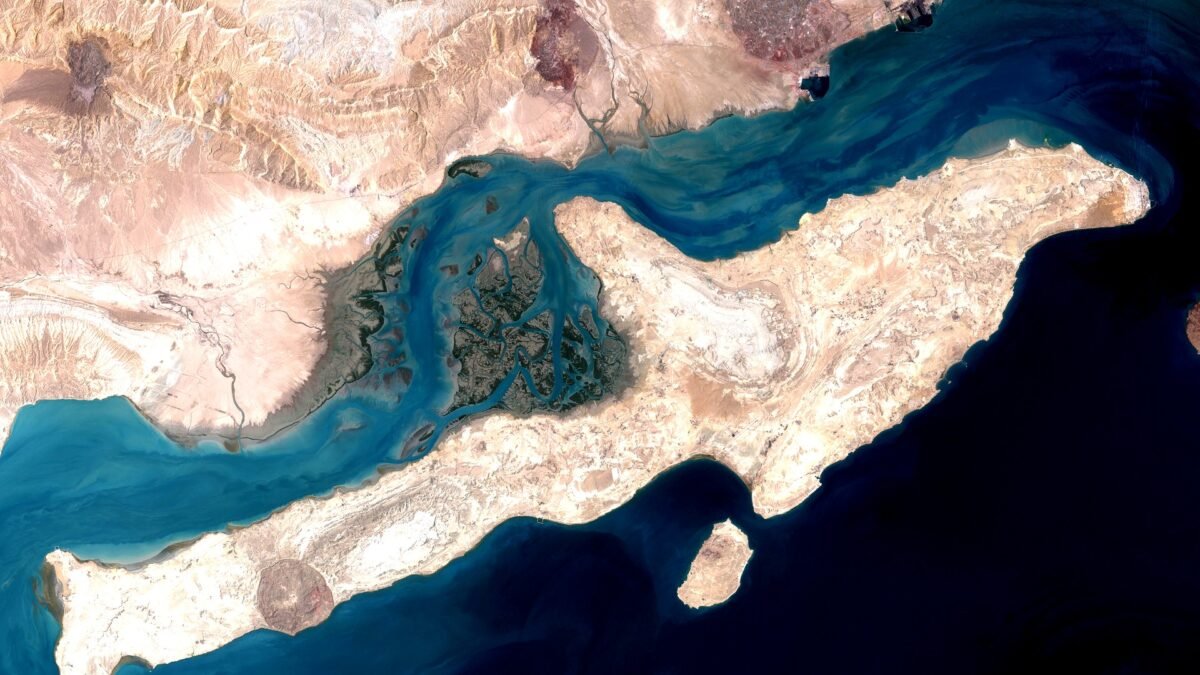
The United States struck Iran’s Qeshm Island on Monday in a series of secret, limited attacks that American officials described as defensive, hours after President Donald Trump said a diplomatic deal to end the eight-month war “could happen” and on the eve of midterm elections that will decide control of Congress.
The operation was first reported by The Wall Street Journal, citing United States officials, and was independently confirmed to CNN by three American officials. According to Reuters, which reported the Journal’s account, the attack was the latest in a series of limited strikes that Washington has secretly carried out against Iran in recent weeks, deliberately kept quiet so as not to signal any intention of resuming a major military campaign.
Iran’s state news agency IRNA reported several explosions on the island, which sits at the mouth of the Strait of Hormuz, and said residents had seen two aircraft flying over Qeshm. According to Al Jazeera, citing IRNA, five explosions were heard on the island, with further blasts reported in the mainland port city of Bandar Lengeh. The semi-official Fars news agency said explosions were also heard in Bandar Lengeh, coming from the direction of the sea.
There was no immediate official information on the cause of the explosions, the precise targets, any damage, or any casualties, and the United States Central Command did not immediately respond to requests for comment, according to Reuters. The Pentagon referred questions to Central Command.
A defensive strike, Washington says
American officials told both the Journal and CNN that Monday’s action was defensive in nature and intended to protect United States assets in the region. One official told CNN that the attack came in response to Iran firing at an American aircraft, and that it did not appear to be the kind of major combat operation officials have been contemplating.
“This was a defensive measure for Iranians using surface to air missiles against US assets,” another American official told CNN.
According to the Journal, Iran’s Islamic Revolutionary Guard Corps fired a surface-to-air missile at a United States jet fighter on Monday, and the American aircraft fired back in self-defence. In a separate incident on the same day, United States forces intercepted an IRGC missile that originated from Qeshm and was targeting commercial shipping, one official told the newspaper.
One person familiar with the matter told CNN that the administration had deliberately kept the attack under wraps in an effort not to overstate what was, in its telling, a defensive move. The strikes were meant to protect American assets, the person said.
The account given by American officials presents the operation as something narrower than the full-scale campaign Washington has threatened to resume. Yet the fact that the United States has been carrying out such strikes in secret for weeks, while publicly talking about a deal, is itself one of the most consequential revelations of the night.
Why Qeshm matters
Qeshm is Iran’s largest island in the Gulf, lying about 14 miles from the Iranian port city of Bandar Abbas, according to CNN. It sits at the northern edge of the Strait of Hormuz, beside the shipping lanes that carry oil out of the Gulf, and it is central to Iran’s ability to assert control over traffic through the waterway, through which about 20 million barrels of oil passed every day before the war.
The island hosts a naval base and a major desalination plant, and, according to the Journal, a large underground missile site. The United States has targeted Qeshm previously during the war, and American officials have discussed seizing it, the newspaper reported.
That combination — a missile arsenal, a naval base, and a position astride the world’s most important oil chokepoint — is what makes Qeshm the single most strategically loaded piece of ground in the conflict. Whoever controls the waters around it shapes the flow of energy on which much of Asia depends. An attack there, however limited, is never a routine event.
Trump plays down war talk as voting begins
The strikes landed on the same day that President Trump publicly played down the prospect of a return to war. Earlier on Monday, asked by reporters whether he was considering striking Iran after Tuesday’s midterm elections, Trump replied “no”, according to Reuters. He also said a deal with Tehran could happen.
In an appearance that aired on Fox News on Monday night, Trump did not specifically address the reports of new strikes, but he broadly defended his decision to launch the war and suggested there had not been recent fighting.
“We’re not fighting a war. Everyone says ‘you’re at war!’ Well, when was the last time we fired anything? This isn’t a war — it’s a very soft war … But this isn’t like a war that’s going on. There’s no war raging. It could happen if they don’t make a deal, but they want to make a deal very badly and there’s a very good chance we make a deal,” Trump said, according to CNN.
Vice President JD Vance struck a similar tone on Monday, telling reporters that the United States and Iran had “made some progress” toward an off ramp to the war. “The Iranians are always a little unpredictable, and as the president always says, he retains kinetic options, he retains non-kinetic options. But we’ve certainly made some progress. We’ll see if we can make some more,” Vance said, adding that he had just spoken with the president about the war and that both men felt “pretty good” about a potential deal.
Iran’s foreign ministry spokesperson, Esmail Baghaei, told reporters in Tehran on Monday that “the ball is in the U.S. court” on any prospective deal to end the war, according to the Journal.
Talks continue as missiles fly
The strikes came against the backdrop of continuing diplomacy. Contacts between Iran and the United States to end their eight-month war are continuing, Tehran’s foreign ministry said on Monday, according to Reuters, after days of Qatari-mediated talks in Doha ended with altered proposals but no breakthrough. The Iranian delegation left Doha on Sunday, and a draft proposal is circulating, with a follow-up meeting under discussion. Qatari mediators were reported to be travelling to Tehran late on Monday to meet Iran’s foreign minister, Abbas Araghchi, on a version of the draft deal, although that trip had not been confirmed by officials.
Iran’s seven-step plan, put forward in September, calls for the United States to end its blockade on Iranian ports, for Iran to reopen the Strait of Hormuz, for Washington to issue a waiver on Iranian oil sales and cancel new sanctions, and only then for talks on other issues. Trump rejected that plan in September. Araghchi said on Saturday that the plan had been condensed into a two-day implementation timetable, a point Baghaei confirmed on Monday, according to Reuters. Nuclear talks would only follow once Iran verifies that the conditions have been met. The transfer of highly enriched uranium has not been raised, and there has been no discussion yet of inspections by the International Atomic Energy Agency. Iran remains committed to the Nuclear Non-Proliferation Treaty, according to its officials.
The war was launched on 28 February 2026 by the United States and Israel. Iran’s then supreme leader, Ali Khamenei, was killed in the opening strikes, and his son Mojtaba is now supreme leader, though he has not been seen publicly since taking the role. Mojtaba has ordered an immediate response to any threat, without geographic limits. Iran’s security chief, Mohsen Rezaei, has warned of “devastating blows” using new weapons, while also saying that the tone from Washington had “completely changed” after a letter from Vance.
Trump had said there would be no new attack before Tuesday’s midterms, and he described a call with the Israeli prime minister, Benjamin Netanyahu, on Saturday as “very good”. Netanyahu lost his parliamentary majority last week, adding political pressure of his own to the diplomacy.
Oil whipsaws on war and peace
Oil prices reacted immediately to the news of the strikes. Brent crude futures settled $8.66, or 7.63 per cent, lower on Monday at $104.77 a barrel, according to Reuters, as hopes of a diplomatic settlement pulled prices down sharply. They then rose 48 cents, or 0.5 per cent, to $105.25 a barrel by 0104 GMT on Tuesday in early Asian trade after the report of the strike on Qeshm, while United States West Texas Intermediate crude was up 47 cents, or 0.5 per cent, at $96.93 a barrel.
The swing captures the market’s dilemma in a single session: a deal would reopen the Strait and bring prices down; a strike, or the fear of a wider war, pushes them up. Brent ended October at its highest in six months on concerns that the conflict could escalate again after Tuesday’s midterm elections, according to Reuters.
Shipping through the Strait of Hormuz is about 70 per cent below its pre-conflict level, according to the United Kingdom Maritime Trade Operations agency, and October was the busiest month for assaults on ships in the strait since March. A Qatari liquefied natural gas tanker was struck on Friday, a rare attack on an LNG carrier. The strait previously carried about a fifth of global crude oil and natural gas supplies, according to Reuters.
Iran claims it downed American drones
Iran’s Revolutionary Guard Aerospace Force claimed on Monday that it had shot down three American drones near the Strait of Hormuz, including what it described as the 55th MQ-9 military drone it has brought down. According to Iranian state broadcaster Press TV, the Guard said two MQM-170 reconnaissance drones were brought down south of Qeshm Island using electronic warfare systems, taking the total number of captured drones of that type to four. In a separate statement, the Guard said its Aerospace Force had tracked and destroyed an MQ-9 drone east of the Strait of Hormuz using a newly developed air defence system.
None of those claims has been confirmed by the United States military, and they should be treated as Iranian claims rather than established facts. No independent verification of the drone shootdowns has been published, and no casualty or damage figures have been released by either side for Monday’s events.
A region braced for what comes after the vote
The Journal reported that Admiral Brad Cooper, the head of United States Central Command, visited the White House last week to brief Trump on the conflict, and that Central Command has laid the groundwork for broader strikes, including moving more missile defences and munitions into the region in recent weeks. The newspaper also reported that the United States has told Gulf nations to prepare for a short and intense operation shortly after the election.
That reporting sits uneasily beside the president’s public language. On the one hand, Trump says a deal “could happen” and answers “no” when asked about strikes after the midterms. On the other, his military commanders are positioning the assets for a short, intense operation, and his forces are already striking Iranian targets in secret.
The contradiction is not necessarily a contradiction at all. It may be the shape of the strategy: keep the pressure on, keep the diplomacy alive, and keep the option of a sharp escalation ready for the day after the voting. But it leaves allies, markets and Iran itself guessing about which of the two tracks is real.
China has been watching closely. Its foreign minister, Wang Yi, met Iran’s deputy foreign minister in Beijing on Monday, and Beijing is sending a special envoy to Iran, Oman and Saudi Arabia in early to mid-November. President Xi Jinping has said the Gulf should not become an arena for great-power rivalry. Russia has described reports of new strikes as “alarming” and expressed extreme concern.
In the Gulf itself, the mood is anxious. At the Manama Dialogue, the United Arab Emirates’ presidential adviser Anwar Gargash said the two sides’ positions were far apart by “the rules of logic” and that he worried about the worst. Egypt’s foreign minister has warned that the next escalation would be “more dangerous, more destructive”.
Analysis: Why It Matters
1. The secret war inside the public war
The most important revelation in the Journal’s reporting is not the strike itself but the pattern it exposes. For weeks, the United States has been carrying out limited strikes against Iran without announcing them, while the president has spoken publicly as though the fighting had stopped. Trump’s own words on Fox News — “when was the last time we fired anything?” — were broadcast on the same night his forces were firing at Iranian targets. Either the president was unaware of the scale of his own military’s activity, or he was deliberately drawing a line between a “war” and a series of defensive actions that, in his telling, do not count as one.
Both possibilities matter. If the military is acting with a degree of autonomy that the White House does not fully advertise, then the risk of miscalculation rises, because Iran cannot know which American statements to trust. If, on the other hand, the secrecy is a deliberate choice, then it is a choice with a cost: the American public, Congress and allies are being asked to judge a war they are not being told about. A democracy cannot sustain a secret war indefinitely, and the longer the gap between the public story and the private reality, the harder it becomes to control the moment when the two collide.
2. Defence or escalation? The line is thinner than it looks
Washington’s framing of Monday’s strikes as defensive is worth taking seriously, and worth testing. A surface-to-air missile fired at an American jet is a genuine provocation, and a missile launched from Qeshm at commercial shipping is exactly the kind of threat the United States says it is in the Gulf to stop. On those facts, a limited response is a proportionate answer.
But the same facts can be read the other way. The strikes were carried out on an island that hosts Iran’s most sensitive missile infrastructure, at a moment when diplomacy is at its most delicate, and they were kept secret precisely because announcing them would look like a resumption of the war. Iran’s leadership, which has already ordered an immediate response to any threat without geographic limits, is unlikely to draw a fine distinction between a defensive strike and an offensive one. The danger is not that either side wants a wider war this week. The danger is that each side’s defensive move looks like an offensive move to the other, and that the exchange escalates one step at a time until neither side can step back.
3. The election clock
Nothing about the timing is accidental. The strikes happened on the eve of the midterm elections, in which Americans are voting on all 435 House seats, 35 Senate seats and 36 governorships, with control of Congress and the final two years of Trump’s presidency at stake. The president has said there would be no new attack before the vote, and he has told Gulf nations to prepare for a short and intense operation shortly after it. The message, intended or not, is that the election is a pause button, not a stop button.
That creates a strange incentive structure. For Iran, the days after the election are the moment of maximum danger, and also the moment when a deal would be most valuable to a president who has just been judged by the voters. For the markets, the same logic applies in reverse: a deal would bring prices down sharply, while a post-election operation would send them up. And for the voters themselves, the war they are being asked to judge is one they have only partly been told about. The secrecy that surrounds the strikes is, in that sense, also a political choice, and it will be judged as one.
4. Hormuz and the price of everything
The Strait of Hormuz is the reason this conflict matters to people who will never visit the Gulf. About a fifth of the world’s crude oil and natural gas used to pass through it, and shipping there is already about 70 per cent below its pre-conflict level. Every incident in the strait — a missile fired at a tanker, a strike on an island, a rumour of a blockade — moves the oil price, and the oil price moves the price of fuel, food and freight everywhere else.
Monday’s session showed how sensitive that link has become. Brent fell more than 7 per cent on hopes of a deal, then rose again within hours on news of a strike. That volatility is itself a cost: it makes planning harder for businesses, it feeds inflation, and it punishes the poorest countries first. The longer the strait remains a war zone, the more the world pays for it, whether or not a single tanker is sunk.
5. The diplomacy paradox
Perhaps the strangest feature of this moment is that the strikes and the talks are happening at the same time, and may even be helping each other. The Qatari-mediated negotiations in Doha ended without a breakthrough, but they produced a draft proposal, and Qatari mediators were reported to be heading to Tehran on Monday night to discuss it. Iran’s foreign ministry says contacts are continuing. Vance says progress has been made. Baghaei says the ball is in the American court.
It is possible that the strikes are, in Washington’s mind, a form of leverage: a reminder to Tehran that the military option remains live, delivered at the very moment the diplomats are asking Iran to accept terms. It is equally possible that they are a warning to the diplomats themselves, a signal that the military track will not wait for the negotiating track. Either way, the two tracks are now visibly entangled, and the deal that Trump says “could happen” will have to survive the consequences of the strikes that happened while he was saying it.
What to Watch Next
- Tehran’s response: Will Iran confirm the strikes, name targets or casualties, or retaliate? Its leadership has ordered an immediate response to any threat, and the coming days will show whether that order is carried out or held in reserve for the negotiations.
- The Qatari mediators’ trip: Whether the reported Qatari visit to Tehran takes place, and whether it produces a revised draft deal, will be the clearest signal of whether diplomacy survives Monday’s strikes.
- The post-election window: With Trump telling Gulf nations to prepare for a short and intense operation after the midterms, the days after Tuesday’s vote are the most dangerous in the calendar. Any build-up of American forces or assets in the region will be the tell.
- Oil and shipping: Brent’s whipsaw on Monday showed how quickly prices move on Hormuz news. Watch whether shipping through the strait falls further, and whether insurers and tanker operators change their routes or rates.
- Congress and the public: Once the midterm results are in, the new Congress will have to decide how much scrutiny to apply to a war that has been fought, in part, in secret. The first hearings and the first questions about the Qeshm strikes will set the tone for that oversight.
Sources
- The Wall Street Journal — U.S. Strikes Iran’s Qeshm Island as Trump Talks Down War Risks
- CNN — US military conducts strikes on Iran’s Qeshm Island in defensive operation, officials say
- Reuters — US struck Iran’s Qeshm Island, Wall Street Journal reports
- Reuters — Oil rises after report of US strike on Iran’s Qeshm Island
- The Hindu BusinessLine — Explosions reported on Iran’s Qeshm Island amid rising tensions with US

About the Author — Abdul Mannan
Related Articles

Iliana Yotova Wins Bulgaria’s Presidential Runoff to Become the Country’s First Elected Woman President
Iliana Yotova has won Bulgaria's presidential runoff with 57.6 per cent of the vote, becoming the country's first…

Fake Nuclear Alerts Hit Russian and Ukrainian Emergency Apps as Kherson Truce Ends
Fake nuclear and chemical alerts flashed across Russian and Ukrainian emergency apps on Sunday night, hours after a…
UN Mission in Western Sahara Ends After 35 Years as Security Council Deadlock Leaves a Vacuum
MINURSO's mandate expired at midnight on 31 October after the Security Council failed to renew it, ending 35…