
Suspected Russian Aircraft Breach Japanese Airspace as Tu-95 Bombers Land in Vietnam in Biggest East Asia Deployment in a Decade

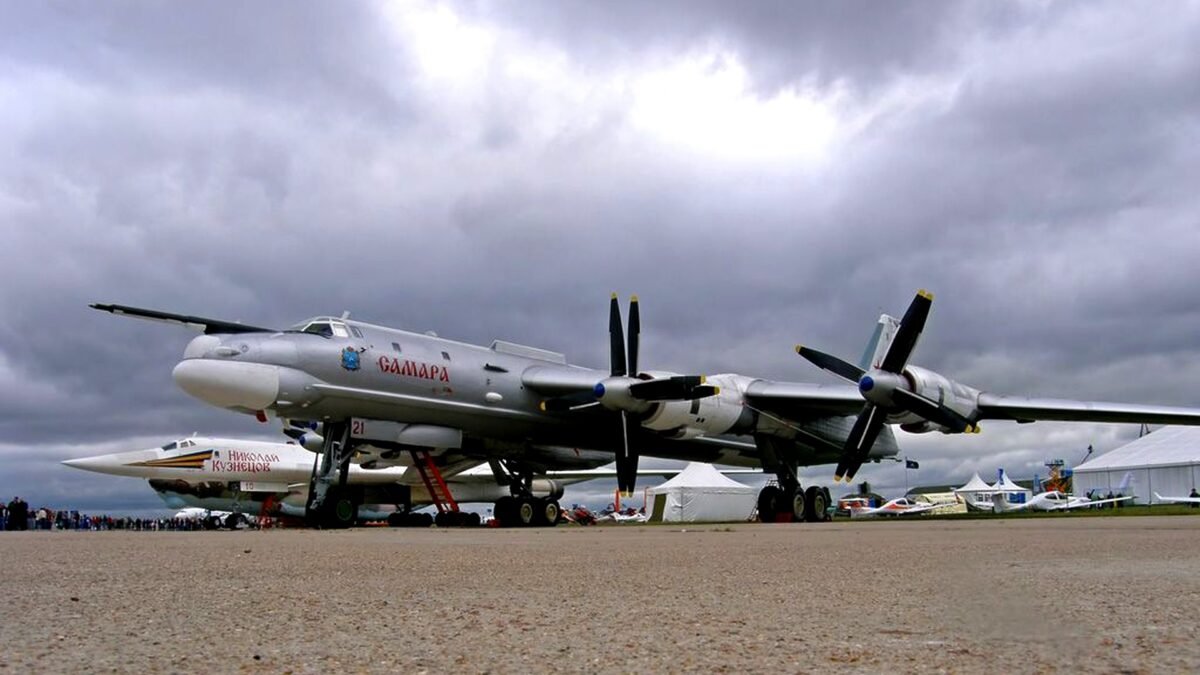
Two aircraft believed to be Russian entered Japanese airspace before dawn on Tuesday, flew past Taiwan, and hours later two Russian Tu-95 strategic bombers landed in Vietnam, in what Reuters described as Moscow’s most significant deployment of military aircraft across East Asia in possibly more than a decade. The flights, which set off fighter scrambles in three countries and a formal protest from Tokyo, came two days before a planned summit between the leaders of the United States, China and Russia.
Japan’s Defence Ministry said the two aircraft separately entered Japanese territorial airspace north-west of Okinoshima Island, off Fukuoka Prefecture, shortly after 4 a.m. local time on Tuesday 17 November. The first aircraft was inside Japanese airspace from about 4:07 a.m. to 4:10 a.m., and the second from about 4:09 a.m. to 4:12 a.m., according to the ministry. Japan’s Air Self-Defense Force scrambled fighter jets, issued radio warnings, and Tokyo lodged a formal protest with Moscow, demanding measures to prevent a repeat.
“The violation of Japan’s airspace by Russian aircraft is a serious infringement of Japan’s sovereignty,” Chief Cabinet Secretary Minoru Kihara said at a news conference in Tokyo, calling the flights “completely unacceptable”. Defence Minister Shinjiro Koizumi also condemned the incursion, and said the purpose of the flights was unclear. Japan’s Defence Ministry said it was analysing the purpose of the flights and continuing surveillance.
According to the ministry, the aircraft then flew on through the Tsushima Strait, passed between Okinawa Prefecture’s Yonaguni Island and Taiwan, and continued into the western Pacific Ocean. The same morning, South Korea said Russian military aircraft had entered its air defence identification zone over the Sea of Japan, prompting it to scramble fighter jets, although no violation of South Korean sovereign airspace was reported. Taiwan’s Defence Ministry said separately that it had detected two Russian military aircraft entering its air defence identification zone from the north-east, and that its military had “responded accordingly” as the aircraft flew east of the island and left the zone south of Taitung County.
Later on Tuesday, two Russian Tupolev Tu-95 strategic bombers, known to NATO as “Bears”, landed at Danang airport in central Vietnam, accompanied by two supporting aircraft. The bombers, identified as RF-94202 and RF-94188, were photographed approaching the airport and later appeared in satellite imagery parked on the tarmac, where they remained on Wednesday, according to Reuters. Aviation observers reported that five Tu-95MS aircraft had departed Ukrainka Air Base in Russia’s Amur region on 16 November, with three conducting a separate training flight over the Sea of Japan and two continuing towards Vietnam.
Russia’s Defence Ministry, Vietnam’s Foreign Ministry and the Russian embassy in Hanoi did not respond to requests for comment, according to Reuters. The United States State Department also did not respond to a request for comment on the flights near Japan and Taiwan.
What Happened Over Japan
The incursion was brief — each aircraft spent about three minutes inside Japanese airspace — but it was the first confirmed violation of its kind in more than two years, and the first along a similar route in thirteen. Japan’s Defence Ministry identified 23 September 2024 as the date of the previous confirmed airspace violation by a Russian aircraft, when a Russian military patrol plane entered Japanese airspace off Rebun Island in Hokkaido. On that occasion Japan scrambled F-15 and F-35 fighters, which fired flares after the patrol aircraft apparently ignored warnings.
The route taken on Tuesday was itself familiar to Japanese defence planners. According to the BBC, Russian bombers also entered Japanese airspace near Okinoshima in August 2013, and Japan’s Defence Ministry described the latest incident as the first confirmed airspace violation along a similar route since that year, a gap of thirteen years.
Japan described the aircraft only as suspected Russian planes. Their nationality and mission remained under examination, and the ministry did not identify the aircraft types involved in the Japanese airspace incident. That caution matters, because the identification of the aircraft that crossed into Japanese airspace has not been officially tied by any regional authority to the two Tu-95 bombers photographed at Danang. The timing and the reported routes suggest a connection with the deployment to Vietnam, but the link has not been formally established, and it is also unclear whether Japan, South Korea and Taiwan were responding to the same aircraft or to different ones, according to the BBC.
An air defence identification zone, the area in which South Korea and Taiwan detected the Russian aircraft, is not the same thing as sovereign airspace. It is a self-declared buffer area beyond territorial airspace in which governments identify approaching aircraft for security purposes, and foreign military aircraft are expected, but not legally required, to notify governments before entering it. Japan’s announcement, by contrast, said the suspected planes had crossed territorial airspace itself — a distinction Tokyo was careful to draw, and one that explains the sharper language of its protest.
The East China Sea contains self-declared, overlapping air defence identification zones belonging to China, Taiwan, Japan and South Korea, which makes the region one of the most closely watched stretches of sky in the world. Against that background, an unannounced flight by Russian military aircraft through three countries’ zones in a single morning was always going to draw a response. What made this one different was that it did not stop at a zone: it crossed into sovereign airspace, and it ended with strategic bombers on the ground in a third country.
Three Countries Scrambled Jets in a Single Morning
Japan’s response was the most forceful. Fighter jets from the Western Air Defence Force were launched to monitor the aircraft and issue warnings, and the government protested to Moscow through diplomatic channels. Kihara, the government’s chief spokesperson, said the flight paths were a serious infringement of sovereignty and completely unacceptable. Koizumi, the defence minister, said Tokyo had lodged a stern protest and called on Russia to prevent a recurrence.
South Korea’s Joint Chiefs of Staff said several Russian military aircraft entered the country’s air defence identification zone over the Sea of Japan early on Tuesday without advance notification, prompting the military to scramble fighter jets, according to the Korea Times. The aircraft departed without violating South Korean airspace, the authorities said.
Taiwan’s Defence Ministry said it had detected two Russian military aircraft entering its air defence identification zone, and that its military had responded accordingly. Huang Chih-wei, vice chief of Taiwan’s General Staff, told reporters in Taipei on Wednesday that the Russian flights “posed a threat to the peaceful and stable status quo in the Asia-Pacific region”.
Russian military aircraft had been spotted near Taiwan before. Chieh Chung, a researcher at Taiwan’s defence ministry think-tank, the Institute for National Defense and Security Research, pointed to previous incidents in 1986 and 2010, both involving Tu-95s. But the combination — a sovereign airspace violation in Japan, zone entries in South Korea and Taiwan, and a landing in Vietnam, all within about twenty-four hours — is what sets this deployment apart.
The Bombers That Landed in Vietnam
The two aircraft that landed at Danang are Tu-95MS strategic bombers, the modern missile-carrying version of a design that has been in Russian service for seven decades. Some Tu-95s are nuclear capable, and the type is sometimes deployed for intelligence gathering and surveillance, according to military attaches cited by Reuters. The bombers were accompanied by two supporting aircraft: Reuters described them as long-range tankers, while aviation observers identified them as an Il-76MD and an Il-76MD-90A, both transport variants rather than aerial refuelling tankers. The two accounts differ on the supporting aircraft, and neither Russia nor Vietnam has explained the purpose of the visit.
The bombers remained on the tarmac at Danang airport on Wednesday, according to Reuters. Their presence there is the most striking part of the story. The last known deployment of Russian strategic airpower to Vietnam was in 2014, when Hanoi offered Russian warships and aircraft preferential access to Moscow’s Cold War-era base at Cam Ranh Bay and the airfield at Danang — both sites developed by United States forces at the height of the Vietnam War. Back then, Russia deployed tanker aircraft to Danang to support Tu-95 flights near the major United States air and naval bases on the Pacific island of Guam, according to Ian Storey, a security scholar at Singapore’s ISEAS-Yusof Ishak Institute.
Storey told Reuters he was not aware of later instances, and that deployments may have been suspended after the administration of then-President Barack Obama complained to Hanoi. Last year, Moscow asked to revive the arrangement, but Hanoi was initially hesitant, according to Nguyen The Phuong, an expert on Vietnam security at Australia’s University of New South Wales. Phuong said this week’s deployment was ostensibly for refuelling, and signalled a change in approach that could herald further deployments.
The visit recalls the Soviet Union’s extensive use of Cam Ranh Bay during the Cold War, when Soviet naval aviation operated from the Vietnamese base, including Tu-95RT maritime reconnaissance aircraft. Russia later relinquished its facilities at Cam Ranh, but Vietnamese installations were used again in 2014 to support Russian long-range bomber operations near Guam. Those missions involved tanker aircraft operating from Vietnam rather than the strategic bombers themselves landing there — which makes the sight of two Tu-95MS bombers parked at Danang a step beyond anything seen in more than a decade.
A Route Not Flown Since 2014
Vietnam’s decision to host the bombers is the part of the story that will be studied most closely in the region’s capitals. Vietnam has long practised what its leaders call bamboo diplomacy: bending with the prevailing wind without breaking, and keeping workable relations with all the major powers at once. It maintains a comprehensive strategic partnership with the United States, deep economic ties with China, and a defence relationship with Russia that stretches back to the Soviet era. Hosting Russian strategic bombers is the kind of gesture that tests the balance.
Russia is by far Vietnam’s main arms supplier, according to Reuters. Hanoi has publicly sought to diversify its suppliers since 2022, when Russia launched its full-scale invasion of Ukraine. But Vietnam remains dependent on Russian parts and technical support, while talks on additional supplies have continued. Phuong, the Vietnam security expert, said Hanoi could also have been motivated by the prospect of military procurement benefits from allowing the deployment.
There is also a message aimed at Beijing. Phuong said that by allowing the new Russian deployment, Hanoi could be sending a signal to neighbouring China after Beijing’s announcement in late September that it was helping build a new military airfield in Laos to train its air force. Vietnam has not publicly criticised China’s move but is monitoring the activity to ensure the training facility is not turned into a military base, according to Phuong. Hanoi and Beijing are also at odds over contested areas of the South China Sea, and Vietnam has often viewed its strong relations with Moscow as a strategic counterweight to China.
“The green light for the Russian bombers may be intended to signal to China that its military ties to Russia remain strong,” Storey said. The reading is consistent with the way Vietnam has used its Russian relationship for decades: as insurance against over-dependence on any single neighbour, and as a reminder to Beijing that Hanoi has other friends.
Why the Timing Matters
The flights took place just ahead of Russian President Vladimir Putin’s arrival in the southern Chinese city of Shenzhen for this week’s Asia-Pacific Economic Cooperation summit, and just as leaders including United States President Donald Trump gathered in Manila for a meeting of the Association of Southeast Asian Nations. On Thursday, Putin is due to sit down with Trump and Chinese President Xi Jinping in a three-way meeting that has dominated the diplomatic calendar for weeks. Xi and Putin met in Shenzhen on Wednesday, a day before the trilateral session.
“Russia chose to make this politically charged flight before Thursday’s US-China-Russia leaders summit,” Chieh Chung said. He added that he could not rule out that the aim was to project an image of tight China-Russia cooperation ahead of that summit. China and Russia have close political and military ties, and Moscow has repeatedly backed Beijing’s territorial claims over Taiwan. China’s air force and navy already operate around Taiwan daily.
In staging its most significant deployment of military aircraft across East Asia in possibly more than a decade this week, Russia is displaying its enduring reach and likely sending a potent message ahead of this week’s US-China-Russia meeting, according to Reuters. “The deployment is clearly intended to remind regional states that, despite ongoing war in Ukraine, Moscow can still project power into Southeast Asia,” Storey said.
The message lands at a moment when the region’s attention is already fixed on the summit. Trump flew into Manila for the first Quad summit in two years, and his Asia trip has been building towards the meeting with Xi and Putin in Shenzhen. A show of Russian long-range air power on the eve of that meeting is difficult to read as coincidence, and analysts in Taipei, Singapore and Sydney have all read it the same way: as a deliberate demonstration, staged for an audience that includes Washington, Beijing, Tokyo and Hanoi alike.
There is also a Japanese dimension that predates the summit. Tensions have been flaring between Japan and Russia, which are locked in a decades-old territorial dispute over a cluster of islands in the Pacific Ocean. For months, Moscow has been ratcheting up the pressure on Tokyo, according to the BBC. In August, Putin paid his first visit to one of the disputed islands, prompting a sharp rebuke from Japanese Prime Minister Sanae Takaichi. In October, Russia detained a Japanese journalist on spying allegations. Tuesday’s airspace violation fits that pattern of pressure — and it is the most direct of the steps taken so far.
Analysis: Why It Matters
The war in Ukraine has not grounded Russia’s long-range aviation
The most important fact about this deployment is that it happened at all. Russia has been fighting a full-scale war in Ukraine for more than four years, and its air force has been heavily committed to that conflict. The assumption in many Western capitals has been that the war has consumed Moscow’s capacity to project power elsewhere — that the bombers, the tankers and the crews are all spoken for. This week proves that assumption wrong, or at least incomplete. Five Tu-95MS bombers left a base in Russia’s Far East on 16 November, flew thousands of kilometres south, alarmed three countries’ air forces, and put two strategic bombers on the ground in Vietnam. That is not the behaviour of an air force that has nothing left to spare.
The point is not that Russia’s long-range aviation is undiminished. It has lost aircraft in Ukraine, and its bomber fleet has been a target of Ukrainian drone strikes. But the deployment shows that Moscow retains a usable reserve of strategic air power, and that it is willing to spend it on signalling rather than on the war itself. For the countries of East Asia, which have watched the Ukraine war from a distance and wondered how much of Russia’s military attention it absorbs, the answer this week was: less than they might have hoped.
Japan’s protest is about sovereignty, not just safety
Three minutes inside Japanese airspace is a small violation in purely physical terms, and no one was hurt. But Tokyo’s language — “serious infringement of Japan’s sovereignty”, “completely unacceptable” — was the language of a government that understands the precedent being set. Airspace violations are tests. A state that lets one pass without protest invites the next one, and the next one may last longer and go deeper. Japan’s response, fighters scrambled, warnings issued, formal protest lodged, is designed to make the cost of the next test higher than the cost of this one.
The timing of the protest matters too. Japan’s dispute with Russia over the Kuril Islands, known in Japan as the Northern Territories, has been frozen for decades, but Moscow has been pressing Tokyo more openly in recent months: the presidential visit to a disputed island in August, the detention of a Japanese journalist in October, and now an airspace violation. Each step is small on its own. Together they form a pattern of pressure that Tokyo cannot ignore, and that it will now have to answer with more than words — probably with closer coordination with the United States and with its own defence planning.
Vietnam has made a choice, and it will be read as one
Hanoi will insist, if it says anything at all, that the Danang landing was a routine refuelling stop, a matter of logistics rather than politics. That is the reading Phuong offered, and it may be partly true. But in the world of strategic signalling, the distinction between logistics and politics barely exists. A state does not host another country’s nuclear-capable strategic bombers by accident, and it does not do so in the week of a major summit without knowing how the gesture will be read.
The gesture will be read in at least three capitals. In Washington, it will be read as evidence that Vietnam’s diversification away from Russian arms has limits, and that Hanoi’s famous balancing act still leans on Moscow when it matters. In Beijing, it will be read — as Storey suggested — as a reminder that Vietnam’s military ties to Russia remain strong, and that China cannot take Vietnamese acquiescence for granted, particularly after the Laos airfield announcement. And in Moscow, it will be read as a success: proof that Russia still has friends willing to host its bombers, even in a region where the United States has spent years building partnerships.
None of this means Vietnam has chosen a side. Its foreign policy is built on not choosing sides. But the Danang landing shows that not choosing sides still involves making choices, and that some of those choices are visible from a very long way away — in this case, from a satellite photograph of four Russian aircraft parked on a Vietnamese runway.
The summit now has a military backdrop it did not have a week ago
Thursday’s meeting between Trump, Xi and Putin was already the most consequential diplomatic event of the year in Asia. It was billed as a chance to talk about Ukraine, trade, and the shape of great-power relations. Now it has something else behind it: a Russian bomber deployment, a Japanese airspace violation, and three countries scrambling fighters. The leaders will sit down knowing that one of them has just demonstrated, in the most literal way possible, that his military reach extends across the region in which they are meeting.
That does not mean the deployment will dominate the summit. The agenda is crowded, and the leaders have their own reasons for wanting the meeting to succeed. But it does change the atmosphere. Putin arrives in Shenzhen having shown that Russia can still project power in Asia. Trump arrives having watched Russian aircraft alarm three American partners in a single morning. Xi arrives hosting both men, with his own claims over Taiwan backed — as Reuters noted — by Moscow’s repeated support. The bombers will not be in the room, but their shadow will be.
The real test is whether Danang becomes a habit
The most consequential question raised by this deployment is not about Tuesday’s flights. It is about what happens next. Was this a one-off demonstration, staged for the summit and never to be repeated? Or was it the first of a series — the revival of an arrangement that lapsed in 2014, now resumed with bombers rather than tankers landing in Vietnam?
Phuong’s observation that the deployment was ostensibly for refuelling, and that it signalled a change in approach that could herald further deployments, is the warning to watch. If Russian bombers return to Danang in the coming months, the region will have to reckon with a restored Russian military presence in Southeast Asia for the first time in more than a decade. That would change the calculations of every country in the South China Sea, and it would give Moscow a lever in Asian diplomacy that it has not held since the Cold War.
If, on the other hand, the bombers fly home and do not return, the deployment will be remembered as a piece of theatre — effective theatre, but theatre all the same. The difference between those two outcomes is the difference between a summit-eve stunt and a strategic shift. It will not be clear which one it was until the next deployment either happens or does not. That is why the tarmac at Danang, and the flight plans out of Ukrainka, are now among the most closely watched patches of concrete in Asia.
What to Watch Next
- Whether the bombers leave Danang, and when. Their departure — or their continued presence — will be the first indication of whether this was a refuelling stop or the start of a longer stay.
- Whether Russia or Vietnam explains the visit. Neither government had commented by Wednesday. Any statement will be read closely for clues about the purpose of the deployment and whether more flights are planned.
- Japan’s next move. Tokyo has protested and demanded preventive measures. Watch for any change in Japan’s air defence posture, and for whether the issue is raised with Washington or at the summit.
- The Thursday trilateral summit in Shenzhen. Watch for any reference to the flights by Trump, Xi or Putin, and for whether the deployment affects the tone of the meeting.
- Further Russian flights in the region. Aviation observers will be watching Ukrainka Air Base and the Sea of Japan for signs of more Tu-95 movements in the coming days.
- China’s reaction. Beijing has not commented on the deployment. Its response — or its silence — will show how it reads Vietnam’s signal and Russia’s show of force.
- Whether the 2014 pattern repeats. If Russian aircraft return to Vietnamese airfields in the coming months, the region will be dealing with a restored Russian military presence in Southeast Asia for the first time in more than a decade.
Sources
- Reuters — “Analysis: Russian military aircraft deployment sends potent message to Asia”, 18 November 2026
- BBC News — “Japan sends up jets after alleged Russian incursion of its airspace”, 17 November 2026
- Air Data News — “Russian Tu-95MS bombers make rare visit to Vietnam after flight near Japan and Taiwan”, 18 November 2026
- Clash Report — “Russian Warplanes Breach Japan’s Airspace, Fly Near Taiwan”, 18 November 2026
- Newsmax — “Russian Jets Enter Asian Airspace Before Trump China Visit”, 17 November 2026
- The Globuzz — “Japan Protests After Two Suspected Russian Aircraft Enter Airspace”, 17 November 2026

About the Author — Abdul Mannan
Related Articles
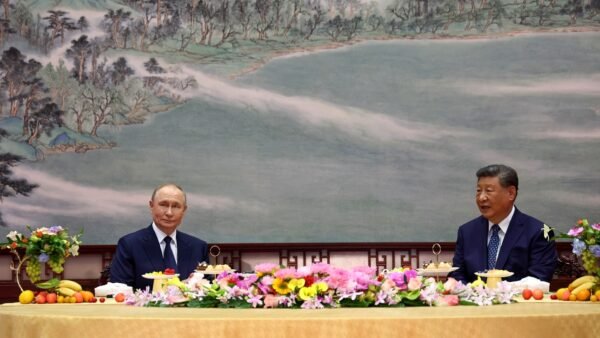
Xi and Putin Meet in Shenzhen on Eve of Historic Three-Way Summit with Trump as Ukraine Fears Grow
Xi Jinping and Vladimir Putin met in Shenzhen on Wednesday, a day before their historic three-way summit with…
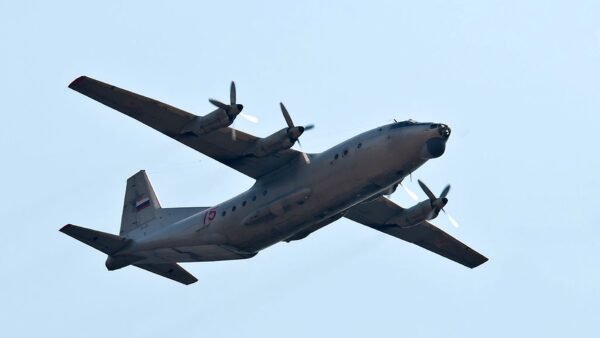
Russian Military An-12 Transport Plane Crashes in Siberia, Killing All 19 on Board
A Russian Air Force An-12 transport plane crashed in Siberia on Tuesday, killing all 19 people on board,…
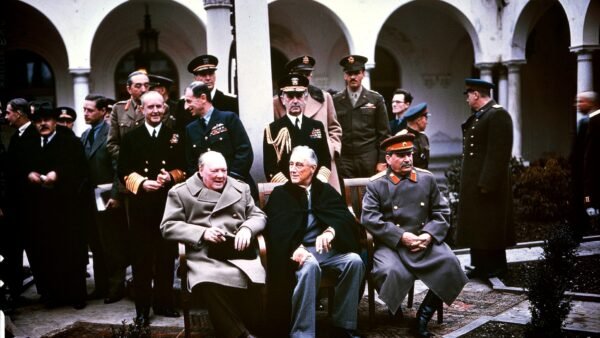
South Korea Fears a ‘Second Yalta’ as Trump, Xi and Putin Prepare to Meet in Shenzhen
South Korea has warned Washington and Beijing that Thursday's first-ever Trump–Xi–Putin summit must not become a "second Yalta"…