
Saudi Arabia Shoots Down Houthi Cruise Missile Aimed at Riyadh as Both Sides Strike Each Other’s Capitals

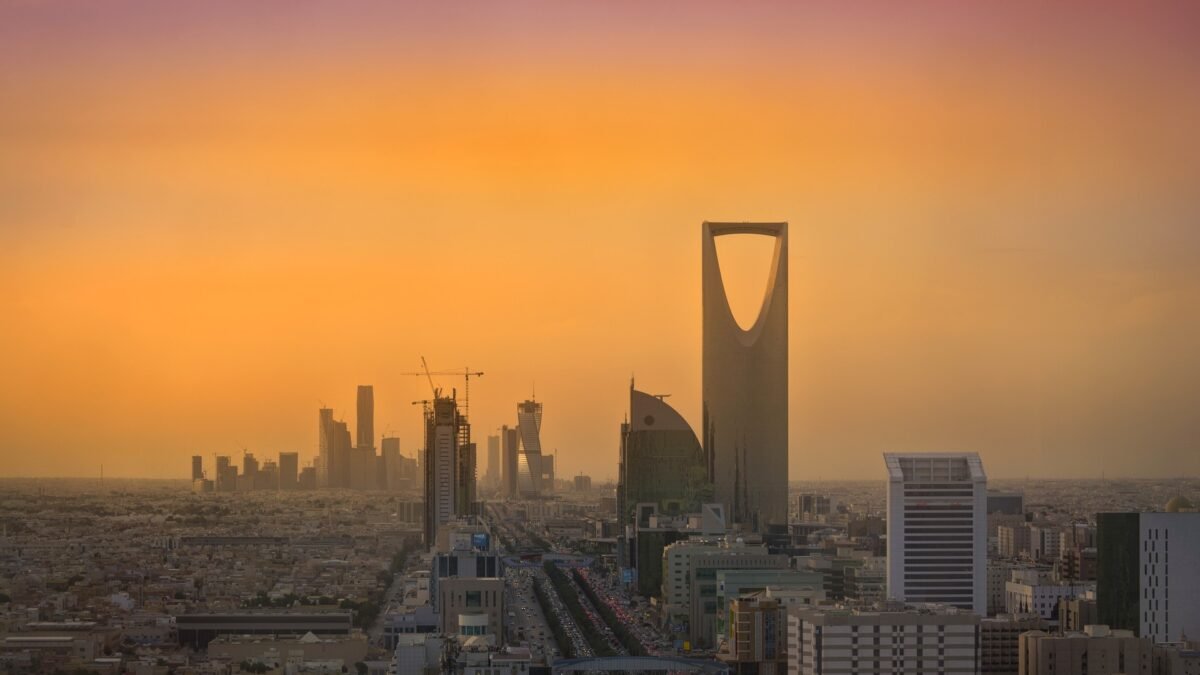
Saudi Arabia said on Saturday that its air defences had intercepted and destroyed a Houthi cruise missile aimed at the capital, Riyadh, as the kingdom and Yemen’s Houthi movement traded strikes on each other’s capitals in the sharpest exchange of the week. The Saudi-led coalition later announced further interceptions over the kingdom’s southern region, and Houthi media reported Saudi strikes on residential areas of Sanaa that wounded 13 people.
The cruise missile was the third type of weapon fired at Saudi Arabia in three days, according to the coalition, after ballistic missiles on Thursday and drones on Friday, and it underlined how the war in Yemen has escalated into a daily aerial duel over the Arabian Peninsula. The Houthis have not claimed the cruise missile attack, and the coalition gave no detail about where the missile was launched from, when it was fired, or whether any debris fell to the ground.
“Air defences intercepted and destroyed a cruise missile launched by the Houthi terrorist militia towards the Riyadh region,” the coalition’s spokesman, Major General Turki al-Maliki, wrote on X, according to the Saudi Press Agency. The announcement came early on Saturday, and the coalition said the missile had been destroyed before it could reach its target. No casualties or damage were reported in Riyadh.
It was the second attack aimed at the Saudi capital in less than a day. On Friday afternoon, the coalition said it had shot down a Houthi drone launched toward the Riyadh region, according to Anadolu Agency. Saudi Arabia’s Civil Defense later announced that the threat to the Eastern Province and the city of Al Kharj had passed.
Strikes on Sanaa
Hours after the cruise missile was intercepted, Houthi media reported that Saudi-led forces had struck the Yemeni capital, Sanaa, which the Houthis have controlled since 2014. The Houthi news agency Saba said a Saudi attack hit the residential neighbourhood of Bir Abu Shamlah in the Al-Tahrir district of the city.
“Eight homes and three shops were damaged after Saudi enemy forces targeted the residential neighbourhood of Bir Abu Shamlah in Al-Tahrir district, Sanaa,” Saba posted on Telegram, according to Agence France-Presse. The Houthi news outlet Almasirah said the attack wounded 13 people.
The exchange of strikes on the two capitals capped a week in which both sides have hit each other’s cities almost daily. On Thursday, the coalition said it had destroyed 50 Houthi military targets in the provinces of Sanaa, Hodeidah and Saada, in what it described as a large operation against the group’s capabilities. The Houthi-run health ministry in Sanaa said on Thursday that at least 19 civilians had been killed and 25 others wounded in Saudi strikes over the previous 48 hours, according to CNN, which said it had not been able to independently verify the casualty claims.
The coalition has been bombing areas controlled by the Iran-backed group since Yemen’s civil war reignited over the summer, according to AFP. In response, Houthi fighters have been targeting the oil-rich kingdom almost daily, hitting energy facilities, airports and Riyadh’s financial district.
A ship seized off Yemen’s coast
On the same morning, armed individuals boarded a cargo ship in the Gulf of Aden and took control of the vessel, the United Kingdom Maritime Trade Operations agency said on Saturday, according to Reuters. The ship’s master reported that the armed individuals boarded the vessel at 0630 GMT, about 64 nautical miles (119 kilometres) southwest of Balhaf, Yemen, and took control of it.
The agency said the authorities had been informed and advised vessels in the area to proceed with caution. In a later update, the agency said the armed individuals had left the ship and its crew were safe, and that the vessel was proceeding to its next port of call. It was not immediately clear who was behind the incident. Maritime security reporting identified the vessel as the Panama-flagged container ship Marsa Virgo.
The boarding added a maritime dimension to a day of escalation on land and in the air. The Gulf of Aden and the Bab el-Mandeb Strait, which links the Red Sea to the Indian Ocean, have become increasingly contested waters as the war in Yemen has intensified, with the Houthis expanding their presence along Yemen’s Red Sea coast and Yemeni government forces pulling back to defend Aden earlier this month.
Three weapon types in three days
The cruise missile intercepted on Saturday was the latest in a sequence of attacks that has used a different weapon almost every day. On Thursday, 26 November, the coalition said it intercepted two ballistic missiles fired toward Riyadh, as well as a cruise missile and a drone intercepted over western Saudi Arabia near the port of Jeddah, according to The National and Anadolu Agency. On Friday, 27 November, the coalition said it had shot down two drones aimed at Riyadh and the southern region. On Saturday, the cruise missile aimed at Riyadh followed, and the coalition later announced further ballistic missile interceptions over the southern region.
The Houthis offered a sharply different account of the same period. Their military spokesman, Yahya Saree, said the operations on 26 and 27 November were “carried out in three phases” and had struck their intended targets accurately, and he dismissed the coalition’s interception claims for western Saudi Arabia as “false”, according to the Manila Times and Al Jazeera.
Neither side’s claims about interceptions and impacts can be independently verified in full. The coalition publishes its interception announcements but rarely releases debris or radar evidence, while Houthi claims of successful strikes are often contradicted by the absence of reported damage on the ground. What is not in dispute is the tempo: missiles and drones are now being fired at Saudi Arabia almost every day, and the coalition is answering with strikes on Houthi-held territory in return.
A week of escalation
The exchange on Saturday followed one of the most violent weeks of the renewed war. On Tuesday, 24 November, a Houthi strike hit a tower in Riyadh’s King Abdullah Financial District, the heart of the kingdom’s sovereign wealth fund, wounding 11 people, according to Reuters. On Wednesday, the Houthis claimed to have struck Saudi Arabia’s largest refinery at Ras Tanura, and satellite images showed smoke at the site, although the coalition said its air defences had destroyed four drones and did not confirm a refinery hit.
On Thursday, a projectile struck an oil refinery in Saudi Arabia’s southwestern Jazan region, killing a Nepalese worker and injuring several others, according to the Saudi Ministry of Energy. The same day, the coalition said it had carried out a “precision military operation” against Houthi capabilities, destroying 50 targets it described as legitimate military targets across Sanaa, Hodeidah and Saada governorates. The Houthis, meanwhile, said Saudi warplanes and missiles had carried out 109 strikes over the previous 24 hours across Yemen, including in Sanaa and Hodeidah.
The fighting has drawn a formal regional response. On Friday, Pakistan, Saudi Arabia and Türkiye concluded a meeting of the Strategic, Political and Defence Committee of the Makkah Alliance for Defence in Islamabad with a joint declaration condemning what they called persistent and heinous Houthi attacks on civilians and civilian infrastructure in Saudi Arabia, and reaffirming their collective resolve to step up support for the kingdom’s security, sovereignty and territorial integrity. The declaration was announced by Pakistan’s Deputy Prime Minister and Foreign Minister, Ishaq Dar, at a press conference in Islamabad.
The pact, signed in August, commits the three countries to collective defence, and Friday’s declaration was the first time the alliance had met to respond directly to the Houthi campaign against Saudi Arabia. It was also a signal to the Houthis and their backers that the attacks on Saudi Arabia now carry a diplomatic cost beyond the Saudi response alone.
Analysis: Why It Matters
The most important feature of Saturday’s exchange is not any single missile. It is the pattern. Three different kinds of weapon were fired at Saudi Arabia in three days: ballistic missiles, drones and now a cruise missile. That variety matters because each weapon stresses a different layer of the kingdom’s defences. Ballistic missiles fly high and fast and are engaged by long-range interceptors. Drones are small, slow and cheap, and they are designed to exhaust air defences by forcing them to fire expensive interceptors at cheap targets. Cruise missiles are the hardest of the three to stop: they fly low, hug the terrain, and give radar far less warning than a ballistic missile. The fact that the Houthis can now use all three in a single week suggests a campaign that is being planned, not improvised.
The second feature is the geography. The Houthis are no longer striking only at the border or at oil sites in the east. They are aiming at Riyadh, the political capital, and at the financial district where the kingdom’s sovereign wealth fund is based. A strike on a tower in the King Abdullah Financial District, a strike on the largest refinery at Ras Tanura, and a cruise missile aimed at Riyadh in the same week show a deliberate effort to hit the symbols of Saudi power and wealth, not just its military installations. Even when the missiles are intercepted, the attempt itself forces the kingdom to keep its defences on permanent alert, to close airspace, and to warn its population.
The third feature is the response. The coalition’s answer has been to bomb Houthi-held Yemen, and the Houthi-run health ministry says civilians are being killed in those strikes. The reported strike on a residential neighbourhood in Sanaa on Saturday, wounding 13 people, illustrates the cycle: an attack on Riyadh is answered with a strike on Sanaa, which the Houthis then cite as justification for the next attack on Riyadh. Neither side has shown any sign of wanting to break that cycle, and the Makkah pact declaration on Friday, while politically significant, was a statement of solidarity rather than a new military commitment.
The fourth feature is the wider war. The Houthi campaign is not happening in isolation. It is part of a regional conflict that began when the United States and Israel attacked Iran in late February, and it is running in parallel with an American naval blockade of Iranian ports. On Thursday, the United States disabled a commercial ship in the Gulf of Oman after it tried to run that blockade, and Iran has vowed to break the embargo. The Houthis, who are backed by Iran, are fighting their own front of the same war, and their attacks on Saudi Arabia serve Iran’s interest by stretching the kingdom and its allies across two fronts at once.
That connection is also the reason the crisis is unlikely to stay contained in Yemen. Saudi Arabia has so far chosen restraint in its direct dealings with Iran, and the Makkah pact declaration emphasised de-escalation and diplomacy alongside its defence commitments. But if a Houthi missile gets through and kills people in Riyadh, or if a Saudi strike on Sanaa kills a large number of civilians, the pressure for a harder response will grow quickly, and the countries that have pledged to defend Saudi Arabia will be drawn further in.
There is also an economic dimension that reaches far beyond the Gulf. The Houthi campaign has already disrupted oil flows through the Strait of Hormuz and the Red Sea, and the attacks on Saudi refineries and the kingdom’s energy infrastructure have kept oil prices elevated. The OPEC+ group of oil producers is due to meet online on Sunday to set production quotas for 2027, and it will do so against a background of war, a blockade and a daily missile threat to the world’s largest oil exporter. Any further escalation would be felt at petrol pumps around the world.
What to watch next
The first thing to watch is whether the Houthis claim the cruise missile attack. Their silence so far is unusual: the group normally claims its strikes quickly, and its spokesman has been vocal about the operations on Thursday and Friday. A claim would confirm that the cruise missile was a deliberate escalation; continued silence would raise the question of whether the missile was fired by someone else, or whether the group is holding its claim back for another reason.
The second is the coalition’s next move in Yemen. The strikes on Sanaa on Saturday were reported by Houthi media as hitting a residential neighbourhood, and the casualty figures, 13 wounded, will be used by the Houthis to argue that Saudi Arabia is targeting civilians. The coalition will face a choice between continuing the bombing campaign, which risks civilian casualties and international criticism, and shifting to a different approach.
The third is the maritime picture. The boarding of a cargo ship off Balhaf on Saturday morning was resolved without casualties, and it is not clear who was behind it. But it is a reminder that the waters off Yemen are now among the most dangerous in the world for commercial shipping, and that a single incident at sea can escalate as quickly as a missile in the air.
The fourth is the OPEC+ meeting on Sunday. The producers will have to set quotas while the war is still disrupting supply, and Saudi Arabia will be negotiating from a position in which its own oil infrastructure is under daily attack. The outcome of that meeting will show whether the world’s oil producers believe the crisis is contained or whether they expect it to get worse.
Finally, watch the Makkah pact. Friday’s declaration was the alliance’s first collective response to the Houthi campaign. Whether Pakistan and Türkiye now take concrete steps, such as deploying advisers, sharing intelligence or supplying equipment, will show whether the pact is a real defence alliance or a statement of intent. The Houthis, and Iran, will be watching that closely.
Sources
- Saudi Press Agency — Coalition: Air Defenses Intercept and Destroy Cruise Missile Launched by Terrorist Houthi Militia Toward Riyadh Region
- Agence France-Presse, via The Straits Times — Saudi, Houthis trade strikes targeting capitals
- The Insight International, citing Anadolu Agency — Saudi air defenses intercept Houthi cruise missile fired toward Riyadh
- Qatar News Agency, via Fana News — Coalition to Support Legitimacy in Yemen Intercepts Missile Launched Towards Riyadh
- Reuters, via Devdiscourse — Armed group boards cargo ship off Yemen and takes control, UKMTO says

About the Author — Abdul Mannan
Related Articles
MSF Says Israeli Strike Killed Two of Its Staff at Gaza Clinic as Israel Claims They Were Hamas Fighters
Doctors Without Borders says two of its watchmen were killed in a direct Israeli strike on its clinic…
Erdogan Completes Ratification of Mecca Defence Pact as Pakistan, Saudi Arabia and Turkey Meet in Islamabad
Turkey's president formally approved the Mecca Joint Defence Agreement on Friday, completing ratification as defence and foreign ministers…
Houthis Strike Aramco’s Jazan Refinery, Killing One Worker, as Saudi Arabia Pounds Yemen in Escalating Oil War
A projectile struck Aramco's Jazan refinery on Thursday, killing a Nepalese worker and injuring several others, a day…