
Harry Brook’s Record 202 in Vain as Sri Lanka Chase 430 to Stun England

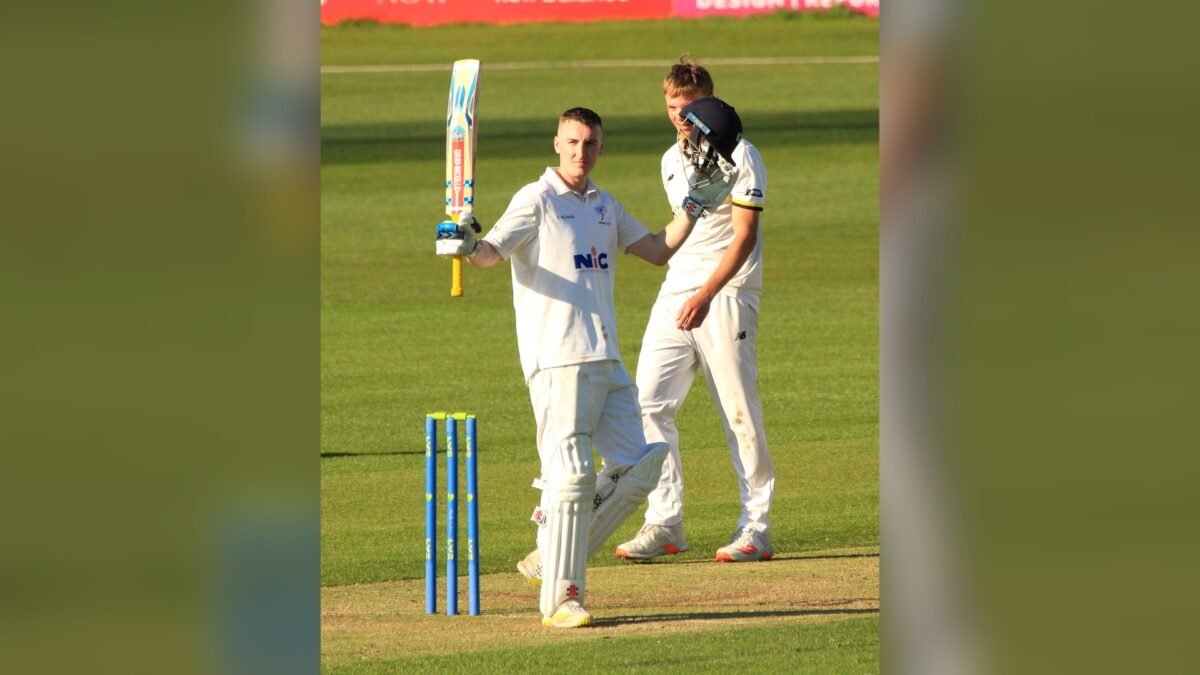
Rawalpindi: Harry Brook produced one of the great one-day innings ever played — the fastest double century in ODI history — and still ended up on the losing side, as Sri Lanka chased down 430 with a ball to spare to stun England in a record-shattering tri-series clash at the Rawalpindi Cricket Stadium on Thursday.
It is, quite literally, without precedent. According to the record books, in 55 years of one-day international cricket, no team had ever lost a match in which one of its batters made a double century. England have now joined — or rather founded — that most painful of clubs. Brook’s 202 off 116 balls, a blaze of invention and raw power, was swallowed whole by one of the most extraordinary run chases the format has ever witnessed: 430 for 8, the second-highest successful pursuit in ODI history, completed with six from the penultimate delivery of the match.
The numbers barely fit on the scorecard. England posted 429 for 4 — their fourth-highest ODI total and the highest men’s ODI score ever made in Pakistan — and it was not enough. Brook, the 27-year-old England white-ball captain, walked in at number four in the 17th over and simply dismantled the Sri Lanka attack, reaching his century in 75 balls and his double century in just 114 deliveries, three balls faster than Shubman Gill’s record of 117, set only three weeks ago against the West Indies in Guwahati. Along the way he eclipsed Ben Stokes’s 182 against New Zealand at The Oval in 2023 as England’s highest individual ODI score — becoming the first Englishman ever to reach 200 in the format.
And then, in the cruellest symmetry imaginable, he was dismissed off the final ball of England’s innings — caught by Sahan Arachchige off Janith Liyanage’s bowling — and watched that same Liyanage smash the winning blow three hours later.
The innings of a lifetime — from a man who took 24 balls to get going
The most staggering thing about Brook’s 202 is how slowly it began. According to the match reports, he took just 13 runs from his first 24 deliveries, looking almost becalmed. What followed was carnage: a 75-ball hundred, then a second hundred off only 39 balls — 21 fours and 10 sixes in all, at a strike rate of 174.14.
He was not alone. Joe Root, according to the match coverage, made 69 from 66 balls in a 159-run stand with his captain — and in doing so became the first England batter to reach 8,000 ODI runs. Tom Banton set the tone at the top with a brisk half-century, and Will Jacks’s unbeaten 66 from 30 deliveries gave the innings its rocket fuel: the pair added 185 runs together, with 156 coming in the final ten overs, as England became the first side to pass 400 in an ODI in Pakistan.
The context matters. Ishan Kishan’s 126-ball double against Bangladesh had stood untouched for four years; the fastest-double-hundred record has now fallen twice in three weeks. And there was a poetic footnote from the Sri Lanka dugout: head coach Gary Kirsten had held the previous highest ODI score on Pakistani soil — 188 not out against the UAE at the 1996 World Cup — and watched it fall 30 years on.
The chase: 24 for 2 to history
Sri Lanka’s reply should have been a formality. It was anything but. At 24 for 2, with the asking rate already in double figures, the chase looked stillborn. Then came the partnerships that made history.
First, a 166-run third-wicket stand between Avishka Fernando, who made 97, and Pavan Rathnayake, whose 87-ball hundred turned the tide. Then Rathnayake (130) put on another hefty partnership with Dasun Shanaka, who fired eight maximums in a 97 from just 50 deliveries. There was even a slice of farce in between: Sri Lanka captain Kusal Mendis was run out backing up without facing a single ball, after bowler Gus Atkinson tipped a drive from Fernando back onto the non-striker’s stumps.
The finish was pure theatre. Sri Lanka needed eight runs from the final over, and Josh Tongue swung the contest back England’s way by bowling Dunith Wellalage and Eshan Malinga in successive deliveries. But Janith Liyanage — the same man who had dismissed Brook off the final ball of England’s innings — refused to buckle. With six needed from the final two balls, he launched Tongue over long-off for six, sparking wild celebrations and completing the second-highest successful chase in ODI history, behind only South Africa’s 438 against Australia at Johannesburg in 2006.
Sri Lanka finished on 430 for 8 after 49.5 overs. The two innings produced 859 runs — and a match that will be replayed for decades.
Brook: “Heart-breaking”
Brook’s reaction after the match said everything about how the records feel when the result goes the other way. “Unfortunately, it doesn’t matter now,” he said of his record, according to Reuters. “I thought we were going to be in a good position but, unfortunately, it doesn’t even count.”
“Heart-breaking,” he added. “It’s very disappointing that we haven’t been able to defend 430, but that’s life, that’s cricket. You don’t see many teams chase down 430 and hats off to Sri Lanka. They’ve played exceptionally well. We couldn’t execute our skills enough with the ball and, again, they’ve just played an absolute blinder.”
England have now lost both of their matches in the tri-series, which also involves hosts Pakistan, and sit bottom of the table. Pakistan lead with two wins, Sri Lanka have their first points, and England must win their remaining two games — starting with a clash against Pakistan in Lahore on Sunday — to reach the final in Lahore on October 31.
Analysis: Why It Matters
1. A record that tells two stories at once
Brook’s 202 is, on any sane measure, one of the great ODI innings — the fastest double century ever, the first by an Englishman, made from a starting position of 13 off 24 balls. That it finished in a losing cause does not diminish the innings; it magnifies the other story. Records are usually signposts on the road to victory. This one was a signpost on the road to one of the greatest defeats in English white-ball history — and that paradox is precisely why the match will be remembered. Nobody recalls the previous fastest double hundreds with this clarity; everyone will recall the one that lost.
2. The chase was no fluke — it was constructed
It is tempting to file Sri Lanka’s 430 under “freak result” and move on. That would be wrong. Look at the construction: a 166-run stand to stabilise, a century at better than a run a ball, then a 97 off 50 from Shanaka to keep the rate honest, then a 22-ball fifty from Liyanage to finish it. That is not slogging; it is a blueprint for chasing enormous totals — take the game deep, back your depth, and trust that the last ten overs belong to the batting side. Sri Lanka played the modern template almost perfectly, and England’s callow attack, missing the experience of Adil Rashid, had no answer when the pressure peaked.
3. England’s bowling is the real problem
Concede 430 in a 50-over match and the questions write themselves. England’s batting has rarely been in better shape — 429 for 4 is their fourth-highest ODI total — but totals of that size are now paper shields in the modern game. Twice in two games England have lost in this tri-series, and twice their bowling has failed to defend what their batters built. Tongue’s double strike in the final over showed fight, but the damage was done long before: Sri Lanka were allowed to stay in a chase that, at 24 for 2, should have been closed out. With the final in Lahore a week away and Pakistan up next, England’s bowlers need answers fast — because Brook and company will not make 429 every time.
4. Sri Lanka have announced themselves
Before Thursday, Sri Lanka were the afterthought of this tri-series — the third team, the warm-up act for England and Pakistan. Not any more. To chase 430 is to make a statement that travels: this is a young batting unit with no fear and genuine depth, from Rathnayake’s maiden brilliance to Shanaka’s power to Liyanage’s ice-cold finish. Whatever happens in the rest of the tournament, this result resets how opponents will treat them — and how Sri Lanka will treat themselves.
5. The 400 barrier has truly fallen
There was a time, not long ago, when 350 was a winning total and 400 was unthinkable. This was only the third successful chase of more than 400 in ODI history — but the fact that two of the game’s great batting records (fastest double hundred, second-highest chase) fell in the same match tells us the format has entered a new era. Pitches are flatter, bats are bigger, and batters are braver. Totals that once guaranteed victory are now merely competitive. Bowlers everywhere should be worried.
What to watch next
- England vs Pakistan, Lahore (Sunday): a must-win for Brook’s side against the tournament leaders — lose and the final is almost certainly gone.
- England’s bowling changes: will the team management recall experience, or back the young attack to learn from the 430 mauling?
- Rathnayake’s encore: an 87-ball hundred in a record chase marks Pavan Rathnayake as a name to watch for the rest of the series.
- Sri Lanka’s momentum: their first points of the tri-series — can they back it up and push for the Lahore final?
- The 400 club: with records falling in pairs, the question is no longer whether 450 will be chased, but when.
Sources

About the Author — Abdul Mannan
Related Articles

LeBron James Dismisses Trump’s National Anthem Criticism: ‘Slow News Day at the Office’
LeBron James refused to be drawn into a feud with Donald Trump over his national-anthem warm-up movements, smiling…
South Africa Thrash Australia by an Innings and 31 Runs at Gqeberha to Level Test Series
Kagiso Rabada took four for 77 on the final day as South Africa bowled Australia out for 295…

Damian Lillard Scores 25 in Emotional Portland Return as Trail Blazers Obliterate Suns 124-83
Damian Lillard scored 25 points in his first game in nearly 18 months as the Portland Trail Blazers…