
4.1-Billion-Year-Old Martian Meteorite Found in the Sahara Offers New Clues to a Wetter, Warmer Early Mars

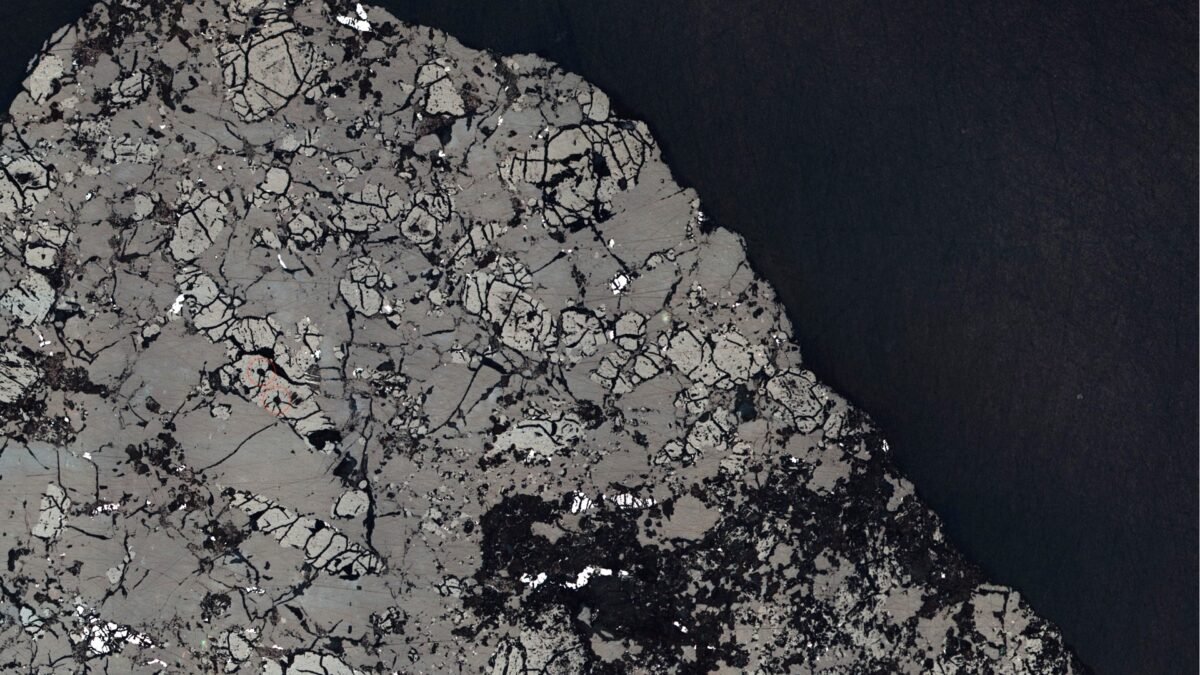
A rosy-coloured rock picked up on a salt flat in the Sahara Desert in 2022 has turned out to be one of the oldest pieces of Mars ever found on Earth. The meteorite, named Teghaza 001, formed in the Martian crust at least 4.1 billion years ago, and its chemistry carries fresh evidence that the young Red Planet was once a far warmer and wetter world than the cold desert it is today.
The findings, published on 29 October in the journal Science, make Teghaza 001 only the third Martian meteorite known to date from the planet’s earliest history, according to Reuters. Scientists say the rock is a rare window into a time when Mars may still have had a thick atmosphere, surface water and the conditions that life would have needed to take hold.
“We’re holding a piece of a rock that’s dated even before the oldest Earth rock — a piece of Mars that’s so ancient, it existed when life had just started on Earth,” Yang Liu, a planetary scientist at NASA’s Jet Propulsion Laboratory in California and the study’s lead author, told Scientific American, as reported by Smithsonian Magazine.
The meteorite weighs about 800 grams, a little under two pounds, and was found in eight pieces on the Teghaza salt plain in Mali, roughly 21 miles (34 kilometres) from the village of Bir Chali. Its largest fragment is about the size of a fist. Researchers at the University of New Mexico first recognised it as Martian from the chemical fingerprint of its oxygen isotopes, and a team spanning NASA’s Jet Propulsion Laboratory, Caltech, the University of California, Los Angeles, and the University of Maine then spent years establishing exactly what it was and how old it is.
What makes the find so valuable is not only its age but what the rock remembers. Teghaza 001 is a coarse-grained igneous rock called gabbro, made mostly of the minerals feldspar and pyroxene. It began as magma rising from the Martian mantle, cooled slowly underground, and became part of the planet’s crust. As it cooled, water percolated down into the deep crust and mixed with that molten rock, leaving chemical traces that scientists can still read more than four billion years later.
“Multiple lines of evidence in Teghaza 001 suggest Mars’ surface had water at more than 4.1 billion years ago,” Liu said, according to Reuters. “This is reflected by hydrogen isotopes in phosphate and oxygen isotopes in minerals and bulk samples.”
That evidence matters because water is the one ingredient every known organism needs. The new study does not show that life existed on Mars, and its authors are careful to say so. But it strengthens the case that early Mars had the raw materials and the setting for life to begin. “The findings lend support to the idea that early Mars had the necessary ingredients and conditions to harbor life,” said study co-author Lee Saper, a geochemist at NASA’s Ames Research Center and the Bay Area Environmental Research Institute, in comments to Reuters. “But they do not directly answer the question of whether there was life on Mars.”
A rock that should not exist — and almost was not noticed
Scientists know of roughly 435 meteorites that originated on Mars. Almost all of them are young by planetary standards, most having formed a few hundred million years ago. Only three provide a snapshot of the planet’s youth, when Mars itself was barely a few hundred million years old: Allan Hills 84001, found in Antarctica in 1984; Northwest Africa 7034, nicknamed Black Beauty, which contains fragments dated at more than 4.3 billion years old; and now Teghaza 001.
Teghaza 001 stands apart even from those two. Allan Hills 84001 was initially assessed as being about 4.5 billion years old but has more recently been dated to a similar age to Teghaza 001, and the new study suggests Teghaza 001 is likely the older of the pair, according to Reuters. Black Beauty is a breccia, a conglomeration of many different rock types cemented together, some of whose fragments are ancient. Teghaza 001, by contrast, is a single, unadulterated rock type from start to finish.
“There are a few parts to Black Beauty that are around that age, but that whole meteorite itself is a conglomeration of many different rock types. Teghaza 001 is just one unadulterated rock type, and it’s 4.1 billion years or older, so that was a big surprise,” said Carl Agee, director and curator of the University of New Mexico’s Institute of Meteoritics, in a statement from the university. “It’s the oldest Martian igneous rock ever found by a huge margin.”
The discovery began with something looking wrong. After receiving samples recovered from the Sahara, Agee examined one and noticed textural, mineralogical and compositional features he had not seen in other Martian meteorites. Using the university’s electron microprobe and oxygen-isotope analysis, Agee and colleague Karen Ziegler found domains within the rock carrying high levels of manganese oxide, a compound that Mars rovers search for as a marker of environments that could support life, and one that on Earth is commonly produced by microbial activity. The oxygen isotope values resembled those of Black Beauty, the water-rich meteorite Agee had studied before.
“I realized that this one was a little bit like Black Beauty, not exactly, but it resembled it in the oxygen isotope values,” Agee said. “I looked at it microscopically and found domains within it that had high levels of manganese oxide, a compound being looked for on Mars by the rovers as an indicator of environments conducive to life.”
That hunch set off a wider collaboration. Scientists at NASA’s Jet Propulsion Laboratory, Caltech’s Division of Geological and Planetary Science, the University of California, Los Angeles, and the University of Maine’s School of Earth and Climate Sciences joined the effort, and the rock’s age was fixed by dating tiny zircon crystals embedded within it.
How scientists dated a rock older than Earth’s oldest
Zircon crystals are among the most reliable clocks in geology. They contain uranium, which decays into lead at a known and steady rate, so measuring the ratio of uranium to lead in a zircon reveals when the crystal formed. The team also analysed the decay of rubidium into strontium in the meteorite, which yielded a similar age estimate, according to Smithsonian Magazine. Together, the two independent clocks put Teghaza 001’s formation at 4.1 billion years ago or earlier.
That date places the rock in the Pre-Noachian period, the oldest geological epoch on Mars, roughly 4.5 to 4.1 billion years ago. Mars itself formed about 4.5 billion years ago, so Teghaza 001 crystallised when the planet was still in its infancy, only a few hundred million years after its birth.
“If there was ever abundant life on Mars, on the surface, not sequestered away in some subsurface, that would be the time that you would be looking at, the Pre-Noachian period,” Agee said. “It’s the very earliest time, and that was when maybe Mars still had a magnetic field, and it was shielded from radiation, and there were surface waters. There was a denser atmosphere. If primitive life was abundant on Mars, that is the time that is most likely for it to have happened.”
The water evidence is written into the rock’s minerals. Isotopes of oxygen and hydrogen show that water was percolating down into the planet’s deeper crust, as happens on Earth, and mixing with molten rock rising from the mantle while the gabbro was slowly cooling and crystallising underground. The rock’s altered minerals and its unusual oxygen-isotope composition both point to an environment dramatically different from the dry Mars of today. A separate paper on the same meteorite, published in the journal Science Advances in June, focused specifically on its water content.
The journey that brought the rock to Earth is itself dramatic. At some unknown point in the past, an asteroid struck Mars with enough force to blast fragments of its crust into space. One of those fragments drifted through the solar system until its path crossed Earth’s, fell through the atmosphere as a meteor, and landed in the Sahara, where it lay until its discovery in 2022. “It was blasted by an impact from the surface of Mars and was flying through space until its path crossed that of Earth,” Liu said, according to Reuters. “We do not know when the sample landed on Earth.”
Thirteen possible birthplaces on Mars
One of the most striking parts of the study is that the team could narrow down where on Mars the rock may have come from. By comparing Teghaza 001’s mineralogy and chemistry with orbital remote-sensing data from NASA’s Mars Reconnaissance Orbiter, the researchers identified 13 locations on the planet whose composition matches the meteorite, according to a NASA statement reported by Smithsonian Magazine. The chemistry points most strongly to the heavily cratered southern highlands, the ancient terrain of Mars’ Noachian period, and possibly to the region near Hellas Basin, one of the largest impact craters in the solar system, Liu told Reuters.
That is not a precise address. Scientists can never know for certain where a Martian meteorite originated, and the 13 candidate sites are matches, not a confirmed launch point. But the exercise is far from academic. Identifying the kind of terrain that produced Teghaza 001 tells mission planners where to look for more of the same. The rock’s chemistry suggests it came from a previously underrepresented region of Mars, an area no rover has yet explored, according to the University of New Mexico.
“This is just one single meteorite. It’s like going out, going back in time and chipping off a hunk of an outcrop, 4 billion years ago on Mars, and then we have this example of what was actually happening,” Agee said. “That is why it’s such a valuable sample. We’ve never found one like this before.”
The find also sharpens a question that has run through Mars science for decades: how did two planets that formed from the same material, at the same time, in the same solar system, end up so different? Earth stayed wet and living; Mars became cold, dry and desolate. Yet the evidence is now extensive that Mars once had water flowing across its surface in rivers and lakes, and possibly an ocean in its northern hemisphere, billions of years ago. Teghaza 001 adds a new chapter to that story, written not by an orbiter or a rover but by a piece of the planet itself.
“The detailed information we can extract from these meteorite samples complements and validates our exploration of Mars using satellites, landers and rovers,” Liu said. “Martian meteorites are our only samples from Mars, forming our basis for understanding the formation and differentiation of early Mars and allowing us to evaluate in laboratories whether ancient Mars could have supported habitable conditions.”
Why only three ancient samples exist
The rarity of rocks like Teghaza 001 is itself part of the story. For a piece of ancient Mars to reach a laboratory on Earth, a chain of improbable events has to line up. An impact must strike exactly the right patch of ancient crust hard enough to eject rock into space, but not so violently that it is destroyed. The fragment must escape Mars’ gravity, survive a journey through space that can last millions of years, and then survive the fiery passage through Earth’s atmosphere. Finally, someone has to find it, recognise it, and keep it.
Most Martian meteorites are young because most of Mars’ surface is young in geological terms: the ancient southern highlands are a comparatively small target, and the rocks most easily blasted off the planet tend to come from younger volcanic plains. That is why nearly all of the roughly 435 known Martian meteorites formed within the last few hundred million years, and why a single unaltered sample from the first chapter of Mars’ history is, in Agee’s words, something scientists may never see again. “It’s not like this is very common, so not only is it ancient and samples a different type of environment in a different time on Mars, but we don’t have any other samples like it,” Agee said. “Chances are very slim or next to impossible that we’ll get another one like this anytime soon.”
The three ancient samples also tell different stories. Allan Hills 84001, the Antarctic find, became famous in 1996 when a NASA team suggested it contained possible fossilised microbes, a claim that was later widely disputed and never confirmed. Black Beauty is a jumble of rock types, including fragments older than 4.3 billion years, that records a mixture of Martian environments. Teghaza 001 is the cleanest of the three: one rock, one history, from magma to crust to water-altered minerals, with its age pinned down by two independent dating methods.
That clarity is what makes it so useful. Because the rock is a single igneous type, scientists can read its history without having to untangle the mixed signals of a breccia. Its composition gives a direct measurement of what the Martian mantle looked like more than four billion years ago, and how it differed from the mantle that produced younger Martian rocks. “When you add a third sample, and its geochemistry is really unique compared to the other samples that we have, it lets us see a different part of Mars’ ancient history in terms of what the mantle looked like and what the different mantle sources were on Mars,” said study co-author Alicia Cruz-Uribe, a geochemist at the University of Maine, in a statement from the university.
Analysis: Why It Matters
A new data point for the biggest question in Mars science
The central question about Mars has never really been whether water once flowed there. Orbiters have photographed dry river valleys, lake beds and deltas for decades, and rovers have examined rocks laid down in ancient lakes. The question is what kind of world that water made: how long it lasted, how warm the planet was, whether the chemistry was right, and whether life ever took advantage of it. Every new sample that speaks to those questions is valuable precisely because the evidence is so thin. Three ancient rocks is almost nothing to reconstruct an entire planet’s youth from, and each one that arrives changes the picture. Teghaza 001’s contribution is to show that water was not just sitting on the surface of young Mars but was actively circulating through its crust, mixing with magma and altering minerals deep underground. That is the signature of a living water cycle, not a brief flood, and it pushes the story of a wet Mars further back in time and deeper into the planet.
Habitability is not the same as life — and the distinction matters
It is worth being precise about what this discovery does and does not prove, because the history of Mars science is littered with over-claims. The study’s authors state plainly that their findings support the idea that early Mars had the ingredients and conditions for life, but do not answer whether life was ever there. That caution is not modesty; it is the science. Water, warmth, chemistry and time are necessary for life as we know it, but they are not sufficient, and a rock can record all four without ever having hosted a single microbe. The manganese oxide found in Teghaza 001 illustrates the point neatly: on Earth, microbes commonly produce it, but it can also form without biology, and its presence is evidence of a habitable environment, not of inhabitants. Readers should treat this as a discovery about Mars’ potential, not its past biology, and any report that presents it as proof of ancient Martian life is overstating the evidence.
Why a rock found by chance still beats a rover, for now
There is an irony at the heart of this story. Humanity has spent billions of dollars sending orbiters, landers and rovers to Mars, yet the oldest and most revealing samples of the planet’s crust arrived here entirely by accident, delivered free of charge by asteroid impacts. The reason is simple: meteorites can be picked apart in laboratories on Earth with instruments no spacecraft could carry, measured to extraordinary precision, and re-examined whenever a new technique appears. A rover can photograph a rock and zap it with a laser; a laboratory can date its zircons crystal by crystal. That gap is exactly why scientists have argued for decades that Mars samples must be brought back to Earth, a point underlined by Arya Udry, a planetary scientist at the University of Nevada, Las Vegas, who was not involved in the study. She told Scientific American that to really understand Mars’ evolutionary history, scientists will need more than the pieces that happen to fall on Earth by chance: “Mars is a complex planet, and this meteorite is really cool, but we don’t know exactly where it came from, so this is really another example of why we need to bring back samples.” Until a sample-return mission succeeds, rocks like Teghaza 001 are the closest thing planetary science has to a time machine.
The 13 locations are a map for the next missions
The least-noticed part of this study may prove the most useful. By matching Teghaza 001’s chemistry against orbital data, the team produced a shortlist of 13 places on Mars where rock like this could be found, concentrated in the ancient southern highlands. That is a practical gift to the people who choose where landers and rovers go next. Every landing site is a gamble, and the most precious resource in planetary exploration is a reason to prefer one patch of ground over another. If future missions visit the southern highlands, they will now be going to terrain that a laboratory on Earth has already shown to hold records of the planet’s earliest water cycle. The find also reframes what counts as interesting ground on Mars: not only the lake beds and deltas that rovers have favoured, but the old, battered highlands that preserve the first billion years.
A reminder that the solar system still delivers surprises
Finally, there is something quietly remarkable about the timeline. Teghaza 001 was found in 2022, sat in collections while scientists worked out what it was, and only now, four years later, has revealed itself as one of the most important Martian rocks ever recovered. It is a reminder that discovery in planetary science is not only about new missions and new instruments; it is also about looking again, carefully, at what is already in hand. The same is true of the wider moment: in the same month, astronomers announced a possible new dwarf planet beyond Pluto, and Japan launched a spacecraft to bring back samples from Phobos, one of Mars’ moons, in the hope that it carries dust blasted off Mars itself. The solar system’s oldest stories are still being found, sometimes in a desert, sometimes in a drawer, and sometimes in data that has been waiting for someone to notice what it contains.
What to Watch Next
- Follow-up studies on Teghaza 001: The research team says work on the meteorite has only just begun. Expect further papers examining its minerals in finer detail, including whether its water-related chemistry can pin down the temperature and chemistry of the fluids that altered it.
- The southern highlands as a landing target: Watch whether future Mars mission planning gives more weight to the ancient southern highlands, and whether any of the 13 candidate origin sites identified in the study appear in landing-site discussions.
- Mars sample return: The study strengthens the scientific case for bringing Martian rock back to Earth deliberately rather than waiting for chance deliveries. Watch for decisions on sample-return missions and on Japan’s Phobos sample mission, which launched earlier this month and may return Martian dust.
- New ancient meteorites: Meteorite hunters and collectors will be watching Saharan finds more closely. Any new ancient Martian meteorite would be a major event, though the scientists behind Teghaza 001 caution that another like it may never be found.
- The life question: The evidence for a habitable early Mars will keep growing, but proof of ancient Martian life, if it exists, will require either returned samples or a rover finding unambiguous biosignatures. Teghaza 001 moves the debate forward without settling it.
Sources
- Yang Liu et al., “A Martian meteorite that formed ≥4.1 billion years ago samples Mars’ early crust and mantle,” Science (2026)
- Reuters (Will Dunham), “Martian meteorite found in the Sahara is 4.1 billion years old,” 29 October 2026
- Smithsonian Magazine (Margherita Bassi), “This Rosy Stone Spotted in the Sahara Turned Out to Be a 4.1-Billion-Year-Old Meteorite From Mars,” 30 October 2026
- University of New Mexico / phys.org, “Rare 4.1-billion-year-old Martian meteorite reveals clues to planet’s ancient past,” 29 October 2026
- The Times of India / Education Times, “NASA identifies 13 possible origins on Mars for a 4.1-billion-year-old meteorite found in the Sahara,” 31 October 2026

About the Author — advmannan1
Related Articles

The $6.3 Billion Heist: How North Korea’s Hackers Robbed Binance in Twenty Minutes — and What It Means for Your Money
North Korea's Lazarus hackers stole $6.3 billion from Binance in 20 minutes — the largest crypto heist in…

ISRO’s GSLV-F18 Puts NVS-03 Navigation Satellite in Orbit, Restoring India’s NavIC to Four Satellites
India's GSLV-F18 rocket placed the NVS-03 navigation satellite into its intended transfer orbit on Friday night, restoring the…
Rubin Observatory Spots Possible Sixth Dwarf Planet Beyond Pluto in Largest Distant Find in 20 Years
Astronomers have found 2026 ED138, a large icy world orbiting beyond Pluto that could become the solar system's…