
Elon Musk Backs Possible Tesla–SpaceX Merger Worth $3.5 Trillion as Both Boards Launch Reviews

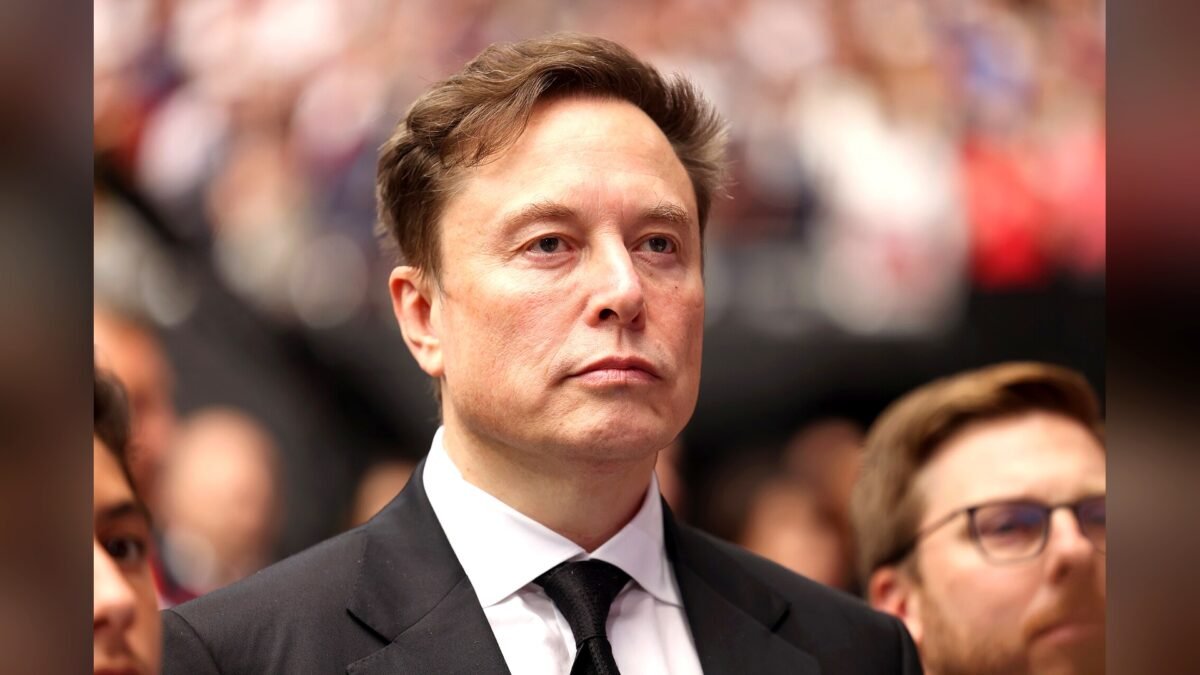
Elon Musk has publicly backed a potential merger of Tesla and SpaceX, telling investors on Tuesday that both companies have formed special committees of independent directors to study combining two businesses whose combined stock-market value would be about $3.5 trillion — a figure that would make it the largest corporate transaction on record.
Musk disclosed the development during SpaceX’s third-quarter earnings webcast on October 20, in response to a direct question from an investor about a tie-up between the electric-car maker and the rocket and satellite company he also runs. “I do think there’s a lot of merit to combining the companies,” Musk said, according to Reuters. “Do I think it would be a good idea? Yes. But at the end of the day the shareholders have to be supportive of this.”
The special committees — groups of board members assembled when a leader has a personal stake on both sides of a deal — were set up at the request of shareholders, Musk said. He stressed that he is excluded from the discussions because he is a conflicted party: he is chief executive of both companies. “Because I’m a conflicted party, I can’t actually be in the discussions,” he said, describing the process as an “odd kabuki dance” in which “two groups of people are talking and I can’t be in the conversation.” In another account of the call, he compared answering the question to “tap-dancing through a minefield.”
A deal on paper, not in fact
Musk was careful to temper expectations. “Some people out there assume that a SpaceX and Tesla merger is a certainty, and I think that would be overstating it,” he said. The committees have not agreed on transaction terms, he added, and there is no guarantee that they will.
At Tuesday’s closing prices, SpaceX was worth about $2 trillion and Tesla nearly $1.5 trillion, giving the two a combined stock-market value of roughly $3.5 trillion, according to market data cited in multiple reports. Fortune reported a potential transaction value of $3.5 trillion, though that figure is a market estimate rather than an agreed price — no deal price has been set, and no transaction structure, timetable or formal valuation has been established.
Any merger would face a steep procedural climb. Musk said that on Tesla’s side, a transaction would require support from holders of at least 50 per cent of all outstanding shares — not merely a majority of the shares that show up to vote. “Quite a high hurdle,” he said. Tesla filed its annual shareholder proxy on Monday without any merger proposal; its annual meeting is scheduled for December 3, 2026. Rumours of a tie-up had circulated for months, even before SpaceX’s blockbuster flotation in June, and Barclays suggested last week that a deal could be announced before Tesla’s annual meeting.
The two companies are already financially entangled. Tesla’s proxy confirmed that the carmaker invested $2 billion in SpaceX, and SpaceX has bought more than $100 million worth of Tesla Cybertrucks, according to reports. SpaceX absorbed Musk’s artificial-intelligence company xAI in February, and xAI is a large buyer of Tesla’s utility-scale batteries.
Why Musk wants it
Musk’s stated rationale is the convergence of the two companies’ ambitions. “I do think there’s a lot of merit to combining the companies as we are pretty much in the superintelligence singularity, and there’s a lot to be gained from cooperating on developing superintelligence software, chip design, the Terafab obviously, robotics, mass-to-orbit with the Starmind constellation (of orbital data centers), connectivity,” he said on Tuesday.
Terafab refers to a colossal artificial-intelligence chip manufacturing complex being developed in Texas by SpaceX, Tesla and Intel, according to reports of the call. The Starmind constellation is the companies’ planned network of orbital data centres. While Tesla and SpaceX were once seen as largely separate businesses, the lines between them have blurred as Musk pushes into artificial intelligence, robotics, advanced manufacturing, satellite communications and computing infrastructure on Earth and potentially in orbit, Reuters noted.
Bringing the companies together could also simplify decision-making across an empire in which many projects already cut across multiple companies, requiring approvals from separate boards and shareholders. A combined company would give management more freedom to deploy capital, engineering talent and infrastructure where it sees the greatest opportunity. Musk has long argued that he needs greater influence over Tesla to pursue its AI and robotics strategy: he owns nearly a fifth of Tesla and holds voting control at SpaceX, with roughly 45 per cent of its shares and about 82 per cent of its voting power, according to reports.
The tone marks a clear shift from three months ago. During Tesla’s second-quarter earnings call in July, an Oppenheimer analyst asked about synergies between the two companies. Musk noted their overlap was growing, “increasingly, especially with Terafab,” but immediately added: “Obviously, we can’t discuss merging companies on an earnings call — we must follow the proper process,” redirecting the question to Tesla’s general counsel.
SpaceX’s blockbuster quarter
The merger discussion came as SpaceX reported a landmark third quarter. Revenue rose 161 per cent year over year to $14.6 billion, beating the Visible Alpha consensus of about $12.86 billion, and the company posted net income of $4.4 billion, compared with a $1.1 billion loss a year earlier — its first profit since going public in June in what was then the biggest share sale ever, at $85.7 billion.
The standout was SpaceX’s artificial-intelligence business: revenue from AI-related activities increased more than ninefold to $7.6 billion, making it the company’s largest revenue contributor, driven largely by leasing computing capacity. Capital expenditure nearly tripled to $19.6 billion as the company invested in its computing infrastructure. Musk said he expects SpaceX to generate recurring annual revenue of between $500 billion and $1 trillion by the end of 2027, according to reports of the call.
Investors reacted enthusiastically. SpaceX shares rose about 8 per cent in after-hours trading to around $160.09, while Tesla gained roughly 1.7 per cent to about $380.17. Tesla reports its own third-quarter results after the market closes on Wednesday, October 21 — Musk’s first call with Tesla analysts since confirming the committees.
Analysis: Why It Matters
The biggest deal in history — on paper only
If a Tesla–SpaceX combination ever reached signed terms at anything like $3.5 trillion, it would dwarf every merger in corporate history. But the most important sentence Musk uttered on Tuesday may have been the cautionary one: treating a merger as certain “would be overstating it.” What investors actually have is process, not product — two committees, no terms, no timetable, no agreed valuation, and a legal thicket that typically takes months to clear even after a deal is struck. The $3.5 trillion is a journalist’s arithmetic of Tuesday’s closing prices, not a number anyone is negotiating. The gap between that headline figure and the reality of an empty term sheet is where most of the speculation will live — and where most of it may die.
The 50-per-cent-of-everything hurdle
Musk’s own framing of the approval requirement is the number to watch. Requiring a majority of all outstanding Tesla shares — including shares that never vote — is a materially harder test than the standard majority-of-votes-cast. It hands effective veto power to apathy: every retail shareholder who ignores the ballot is a de facto “no.” Musk called it “quite a high hurdle,” and he should know — his own Tesla pay package fights have repeatedly exposed how mobilising millions of retail investors is the hard part of governance, not the boardroom vote. Any future merger battle will be won or lost in the shareholder registry long before it reaches the ballot box.
The superintelligence thesis
Strip away the corporate theatre and Musk’s industrial logic is genuinely coherent. Tesla’s Optimus humanoid robots, SpaceX’s rockets, xAI’s models, Starlink’s connectivity and a Texas Terafab making custom AI chips with Intel describe a single vertically integrated machine for building and deploying artificial superintelligence — software, silicon, power, launch capacity and distribution under one roof. The “odd kabuki dance” of two separate boards negotiating with a man who effectively owns both sides exists precisely because the current structure is a fiction: the companies already behave as one operation. A merger would simply let the legal form catch up with the economic reality — which is exactly why the conflict-of-interest machinery around it matters so much.
The Musk premium — and its risks
Markets loved the idea, sending SpaceX up 8 per cent after hours. But that enthusiasm is a bet on a man, not a model. Musk would own roughly a third of a combined company, consolidating an empire that already spans cars, rockets, satellites, AI, social media and chip manufacturing. Investors cheering the committees should remember the other side of concentration: a single governance structure where capital, engineering talent and strategic attention flow at one man’s discretion. The same integration that unlocks the Terafab and the Starmind constellation also concentrates failure modes — financial, technical and reputational — in one place.
What Tesla reports tonight changes the frame
Context matters: SpaceX disclosed the committees on the eve of Tesla’s own third-quarter earnings, due after the market closes on Wednesday. It will be Musk’s first call with Tesla analysts since confirming the process, and every question about margins, deliveries and robotaxi timelines will now sit under the shadow of the merger question. If Tesla’s numbers disappoint, the merger becomes a convenient narrative escape hatch; if they impress, it becomes the capstone of a two-day Musk victory lap. Either way, the committees’ quiet deliberations and the quarterly earnings noise will feed each other — and the 50-per-cent-of-all-shares arithmetic does not care about either.
What to Watch Next
- Tesla’s Q3 earnings call today (Oct 21): Musk’s first analyst session since confirming the committees — expect the merger question to dominate the Q&A.
- Any committee terms: the two independent panels must agree on a transaction structure before anything reaches shareholders — no timeline has been given.
- The December 3 annual meeting: Tesla’s proxy contains no merger proposal; watch for any supplement or shareholder resolution as the date approaches.
- The shareholder arithmetic: mobilising a majority of every outstanding Tesla share is historically difficult — track how proxy advisers and large funds position themselves.
- Regulatory review: a transaction of this scale would face months of scrutiny in multiple jurisdictions — and no review can even begin until terms exist.
Sources
- Reuters — “Why would Musk merge SpaceX and Tesla?” (21 October 2026)
- Billionaires Africa — “Billionaire Elon Musk’s SpaceX, Tesla explore $3.5tn merger” (20 October 2026)
- The Hindu BusinessLine — “Tesla-SpaceX merger: What Elon Musk’s plan means for investors” (21 October 2026)
- Journal du Net — “Elon Musk Confirms Talks on Possible SpaceX-Tesla Tie-Up” (21 October 2026)
- Qazinform — “Tesla and SpaceX discuss merger” (21 October 2026)

About the Author — Abdul Mannan
Related Articles
Trump Launches $25 Million Fraud Whistleblower Programme Offering Cash Bounties to Tipsters
President Donald Trump has announced a $25 million Justice Department programme paying cash rewards — up to $30,000…
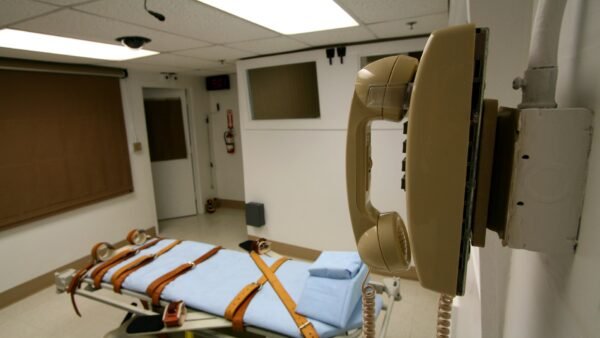
Florida Prepares to Execute 77-Year-Old Vietnam Veteran for 1986 Killing of Sheriff’s Deputy
Florida is set to execute William Reaves Jr., 77, by lethal injection at 6 p.m. Tuesday for the…
Trump Declares East Potomac Golf Course Work Starts “Immediately” After Calling Judge a “Crazed Lunatic”
President Donald Trump declared on Monday that renovation work on Washington's historic East Potomac Golf Links would begin…