
Trump Flies Into Manila for First Quad Summit in Two Years as Asia Trip Builds to Xi-Putin Meeting

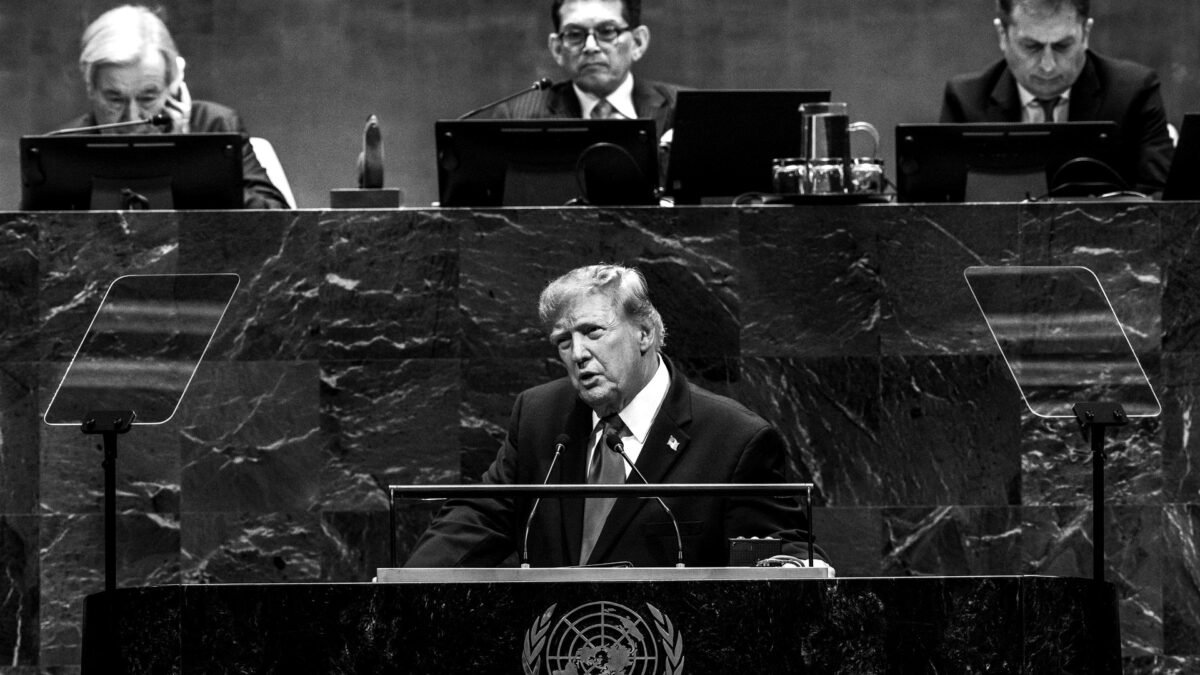
US President Donald Trump flies into Manila on Tuesday for the first meeting of Quad leaders in more than two years, a gathering that will put the Indo-Pacific grouping back on centre stage days before he sits down with the presidents of China and Russia in the first three-way summit of its kind.
Trump is due to land in the Philippine capital late on Tuesday afternoon, according to Reuters, and to join the leaders of India, Japan and Australia for a Quad meeting in the evening. The White House schedule puts the meeting at the Solaire Resort at 6.30pm local time, following a greeting and photograph opportunity, according to reports of the schedule. The leaders are expected to discuss maritime security, critical minerals, supply chains and emerging technology, according to officials briefed on the preparations.
The meeting is the first of the Quad at leaders’ level since September 2024, when Joe Biden hosted the group in Wilmington, Delaware, in the closing months of his presidency. It is the first of Trump’s second term, and the first Quad summit ever held in a country that is not a member of the grouping. The timing is deliberate: on Thursday, Trump travels to Shenzhen for a trilateral meeting with Chinese President Xi Jinping and Russian President Vladimir Putin, the first such three-way encounter ever held.
For a grouping that spent much of the past two years sustained by ministerial meetings rather than leadership, Manila is a test of whether the Quad still matters — and whether four democracies that agree on very little else can agree on what to do about a region that is changing faster than their diplomacy.
The meeting in Manila
The four leaders arriving in Manila could hardly be more different in circumstance. Trump comes to Asia days after his Republican Party lost control of both chambers of Congress in the midterm elections, according to Reuters, and in the middle of a political storm at home over the resignation of Nvidia chief executive Jensen Huang and the spy allegations that surrounded it. Narendra Modi, the Indian prime minister, has been in Manila since Monday for the 23rd ASEAN-India Summit and the 21st East Asia Summit, both also held on Tuesday. Sanae Takaichi, Japan’s prime minister, is in the first months of her premiership and making her debut on the biggest regional stage. Anthony Albanese, the Australian prime minister, confirmed his attendance and has described the gathering as the first Quad leaders’ meeting of the current American administration.
India holds the chair of the Quad this year, and the Manila meeting is, in a sense, a substitute for a summit that never happened. India was due to host the leaders in 2025. That summit never took place, mainly because of the American president’s unavailability, according to sources cited by The Hindu, and New Delhi has been unwilling to hand over the chair without having hosted. The result is a leaders’ meeting staged on borrowed ground: Manila, a city that is not a member of the grouping, hosting on the sidelines of the Association of Southeast Asian Nations summits.
There is a certain symmetry in the choice. Manila is where the Quad began and where it was reborn. The first Quad meeting was held in the Philippine capital in 2007, on the sidelines of the ASEAN Regional Forum, at the urging of the Japanese prime minister of the day, Shinzo Abe. The dialogue was revived in Manila a decade later, in November 2017, when officials from the four countries met on the sidelines of the ASEAN summit and agreed to bring the grouping back. Now the city hosts the first leaders’ summit since Wilmington — and the first ever held outside a member country.
Trump will skip the East Asia Summit itself, according to Reuters, but he will join a United States-ASEAN “Special Summit” and meet Philippine President Ferdinand Marcos Jr on Wednesday. The Philippines is a defence ally of the United States, bound by a mutual defence treaty that dates to 1951, and its position on the edge of the South China Sea makes it one of the most exposed countries in the region. Trump is also expected to hold talks with Thai Prime Minister Anutin Charnvirakul on Tuesday, with a joint statement to be issued on negotiations over a reciprocal trade agreement, according to the Thai government. The United States is Thailand’s largest export market, accounting for 24 per cent of its total shipments this year, according to Reuters, and Thailand has been designated a major non-NATO ally of the United States since 2003.
The White House has confirmed the Quad meeting. “On Tuesday evening in Manila, the President will participate in a multilateral meeting with Quad leaders to discuss shared interests of peace, prosperity and security in the Indo-Pacific region,” Assistant Press Secretary Olivia Wales said, according to reports of her remarks. A White House spokesperson said on Friday that under Trump’s leadership the Quad had demonstrated it is “a partnership of action, tackling the region’s toughest challenges and driving opportunities to ensure a free and open Indo-Pacific”, according to Reuters.
What is on the table
No formal agenda has been published for the Manila meeting, and officials have been careful to describe the expected discussion in general terms. But the shape of it is clear from briefings in Washington, New Delhi and Tokyo. A Japanese foreign ministry official said it was expected that the leaders would try to show unity, with maritime security, export restrictions, critical-minerals supply-chain diversification and artificial intelligence among the potential discussion points, according to Reuters. Undersea cables, emerging technology and disaster relief were also likely to be covered, a source familiar with the matter said.
Critical minerals sit at the top of the list. The United States, India, Japan and Australia all depend heavily on China for the rare earths and processed minerals that go into everything from smartphones to fighter jets, and reducing that dependence has become a shared priority. China dominates the processing of many of these materials, and its export restrictions — imposed and tightened repeatedly over the past two years — have turned a commercial vulnerability into a strategic one. The four leaders are expected to consider how to build supply chains that do not run through a single country, including by pooling demand, financing processing capacity outside China and coordinating stockpiles.
Maritime security is the other large item. Attacks on commercial vessels and the security of sea lanes through the South China Sea and the Strait of Malacca affect all four countries, and the Quad has been building joint coast guard and maritime surveillance work for years. According to officials cited by The Hindu, the leaders are expected to discuss critical-mineral supply chains, the security of commercial shipping lanes for energy supplies, and attacks on commercial ships. For India, the issue is personal as well as strategic: at least 30 Indian seafarers have been killed in attacks in the Strait of Hormuz, the Sea of Oman and the Black Sea, according to reports of the preparations. A mechanism for a Quad Business Forum may also be announced, according to the same reports, giving companies in the four countries a formal channel into the grouping’s work.
The maritime focus is not new, but it has sharpened. The Quad’s foreign ministers, meeting in Atlanta on 31 October, recorded in a joint statement the “absolute necessity to protect and preserve navigational rights and freedoms” in the Strait of Hormuz, the Red Sea and the Bab el-Mandeb Strait, in accordance with international law as reflected in the United Nations Convention on the Law of the Sea. That language — agreed by all four foreign ministries and released simultaneously — was a signal that the grouping’s maritime concerns now stretch from the western Pacific to the Gulf, and that the war between the United States and Iran, now in its ninth month, has made the safety of shipping a live question rather than a theoretical one.
Technology runs through the rest of the agenda. The leaders are expected to discuss secure fifth-generation networks, undersea cables, artificial intelligence and the rules that will govern them. The Quad launched a partnership for cable connectivity and resilience at its Hiroshima summit in 2023, and the safety of the cables that carry almost all intercontinental internet traffic has become a sharper concern as sabotage and accidental damage have multiplied. Disaster relief — the Quad’s original purpose, born out of the joint naval response to the 2004 Indian Ocean tsunami — remains on the agenda, and the grouping’s work on health security, climate adaptation and clean energy is likely to be reviewed.
Takaichi, speaking at the ASEAN meetings on Tuesday, pledged to work with the regional bloc to boost economic and energy resilience, to address export restrictions and vulnerabilities from rapid artificial intelligence development, and to strengthen supply chains, including on critical minerals, according to Reuters. “While the international order is experiencing a period of great instability, Japan will play an ever more proactive role,” she said. For a prime minister in her first months in office, Manila is both a debut and a statement of intent: Japan intends to be heard in the region, not merely present.
A grouping that went quiet
The Quad has spent the past two years in a strange position: active at ministerial level, absent at the top. Its foreign ministers met three times in 2026 — in New Delhi on 26 May, in Manila on 22 July and in Atlanta on 31 October — and working groups on health, climate, technology and maritime security continued to meet. But the leaders’ summit, which had been held annually since 2021, did not happen in 2025. The gap is the longest since the grouping was raised to leaders’ level, and it has fed doubts about whether the Quad still commands the attention of its most powerful member.
Those doubts surfaced publicly last week. On 14 November, Politico reported that the Trump administration’s approach had left the grouping “on life support”. The report was rebutted within days by the State Department: Dylan Johnson, the Assistant Secretary of State, described it on social media as an “utterly ridiculous take” and “fake news”, according to reports of his remarks. Washington’s answer to the charge is the Manila meeting itself — a leaders’ summit, convened at short notice, on the sidelines of someone else’s gathering, but a leaders’ summit all the same.
The history of the Quad explains both the doubts and the resilience. The grouping was initiated in 2007 by Abe, with the support of the Australian prime minister John Howard, the Indian prime minister Manmohan Singh and the American vice-president Dick Cheney. It ceased in 2008, when Australia withdrew under Kevin Rudd, reflecting ambivalence about a grouping that Beijing read as an attempt at encirclement. It was revived in November 2017, again in Manila, when the four countries — led by Abe, the Australian prime minister Malcolm Turnbull, the Indian prime minister Narendra Modi and the American president Donald Trump — agreed to bring it back, in part to counter China militarily and diplomatically in the region, particularly in the South China Sea.
The revival stuck. The Quad was raised to leaders’ level in March 2021, with a virtual summit, and the first in-person leaders’ summit followed in Washington in September that year. Summits followed in Tokyo in 2022, Hiroshima in 2023 and Wilmington in 2024 — the sixth leaders’ summit and the fourth in person. Each produced concrete work: the Indo-Pacific Partnership for Maritime Domain Awareness, launched in Tokyo in 2022, gives regional partners near-real-time satellite data to track illegal fishing and so-called dark ships; the Hiroshima summit launched the partnership for cable connectivity and the Pacific’s first open radio-access-network fifth-generation telecom system, in Palau; the Wilmington summit issued the Wilmington Declaration and launched the Quad Cancer Moonshot, the MAITRI maritime training initiative, the Quad-at-Sea coast guard observer mission, the Quad Indo-Pacific Logistics Network and the Ports of the Future Partnership. In 2026, the maritime domain awareness partnership was extended to the Indian Ocean, and a new initiative — the Indo-Pacific Maritime Surveillance Collaboration — was set up to use advanced technology to track grey and dark vessels, beginning in the Indian Ocean.
That record is the Quad’s defence against the charge that it has faded. Its critics’ answer is that the record is ministerial and technical, and that the grouping’s political centre of gravity has drifted. Under Biden, the Quad was a signature initiative, hosted at the president’s home town and framed as the centrepiece of American strategy in the Indo-Pacific. Under Trump, it has been one item among many — and, until this week, an item that never reached the leaders’ table.
Kurt Campbell, the former deputy secretary of state, credited the Secretary of State, Marco Rubio, with the timing and the reconvening of the Quad, which he said had lost ambition under Trump, according to Reuters. “Part of what he [Rubio] is thinking is that this is probably the best possible signal if you’re going to go into a trilateral meeting,” Campbell said, referring to Thursday’s talks in Shenzhen. “The linchpin of everything that we do in Asia is the US-Japan relationship, and a perception that this is not at the top of the president’s mind would concern me.” The remark captures the logic of Manila: the Quad meeting is not only about the Quad. It is a signal, sent two days before Trump meets Xi and Putin, that the United States arrives in China with its allies beside it.
The China question
China is the subject the Quad never names and never stops discussing. Xi Jinping has previously objected to the Quad as an effort to encircle Beijing, according to Reuters, and Chinese officials have described it in the past as an Asian NATO. Quad members have said the grouping is not directed against any one country, and its public statements are written in the language of a free and open Indo-Pacific, of rules and of navigational freedom, rather than of containment. But nobody in Manila mistakes the subtext. The agenda — critical minerals, shipping lanes, export restrictions, undersea cables, artificial intelligence — is a list of the points at which the four countries’ dependence on China has become a vulnerability.
Beijing’s presence in Manila is felt even in its absence from the Quad meeting. At the ASEAN summit on Monday, the Chinese premier, Li Qiang, hailed what he called “truly extraordinary” economic achievements of China and ASEAN in the face of global trade restrictions, expressing Beijing’s commitment to free trade and the need to “stand united, ward off interference, and work together”, according to Reuters. China is ASEAN’s largest trading partner and a key source of investment, and the biggest economies of the 11-member bloc — which has a combined gross domestic product of more than $3.9 trillion, according to Reuters — want to deepen ties with the United States despite protracted trade and diplomatic uncertainty under the Trump administration. ASEAN’s dilemma is the Quad’s opportunity and its limit: the countries of South-East Asia want American engagement and Chinese trade, and they have no interest in being asked to choose.
The trade war between the United States and China forms the backdrop to the whole week. The truce between the two countries is fragile, and the past ten days have strained it. The resignation of Jensen Huang as chief executive of Nvidia, and the spy allegations that surrounded it, have soured the atmosphere, and on Monday the Commerce Department’s Bureau of Industry and Security issued an interim final rule closing the loophole that had allowed Chinese firms to rent American artificial intelligence chips through cloud services abroad. The rule, the administration’s first policy response to the scandal, lands in the middle of a public argument inside the administration itself over whether Huang should be allowed to return. The board of Nvidia has ruled out his return, according to Reuters, while Trump has said he would not mind it. The dispute is a reminder that the technology rivalry with China is not only a matter of statecraft; it runs through boardrooms, courtrooms and the share prices of the world’s most valuable companies.
For India, the China question is the most complicated of all. Modi met Xi at Kazan in October 2024, the first formal meeting between the two leaders in five years, and the two countries have been cautiously rebuilding a relationship damaged by the border clash of 2020. India is the only Quad member that shares a land border with China, and the only one that has fought a war with it in living memory. Its interest in the Quad is maritime and economic — shipping lanes, minerals, technology — rather than military, and it has been careful to keep the grouping’s language away from the vocabulary of alliance. That caution is one reason the Quad has no founding treaty, no permanent headquarters and no promise that its members will fight in one another’s wars — a point its own literature stresses, in contrast to a military alliance such as NATO.
Protests in Manila
Trump’s arrival in Manila has not been welcomed by everyone. Days of demonstrations preceded his visit, including the burning of effigies of the president and calls for an end to the war in the Middle East and for the scrapping of the United States-led Pax Silica supply chain initiative, according to Reuters. Protests were expected to continue on Tuesday, with thousands of demonstrators planning to march near the Philippine International Convention Centre in Pasay, the venue of the ASEAN summit, according to reports of the plans.
Pax Silica, the focus of much of the anger, is a State Department initiative launched in December 2025 and described by the department as a flagship effort to secure the supply chains for the critical minerals and rare earths required for semiconductors, artificial intelligence, advanced technology and military equipment. It is a non-binding coalition of chosen American allies, aimed at building a China-free technology and artificial intelligence supply chain, and more than 25 countries have signed on, including the United Kingdom, Israel, Japan and India. The Philippines was the 13th country to join, and in April its government unveiled plans for a manufacturing hub in New Clark City, in Tarlac province, about 100 kilometres north of Metro Manila, on a 4,000-acre site allocated for technology firms, research institutions and government agencies.
Critics in the Philippines say the hub will take land from farmers and Indigenous communities, harm the country’s water supply and represent American control over Philippine land and sovereignty. Members of GABRIELA, a Philippine women’s political organisation, protested with signs reading “Shut the Pax Down”, according to reports of the demonstrations, and student groups demonstrated this week against American investment in artificial intelligence data centres. On Sunday, police arrested 276 people in Muntinlupa City, most of whom were said to be heading to a protest in Manila on the opening day of the ASEAN summit, according to Rappler. A day earlier, eleven people were arrested and 16 police officers were injured when officers blocked a march heading towards the convention centre, according to reports of the incident. The Philippine National Police has deployed 19,869 officers to the summit venue and along key transit routes for the duration of the ASEAN summit, according to reports.
American and Philippine officials have said there are not expected to be any major announcements about Pax Silica during Trump’s visit, and the Philippine trade undersecretary, Ceferino Rodolfo, told reporters that the agreement would not be signed at the summit. The protests, however, are a reminder that the supply-chain politics at the centre of the Quad’s agenda are not abstract. In the Philippines, they are about land, water and who decides what gets built on it — and about a president whose visit is, for many Filipinos, a symbol of an unequal relationship rather than a partnership of equals.
The week ahead: Shenzhen
Manila is the first stop of a week that ends in China. On Thursday, Trump travels to Shenzhen for the Asia-Pacific Economic Cooperation forum and for the first-ever trilateral meeting with Xi Jinping and Vladimir Putin. The White House announced the meeting on Friday 13 November, and the Kremlin confirmed it the following day. China confirmed on Monday, through the foreign ministry spokeswoman Mao Ning, that Xi would host the two leaders. The focus, according to the White House, is nuclear non-proliferation: the last treaty between the United States and Russia limiting nuclear weapons expired in February 2026, and there is no successor in place. Trump has said he will also raise Ukraine and Iran, according to reports of his remarks, and a meeting with the North Korean leader, Kim Jong Un, has been described as possible.
The trilateral is the most consequential meeting of the week, and the Quad meeting is, in part, preparation for it. Campbell’s remark — that the Manila gathering is “the best possible signal” before the trilateral — is the logic in one sentence: Trump meets Xi and Putin having just met the leaders of the three democracies that share America’s interest in a free and open Indo-Pacific. Whether that signal is read in Beijing as reassurance or as pressure is a question the week will answer.
The Quad’s own future will be judged by what follows Manila. The grouping’s chair rotates, and India has yet to host a leaders’ summit; whether the next summit is held in New Delhi, and when, will be one of the first questions after Tuesday. The foreign ministers’ meeting in Atlanta on 31 October produced a joint statement that was notably sharper than its predecessors on the safety of shipping in the Gulf. The leaders’ statement from Manila, if there is one, will be read for the same reason: for what it says about minerals, about shipping, and about whether four countries that have spent two years working at ministerial level are ready, once again, to lead together.
Analysis: Why It Matters
A summit on borrowed ground is still a summit
The Manila meeting is, in every formal sense, an improvisation. It is held in a country that is not a member, on the sidelines of someone else’s summit, in place of a summit that was supposed to be held in New Delhi last year and never was. It would be easy to read that as a sign of weakness — and some will. But the history of the Quad suggests the opposite reading. The grouping was born in Manila in 2007, reborn in Manila in 2017, and both times it was an improvisation that stuck. The Quad has never had a headquarters, a treaty or a secretariat. Its strength has always been that it can meet wherever its leaders happen to be, and that it does not need a building to be real. Manila is not a compromise. It is the Quad doing what it has always done: meeting where the region’s diplomacy is already happening, and using the occasion to say something that would not otherwise be said.
The agenda is a map of dependence
Read the expected agenda as a list, and it looks technical: critical minerals, shipping lanes, export restrictions, undersea cables, artificial intelligence, disaster relief. Read it as a diagnosis, and it is something else: a map of the points at which four of the world’s largest democracies have discovered that they depend on a single country for things they cannot do without. China processes most of the world’s rare earths. It builds most of the world’s ships. Its export restrictions can move markets. The Quad’s answer is not to sever that dependence — nobody in Manila believes that is possible — but to dilute it: to build processing capacity elsewhere, to coordinate stockpiles, to share the cost of resilience. That is a slower and less dramatic project than decoupling, and it is a more honest one. The question is whether four governments, each with its own politics and its own timetable, can sustain a project whose benefits are measured in years rather than in headlines.
Two years without leaders is a long time in Asia
The gap since Wilmington is the longest the Quad has gone without a leaders’ summit since it was raised to that level in 2021, and in Asia two years is a long time. In that period, the war in Ukraine has widened into a war between the United States and Iran; the trade war between the United States and China has deepened; the artificial intelligence race has become a contest over chips, minerals and the rules of the technology itself; and the Philippines, the host of this week’s meeting, has become the front line of a dispute over supply chains that is being fought in its streets as well as in its ministries. The Quad’s working groups kept the machinery turning. But machinery is not leadership, and the absence of leaders’ meetings was itself a message — to Beijing, to ASEAN, and to the members themselves. Manila corrects that message. Whether it corrects it permanently depends on what happens next: a date for the next summit, a host, and a statement that says something new.
The trilateral is the real audience
It would be a mistake to judge the Manila meeting only by what it produces. Its most important audience is not in the room. On Thursday, Trump sits down with Xi and Putin in Shenzhen, in the first three-way summit of its kind, to discuss nuclear weapons, Ukraine and Iran. The Quad meeting, two days earlier, is the answer to a question that will be asked in Shenzhen, whether or not it is spoken aloud: does the American president arrive with his allies behind him, or alone? Campbell’s remark that the Manila gathering is “the best possible signal” before the trilateral is unusually candid for a former official, and it is almost certainly the thinking inside the administration. The signal cuts both ways. If the Quad meeting produces a united statement on minerals and maritime security, it strengthens Trump’s hand in Shenzhen. If it produces only a photograph, it tells Beijing that the grouping is a habit rather than a commitment. The photograph will be taken either way. The statement is the thing to watch.
India’s chairmanship is the unresolved question
The most awkward fact in Manila is also the most revealing: India chairs the Quad, India was supposed to host the leaders in 2025, and the summit never happened. New Delhi has been unwilling to hand over the chair without hosting, and the result is a leaders’ meeting held in a third country. That is not a crisis, but it is a symptom. The Quad’s rotation depends on each member hosting in turn, and the failure of the rotation in 2025 was, in effect, a failure of the grouping’s most basic machinery. Whether the next summit is held in New Delhi — and whether India, which has the most complicated relationship with China of any Quad member, is willing to host a meeting whose agenda is so plainly about China — will tell us more about the Quad’s future than anything said in Manila on Tuesday evening. The grouping can survive a missed summit. It cannot survive a chair that never chairs.
What to Watch Next
- The joint statement, if any, from the Manila meeting — and whether it names critical minerals, shipping lanes and export restrictions in concrete terms, or stays at the level of general principle.
- Whether a date and a host are announced for the next Quad leaders’ summit, and whether India is confirmed as the host it was due to be in 2025.
- Any announcement of a Quad Business Forum mechanism, which would give companies in the four countries a formal role in the grouping’s work on supply chains.
- China’s response to the meeting, and whether Beijing treats it as routine diplomacy or as a provocation ahead of Thursday’s trilateral in Shenzhen.
- The Shenzhen trilateral itself on Thursday 19 November — the first meeting of Trump, Xi and Putin — and whether it produces anything concrete on nuclear arms control.
- Whether the protests in Manila against Pax Silica continue during Trump’s visit, and whether the Philippine government says anything further about the New Clark City hub.
- The follow-up to the foreign ministers’ Atlanta statement on shipping in the Strait of Hormuz, the Red Sea and the Bab el-Mandeb Strait, and whether the leaders endorse its language on navigational freedoms.
Sources
- Reuters — “Trump to kick off Asia trip with Quad talks in Manila ahead of China visit” (Karen Lema and Mikhail Flores, 17 November 2026)
- The Hindu BusinessLine — “Trade imbalance, defence, maritime ties to top Modi’s agenda at ASEAN meetings” (16 November 2026)
- Delhi Press — “Two Years Late, the Quad Meets Tuesday on Borrowed Ground” (16 November 2026)
- Wikipedia — “Quadrilateral Security Dialogue” (background on the grouping’s history and summits)
- BusinessWorld — Reuters: “Trump to kick off Asia trip with Quad talks in Manila ahead of China visit” (17 November 2026)
- AmeriLedger — “Protests flare in Philippines over Trump’s visit and planned AI hub” (17 November 2026)

About the Author — Abdul Mannan
Related Articles
Army Whistleblower Says Pentagon Ignored Warnings Before Iranian Drone Killed Six US Soldiers in Kuwait
Army Major Stephen Ramsbottom, who survived the March 1 drone strike at Port Shuaiba in Kuwait, has filed…
Justice Department Warns Senator Warren Over Planned Trump Probes in ‘Tomahawk’ Letter
The Justice Department has warned Senator Elizabeth Warren that her planned investigations of President Donald Trump's associates could…
Iran Launches Second Drone Attack in Three Days on US Base in Bahrain as Hormuz Standoff Deepens
Iran says it fired six drones at a US air defence radar in Bahrain early on Sunday, the…