
Trump Heads to Texas to Bolster Paxton as Rubio Joins Him at Venezuelan Oil Tanker

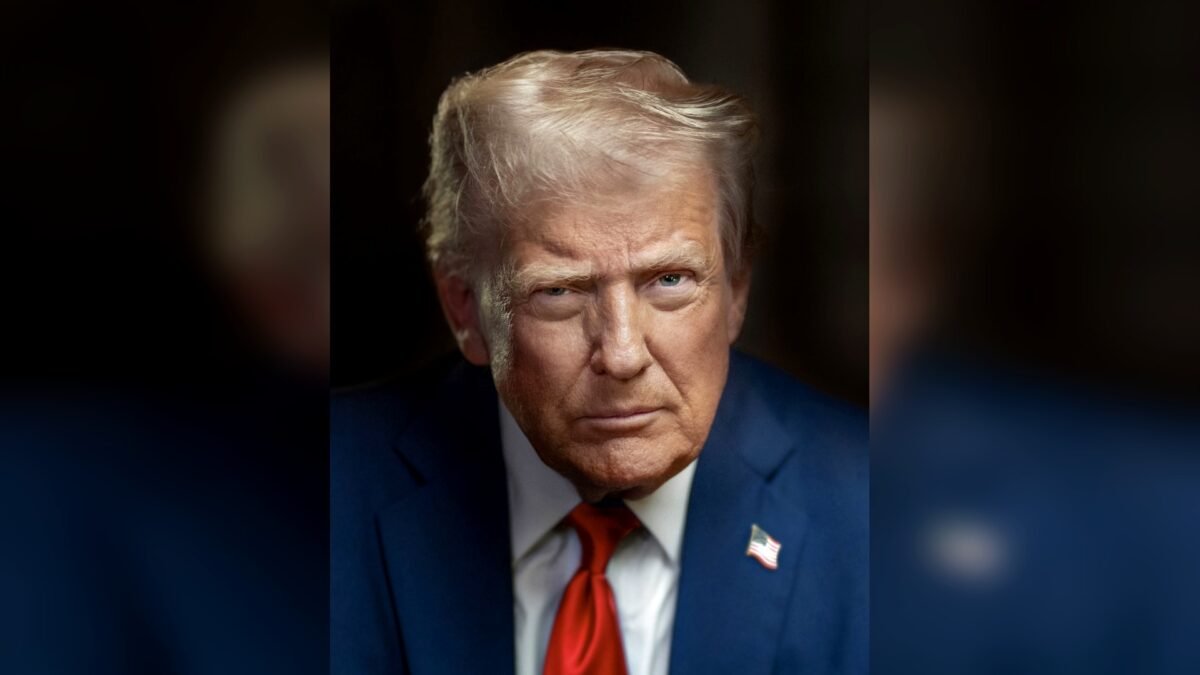
President Donald Trump travelled to Texas on Tuesday 27 October to campaign for Ken Paxton in one of the closest Senate races in the country, pairing two rallies with a highly staged visit to an oil tanker carrying Venezuelan crude, according to the Associated Press and USA Today. Secretary of State Marco Rubio was to join him for the tanker visit, in what the Associated Press described as a highly unusual step for the nation’s top diplomat: a serving secretary of state hitting the campaign trail alongside the president in the final week before the midterm elections.
Trump left Washington on Tuesday morning for rallies in Corpus Christi and Lubbock, telling reporters before boarding Air Force One that Paxton would “do very well”, even though polls show a tight race, according to USA Today. He also predicted that the rally of Paxton’s Democratic opponent, James Talarico, in Lubbock would be “swamped” by his own crowd. “He’s going to get swamped because we have thousands of people,” Trump said, according to USA Today. “You know a midterm is usually not that exciting. This has become very exciting and the crowds are incredible.”
The Texas trip was Trump’s third swing through the state since a midterm convention in Dallas in September, according to the Associated Press, and it underlined how seriously the White House now takes a contest that, in most recent cycles, Republicans would have expected to win comfortably. Texas has not elected a Democrat to statewide office in 32 years, according to the Associated Press, and has not sent a Democrat to the United States Senate since 1988. Yet poll after poll in October has shown Talarico narrowly ahead of Paxton, or the two men tied, with early voting already under way and election day set for 3 November.
Alongside the rallies, Trump planned to show off a newly arrived tanker filled with Venezuelan crude destined for Texas refineries, according to the Associated Press, citing a congressional aide and two United States officials who spoke on condition of anonymity before the plans were publicly announced. Trump confirmed the plan to reporters on Tuesday, saying he and Rubio would visit the tanker. “They’ve sent me as a gift a boatload of a million barrels of oil, and I’m giving that to the United States of America,” Trump said, according to Reuters. He later wrote on Truth Social that it was the “first shipment of BILLIONS of Barrels to come”, according to Reuters.
Reports differed on the precise port for the tanker stop. The Associated Press report placed the visit at Port Arthur, Texas, while a White House official quoted by the New York Post placed the shipment’s arrival at Corpus Christi. What was not in dispute in the reporting was the political choreography: the tanker visit, the president’s remarks and then the move to Lubbock for the evening rally were presented as a single day’s argument, linking the administration’s Venezuela policy to the campaign for the Senate seat.
A tanker, two rallies and a tight race
Trump’s schedule on Tuesday combined governing and campaigning in a way that the Associated Press noted as a deliberate feature of the trip. The president had rallies scheduled in Corpus Christi and Lubbock, according to the Associated Press, while Talarico had events planned the same day in Midland, Amarillo and Lubbock. USA Today reported that hundreds of people lined up hours before Trump’s Lubbock rally, some arriving up to 12 hours early and waiting in lawn chairs outside the Lubbock Memorial Civic Center ahead of the president’s scheduled 6 p.m. appearance in support of Paxton.
The stakes, as USA Today put it in its live coverage, extend well beyond one Senate seat. A Democratic Senate could block Trump’s judicial nominees, and lawmakers have threatened to investigate his administration, according to USA Today. Control of the Senate is therefore part of what is being contested in Texas, even though only one seat is on the ballot there: the seat being vacated by the outgoing Republican Senator John Cornyn.
The polling picture explains the urgency. A new Emerson College Polling/Nexstar Media poll released on 22 October found 48 per cent of likely voters supporting Talarico and 46 per cent supporting Paxton, a two-point lead within the poll’s 3.1 percentage point margin of error, according to USA Today. A Cook Political Report battleground poll released on 21 October showed Talarico leading Paxton 49 per cent to 44 per cent, a five-point lead outside that poll’s 3.2 point margin of error, according to USA Today.
Other October polls told a similar story of a narrow Democratic lead or a dead heat. USA Today reported that a Fox News poll on 21 October had the candidates tied at 49 per cent; a University of Houston Hobby School poll on 18 October put Talarico ahead 48 per cent to 46 per cent; a Marist poll on 14 October had Talarico ahead 47 per cent to 45 per cent; a University of Texas/Texas Politics Project poll on 13 October had Talarico ahead 50 per cent to 47 per cent; a YouGov poll on 6 October had Talarico ahead 50 per cent to 44 per cent; and a New York Times poll on 3 October had Talarico ahead 51 per cent to 45 per cent. The Emerson poll also found that when the 5 per cent of undecided voters were asked which candidate they leaned towards, Talarico’s support rose to 49 per cent and Paxton’s to 48 per cent, according to USA Today.
Early voting runs through 30 October, according to reporting on the race, so much of the electorate had already begun voting by the time Trump arrived. That timetable is part of why the final week matters so much: the rallies are aimed less at voters who have already cast a ballot and more at the remaining pool of late deciders and at energising supporters to turn out before the polls close.
The oil shipment at the centre of the visit
The tanker visit was designed to give Trump a visible symbol for his administration’s Venezuela policy. Trump announced in August an agreement that grants the United States access to a fifth of Venezuela’s crude reserves, according to Reuters. The United States has been working closely with the interim government led by acting President Delcy Rodriguez since United States forces captured President Nicolas Maduro in January, according to Reuters. Maduro was captured in a United States military operation in Caracas on 3 January and taken to face narco-terrorism charges in the United States, according to reporting at the time.
A White House official told the New York Post that the shipment arriving in Texas contained one million barrels of oil, “provided to the United States for free, at no cost to the taxpayer”, and that it would be “the first of the billions of barrels to come from this deal”. The White House said in September that oil from the Venezuela deal would probably reach United States reserves in November, according to Reuters. In August, Trump said the agreement would “MORE THAN DOUBLE American Oil Reserves, greatly increase our Oil Supply, and substantially lower Gas Prices for all Americans”, according to the New York Post’s account of his statement.
The administration’s framing presents the shipment as a windfall: oil secured through a deal with Venezuela’s new leadership, delivered without cost to the taxpayer, and pointing towards much larger volumes to come. That framing is the administration’s own description, and it has not been independently verified in the reporting available on Tuesday. The underlying facts reported by Reuters and the Associated Press are narrower: an agreement was announced in August; the United States is working with the Rodriguez interim government; a tanker carrying one million barrels was due in Texas on Tuesday; and Trump and Rubio planned to visit it.
The tanker visit also sits against a longer history of Venezuelan oil reaching the Texas Gulf Coast. The United States seized the supertanker Skipper in December 2025, carrying about 1.8 million barrels of Venezuelan oil, and United States forces have intercepted 10 tankers since December, according to Reuters analysis reported in March. Oil from seized ships is typically sold, with proceeds directed to funds related to United States victims of state-sponsored terrorism, according to Reuters. The tanker due on Tuesday was different in the administration’s telling: not a seizure, but the first shipment under a negotiated deal.
Rubio on the campaign trail: an unusual step
Rubio’s presence was the most unusual element of the day. It was not clear whether Rubio, who also serves as Trump’s national security adviser, would take part in any campaign events, according to the Associated Press. But it was the first time he had hit the road with Trump as the president barnstormed the country, according to the Associated Press, which described it as highly unusual for the nation’s top diplomat to participate in political travel.
The Associated Press noted that Rubio’s trip was the latest example of how Trump’s second presidency has blurred the lines between governing and campaigning, and that Attorney General Todd Blanche had already been appearing at rallies alongside Republican candidates. Rubio previously ran for president in 2016 and is considered a top prospect for 2028, according to the Associated Press. He has not said whether he will run, and his political activities have been limited since becoming secretary of state, according to the Associated Press.
Rubio has been deeply involved in the Venezuela policy that the tanker visit was meant to showcase. He was a chief architect of the administration’s approach to Latin America and was closely involved in the negotiations with Venezuela’s interim leadership, according to reporting on the trip. His presence therefore served two purposes at once: it lent the tanker visit the authority of the secretary of state, and it placed one of the Republican Party’s leading figures for 2028 alongside the president in a state that will matter in any future presidential contest.
That dual purpose is worth noting because it cuts both ways. For the administration, Rubio’s presence strengthens the claim that the Venezuela deal is a serious foreign-policy achievement rather than a campaign prop. For critics, the same presence reinforces the argument that the lines between official business and partisan campaigning have been erased. Neither reading can be settled by the fact of the visit alone; what matters is what Rubio says and does on the ground, and whether he appears on a rally stage or confines himself to the tanker event.
The race Trump is trying to rescue
Paxton, the Texas attorney general, is running for the Senate seat as a staunch Trump ally. His legal and ethical record has been a central issue in the campaign. Paxton was indicted on securities fraud charges in 2015, accused of steering investors to a technology startup without disclosing that he was paid to do so, according to reporting on his record. The case was dismissed in 2024 under a pretrial agreement requiring community service, ethics training and restitution, and Paxton denied wrongdoing, according to reporting on his record. The Republican-controlled Texas House impeached him in 2023 on charges including bribery and abuse of office, and the state Senate later acquitted him, according to reporting on his record.
Talarico has cast Paxton as, in his campaign’s phrase, the most corrupt politician in Texas, according to reporting on the race, while Paxton’s campaign has said Talarico raises the allegations to distract from his own record. Paxton has also acknowledged an extramarital affair, and his wife is divorcing him, according to reporting on his record. None of these matters resulted in a criminal conviction: Paxton has never been convicted of a crime, according to reporting on his record.
Talarico, a Democratic state representative and pastor, has campaigned on affordability and accountability. He has highlighted bipartisan legislation limiting certain insulin copayments, called for changes to tax policy, criticised aspects of the Trump administration’s immigration enforcement and advocated stronger measures to address healthcare costs, according to reporting on his campaign. He has also sought to attract voters who have supported Republicans in the past but remain concerned about Paxton’s controversies, according to reporting on the race.
The money race reflects the national attention on the contest. Talarico raised 68.6 million dollars compared with Paxton’s 19.5 million dollars in direct fundraising, according to Federal Election Commission data reported in October, while Republicans spent more than 200 million dollars on outside advertising in support of Paxton, according to the same reporting. The University of Houston Hobby School poll found Talarico leading among independents, with 60 per cent saying they would vote for him, while Paxton had the support of 88 per cent of Republican voters, according to the El Paso Times. Talarico also led among Black voters, voters aged 18 to 34 and voters in urban areas, while Paxton led among rural voters, voters aged 55 and older and white voters, according to the El Paso Times.
Trump is not the only senior Republican campaigning in the final days. Vice President JD Vance has been active on the trail, making stops in Montana and Kansas and swinging through Michigan on Tuesday, according to the Associated Press. Vance campaigned in Kansas for Senator Roger Marshall, who faces a tight re-election race, and Trump held a rally near Wichita for Marshall the previous week, according to Kansas Public Radio. The pattern is the same in state after state: the administration’s most prominent figures are being deployed to defend Republican seats that the party once took for granted.
On Monday, a day before the Texas trip, Trump announced that the United States would give one million dollars to anyone who reported voter fraud that leads to an arrest and conviction, according to Reuters, barely a week before midterm elections that polls suggested could prove difficult for his Republican Party. The announcement, made on social media, was part of the final-week atmosphere in which the Texas visit took place: a campaign emphasising fraud claims, turnout operations and high-profile presidential travel, all aimed at a midterm electorate that both parties expect to be closely fought.
Analysis
Texas is no longer a formality, and both parties know it
The most important thing about Trump’s Texas trip is that it had to happen at all. A president does not spend the final week of a midterm campaign flying to a state his party has held for a generation, bringing the secretary of state with him and staging a tanker visit, unless the internal picture is genuinely frightening. The public polls tell the same story: Talarico has led in most October surveys, sometimes within the margin of error and sometimes outside it, and Paxton has not led in any of the recent polls reported by USA Today. That does not mean Talarico will win. Polls in Texas have underestimated Republicans before, undecided voters tend to break late, and the Libertarian candidate’s support could shift the balance. But the direction of travel is clear enough that the White House has treated Texas as a battleground, and battlegrounds are where presidencies are defended or lost.
The tanker is the message
The decision to pair the rallies with a tanker visit reveals how the administration wants the final week to be understood. The argument is not primarily about Paxton or Talarico at all. It is that the administration delivers tangible things: oil, lower prices, a Venezuela policy that produces results Americans can see at a Texas port. Whether the shipment will actually lower petrol prices is a separate question, and one that no single tanker can answer. A million barrels is a small fraction of American consumption, and the “billions of barrels to come” is a promise about the future, not a fact about the present. But as theatre, the tanker works precisely because it is concrete. Voters who are sceptical of speeches can be shown a ship. The risk for the administration is that the theatre invites the questions it is designed to avoid: who owns the oil, what was given in return, and whether a deal struck with an interim government installed after a military operation is the kind of achievement that survives scrutiny. Those questions will not be answered on a dockside in Texas.
Rubio’s presence tells you about 2028 as much as 2026
Secretaries of state do not normally do campaign rallies, and Rubio’s decision to travel with Trump should be read as a statement about his own future as well as about Paxton’s. Rubio has kept his political ambitions carefully contained since joining the administration, and this trip breaks that containment in a visible way. If Paxton wins, Rubio will have been present at the rescue, standing beside the president at the moment a supposedly safe seat was held. If Paxton loses, Rubio will have been present at a defeat, and his association with it will be part of the record. Either way, the trip binds Rubio more closely to Trump’s political fortunes, which is a calculation with consequences well beyond Tuesday. It also signals to other ambitious Republicans that loyalty to the president’s campaign operation is now part of the job description at the highest levels of government, a precedent that will be difficult to undo.
Paxton, not Talarico, is the real argument in this race
Strip away the tanker and the rallies, and the Texas race is an argument about one man. Talarico’s campaign is built on the proposition that voters will reject a candidate whose record includes impeachment, a securities fraud case and an acknowledged affair, even in a state that votes Republican. Paxton’s campaign is built on the opposite proposition: that party loyalty, presidential backing and the sheer weight of Republican advertising will carry a flawed candidate past a challenger whose views on cultural issues can be caricatured. The polls suggest the first proposition is winning, but narrowly, and the final week is where the second proposition gets its best chance. Presidential visits do not change many minds, but they change who turns out, and in a race this close, turnout is everything. The question for Texas voters is whether character is a luxury they can afford to overlook when control of the Senate is at stake, or whether it is the issue itself.
The final week is about turnout, not persuasion
With early voting nearly over and most voters already decided, the remaining contest is mechanical: which side gets its supporters to the polls, and which side’s late deciders actually show up. Trump’s claim that Talarico’s rally would be “swamped” is best understood in that light. It is not a prediction about the result; it is an instruction to his own supporters, telling them that their side is bigger, more enthusiastic and already winning. The same logic applies to the voter-fraud bounty announced on Monday. It is presented as an anti-fraud measure, but its practical effect in the final week is to energise supporters and to frame the election as something that must be defended. Both parties are now playing the same game with different tools: Democrats are banking on anger at the cost of living and at Paxton’s record, while Republicans are banking on presidential star power and the machinery of turnout. The tanker, the rallies and the bounty are all turnout devices, and their success will be measured in votes cast, not in headlines.
Why It Matters
This race matters for three reasons that go beyond Texas. First, it will help decide control of the Senate, and with it the fate of judicial nominations and the scope of congressional oversight of the administration. Second, it is a test of whether a Republican candidate with Paxton’s record can still win in a state that has rewarded Republican loyalty for decades, or whether there is a limit to what voters will accept from their own party’s nominees. Third, it is a preview of how the administration intends to campaign in the future: governing actions staged as campaign events, cabinet secretaries deployed as campaign surrogates, and foreign policy presented as a domestic deliverable. If that approach works in Texas, it will be repeated everywhere. If it fails in Texas, in a state Republicans should win, it will raise serious questions about the administration’s standing with voters who once formed its most reliable base.
For Texas voters, the choice is more immediate. They are being asked to decide between a Democratic challenger who promises affordability and accountability and a Republican incumbent attorney general who promises loyalty to the president and a record of fighting the administration’s opponents. The tanker visit adds a third element to that choice: a promise that the administration’s foreign policy will deliver cheaper energy and a stronger America. Whether voters believe that promise, and whether they credit it to Paxton, will be part of what decides the outcome on 3 November.
What to Watch Next
- Trump’s remarks at the tanker visit and at the Lubbock rally, and whether Rubio appears on a campaign stage or confines himself to the official event, will show how far the administration is willing to go in blending governing and campaigning.
- Whether the tanker visit takes place as planned, and what photographs and footage emerge from it, will determine whether the administration gets the visual argument it staged the day to produce.
- Final polls in the last days before 3 November, and early-voting turnout figures, will indicate whether Talarico’s narrow lead is holding or whether Paxton’s support is recovering as undecided voters make up their minds.
- The result in Texas on 3 November, and its effect on control of the Senate, will shape the final two years of Trump’s presidency, including judicial confirmations and congressional investigations.
- Follow-through on the Venezuela oil deal, including whether further shipments arrive and whether petrol prices move, will test whether the “first shipment of billions of barrels” was a campaign promise or the start of a sustained energy relationship.
Sources
- Reuters — Trump says he will visit tanker in Texas with first oil from Venezuela deal
- Associated Press (via KCAU) — Trump and Rubio plan to visit oil tanker carrying Venezuelan crude in Texas
- USA Today — Trump, Talarico both rally Texas voters as Senate fight rages: live updates
- Reuters — Trump offers $1 million for tipoffs that lead to voter fraud convictions

About the Author — Abdul Mannan
Related Articles
Justice Department Charges James Comey for Third Time Over Alleged 2016 Leak to The New York Times
The Justice Department has charged former FBI Director James Comey for a third time, over an alleged 2016…
Trump Rules Out Iran Strike ‘Today’ Even as US Forces Stand Ready to Act Within 96 Hours
US President Donald Trump said there would be no strike on Iran on Sunday, even as US officials…
Trump Votes Early in Florida as Obama Rallies Democrats in Ohio and Michigan in Final Midterm Push
President Donald Trump voted early in Florida on Saturday while former President Barack Obama rallied Democrats in Ohio…