
UEFA Gives FIFA a November 2 Deadline to Hand Over Documents on Infantino’s Abandoned World Cup Sell-Off Plan

UEFA’s Letter Lands on FIFA’s Desk
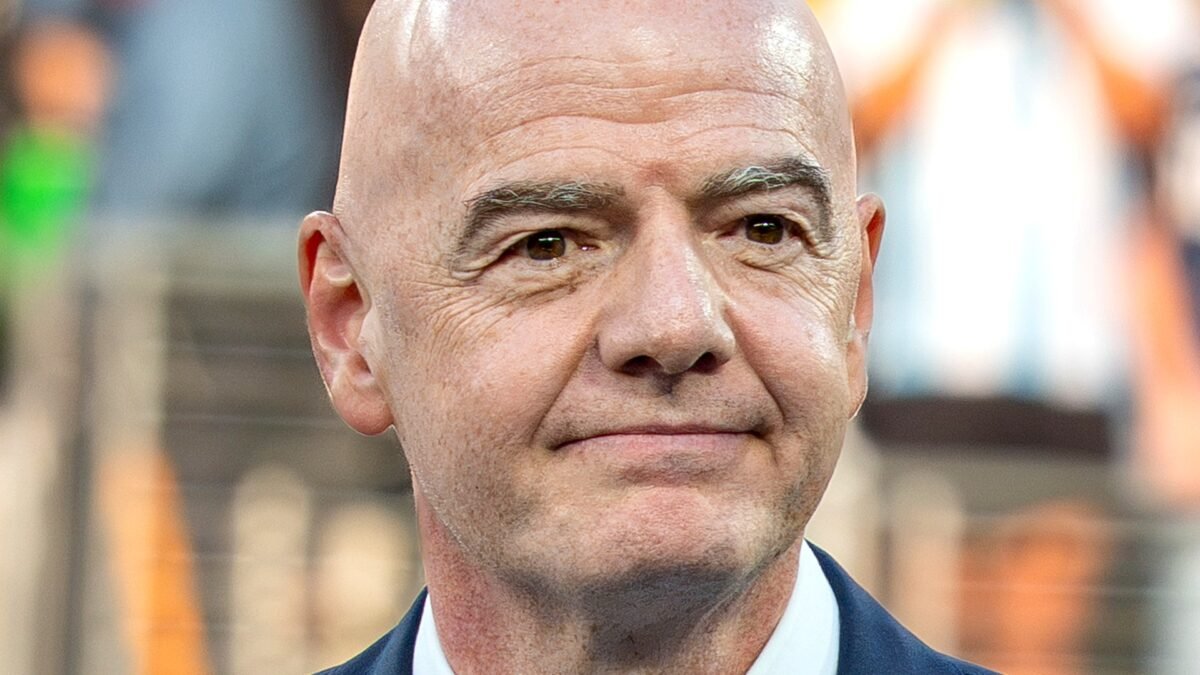
UEFA has given FIFA until 2 November to hand over documents relating to Gianni Infantino’s aborted attempt at a secretive investment plan for the World Cup, escalating a power struggle between European and world football’s governing bodies that now reaches into the United States federal courts.
The formal letter, signed by UEFA general secretary Theodore Theodoridis on behalf of Europe’s FIFA council members and sent on Monday, followed a week in which Infantino faced down his critics in person at a FIFA council meeting in Zurich — and, according to UEFA’s account, left its European delegates empty-handed, according to the Associated Press.
Infantino provided no documents about the $4.2 billion World Cup sell-off plan he launched and quickly dropped in July amid a fierce backlash led by Europe. His apology and explanation at the council meeting, UEFA said, failed to address the core concerns raised by council members, the AP reported.
“These explanations have not begun satisfactorily to address a number of fundamental questions raised by Council members. Others remain unanswered, and the information and documentation requested have not been [provided],” the letter said, according to the AP.
“The withdrawal of FFE, the recognition of mistakes, and the announcement of ‘potential governance reforms’ do not answer how the relevant decisions were taken or why the FIFA Council was not involved at the appropriate stage.”
What Is in the 42 Questions
UEFA submitted 42 detailed questions demanding written responses and supporting documents. The list reads less like a governance audit and more like a catalogue of everything UEFA finds troubling about the Infantino era, according to reports of the letter’s contents.
Among the subjects UEFA is demanding answers on are Infantino’s personal remuneration package; financial payments made to singer Marc Anthony; the handling of United States striker Folarin Balogun’s disciplinary case; and the business and political relationships involving Donald Trump and his family, according to the AP.
UEFA also wants answers on the operational independence of FIFA’s judicial, electoral and ethics committees — the machinery that is supposed to keep the organisation honest.
European delegates asked Infantino several of these questions face to face at the Zurich council meeting last week but were told to submit them in writing, according to a Press Association report carried by ESPN. Beyond the headline items, the questions also cover the World Cup final half-time show and the introduction of hydration breaks at the finals earlier this summer.
German newspaper Die Zeit, reporting on the contents of the letter, said UEFA is demanding detailed information about a reported role for Joshua Kushner, the brother of Jared Kushner, in the plan to sell World Cup rights to private-sector investors, as well as clarification on whether the reversal of Balogun’s World Cup red card was connected to a potential phone call between Infantino and Trump.
“A series of decisions, transactions, and interventions involving the FIFA President, the President of the United States, and associated individuals raise serious questions regarding potential conflicts of interest, transparency, and institutional accountability,” UEFA’s letter said, according to Die Zeit.
FIFA’s Response: We Will Reply — Eventually, and Privately
FIFA insists it intends to reply to the questions submitted by UEFA on behalf of council members, but it has not committed to doing so by the 2 November deadline — or even before the deadline for candidates to declare for next year’s presidential election, according to the Press Association report.
A FIFA spokesperson said: “The FIFA Governance Regulations state that Council meetings and their associated documentation are confidential. While FIFA intends to reply to questions submitted by its Council members it has no intention of breaching confidentiality by commenting on internal communication and/or documentation to media.”
“FIFA considers respect for these Regulations to be a function of respect for the Council itself and for its individual members. FIFA will always maintain this respect and will not be drawn into any exchange with any third parties that undermines this.”
The statement confirms FIFA will answer — but on its own timetable, behind closed doors, and with no commitment to the calendar UEFA has imposed.
The Courts Get Involved
UEFA is not relying on letters alone. The European body has asked United States federal courts to authorise subpoenas compelling the production of documents and sworn testimony about the abandoned investment plan, known as FIFA Forward Enterprise, according to the AP.
FIFA’s lawyers have claimed UEFA is harassing Infantino — an unusually sharp exchange between two organisations that are supposed to govern the same sport collaboratively.
The legal move raises the stakes considerably. Subpoenas issued by US courts would reach into the commercial arrangements behind FIFA Forward Enterprise, and the request for sworn testimony signals that UEFA wants evidence, not assurances.
The Plan That Started It All
The investment scheme at the heart of the dispute was launched in July and abandoned within weeks after fierce opposition led by Europe. Under the proposal, known as FIFA Forward Enterprise, member associations would have been able to opt into a scheme offering up to $20 million in one-off funding, with a minority stake in the commercial rights of the World Cup and other competitions sold to private-sector investors.
UEFA described FIFA’s decision to withdraw the proposal as “a victory for the whole game,” but insisted that restoring trust in football’s governing body remains a long-term challenge, according to Pulse Sports.
“The current FIFA leadership has not only lost UEFA’s confidence but also that of many other members of the football family,” the organisation said. It thanked fans, clubs, leagues, players, national associations and political leaders who opposed the proposal, arguing they had successfully demonstrated that “football is not for sale.”
UEFA also accused FIFA of attempting to force through “secret schemes” without proper consultation. “We cannot keep going on like this with secret schemes on fast-track timescales, cooked up by faceless individuals and of dubious benefit to the game,” it added.
In an unusually personal passage, UEFA said Infantino had failed to deliver on the promises of transparency and accountability that formed the basis of his successful FIFA presidential campaign in 2016. “The shabby, back-room, opaque deal he hatched and tried to force through was anything but transparent,” UEFA said, according to Pulse Sports.
UEFA has lost confidence in Infantino over his handling of the World Cup private investor plan, and has said it will identify a credible alternative candidate to stand against him in next year’s election, according to the Press Association.
The Timeline That Matters
The 2 November deadline was not chosen at random. It falls sixteen days before the nomination deadline for the presidential election scheduled for next 18 March, according to the AP.
The next FIFA council meeting is scheduled for 16 December in Doha — after nominations close. UEFA insisted that answers cannot wait for that meeting.
“These questions require answers now. They cannot be deferred until the next meeting of the FIFA Council — nor can future governance reforms substitute for scrutiny of decisions already taken and accountability for them,” the letter said, according to the AP.
The compressed timeline means federations will be deciding whether to nominate or endorse a challenger — including any alternative candidate UEFA is seeking — at precisely the moment FIFA’s responses are either in hand or conspicuously absent.
Analysis: Why It Matters
The Deadline Is the Story — Not the Answers
FIFA may well deliver documents eventually. But the fight over the date is the real contest, because the calendar is doing the work UEFA wants done. A 2 November deadline gives member associations a fortnight to read FIFA’s answers — or note their absence — before the window to nominate challengers for the March election closes. That is no accident. UEFA is converting an information request into an election timetable, forcing the 211 member federations to judge Infantino’s transparency while they still have the power to do something about it.
A Secret Plan With a $4.2bn Price Tag
Whatever the merits of selling a minority stake in World Cup commercial rights, the manner of the FIFA Forward Enterprise launch is what condemned it. A sitting president launched a multi-billion-dollar privatisation of the game’s crown-jewel asset, the council that is supposed to govern the sport learned the details after the fact, and the plan was withdrawn only after a European-led revolt. UEFA’s “shabby, back-room” language is not merely insult — it is an argument about legitimacy. Decisions of this scale, the logic runs, cannot be legitimate if the people formally charged with governing the game were never asked. That is why the withdrawal of the plan did not end the matter: the process revealed how the organisation now works.
Why Trump Keeps Appearing in a Football Letter
The questions about Donald Trump, his family and Joshua Kushner are the ones that turn a governance dispute into a geopolitical story. Infantino has cultivated a close public relationship with the US president — an asset when FIFA needed smooth relations with a World Cup host nation, and a liability the moment private commercial schemes intersect with presidential proximity. UEFA’s line about “serious questions regarding potential conflicts of interest” does not allege wrongdoing; it alleges the absence of answers. In the court of member federations, that distinction may matter less than the question itself: why is the president of the United States a recurring character in the paperwork of world football’s governing body?
The Chiomento Question: Who Referees the Referee
Perhaps the most quietly explosive item in UEFA’s letter concerns the election process itself. UEFA says the chair of FIFA’s electoral committee, Bruno Chiomento, has known Infantino for twenty years and spent the full five-week duration of the World Cup with all his expenses covered by FIFA. The letter asks: “In view of the importance of ensuring the independence and perceived impartiality of the electoral process, would FIFA consider Mr Chiomento’s recusal and replacement by his deputy for the duration of the presidential election?” UEFA is not waiting for the election to be disputed — it is challenging the architecture of the election before the nominations even close. A challenger who enters the race under a cloud of process suspicion is a challenger who may never be believed to have had a fair shot.
FIFA’s Confidentiality Defence: Legitimate Rule or Convenient Shield
FIFA’s response is worth reading on its own terms. Governance regulations genuinely do protect council deliberations, and no serious organisation conducts its internal debates through press releases. But confidentiality is a rule about how decisions are debated, not a justification for refusing to show how they were made — and UEFA’s letter is asking the second question. The insistence that replies will come, without saying when, preserves FIFA’s position while running down the clock on the only audience that matters: the federations whose nomination decisions arrive in mid-November. The art of the dodge, in football politics as elsewhere, is to concede the principle and control the timing.
What to Watch Next
- 2 November — the deadline itself. Does FIFA produce the documents and answer the 42 questions in full, partially, or not at all? The completeness of the response will be read as the first real test of whether the Zurich apology meant anything.
- The nomination deadline in mid-November. UEFA says it will identify a credible alternative candidate to stand against Infantino. Whether any challenger actually files nomination papers will determine whether this becomes a contested election or a siege against an incumbent.
- The US court subpoena request. If American courts authorise UEFA’s request for documents and sworn testimony about FIFA Forward Enterprise, the dispute moves from football politics into the jurisdiction of depositions — a different kind of transparency entirely.
- 16 December — the Doha council meeting. By then nominations will have closed. Whatever UEFA learns (or fails to learn) before November shapes the confrontation in Doha, when council members meet face to face again.
- 18 March — the presidential election. Infantino is seeking a fourth term, and his re-election now looks far from certain. The man elected in 2016 on promises of transparency is now defending himself against Europe’s charge that he broke those promises. The irony is the campaign.
Sources
- Associated Press (via TSN) — UEFA gives FIFA a Nov. 2 deadline to release Infantino World Cup plan documents
- ESPN / Press Association — FIFA ‘intends’ to answer UEFA questions but won’t ‘breach confidentiality’
- Associated Press (via Sportsnet) — UEFA gives FIFA a Nov. 2 deadline to release documents
- El Botola (via Die Zeit) — UEFA and Infantino head for showdown, Trump in the picture
- Pulse Sports — UEFA issue vote of no confidence on Infantino, putting FIFA re-election in jeopardy
- PressTV — UEFA demands FIFA release key documents on Infantino World Cup sell-off plan

About the Author — Abdul Mannan
Related Articles
Cristiano Ronaldo Suspended 30 Days and Fined €255 by Portugal After September Camp Walkout
The Portuguese Football Federation handed its all-time top scorer a 30-day suspension and a €255 fine for walking…

Russia Challenges US Women’s Gymnastics Crown as China Leads Worlds Qualifying in Rotterdam
A cobbled-together Russian team finished within a point of the US women in qualifying at the Rotterdam world…

Chris Boswell Breaks Gary Anderson’s Steelers Field-Goal Record in Overtime Win Over Buccaneers
Chris Boswell kicked four field goals — tying and then breaking Gary Anderson's 38-year-old franchise record — as…