
French Police Raid the Ritz Paris and Detain Five in Mohamed Al Fayed Abuse Inquiry

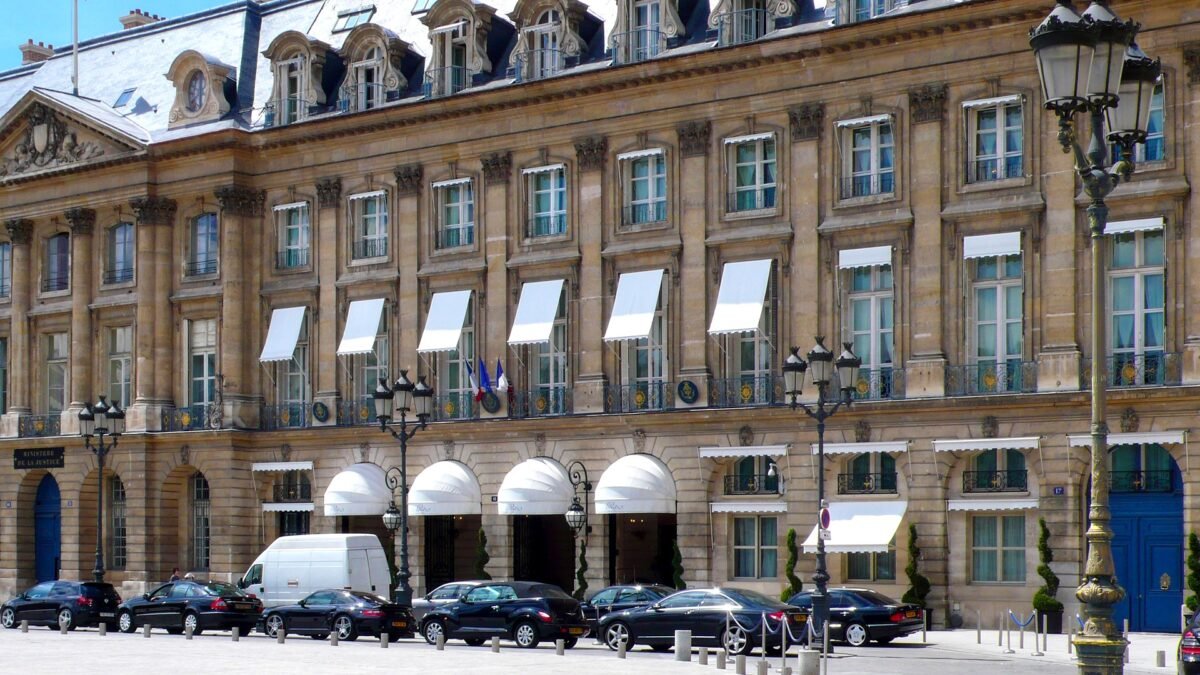
French police have searched the Ritz Paris and two other properties linked to the late Mohamed Al Fayed and detained at least five people for questioning, in the first arrests of an investigation into alleged trafficking and sexual abuse connected to the former Harrods owner, according to reports published on Tuesday.
The searches, carried out in mid-October with British police officers present, mark the most significant development yet in a cross-Channel inquiry that has grown steadily since the BBC revealed the scale of the allegations against Fayed in 2024. Digital material seized during the raids is now being examined by investigators, and the people detained have been released pending further investigation, according to the Paris public prosecutor’s office.
According to The Times, at least five people were held for questioning as part of the inquiry, which was opened last year into claims that women were recruited and abused in France by a network operating for Fayed and his brother Salah. Reuters reported that several people were temporarily placed in police custody after being questioned, and that investigators seized digital material during the searches. The Observer, which first reported the raids, said several people were taken into police custody and have since been released while inquiries continue.
The Paris prosecutor’s office confirmed that searches and evidence gathering took place in mid-October 2026 at the Ritz in the 1st arrondissement of Paris, at the Villa Sainte-Thérèse in Saint-Tropez, and at the Villa Windsor in the 16th arrondissement of Paris. In a statement quoted by The Observer, the office said: “At this stage of the case, several victims have been interviewed by French investigators. The investigations are being conducted in co-ordination with British authorities. As part of this process, searches and evidence collection were carried out in mid-October 2026.”
The Metropolitan Police confirmed in a statement that its officers travelled to France in October and were present during the operation. The force is carrying out its own investigation into allegations against Fayed and those suspected of enabling his offending, under the name Operation Cornpoppy.
No charges have been announced against any of the people detained, and no details of their identities have been released. The Observer understands that no current member of the Ritz Paris staff was arrested.
What Happened in Paris
The centrepiece of the operation was the Ritz Paris, one of the most famous hotels in the world, which Fayed bought in 1979 and which remains owned by the Fayed family. Officers from a specialist French anti-trafficking unit searched the hotel on Place Vendôme, in the heart of the French capital, as part of an inquiry into allegations of rape, human trafficking committed by an organised crime group, and aggravated pimping committed by an organised crime group.
Two other properties with links to Fayed were searched at the same time. The Villa Sainte-Thérèse is a 30-bedroom estate in Saint-Tropez that Fayed owned until 2015. The Villa Windsor is a 14-room mansion in the Bois de Boulogne in Paris that Fayed leased from the city until 2018. Before Fayed, the villa was the main residence of Edward VIII and Wallis Simpson, known as the Duke and Duchess of Windsor after the former king’s abdication of the British throne in 1936, until their deaths.
According to Agence France-Presse, the searches took place on 13 and 14 October, with British investigators present. The Paris prosecutor’s office told AFP that individuals had been held for questioning and that authorities were analysing computers, telephones and other digital media seized in the raids. The investigation remains open.
The Ritz Paris said in a statement that it does not tolerate harassment, abuse or inappropriate behaviour, adding: “The safety, dignity and well-being of our colleagues and guests are paramount. Ritz Paris stands ready to cooperate fully with the relevant judicial authorities. It is Ritz Paris’s policy not to comment on judicial matters or exchanges with the authorities.”
The Foundation Mansart, which is now responsible for the Villa Windsor, said police had visited the house to look at its interiors. The Observer reported that there is no suggestion that the new owners of any of the properties searched are linked to the investigation.
The raids were disclosed to survivors by the Metropolitan Police in a confidential message, according to reports, and were first reported publicly by The Observer on Tuesday 10 November. The Paris prosecutor’s office then confirmed the operation to news agencies the same day.
The Three Properties
Each of the three addresses searched carries its own history, and each has already featured in the accounts of women who say they were abused.
The Ritz Paris, founded by César Ritz in 1898, has held an outsized place in art, fashion and literature for more than a century. Coco Chanel referred to it as “her house” and lived there for almost two decades, and Ernest Hemingway was a regular at the bar that now bears his name. It is also where Dodi, Fayed’s son, and Diana, Princess of Wales, stayed on the night before the 1997 car crash in Paris that killed them both. Its most expensive suite costs up to £52,000 a night, according to The Observer.
One of the women featured in the BBC’s 2024 documentary said she had been sexually assaulted by Fayed at the Ritz hotel in Paris, according to the BBC. Another said she had been raped by him at the Villa Windsor residence. Those accounts are among the reasons the two Paris addresses have become central to the French inquiry.
The Villa Sainte-Thérèse, on the French Riviera, was Fayed’s Mediterranean property. The Observer described it as a 30-bedroom estate in Saint-Tropez. Together, the three properties span the geography of Fayed’s life in France: the grand Paris hotel he owned, the historic mansion he leased, and the Riviera estate where he spent time in the south.
French investigators are now analysing the digital material seized from the searches, a process that could take months. According to reports, temporary detention orders were issued for some suspects immediately after their interrogations concluded, aimed at allowing the analysis of the seized material to proceed.
The French Investigation
The French inquiry was opened in the summer of 2025 by a specialist anti-trafficking force, after complaints alleging sexual misconduct by Fayed. It is a preliminary investigation, which in the French system means prosecutors are gathering evidence to decide whether formal charges should follow.
The investigation is being conducted under the supervision of the Paris public prosecutor’s office, and French investigators have interviewed several victims, according to the prosecutor’s office. It is being run in co-ordination with the British authorities, a point both sides have stressed.
The charges under consideration are among the most serious in the French criminal code: rape, human trafficking committed by an organised crime group, and aggravated pimping committed by an organised crime group. The framing matters. It means the French authorities are not treating the case as a series of isolated complaints against one man, but as an alleged organised system in which a network of people around the Fayed brothers recruited and moved women for abuse.
That framing was welcomed by the lawyers representing victims in France. In a joint statement shared with The Observer, Eva Joly, the former MEP and prosecutor, along with Caroline Joly and Agathe Barril, all lawyers from the firm Alta Voce Avocats, said: “Every month, new victims from all over the world are overcoming their fear and finding the courage to speak out about what they have endured.”
They added: “We are left stunned each time more acts by Mohamed and Salah Al Fayed are revealed, and yet we are still only halfway through the investigations in France. But already, the testimonies reveal an organisation in which the Fayeds’ immense personal wealth and business empire allegedly served their predatory sexual behaviour: a system built with cold, meticulous precision.”
Because Mohamed Al Fayed died in 2023, aged 94, and his brother Salah died in 2010, neither man can face charges. The French investigation, like the British one, is therefore aimed at the people around them: those accused of recruiting women, transporting them, arranging meetings, and covering up what happened. No charges have been brought against anyone in the French inquiry so far, and the people detained in October were released pending further investigation.
Operation Cornpoppy and the Scale of the Allegations
In Britain, the Metropolitan Police taskforce investigating the allegations is known as Operation Cornpoppy. According to The Observer, at least 157 people have reported allegations relating to the Fayed brothers directly to the taskforce. A confidential report of a meeting between the force and the all-party parliamentary group for survivors of Mohamed Fayed and Harrods, seen by The Observer, described Operation Cornpoppy as “unprecedented” in terms of size, and said there are 70 cases the taskforce considers could involve trafficking.
The Times reported that the Metropolitan Police have catalogued more than 400 allegations of sexual misconduct, rape, human trafficking and emotional abuse spanning from 1977 to 2014, and that more than 150 victims have officially come forward to police. The Observer reported that since Fayed’s death, and the broadcast in 2024 of the BBC documentary Al Fayed: Predator at Harrods, more than 400 allegations have been made of sexual misconduct against him and his brother Salah.
The allegations include claims that a network of people around the brothers, including at the Ritz Paris and at Harrods, facilitated the drugging, rape and trafficking of women. Neither Mohamed nor Salah Al Fayed was charged with a crime relating to the allegations against them during their lifetimes.
The scale of the case has continued to grow. Women are still coming forward with new allegations related to the brothers. This week, the BBC reported that a former Harrods employee alleged she was trafficked to the Fayed family’s estate in the Scottish Highlands, where she was drugged and repeatedly sexually assaulted by Salah Fayed, who she alleged kept her “prisoner”. Police Scotland told the BBC that three people had been identified in connection with offending against a number of victims at Balnagown, the Fayed family’s estate in Easter Ross, and that inquiries were continuing.
The Metropolitan Police’s handling of the case has itself come under scrutiny. The Observer reported earlier this year that the Independent Office for Police Conduct had received at least three complaints over the Met’s handling of cases related to Fayed. Victims criticised the force for failing to take allegations of trafficking seriously, and said that as a result they had missed out on specialised support, including counselling, because they were not referred to the relevant services. A Metropolitan Police spokesperson said at the time: “We are assisting [the IOPC] as it carries out an independent investigation into our handling of reports of sexual offending by Mohamed Al Fayed. We are aware that further complaints are now being assessed by the IOPC. We will support these as required.”
How the Case Reached This Point
The full extent of the allegations against Fayed became public in September 2024, when the BBC broadcast its investigation Al Fayed: Predator at Harrods. More than 20 women told the BBC that Fayed had sexually abused them, with some alleging rape. Harrods, which Fayed sold in 2010 to an investment vehicle of the Qatari royal family, apologised in 2024 after the documentary was broadcast.
Several media organisations had reported allegations of sexual misconduct against Fayed in the past, according to Reuters, though some women said they did not feel comfortable coming forward until after his death. In 2009, prosecutors decided not to charge Fayed over a claim that he had sexually assaulted a 15-year-old girl in his store, saying there was no realistic prospect of a conviction.
Fayed, an Egyptian-born billionaire, built a business empire that included Harrods, the Ritz Paris and Fulham Football Club. He bought the Ritz in 1979. He owned Harrods, the luxury department store in Knightsbridge, London, until 2010. He died in 2023, aged 94, with no charges brought against him despite dozens of complaints beginning in the 1990s.
The French investigation opened last year, and the British taskforce has been running since the BBC documentary. The October searches are the first time either investigation has moved from gathering testimony to searching properties and detaining people for questioning.
The timing is significant. The searches took place in mid-October, but were not made public until 10 November, when The Observer reported them and the Paris prosecutor confirmed the operation. That gap of nearly a month suggests the authorities were working quietly while the first forensic examination of the seized material began. The decision to confirm the raids publicly came only after survivors had been informed by the Metropolitan Police.
Survivors’ Reaction
Survivor groups welcomed the development. The Justice for Fayed and Harrods Survivors group said it welcomed the “significant developments” and the co-operation between the Metropolitan Police and the French authorities, according to the BBC. The group has been pressing for accountability for those who enabled Fayed’s alleged offending, not only for Fayed himself.
The survivor advocacy group No One Above said: “France is treating this as organised human trafficking, led by specialists, with properties searched and evidence seized.” The group added, according to the BBC: “Two years on, survivors are still waiting for the same from the Met. It is time the National Crime Agency took this investigation over.”
A former Ritz Paris employee who alleges she was transported to various locations in London and France for the purpose of sexual assault by Fayed told The Observer: “It’s empowering that the age of impunity of sexual predators is coming to a close. It’s thrilling to think that in the case of the Fayeds we have come this far without the vast majority of evidence being viewed yet.”
She said she was “very impressed” by the taskforce in France, particularly the fact that it is investigating allegations concerning the brothers as acts of trafficking and organised crime. “We’re not talking about a handful of victims. It’s a tsunami of victims. There are bad days and there are good days,” she said. “But at least they are going to investigate.”
The reaction captures the two emotions running through the survivor community: relief that the investigation is finally moving into an enforcement phase, and frustration that it has taken so long, and that the British investigation has not yet produced the same visible results as the French one.
Analysis: Why It Matters
A case that outlived its central figure
The most striking feature of the Fayed investigation is that its central figure is dead. Mohamed Al Fayed died in 2023 without facing a charge, and his brother Salah died in 2010. In the ordinary run of criminal cases, the death of the accused ends the matter. Here it has done the opposite. The allegations have grown since Fayed’s death, from the 20-plus women who spoke to the BBC in 2024 to more than 400 allegations catalogued by the Metropolitan Police. The reason is straightforward, and it is one that recurs in cases involving powerful men: many women said they did not feel able to come forward while Fayed was alive. His wealth, his lawyers, his ownership of Harrods and the Ritz, and his public standing all acted as a deterrent. Death removed the deterrent, but it also removed the possibility of a trial of the man himself. What remains is the question of the network around him, and that is the question both the French and British investigations are now trying to answer.
The Ritz raid changes the character of the inquiry
Until now, the Fayed investigations have been, in public at least, an exercise in gathering testimony. Survivors have spoken, lawyers have collected accounts, police have logged complaints. The October searches change that character. Police entered three properties, seized computers and telephones, and detained people for questioning. That is enforcement, not intake. It signals that the French authorities believe they have enough to justify coercive measures, and that they are now testing the evidence against the people who may have made the alleged system work. The distinction matters because it is the difference between an investigation that records what happened and one that may eventually put people on trial. No charges have been brought, and the detained people were released, so the shift is a beginning, not a conclusion. But it is the first time the investigation has visibly moved against living suspects.
France is treating this as trafficking, not just abuse
The legal framing chosen by the French authorities is the most important detail in the story. The inquiry is into rape, human trafficking committed by an organised crime group, and aggravated pimping committed by an organised crime group. That framing treats the allegations as a system, not a series of individual acts, and it places the case in the hands of a specialist anti-trafficking force rather than ordinary detectives. It also explains why the searches covered three properties in two cities, and why the investigation is being run in co-ordination with the British police. Trafficking, by definition, crosses borders, and the alleged movement of women between London, Paris and the Riviera is at the heart of the case. The contrast drawn by survivors between the French approach and the British one is pointed: the French are treating the case as organised trafficking led by specialists, while the Metropolitan Police’s handling has drawn complaints to the police watchdog. Whether that contrast is fair will be judged by results, but the French raids have set a visible benchmark.
Wealth, property and the mechanics of alleged abuse
The three properties searched are not incidental to the case. They are, according to the allegations, the places where the abuse happened and the infrastructure that made it possible. A grand hotel, a historic mansion and a Riviera estate are not just addresses. They are controlled spaces, staffed by employees, reached by private transport, and shielded by the discretion that luxury hospitality sells as a virtue. The Ritz, in particular, has built its reputation on discretion for more than a century. That same discretion, survivors allege, helped conceal what was happening inside it. The case therefore raises a question that goes beyond one man and his circle: what responsibility do the institutions around a powerful person bear when their premises and their staff are allegedly used to facilitate abuse? Harrods apologised in 2024. The Ritz has said it will co-operate fully with the judicial authorities. The answers to that question will be worked out not in statements but in the evidence seized from the searches, and in whether anyone is eventually charged.
What the searches do not yet prove
It is worth stating plainly what the October raids do not establish. No one has been charged. The people detained were released pending further investigation. The digital material seized has not been described in any detail, and its contents are unknown. The allegations against Fayed and his brother were never tested in court during their lifetimes, and the claims about the network around them are, for now, allegations under investigation, not findings of guilt. The French inquiry is a preliminary one, which means prosecutors are still deciding whether there is a case to bring. The British investigation is continuing. The survivors’ accounts are powerful and numerous, and the police on both sides of the Channel are treating them seriously, but the legal process has a long way to run. The raids are a step forward, and a significant one, but they are not a verdict.
What to Watch Next
- The seized digital material: French investigators are analysing computers, telephones and other devices taken from the three properties. What they contain, and how long the analysis takes, will shape the next phase of the inquiry.
- Whether charges follow: the people detained in October were released pending further investigation. The key question is whether the Paris prosecutor’s office moves from a preliminary investigation to formal charges against anyone.
- Operation Cornpoppy: the Metropolitan Police taskforce has described its caseload as unprecedented in size, with 70 cases it considers could involve trafficking. Whether the British investigation produces searches or arrests of its own is the next test of its progress.
- The police watchdog inquiry: the Independent Office for Police Conduct is examining complaints about the Metropolitan Police’s handling of Fayed-related cases. Its findings will matter to survivors who say trafficking allegations were not taken seriously enough.
- Police Scotland and Balnagown: three people have been identified in connection with offending against a number of victims at the Fayed family’s Balnagown estate in the Highlands. That strand of the investigation is continuing, and it widens the geography of the case beyond London and Paris.
- The survivors’ push for the National Crime Agency: survivor groups are calling for the National Crime Agency to take over the British investigation. Whether the government or the Metropolitan Police responds to that call will be a measure of how seriously the British authorities take the contrast with the French approach.
Sources
- Reuters — France searches Ritz, Villa Windsor in probe of the late Al Fayed
- The Observer — French police raid Ritz Paris in Fayed abuse investigation
- The Times — Ritz Paris searched and five detained in Mohamed Al Fayed abuse inquiry
- Agence France-Presse, via The Leaders Online — Ritz among Paris sites searched over alleged trafficking network linked to late billionaire Mohamed Al-Fayed
- Asas Press — New arrests in France probe into alleged abuse of Mohamed Al-Fayed
- Demokratis — French police search Ritz in Al Fayed abuse investigation

About the Author — Abdul Mannan
Related Articles

David Walliams Named as Celebrity Behind Failed Injunction as Guardian and ITV News Publish Grooming and Sexual Misconduct Allegations
David Walliams has been named as the celebrity who failed to stop publication of a three-year Guardian and…

US Evacuates Aircraft from RAF Mildenhall After Iran Threat as Two British Bases Raise Alert to Second-Highest Level
The United States moved refuelling tankers out of RAF Mildenhall on Monday after a threat linked to Iran,…
Labour MPs Urge Burnham to Scrap Draft Conversion Practices Bill Over Fears Parents Could Face Jail
At least a dozen Labour MPs have told party whips they are unhappy with the draft Conversion Practices…