
UK Unemployment Falls to 4.7% in Pre-Budget Boost, but Job Vacancies Sink to Five-Year Low

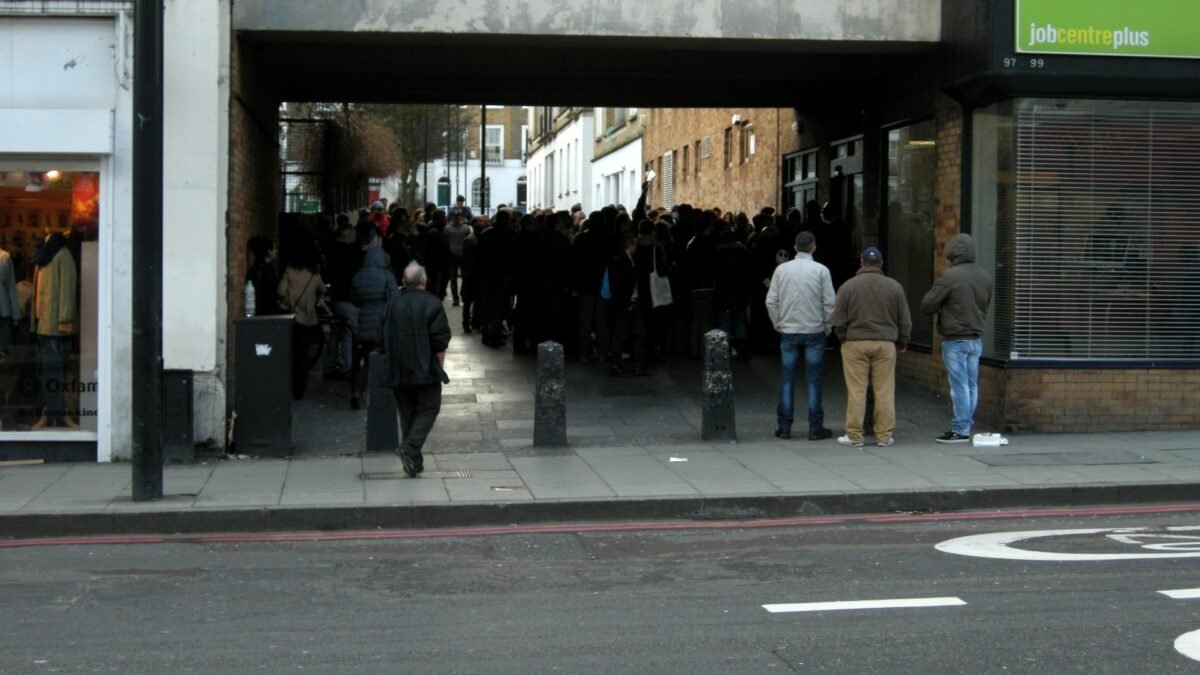
Britain’s unemployment rate has fallen unexpectedly to 4.7%, official figures released on Tuesday showed, delivering a welcome piece of good news to the government eight days before Chancellor John Healey delivers his Budget.
According to the Office for National Statistics, the jobless rate dropped to 4.7% in the three months to August, down from 4.9% in the previous quarter — the lowest level since the three months to July 2025. City economists had widely expected the rate to rise to 5%.
The ONS, which published its final snapshot of the labour market before the Budget on 28 October at 7am UK time, also reported that employment rose by 102,000 over the quarter to 34.577 million, while the number of people unemployed fell by 47,000 to 1.712 million. The employment rate climbed to 75.3%, and the share of working-age people classed as economically inactive edged down to 20.9%.
Yet beneath the headline improvement sits a darker picture: the number of job vacancies has collapsed to its lowest level in five years, as employers — particularly small businesses — pull back from hiring amid rising labour costs.
The headline numbers
The ONS figures for June to August show a labour market that is, in the statistics body’s own words, “broadly flat” this year — but moving in a reassuring direction for the Treasury. The employment rate edged up, unemployment eased, and the count of people neither working nor looking for work fell by 16,000 to 9.091 million.
David Freeman, the ONS deputy director of labour market statistics, said: “While the labour market remains broadly flat in 2026, data from the latest quarter shows the employment rate edging up and a small drop in unemployment.” He noted that the number of workers on payroll remains slightly down over the same period, though the most recent monthly data suggests the decline “might be starting to level off”.
Indeed, more timely payroll figures based on HM Revenue and Customs data showed the number of payrolled employees rising by 13,000 between August and September to 30.3 million — a modest gain, but the first clear sign that the payroll slide of recent months may be stabilising.
Vacancies sink to a five-year low
The worrying counterpoint is the sharp fall in job openings. The ONS estimated there were 691,000 vacancies in the three months to September, a fall of 21,000 — or 2.9% — on the quarter, and the first time the total has dropped below 700,000 since the period of February to April 2021, when the country was still emerging from the coronavirus pandemic.
The quarterly decline is the largest since the start of the year. Vacancies fell in 14 of the 18 industry sectors, with construction posting the largest drop — down 7,000 — and decreased in four of the five employment-size bands. The steepest fall came among the smallest businesses: firms with one to nine employees cut 21,000 vacancies.
According to the ONS, smaller firms continue to say they are not recruiting because of increased labour costs — a reference to the higher employer National Insurance contributions brought in by Healey’s predecessor, Rachel Reeves, and the rise in the minimum wage, which have made it costlier to hire staff. Businesses have also faced sharply higher energy costs since the outbreak of the war with Iran in February.
There are now 2.4 unemployed people for every vacancy, the ONS reported — down slightly from 2.5 in the March-to-May quarter, a level at which the ratio has remained since September 2025.
Pay: a mixed picture
Pay growth presented a split verdict. Average regular earnings growth (excluding bonuses) rose to 3.7% in the three months to August, up from 3.6% a month earlier. After adjusting for inflation using the consumer prices index, real regular pay growth was 0.8%.
However, growth in total pay — including bonuses — slowed to 3.7%, down from 3.9% in the May-to-July period, its lowest rate in nearly six years, according to the ONS. In real terms, using CPI, total pay growth was 0.9% in June to August.
The continued growth of regular pay above headline inflation — currently 3.1% — will be watched closely by the Bank of England, whose rate-setters fear that elevated pay increases could feed into future price pressures. It is a key input into upcoming decisions on interest rates.
The young are being hit hardest
The figures also underline a persistent crisis among young workers. The Work Foundation at Lancaster University pointed to 715,000 young people aged 16 to 24 out of work — down by 28,000 on the quarter, but still 54,000 higher than a year ago.
“Today’s figures show a fall in unemployment, but the government should not be complacent ahead of next week’s Budget,” said Ben Harrison, the Work Foundation’s director. “The UK is still amidst a jobs drought, with vacancies at their lowest for over 12 years outside of the pandemic.”
Separate analysis cited by The Sun put the number of under-25s classed as NEET — not in employment, education or training — at close to one million.
Maxine Bligh, interim chief executive at the Recruitment and Employment Confederation, said: “Today’s figures take some of the shine off recent labour market momentum. Employment is up, unemployment is down and wage growth has picked up, all signs that the jobs market remains stable. But the biggest fall in vacancies since the start of the year is a bitter blow for jobseekers this morning and shows that employers remain cautious.”
The Budget countdown
The figures land eight days before Healey’s Budget, which has been billed as a defining moment for the Labour government. The Chancellor has already ruled out one option: responding to calls from influential Labour figures to raise Capital Gains Tax and bring it into line with income tax, he rejected the idea — a decision welcomed by business groups that had warned it could drive wealthy people out of Britain. Critics of a rise had argued it would trigger a damaging outflow of talent and investment.
The fiscal backdrop remains precarious. The Budget follows a year in which the IMF singled out Britain’s fiscal consolidation for praise — “the country that stands out”, as one IMF official put it — and urged the government to “stay the path”. Healey’s first Budget since taking over from Reeves is expected to flesh out Labour’s plans for a bigger state while reassuring markets that borrowing remains under control.
Prime Minister Andy Burnham has pledged to boost Britain’s economic growth and help households with the cost of living, and earlier this week told officials to rip up their plans for the struggling Thames Water utility and return with more radical options — an early test of his promise to bring the essentials of life under public control.
Analysis: Why It Matters
The headline number is genuinely good news for the government: a falling unemployment rate, defying economists’ forecasts, eight days before a Budget. In the churn of pre-Budget politics, that is the kind of data point ministers will reach for again and again. It suggests the labour market, after a year of stagnation, is not collapsing — and the stabilisation in payroll numbers hints the worst of the hiring freeze may be passing.
But the vacancies collapse is the figure that tells the real story. A fall of 21,000 openings in a single quarter, concentrated in the smallest firms, is not the behaviour of an economy about to accelerate. Small businesses are the economy’s hiring margin: they create new roles first when confidence rises and cut them first when costs bite. When 21,000 of the lost vacancies come from firms with one to nine employees — almost the entire quarterly decline — the message is unambiguous: hiring has become too expensive at the entry level. That is the predictable hangover from the higher employer National Insurance contributions and the minimum-wage rise, compounded by energy costs that have surged since the war with Iran disrupted supply lines.
The pay data sharpens the dilemma. Regular wages growing at 3.7% — above inflation — is good for household spending power in real terms, and it helps explain why the Bank of England has held off on cutting rates since February. But total pay growth sinking to its lowest in nearly six years shows employers are pulling back on bonuses and variable pay — the flexible margin where caution shows up first. Taken together, the pattern is one of a labour market squeezed from both sides: firms reluctant to hire and cutting variable pay, workers clinging to real wage gains, and nearly a million young people neither working, studying nor training.
For Healey, the figures are a double-edged sword ahead of 28 October. The falling unemployment rate gives him political cover to argue that Labour’s stewardship is working. The vacancy drought gives his critics ammunition to argue that his predecessor’s tax rises on employers are the reason jobs are not being created. Expect the Budget to lean heavily into growth measures aimed at small businesses and housebuilding — and watch whether he finds room to soften the very National Insurance increases that the ONS says are behind the hiring freeze. Any relief there would be the clearest admission that the government has read today’s data the same way everyone else has.
What to Watch Next
- The Budget on 28 October: Will Healey respond to the small-business hiring freeze with targeted relief on employment costs, or hold the line on revenue?
- The Bank of England’s next move: Regular pay growth at 3.7% against 3.1% inflation keeps the wage-inflation debate alive ahead of the next rates decision.
- Vacancy data in November: The next labour market release, due 17 November, will show whether the payroll stabilisation was the start of a recovery or a blip.
- Construction: With the biggest sectoral vacancy fall and the government’s housebuilding targets under pressure, watch for sector-specific announcements.
- Youth employment: With nearly a million under-25s classed as NEET, any Budget package on skills and apprenticeships will be measured against this figure.
Sources
- Office for National Statistics — Unemployment (labour market overview, UK: October 2026)
- The Guardian — “UK unemployment rate falls in pre-budget boost, but firms keep cutting vacancies” (business live)
- The Sun — “Number of job vacancies plummets to the lowest level in five years”
- Personnel Today — “Labour market October 2026: Vacancies fall to a 12-year low”

About the Author — Abdul Mannan
Related Articles
Burnham Vows to End ‘Rip-Off’ Parking Charges as Sweeping New Driver Rights Go Before Parliament
Drivers across England, Scotland and Wales are set for the biggest shake-up of private car park rules in…

UK Launches ‘Share the Journey, Not the Noise’ Campaign With £100 Bus Fines for ‘Loudcasting’
The government has launched a national rail campaign against 'loudcasting' and published guidance letting English councils fine bus…

Four Arrested as Manhunt Ends After Nottingham Police Officer Shot in City Centre
Two men and two women have been arrested after a police officer was shot in the foot in…