
Senior US Soldier Arrested in UK on Suspicion of Spying for Russia

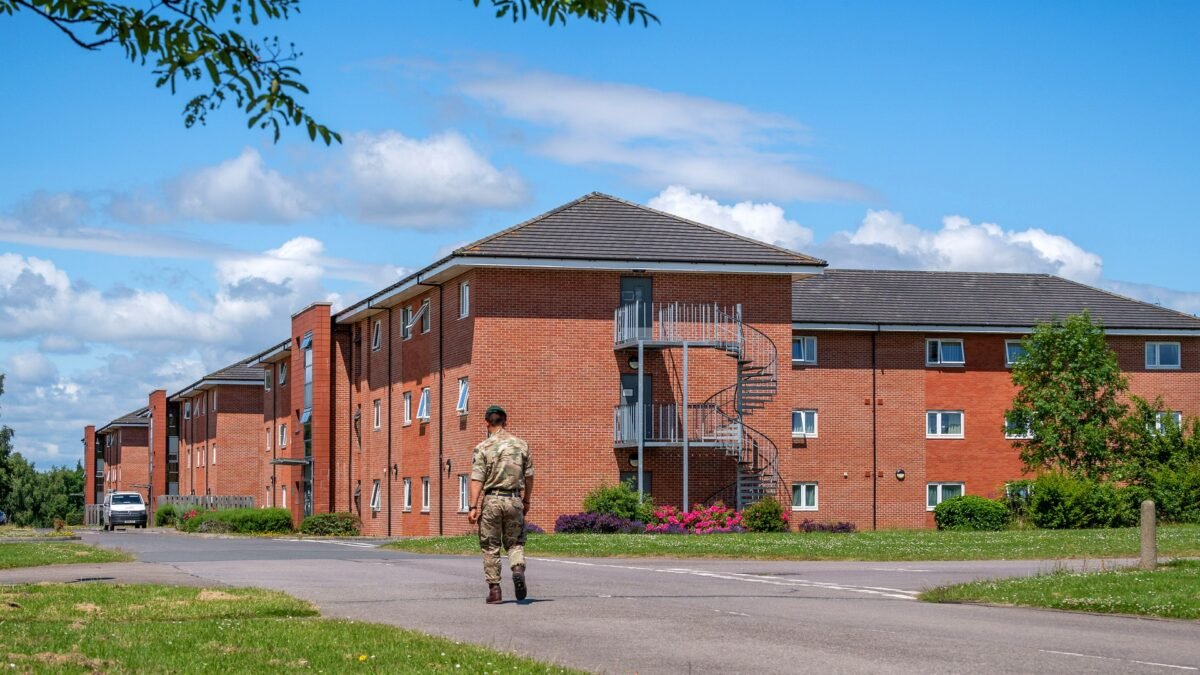
British counter-terrorism police have arrested a senior member of the United States Army in England on suspicion of spying for Russia, in a joint operation involving the Metropolitan Police, the FBI and the US military. The 41-year-old man, who has not been named, was detained near Gloucester on Tuesday, 10 November, and remains in custody at a London police station.
According to the Metropolitan Police, the man was arrested on suspicion of offences under Section 1 and Section 3 of the National Security Act 2023, the United Kingdom’s modern espionage law. Officers are carrying out searches at two locations in Gloucestershire. The force confirmed in its statement that the country to which the allegations relate is Russia.
The arrest was announced by the Metropolitan Police on Tuesday evening, 10 November, and was reported by the BBC, The Wall Street Journal, USA Today, The Times and other outlets within hours. The investigation is being led by officers from Counter Terrorism Policing in London, and police have said it is not linked to any other ongoing counter-terrorism investigation in the United Kingdom.
No charge has been brought against the man at this stage. An arrest on suspicion of an offence is not a charge, and it is not a finding of guilt. Under the National Security Act, police can hold a suspect for up to 14 days before they must either charge or release him, a longer period than the standard detention limit in ordinary criminal cases, because of the nature of national security investigations.
The case is striking for several reasons. The suspect is not a civilian with a passing interest in military secrets. According to Brigadier General Sean Stinchon, the commanding general of the US Army Counterintelligence Command, he is a senior soldier who was entrusted with sensitive information. And the place where he was arrested, and where he was reported to be based, sits at the heart of Britain’s military and intelligence landscape: Gloucestershire, home to a NATO rapid reaction headquarters and to GCHQ, Britain’s signals intelligence agency.
The arrest also lands at a moment when Britain has been using its new espionage laws more visibly than at any time since they came into force, and when the FBI says its own counterintelligence arrests have risen sharply. It is the latest in a series of cases that suggest Russian intelligence activity aimed at the United Kingdom and its allies has not slowed, even as the war in Ukraine grinds on and Western governments have expelled hundreds of Russian intelligence officers from their capitals.
What happened on Tuesday
The Metropolitan Police said the 41-year-old man was arrested near Gloucester on Tuesday, 10 November, as part of an investigation by Counter Terrorism Policing, working closely with US authorities, the US military and the FBI. Searches were under way at two locations in Gloucestershire, the force said, and the man was being held at a London police station.
The force’s statement was issued at 18:45 GMT on Tuesday. It named the two offences under investigation, but gave no further detail about what the man is alleged to have done, what information is said to be involved, or how long the investigation had been running before the arrest was made.
According to The Times, the soldier was stationed at Imjin Barracks near Innsworth, on the northern edge of Gloucester, where NATO’s Allied Rapid Reaction Corps has its headquarters. The BBC reported that he was based at the same barracks. The Wall Street Journal noted that the Gloucester area is also home to GCHQ, the country’s intelligence and cybersecurity agency, whose headquarters is at Cheltenham, a short distance away.
Deputy Assistant Commissioner Vicki Evans, the Senior National Coordinator for Counter Terrorism Policing, described the arrest as significant. “This significant arrest and investigation is a result of close collaboration between UK and US authorities,” she said, according to the Metropolitan Police statement. “The allegations are serious and our investigation is very much ongoing. This activity demonstrates the strength of our UK and US law enforcement and national security partnerships, and I commend the work of all the teams involved. We will work together to take robust action against those we suspect of any criminal activity that could undermine our national security.”
FBI Director Kash Patel said the arrest “involves allegations of espionage, which is of the utmost concern to the United States and our allies.” In the same statement, he said: “While this investigation is continuing, I want to send a clear message — this FBI has no tolerance for anyone who breaks their oath to the United States and whose actions endanger our national security and that of our partners. This includes 167 counterintelligence and espionage arrests from this FBI over the last 21 months — a 53% increase.” He thanked UK Counter Terrorism Policing, MI5, UK Defence Counter Intelligence, and the US Army Counterintelligence Command for their work.
Brigadier General Stinchon said the case “demonstrates the strength of our partnerships and the resolve of the counterintelligence community,” adding: “The alleged conduct of a senior soldier, entrusted with sensitive information, is a sobering reminder that insider threats are real and persistent. I encourage anyone who thinks they’ve witnessed something suspicious to report it to their local counterintelligence office.”
The US Army Counterintelligence Command declined to comment further when approached by USA Today, according to that outlet’s report.
The law: what Sections 1 and 3 mean
The National Security Act 2023 replaced much of Britain’s century-old espionage legislation, which dated back to the Official Secrets Acts of 1911, 1920 and 1939. Parliament passed the new law after the intelligence services and the government argued that the old statutes were no longer adequate for the way hostile states now operate, through cyber intrusion, the recruitment of insiders, the theft of trade secrets and the use of intermediaries and front organisations, rather than the classic image of an agent handing over documents in a park.
Section 1 of the Act covers obtaining or disclosing protected information. A person commits the offence if they obtain, copy, record, retain or disclose information that is protected, meaning information whose disclosure could prejudice the safety or interests of the United Kingdom, and they do so for a purpose prejudicial to the safety or interests of the United Kingdom. The offence can be committed whether the conduct takes place in the United Kingdom or elsewhere. On conviction, it carries a maximum sentence of life imprisonment.
Section 3 covers assisting a foreign intelligence service. A person commits the offence if they engage in conduct intending that it materially assist a foreign intelligence service in carrying out UK-related activities, or if they engage in conduct that is likely to do so and know, or ought reasonably to know, that it is likely to do so. Conduct that may count includes providing, or providing access to, information, goods, services or financial benefits. The maximum sentence on conviction is 14 years’ imprisonment.
The fact that the arrested soldier is suspected of offences under both sections is significant. Section 1 points to the handling of protected information itself. Section 3 points to the relationship with a foreign intelligence service. Together, they describe the classic shape of an espionage case: a person with access to sensitive material, and a foreign service that is said to have benefited, or to have been intended to benefit, from it.
It is important to be precise about what has and has not been established. The police have said only that the man was arrested on suspicion of these offences. They have not said what information, if any, was obtained or disclosed, to whom it was passed, or whether any material actually reached Russia. Those are matters for the investigation, and, if charges follow, for a court. Until then, the allegations remain allegations, and the man is entitled to the presumption of innocence.
The Act also gives police extended powers in national security cases. A suspect detained under the Act can be held for up to 14 days without charge, compared with the ordinary limit of 96 hours for most serious criminal offences in England and Wales. The longer window reflects the complexity of espionage investigations, which often involve the examination of devices, documents and communications, and close coordination with the intelligence services and with foreign partners.
The Gloucestershire connection
The geography of this case is part of what makes it notable. Gloucester is not a random location. Imjin Barracks, near Innsworth, is the headquarters of NATO’s Allied Rapid Reaction Corps, known as the ARRC, a high readiness headquarters that can deploy at short notice to command operations and crisis response. More than 400 permanent staff from over 20 nations serve there, according to NATO, and the headquarters sits under the operational command of the Supreme Allied Commander Europe during peacetime. It is, in NATO’s own description, the United Kingdom’s largest deployable land headquarters.
The barracks, on the site of the former RAF Innsworth, also hosts the headquarters of the 1st (UK) Signal Brigade and the Gurkha ARRC Support Battalion. It was renamed Imjin Barracks after the Battle of the Imjin River, in recognition of the Gloucestershire Regiment’s part in the Korean War, when the ARRC moved there from Rheindahlen in Germany in 2010.
A short distance away, at Cheltenham, stands the headquarters of GCHQ, Britain’s signals intelligence and cybersecurity agency, housed in its distinctive ring-shaped building. The Wall Street Journal, in its report on the arrest, drew attention to the fact that the Gloucester area is home to both the NATO headquarters and GCHQ, underlining why the location of the arrest has drawn attention well beyond the routine reporting of a police operation.
None of this, on its own, tells us what the arrested man is alleged to have done. Police have not said where he worked within the barracks, what his role was, or what material he may have had access to. But it explains why the case has been treated as a serious national security matter from the outset, and why three governments’ agencies, British, American military and the FBI, were involved in the investigation before the arrest was made.
It also explains why the United States, rather than only the United Kingdom, has spoken publicly about the case. The suspect is an American soldier. His alleged conduct, if proved, would be a breach of his oath as a member of the US armed forces. That is why the FBI director and the head of US Army counterintelligence both issued statements, and why the case is being handled as a joint matter rather than a purely British one.
A joint operation, and a public message
The statements issued on Tuesday were as much a message as a factual announcement. Each of the three officials who spoke, Deputy Assistant Commissioner Evans, Director Patel and Brigadier General Stinchon, emphasised the same theme: the closeness of the UK-US security partnership, and the determination of both countries to act against insider threats.
That emphasis is not accidental. The United Kingdom and the United States share intelligence more closely than almost any other two countries in the world, through the Five Eyes partnership that also includes Canada, Australia and New Zealand. American personnel serve at British bases, British personnel serve at American ones, and the two countries’ armed forces and intelligence services work side by side on operations around the world. An espionage allegation involving an American soldier at a NATO headquarters in Britain therefore touches the core of that relationship, and both sides have an interest in showing that it was detected and dealt with jointly.
Director Patel’s reference to 167 counterintelligence and espionage arrests by the FBI over the last 21 months, a 53 percent increase, was a further signal. It was presented as evidence that the bureau is pursuing such cases more aggressively, and as a warning to anyone else who might be considering similar conduct. Whether that increase reflects more espionage activity, more aggressive detection, or both, is not something the statement explains. But the figure itself is striking, and it places this arrest in the context of a wider American counterintelligence effort rather than as an isolated incident.
Brigadier General Stinchon’s language was the most direct. His description of the alleged conduct as “a sobering reminder that insider threats are real and persistent” is the language of a commander speaking to his own force as much as to the public. Insider threats, the risk posed by a trusted person who misuses their access, are among the hardest problems in counterintelligence, because the person involved has already passed the vetting, holds the clearances and knows the systems. No amount of perimeter security can fully guard against them, which is why counterintelligence agencies place such emphasis on monitoring, reporting and the willingness of colleagues to raise concerns.
The wider pattern
This arrest does not come out of nowhere. Britain has seen a series of espionage cases involving Russia in the last two years, and the National Security Act has been used in several of them.
In May 2025, six Bulgarian nationals were sentenced in London for carrying out a spying operation for Russia. The group’s ringleader, Orlin Roussev, who operated from a former guesthouse in the English seaside town of Great Yarmouth, was jailed for 10 years and eight months. His lieutenant, Biser Dzhambazov, received 10 years and two months. Three others convicted at trial received sentences of between six and nearly ten years, and a sixth man who pleaded guilty was jailed for five years and three weeks. Prosecutors said the group, which used Hollywood code names, had targeted journalists, diplomats and Ukrainian troops in the United Kingdom, Germany, Austria, Spain and Montenegro between 2020 and 2023, and had discussed kidnapping or killing opponents of the Kremlin. Roussev was said to have worked for Jan Marsalek, the fugitive former Wirecard executive wanted by Interpol, who prosecutors said acted as an intermediary for Russian intelligence.
In November 2025, a 66-year-old man from Harlow in Essex, Howard Phillips, was jailed for seven years after offering the personal information of the then defence secretary, Grant Shapps, to people he believed were Russian agents. The supposed agents were in fact British undercover officers, and Phillips was convicted at Winchester Crown Court of assisting a foreign intelligence service under the National Security Act. Prosecutors said he had been motivated by money and by an obsession with espionage, and the judge said he posed a national security risk.
More recently, in October 2026, a 24-year-old Royal Navy sailor, Teddy Young, appeared in court charged under the National Security Act. According to Reuters, Young, whose role in the Navy related to warfare intelligence, is accused of obtaining protected information between November 2024 and May 2025, and of taking an interest in a website linked to Russia’s foreign intelligence service, the SVR. He was not asked to enter pleas, and his trial was provisionally listed to begin in October 2027. Police said those charges were not connected to the investigation into an incident at RAF Fairford, the Gloucestershire airbase from which US bombers had carried out strikes on Iran before being withdrawn.
That Fairford connection is worth noting. In recent days, more than a dozen US military aircraft have left a second British airbase, weeks after the United States withdrew bombers from RAF Fairford over a suspected Iran-linked security incident, according to the BBC. The two matters are separate, and the police have said this investigation is not linked to any other ongoing counter-terrorism investigation, but together they underline how much American military activity in Britain has been in the news in recent weeks, and how closely British and American security concerns are intertwined.
Beyond Britain, the pattern is familiar. Since Russia’s full-scale invasion of Ukraine in 2022, European governments have expelled hundreds of Russian intelligence officers operating under diplomatic cover, and have uncovered a string of networks using intermediaries, criminal proxies and recruited insiders to gather information, surveil targets and, in some cases, plan sabotage. Russia denies involvement in such activity, and has consistently described Western espionage allegations as baseless. But the steady flow of arrests and prosecutions across Europe suggests that Moscow’s intelligence services have adapted to the expulsions by relying more heavily on people who are harder to spot: nationals of other countries, residents with legitimate access, and individuals recruited online or through intermediaries.
Analysis: Why It Matters
An insider at a NATO headquarters is a different kind of case
Most espionage cases involve someone on the outside trying to get in. This one, if the allegations are proved, involves someone who was already inside. A senior soldier at a NATO headquarters has, by definition, been vetted, cleared and trusted. He would have had access to the working life of a multinational military headquarters: its plans, its communications, its people and its routines. Even a modest amount of information from such a position, the names of officers, the timing of exercises, the state of readiness, the internal assessments of a crisis, can be valuable to a foreign intelligence service, because it fills in the picture that satellite imagery and intercepted signals cannot provide. That is why Brigadier General Stinchon’s phrase, “a sobering reminder that insider threats are real and persistent,” carries weight. It is an acknowledgement that the most dangerous vulnerability in any security system is often the person who has already been given the keys.
The law is being tested in public, case by case
The National Security Act 2023 was written for exactly this kind of case, but it is still a young law, and each prosecution under it sets a precedent. The Bulgarian spy ring, the Phillips conviction and the Young prosecution have all, in different ways, shown how the Act works in practice. This case, if it proceeds to charges and a trial, will test it further, particularly the interaction between Section 1 and Section 3, and the question of how prosecutors prove that a person’s conduct was intended to assist a foreign intelligence service. It will also test the practical machinery of the Act, including the 14-day detention power and the handling of sensitive material in court, where the government must balance the need for a fair trial against the need to protect sources, methods and the information itself. For the public, the case is a reminder that the law exists not as an abstraction but as a working tool, and that its use is becoming more frequent.
The UK-US partnership is the real story beneath the arrest
The public statements on Tuesday were notable for how much they emphasised joint working. The Metropolitan Police, the FBI, MI5, UK Defence Counter Intelligence and US Army Counterintelligence Command were all named. That is not how routine arrests are announced. It is how allies announce that they caught a problem together, and that the catching of it is itself a demonstration of the partnership’s strength. In a year when the US-UK relationship has faced strain over trade, over the war in Ukraine and over the American military action against Iran, a case like this could easily have become a source of friction. Instead, both sides have presented it as evidence of cooperation. That framing matters, because intelligence sharing depends on trust, and trust depends on each side believing the other will act firmly when one of its own people is suspected of betraying that trust.
Russia’s intelligence effort is adapting, not retreating
The expulsion of hundreds of Russian intelligence officers from Western capitals after 2022 was meant to degrade Moscow’s ability to spy. It did, in the short term. But the cases that have followed, including this one, suggest that the effort has adapted rather than stopped. The Bulgarian network used non-Russians as its operatives. The Phillips case involved an amateur who approached the Russian embassy. The Young case allegedly involved a website linked to the SVR. And this case, if proved, would involve a serving soldier of a foreign army. The common thread is not nationality or method. It is that Russian intelligence, like other services, looks for access wherever it can find it, and that the people who provide it are often motivated by money, ideology, grievance or a mixture of all three. For Western counterintelligence, the lesson is that the threat has become more diffuse, and therefore harder to detect, than it was when it could be tracked through embassy postings.
What happens next will be watched in Moscow, Washington and London alike
The immediate question is whether the man will be charged, and if so, with what. The police have up to 14 days to decide. If charges are brought, the case will move slowly through the courts, and much of the evidence may be heard in closed sessions because of its sensitivity. But the wider audience is already watching. In Moscow, the case will be read for what it reveals about how the arrest was made and what, if anything, was compromised. In Washington, it will be read as a test of how the American military handles an insider threat on foreign soil. And in London, it will be read as a measure of whether the new espionage laws, and the partnership behind them, are working as intended. For now, the only facts that are certain are the ones the police have stated: a man was arrested, an investigation is ongoing, and the allegations are serious. Everything else is a question that the coming days and weeks will answer.
What to Watch Next
- Whether the Metropolitan Police charge the man within the 14-day detention period, and which offences any charges cover.
- Whether the man is named publicly, and what, if anything, is said about his rank, role and length of service at Imjin Barracks.
- What the searches at the two Gloucestershire locations produce, and whether any further arrests follow.
- Whether the US Army takes separate disciplinary or administrative action, and whether the case is also pursued through the American military justice system.
- Whether the government or the intelligence services say anything further about what information, if any, is believed to have been compromised.
- Whether the case is linked, in any way, to other recent espionage investigations in Britain, despite the police statement that it is not linked to other ongoing counter-terrorism investigations.
- How the case is handled in court, including whether parts of any trial are held in closed session to protect sensitive material.
Sources
- Metropolitan Police — Member of US army arrested as part of Counter Terrorism Policing investigation (10 November 2026)
- National Security Act 2023, Section 1 — Obtaining or disclosing protected information (legislation.gov.uk)
- National Security Act 2023, Section 3 — Assisting a foreign intelligence service (legislation.gov.uk)
- USA Today — US soldier who allegedly spied for Russia arrested in England (10 November 2026)
- The Wall Street Journal — U.S. Army Member Arrested in U.K. Over Allegations of Spying for Russia (10 November 2026)
- The Times — Senior US soldier arrested in UK suspected of spying for Russia (10 November 2026)

About the Author — Abdul Mannan
Related Articles
US, Russia and Ukraine Resume Peace Talks in Abu Dhabi as First Day Ends With No Breakthrough but a ‘Constructive’ Tone
The first trilateral talks in nine months opened in Abu Dhabi on Tuesday, with Washington calling the session…

Houthi Missiles Intercepted Over Riyadh for the Second Time in Three Days as Saudi Strikes Hit Sanaa
Saudi air defences intercepted a ballistic and a cruise missile aimed at Riyadh early on Tuesday, the second…
Russia and Ukraine Open First Trilateral Peace Talks in Nine Months in Abu Dhabi as US Pushes a Wider European Security Deal
Russian, Ukrainian and American negotiators opened two days of talks in Abu Dhabi on Tuesday, the first three-way…