
Zelenskyy Offers Front-Line Ceasefire but Rejects US Deal That ‘Makes Ukraine Pay for the War’

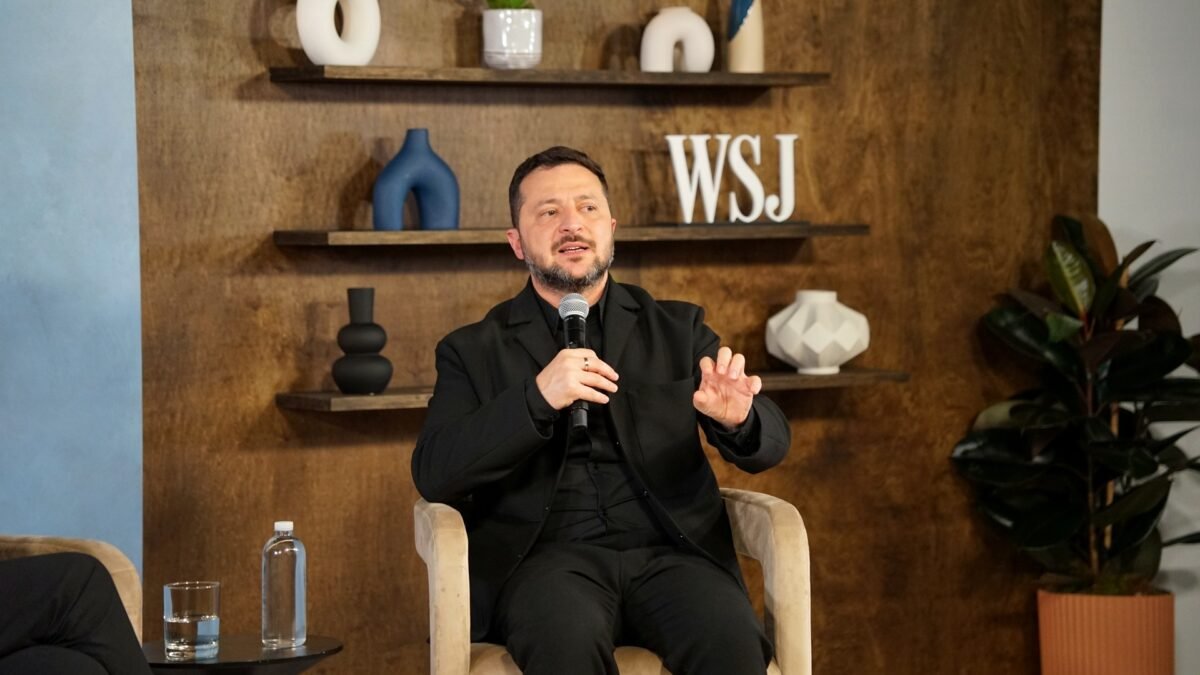
Ukrainian President Volodymyr Zelenskyy has said Kyiv is ready to halt the fighting along the current front line and move to diplomacy, but will not accept a peace deal that makes Ukraine pay for a war Russia started, according to an interview with Al Jazeera broadcast on Sunday.
Speaking in Kyiv, Zelenskyy described a ceasefire on the line of contact as a major concession by Ukraine, while drawing a firm line against recognising Russia’s annexation of occupied Ukrainian territory or surrendering more land in exchange for peace.
“We are talking about a ceasefire along the line of contact. Is this a compromise? Of course, a very big compromise,” Zelenskyy told Al Jazeera. “We understand that he does not want to leave our land. That is why we say: all right, let’s stop here and move on to diplomacy.”
The interview, broadcast on 29 November, lands at a moment when the United States is pressing hard for a settlement before the end of the year, and when both sides are escalating their long-range strikes even as their negotiators talk. It is the clearest statement yet of the terms on which Kyiv says it will stop fighting — and of the terms on which it will not.
What Zelenskyy offered — and what he refused
Zelenskyy’s offer is deliberately narrow. He is not proposing that Ukraine accept Russia’s control of the territory it holds. He is proposing that the shooting stop where it stands, so that the argument over that territory can move from the battlefield to the negotiating table.
He stressed that a halt to the fighting would not mean recognising Moscow’s sovereignty over occupied Ukrainian land, according to Al Jazeera. Ukrainian homes, cities and towns “are ours”, he said, even where they have been destroyed. And he warned that offering land in exchange for peace could encourage Russia to demand more. “Putin may try to go further if Kyiv were to offer land in exchange for peace,” he said, according to the broadcaster.
That framing matters because it answers the central question hanging over the American-led peace effort: what, exactly, is Ukraine being asked to give up? Zelenskyy’s answer is that Kyiv will give up the fighting, for now, but not the land, and not the principle that the aggressor should bear the cost of the war it started.
“I hope he will continue looking for a way to end this war, but not in a way that makes Ukraine pay for it, because that is wrong,” Zelenskyy said of US President Donald Trump, according to The Gaze, a Ukrainian outlet that reported the interview.
Zelenskyy said he believes the United States sincerely wants to see an end to the war, according to Al Jazeera, but he urged Washington to tighten pressure on Moscow through more sanctions and to consider a major new military aid package for Kyiv. His priority, he said, is for the White House and Congress to compel Putin to negotiate an end to the war.
He also made clear that Kyiv intends to work directly with the new Democratic-controlled US Congress, which takes office on 3 January, noting that Ukraine has bipartisan support in Washington. That is a significant signal: if the current negotiating round fails to produce a deal Kyiv can accept, Zelenskyy has said Ukraine will ask its allies for more military assistance and tougher sanctions against Russia.
It is worth noting that Zelenskyy has outlined a similar position before — he said in late October that Ukraine was prepared to accept a freeze in hostilities along the current front line, according to CNN, as reported by The Gaze. What is new is the setting and the force of the statement: a prime-time interview, broadcast as Washington’s deadline pressure intensifies, in which the Ukrainian president publicly rejects the terms he says are being put to him while restating the one concession he is willing to make.
The two American options on the table
Zelenskyy’s interview cannot be understood without the two proposals American negotiators have put to Kyiv, as reported by The Wall Street Journal. Both involve an exchange of land for peace, but they differ sharply in what Ukraine would surrender and what it would receive in return.
Under the first option, Ukraine would withdraw from the remaining “fortress belt” of cities in the Donetsk region — including Kramatorsk and Sloviansk, heavily fortified urban centres that have anchored Ukraine’s eastern defences — and in return receive full membership of NATO. Zelenskyy has refused to give up those cities.
Under the second option, the front line would be frozen where it stands and Ukraine would receive NATO-style security guarantees short of membership, under an international treaty involving the United States and potentially European partners, committing them to protect the country against future Russian attacks. US special envoy Jared Kushner said at a news conference in Berlin on 19 November that Russia had accepted a version of this second option, telling reporters: “We have been able to convince the Russians of this concept that any security guarantee for Ukraine would be based on Article 5,” the NATO treaty’s collective-defence clause.
Zelenskyy’s offer of a ceasefire along the contact line sits close to that second option. The gap between the two sides now lies less over a ceasefire in principle than over who bears the cost of ending the war and whether Moscow drops its demand that Ukraine leave all of Donbas — the eastern region comprising Donetsk and Luhansk provinces, part of which Kyiv still holds.
Kushner, who with fellow envoy Steve Witkoff has led the American mediation, has since indicated that NATO membership itself is not part of the current assumptions guiding Washington’s efforts. Speaking to the Axel Springer media group on 22 November, he said Russia had consistently opposed Ukraine joining the alliance and suggested membership would not be the outcome under consideration. He also said he understood Moscow’s position, arguing that Russia does not want Ukrainian and European military forces concentrated near its borders — remarks that have drawn criticism in Kyiv and among Ukraine’s supporters in Europe.
The American push comes with a timetable. Zelenskyy has confirmed that the United States is seeking an agreement by January 2027, and the Financial Times has reported that US envoys conveyed that ambition to Kyiv and Brussels, prompting concern among European officials that the push for a rapid settlement could leave Ukraine under pressure to make substantial concessions. Ukraine’s presidential chief of staff, Kyrylo Budanov, has cast doubt on the prospect of reaching an agreement before the New Year, saying it would take a miracle to do so. Trump, for his part, has denied imposing a deadline on the negotiations, although he has said he wants the war to end as quickly as possible.
A month of talking while striking
November has been a month in which negotiation and escalation have advanced side by side. Within a single month, Russian and Ukrainian delegations met under US mediation for the first time since February, American envoys carried proposals between Moscow, Kyiv and Berlin, and Washington floated security guarantees for Ukraine modelled on NATO’s Article 5 — while both armies stepped up their attacks on each other’s energy infrastructure, refineries and bridges.
Direct talks resumed in Abu Dhabi on 10 and 11 November, ending a nine-month gap in contact. The previous trilateral round, in Geneva in February, had produced a 200-for-200 prisoner exchange and little else. This time Russia’s delegation was led by Vladimir Medinsky and Ukraine’s by David Arakhamia, with Witkoff and Kushner representing the United States. The outcome followed the familiar pattern of this war’s diplomacy: agreement on humanitarian steps, including a large prisoner exchange expected before the holidays, and no breakthrough on territory or security guarantees.
On 12 and 13 November, Witkoff and Kushner met Putin in Moscow, then Zelenskyy in Dublin. On 19 November, Trump, Chinese President Xi Jinping and Putin met in Shenzhen on the sidelines of the Asia-Pacific Economic Cooperation summit — a meeting at which, Trump later said, he pressed the Russian leader to pull back his military aggression across Europe. In a post on his Truth Social platform on 26 November, Trump wrote: “During my conversations in China with President Vladimir Putin, of Russia, I spent a lot of time talking about the fact that I would like to see President Putin pull back all Military aggression against territories throughout Europe, in the hopes that a Deal can be made between Russia and Ukraine, and made quickly.”
A day earlier, on 25 November, Trump and NATO Secretary General Mark Rutte had issued a joint statement urging Russia not to expand the war in Ukraine, after meeting at Trump’s Mar-a-Lago estate in Florida. The statement warned Moscow against actions that could spread the conflict to other countries — a warning Trump later extended, in his own version of the statement, to Ukraine as well, according to Politico, a change that surprised the alliance’s leadership.
Meanwhile, European leaders wrestled on 26 November over a 1.58 trillion euro long-term EU budget and a 45 billion euro loan for Kyiv, as the Kremlin warned against using frozen Russian assets to fund Ukraine. The loan debate, and the wider question of whether Europe can sustain Ukraine financially if American support wavers, is one reason Zelenskyy’s promise to work with the incoming US Congress carries weight: Kyiv is lining up its political insurance in Washington while its European backers argue over money in Brussels.
The Libya incident: Ukraine’s war reaches North Africa
The Al Jazeera interview also addressed a controversy that has widened the war’s geography in an unexpected direction: Ukraine’s attack on Russian vessels in Libyan waters.
On 22 November, Ukrainian forces struck two Russian vessels at the port of Benghazi in eastern Libya — the corvette Mercury and the cargo ship Angara — sinking one of them, according to Zelenskyy. The attack killed two naval officers of the self-styled Libyan National Army, according to the eastern-based forces in Libya, which is governed by two rival administrations: the internationally recognised government in Tripoli and the eastern authorities in Benghazi.
Libya condemned the strike, and Italy — which has close ties to Libya and a major stake in Mediterranean stability — expressed concern. Zelenskyy apologised to Italian Prime Minister Giorgia Meloni for not informing Rome before the strike, according to Ukrainian media reports, and conceded that the operation had not been coordinated with allies.
In the Al Jazeera interview, Zelenskyy described Russian warships transporting weapons as legitimate targets but stressed that Ukraine does not want escalation in North Africa. He said he wants to make clear to the Libyan people that Kyiv respects their sovereignty and did not target them or their ports.
The episode illustrates both the reach and the risks of Ukraine’s long-range campaign. Kyiv has shown it can strike Russian military assets far beyond the battlefield — in this case, a warship in a foreign port — but each such strike carries diplomatic costs with partners whose support Ukraine needs. The apology to Meloni, and the public reassurance to Libya, suggest Zelenskyy understands that cost and is working to contain it.
The battlefield: drones, bridges and the coming winter
While the diplomats talk, the war grinds on. Overnight into 28 November, Russia and Ukraine traded large-scale drone attacks, with each side saying it had intercepted hundreds of drones launched by the other. Russia’s defence ministry said it had downed 1,246 Ukrainian drones overnight, while Russian strikes killed at least 10 people across Ukraine, seven of them in the town of Nizhyn in the Chernihiv region, according to Ukrainian officials.
A Russian drone attack on Kyiv on 28 November killed a 47-year-old woman and injured five people, including a five-year-old boy and a 17-year-old teenager, according to Kyiv police. Ukrainian forces, meanwhile, struck a deployment facility for Russia’s elite Rubicon drone unit in occupied Berdiansk, in Zaporizhzhia region, inflicting significant losses, according to Ukraine’s Southern Forces.
Both countries have recently stepped up attacks targeting bridges, according to the Armed Conflict Location and Event Data conflict monitor. Ukrainian forces struck the Kerch Bridge — the road and rail link between Russia and occupied Crimea — three times between 16 and 19 November, according to Ukrainian officials, and Kyiv has carried out a 50-day campaign against Russian oil, military-industrial and maritime targets, reaching more than 2,400 kilometres from Ukraine. On 27 November, Zelenskyy chaired a meeting of his senior military staff that revised Ukraine’s long-range strike strategy to target Russia’s defence industry and economy more systematically.
Zelenskyy has warned that Russia is preparing a major attack on Ukraine’s power grid heading into winter, and Russian attacks on electricity substations and distribution networks have already caused new outages in Dnipropetrovsk, Zaporizhzhia, Kirovohrad, Sumy, Kharkiv and Kherson regions. On 27 November, Kyiv proposed a Black Sea ceasefire to protect food exports; Moscow has not yet replied.
Russia currently occupies about 19 percent of Ukrainian territory, including Crimea, according to Al Jazeera, although its advances have slowed this year. The war, which began with Russia’s full-scale invasion in February 2022, is approaching its fifth year. It has killed hundreds of thousands of soldiers and thousands of Ukrainian civilians, according to Al Jazeera, and the American-led mediation effort has so far made little progress beyond a series of prisoner swaps.
Analysis: Why this interview matters
Zelenskyy’s Al Jazeera interview matters less for what is new in it than for where it draws the line. The offer of a ceasefire along the contact line is, as he himself acknowledges, a position Kyiv has held since late October. What the interview does is put that offer on the record, in public, at the precise moment when Washington’s timetable is squeezing hardest — and to pair it with a public rejection of the terms Zelenskyy says are being pressed on Ukraine.
That pairing is a negotiating tactic, and a familiar one. By stating publicly what he will accept and what he will not, Zelenskyy is doing three things at once. He is telling the Trump administration that Kyiv is not the obstacle to peace. He is telling his own public, and his soldiers, that no deal will trade away their land or their country’s dignity. And he is telling European allies that Ukraine needs their backing — in money, weapons and sanctions — to hold the line he has just drawn.
The phrase that will be most argued over is “makes Ukraine pay for the war”. The precise American proposals remain undisclosed, and the Wall Street Journal’s account of the two options on the table does not spell out a financial demand on Kyiv. What Zelenskyy’s words suggest is that the price being discussed goes beyond territory: it may cover reconstruction costs, the use of frozen Russian assets, the terms of any post-war settlement, or the political cost of accepting a frozen conflict that leaves a fifth of the country under occupation. Until the proposals are published, the phrase will be read differently in Kyiv, Washington and Moscow — and that ambiguity is itself part of the negotiation.
The interview also exposes the central tension in the American approach. Washington is offering Ukraine security guarantees modelled on NATO’s Article 5 while simultaneously signalling that NATO membership is off the table, that European allies should carry more of the burden, and that a deal must come quickly. Kushner’s statement that Russia has accepted the guarantees concept is, on its face, a breakthrough: Moscow has spent years insisting it would never accept Western security guarantees for Ukraine. But a guarantee that Moscow accepts is worth examining closely. The history of this war is full of Russian promises that did not hold, and the value of any guarantee depends entirely on who enforces it, with what forces, and under what conditions.
That is why the details matter more than the headlines. A freeze along the contact line sounds simple. In practice it requires agreement on monitoring, on verification, on what happens when the line is violated, on whether the Black Sea is included, on the status of the Kerch Bridge and the Zaporizhzhia nuclear plant, and on the fate of the prisoners still held. None of those questions has been answered in public. The Abu Dhabi talks produced movement on prisoner exchanges; they did not produce movement on any of the rest.
The Libya incident, meanwhile, is a reminder that this war no longer stays inside Ukraine’s borders. Kyiv’s decision to strike a Russian warship in Benghazi was a demonstration of capability — and a diplomatic problem that required a presidential apology to Italy and a public reassurance to Libya. As Ukraine’s long-range campaign extends further, such incidents are likely to recur, and each one will test the patience of allies who support Ukraine’s defence but do not want the war exported to their own neighbourhoods.
Finally, the winter will shape everything. Russia’s campaign against Ukraine’s power grid, and Ukraine’s campaign against Russian refineries and oil infrastructure, are both designed to make the other side’s winter unbearable. Zelenskyy’s warning of a major attack on the grid is not rhetoric; it is a forecast based on the pattern of the last three winters. A ceasefire that held through the cold months would save lives on both sides. A ceasefire that collapsed in January, after both sides had used the pause to rearm, would be worse than none at all.
What to watch next
Several dates and decisions will determine whether Zelenskyy’s offer leads anywhere. NATO foreign ministers meet in Brussels next week, where allies will discuss the American force-posture review — already delayed past its provisional 1 December deadline — and the security guarantees on offer to Kyiv. Moscow has yet to reply to Kyiv’s proposal for a Black Sea ceasefire to protect food exports, a narrower step that could test whether either side is willing to stop shooting anywhere at all.
The G20 summit in Florida on 14 and 15 December is another marker: Trump has said Putin is welcome to attend, and the Kremlin has said no decision has been made on his participation. A meeting there, or the absence of one, will say much about the state of the diplomacy. And in Washington, the new Democratic-controlled Congress takes office on 3 January — the same month by which, Zelenskyy says, the United States is seeking an agreement.
Above all, watch for Moscow’s response. Russia has not publicly answered Zelenskyy’s offer, and its demands — that Ukraine leave all of Donbas, and that no Western guarantees apply — remain unchanged in public. Until Moscow moves, the most likely outcome is the one November has already delivered: talking while striking, with both sides fighting to improve their position before a settlement they expect, sooner or later, to have to negotiate.
Sources
- Al Jazeera, “Zelenskyy rejects Trump’s deal that ‘makes Ukraine pay for war’” (via Yahoo syndication), 29 November 2026
- The Gaze, “Ukraine Ready for Ceasefire but Rejects Peace Deal at Its Own Expense, Zelenskyy Says”, 29 November 2026
- SSBCrack News, “Zelenskyy says Ukraine ready for front-line ceasefire, reassures Libya after Benghazi attack”, 29 November 2026
- Future Times, “Zelenskyy will freeze the front line but rejects a US deal that makes Ukraine pay for the war”, 29 November 2026
- RCSGS, “Talking While Striking: The Russia–Ukraine War at the End of November 2026”

About the Author — Abdul Mannan
Related Articles
Spain Votes in Snap Election as Far Right Eyes First Place in Government Since Franco
Spain votes on Sunday in a snap election that could end eight years of Socialist rule, with polls…
Myanmar Military Strikes Kill Dozens at Wedding Venue and School in Three Days of Bombing
At least 21 people, including five children, were killed when a military airstrike hit a wedding in Moe…

Sea Tribunal Rejects Argentina’s Bid to Halt Falkland Islands Oil Drilling in 18–3 Ruling
The Hamburg tribunal ruled 18–3 that Argentina's bid to halt the Sea Lion oil project could not be…