
$110 Oil: The New Energy Shock and the Reckoning at the Ballot Box

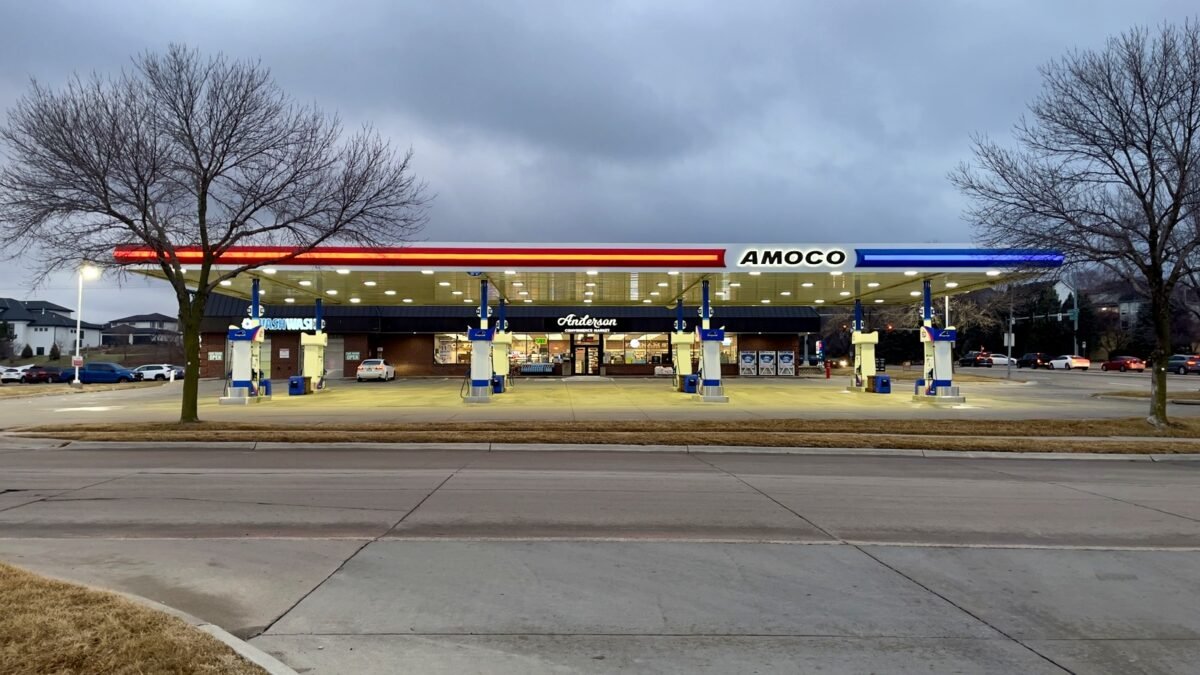
The Number on the Sign
When was the last time a number on a roadside sign made a president sweat? I do not mean the numbers on a ballot — I mean the plain, brutal digits glowing above a filling station on some ordinary American highway. This week, those digits began climbing again, and the whole world heard the creak. Brent crude — the benchmark by which the planet prices its lifeblood — touched $110 a barrel on Friday, for the first time since May. It settled at $109.86, up 3.7 percent in a single session, capping a second straight weekly gain. America’s own West Texas Intermediate followed it to $101.41.
Numbers do not lie, but they do accuse. And this one accuses loudly: of a war that will not end, of ships burning in narrow waters, of refineries coughing smoke into two different skies at once. Diesel futures in New York settled at $4.90 a gallon — the highest ever for this season. Ask yourself, dear reader: when fuel becomes a luxury, who exactly is being taxed? Not the minister. Not the middleman. You.
Missiles Over the Black River
Oil has always been a geography lesson written in fire. Consider the map of this past week. In the Gulf, Iran-backed Houthi rebels kept up their missile and drone strikes on Saudi Arabia; a Saudi-led coalition confirmed the interception of a ballistic missile aimed at the Yanbu oil export terminal on the Red Sea, and drones were shot down over Riyadh and Dhahran. Across the Black Sea, Russia and Ukraine traded blows against each other’s energy infrastructure — Ukraine resumed its strikes on Russian refineries after a brief pause, and a strike on Russia’s Ryazan refinery forced it to suspend operations, knocking out a primary crude distillation unit. Twelve vessels were attacked near the Strait of Hormuz between 5 and 11 October — the largest number of weekly strikes reported to Britain’s Maritime Trade Operations agency since the war with Iran began. The International Energy Agency has warned that spiralling shipping costs could push delivered diesel prices higher across three continents.
Every one of these flashpoints is a hand squeezing the same hose. The Strait of Hormuz alone carries roughly a fifth of the world’s oil shipments. Cargo volumes through it have crept back toward pre-war levels — more than 100 million barrels crossed last week — yet the price refuses to fall. Why? Because traders are no longer pricing oil. They are pricing fear.
The Mirror of 1973
I have written before that history is not a museum; it is a mirror, and it flatters no one. Look into it now. In 1973, Arab producers turned off the taps after the Yom Kippur War, and the West discovered that a commodity could be a weapon: prices quadrupled, American motorists queued for petrol, and the word “embargo” entered the vocabulary of the kitchen table. In 1979, revolution in Iran lit the second great shock — double-digit inflation, stagflation, a president defeated by the price at the pump and the humiliation of hostages.
Do you see the reflection? This war began in late February; Brent stood near $70 a barrel, then screamed past $125 when shipping through Hormuz seized up. A fragile agreement reopened the strait, prices eased — and now they are climbing back toward the same cliff. The East India Company did not die, my friends; it merely learned to refine. Once it was tea and opium that empires moved at gunpoint; today it is black gold, and the ledgers are kept in dollars, not rupees. The commodity changes. The colonial arithmetic does not.
The Kitchen-Table Reckoning
But statistics are cold things until they sit down at your table. So let me bring you inside the American kitchen, where the real election is already being held. An exclusive Harris poll for The Guardian, published this week with less than three weeks to the November 3 midterms, found a country quietly furious: three-quarters of Americans say they are concerned about a recession, and 61 percent believe the country is already in one — though by the technical definition, it is not. Two-thirds named gas and grocery prices their most important issue, ahead of healthcare, living expenses and foreign affairs.
The numbers that sting: annualized inflation reached 3.7 percent in September — the highest reading before a midterm election, excluding the pandemic, since 1990. Petrol prices are more than $1.20 a gallon higher than a year ago; in California, drivers are paying an average of $6.20, according to AAA. Among independents — the voters who will decide the swing races — 65 percent say the economy is getting worse, up from 48 percent in September 2024. Even Republican optimism is bleeding out: only 28 percent now say the economy is improving, down from 49 percent in February. A separate Reuters/Ipsos poll found 78 percent of Americans blame President Trump’s policies for prices rising faster than their paychecks — including a majority of his own Republicans.
I ask you: when a retired bank examiner in Kansas, a registered Republican, tells a reporter he is voting to put “a check and balance on the craziness,” what is he really saying? He is saying the pump has become a polling booth, and every gallon is a vote.
The President and the Pipeline
And so we arrive at the man in the middle of it. Donald Trump has fewer and fewer options to tame energy costs, as Bloomberg’s reporting this week put it — and the midterms are nineteen days away. On Friday, US lawmakers introduced a bill to block a prospective deal with Moscow that would have released several hundred million barrels of Russian diesel onto the market — Congress, it seems, would rather keep prices high than let the Kremlin pad its war chest. Trump has declined to rule out military action against Iran. Goldman Sachs has already raised its December forecast for Brent to $90 a barrel, from $85, citing supply risks that refuse to fade.
Meanwhile the central bankers are reaching for their old medicine. The US Federal Reserve, under Chair Kevin Warsh, has pivoted toward rate hikes to quell price increases it attributes to rising global energy costs and the administration’s import tariffs — this after inflation exceeded the Fed’s 2 percent target for more than five years. The IMF and World Bank opened their annual meetings in Bangkok this week with one theme above all: resilience in an age of fragmentation. Investors, for their part, poured $64.5 billion into stock funds last week and dumped $53.1 billion of cash, according to Bank of America — the great casino keeps spinning, even as the fuel that powers it burns hotter.
What the Barrel Remembers
So where does this end? The technicians will tell you about strategic reserves and emergency stock releases, about diplomacy and demand destruction. They are not wrong; they are merely incomplete. For there is a deeper ledger here, and it is kept in the currency of memory.
Every empire in history has been, at bottom, an argument about who controls the commodity that everyone needs. The British built an empire on the argument that tea must flow through London. The Americans built one on the argument that oil must flow through dollars. The Houthi with his drone, the Ukrainian with his, the trader in London betting on next week’s price — all of them are arguing the same ancient argument, in the same ancient grammar. Only the accent has changed.
I do not pretend to know whether $110 is a ceiling or a floor. The analysts at Goldman Sachs see $90 by December; the traders heading into the weekend were betting on higher. What I know is this: the barrel remembers. It remembers 1973 and 1979. It remembers every promise that energy independence was one pipeline, one deal, one war away. And it will remember November 3, 2026 — the day millions of Americans walked into voting booths carrying, invisibly, the receipt from their last fill-up.
The price at the pump is the one honest editorial a newspaper cannot write and a president cannot veto. Read it carefully, before you cast your vote — or before you cast your judgment on those who will.
Sources & References
- Bloomberg / The Hindu BusinessLine — Brent crude hits $110 a barrel for first time since May, 17 October 2026
- Bloomberg / Rigzone — Brent oil hits $110 as supply risks mount; US bill to block Trump–Moscow diesel deal; diesel at $4.90, 16 October 2026
- Reuters — Investors bought stocks and bonds, shed cash, BofA says, 16 October 2026
- Reuters / Ipsos — Bipartisan majority of Americans blame Trump policies for rising costs, 9 October 2026
- The Guardian (via World Right Now) — Harris poll: key US voters say economy is getting worse ahead of midterms, 15 October 2026
- IANS / Hi India — Brent jumps to $110; Goldman Sachs raises December forecast to $90, 17 October 2026
- Flash Finance — Brent at $110: Yanbu interception, Ryazan refinery strike, 17 October 2026
- Mini Market / Global News Briefing — IMF–World Bank annual meeting in Bangkok; Fed Chair Warsh on rates, 16 October 2026
- Climate and Economy — Round-up: 12 vessels attacked near Hormuz 5–11 October (UKMTO via BBC); IEA diesel warning, 16 October 2026

About the Author — Abdul Mannan
Related Articles
Supreme Court Quashes ₹8,415 Crore Yes Bank AT1 Bond Write-Off, Upholds 2023 Bombay High Court Ruling
India's Supreme Court on Thursday upheld the Bombay High Court's 2023 ruling quashing the ₹8,415 crore write-down of…

India’s IT Stocks Post Best Week in 18 Years as Earnings Beat Trumps AI Fears
India's IT services shares posted their biggest weekly gain in 18 years on Friday, as stronger-than-expected quarterly results…
Fed Chair Warsh Keeps Rate Path Open at IMF Meeting as Markets Rally on the Calm
Federal Reserve Chairman Kevin Warsh declined to signal an October rate move at the IMF meetings in Bangkok,…