
Supreme Court Quashes ₹8,415 Crore Yes Bank AT1 Bond Write-Off, Upholds 2023 Bombay High Court Ruling

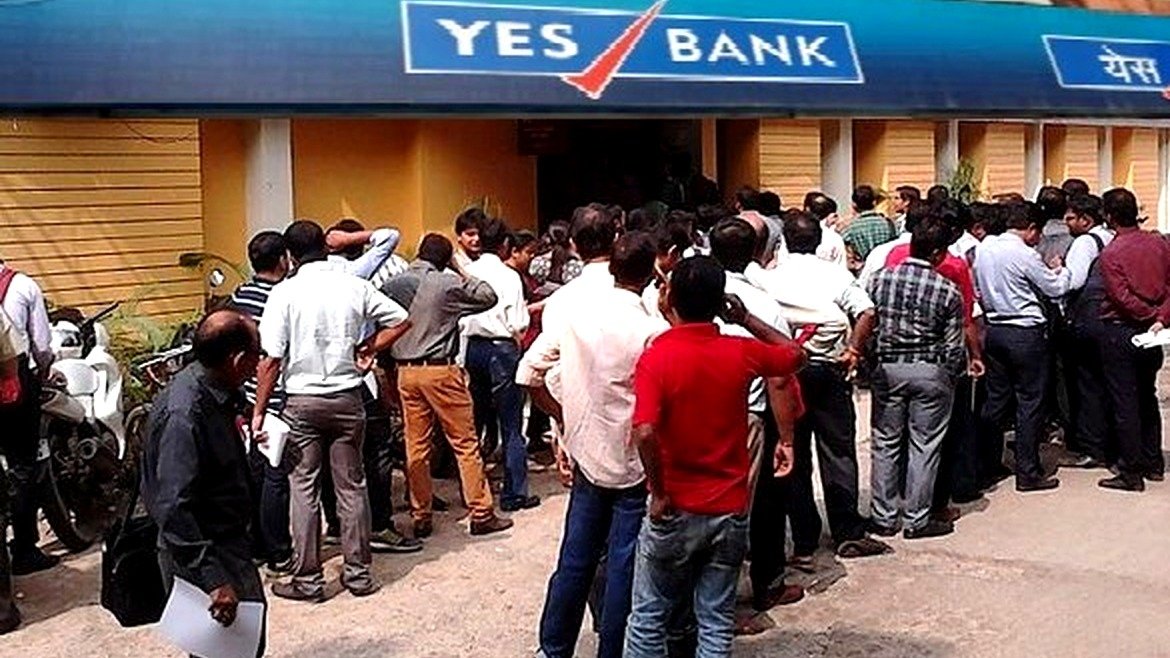
India’s Supreme Court on Thursday delivered one of the most consequential banking judgments of the decade, ruling that the write-down of Yes Bank’s Additional Tier-1 (AT1) bonds worth ₹8,415 crore (about $884 million) during the lender’s 2020 rescue was illegal and arbitrary, according to Reuters. A two-judge bench comprising Justices Dipankar Datta and Augustine George Masih upheld the Bombay High Court’s January 2023 judgment that had quashed the bond write-off, and dismissed appeals filed by Yes Bank, the Reserve Bank of India (RBI) and the Union government, as reported by legal publication Bar and Bench.
Pronouncing its verdict with the words “we see no reason to interfere with the impugned judgment,” the apex court said the administrator who ran the bank during its crisis had no authority to extinguish investors’ holdings after the final reconstruction scheme had come into force, LiveLaw reported. The judgment, which was reserved on May 20, 2026, after extensive arguments, brings to a close a legal battle stretching back more than six years and restores billions of rupees of investments that had been wiped out overnight.
Yes Bank shares fell about 13 per cent on Thursday following the ruling, reflecting investor unease about the financial consequences of reinstating the bonds on the bank’s books, according to Reuters.
The deleted clause that decided the case
At the heart of the dispute was a single provision that existed in the draft reconstruction scheme but vanished from the final one. The RBI placed Yes Bank under a moratorium on March 5, 2020, after a deterioration in the bank’s financial position driven by mounting bad loans and weakening depositor confidence, according to TradingView’s account of the case. On the same day, the RBI appointed an administrator under Section 36ACA of the Banking Regulation Act, 1949, and superseded the bank’s board.
The Centre notified the Yes Bank Limited Reconstruction Scheme, 2020, on March 13, 2020, paving the way for a rescue backed by capital infusion from a State Bank of India-led consortium. A provision in the draft scheme proposing a permanent write-down of the AT1 bonds had been deliberately omitted from the final notified version, LiveLaw reported. Yet on March 14, 2020 — one day after the final scheme took effect — the administrator informed stock exchanges that the entire ₹8,415 crore of outstanding AT1 bonds had been written down to zero, relying on the RBI’s Master Circular on Basel III Capital Regulations.
The Supreme Court held that the requirement to write down the bonds “before reconstitution” meant before the scheme took effect, LiveLaw reported. “Had the intention been otherwise, the clause ought to have read ‘before reconstitution is complete’,” the bench observed, rejecting the argument that the administrator’s power continued until every obligation under the scheme had been fulfilled. The court framed three questions for its consideration and answered the two substantive ones in the negative: first, whether the administrator could write down the AT1 bonds without a specific provision in the reconstruction scheme; and second, whether the write-down complied with the RBI’s Master Circular and the terms of the bonds’ information memoranda.
In the court’s telling, the government had consciously left the bonds untouched when it finalised the rescue architecture, and the administrator could not use general regulatory powers to undo that legislative choice after the fact.
Who held the bonds — and who fought back
The bonds at issue were issued in two tranches: ₹3,000 crore on December 23, 2016, and ₹5,415 crore on October 18, 2017, according to LiveLaw. AT1 bonds are perpetual debt instruments — they have no maturity date — designed to absorb losses when a bank’s capital falls below specified regulatory thresholds. They pay investors a higher return than ordinary bonds precisely because they carry the risk of being written off or converted into equity in times of crisis.
That theoretical risk became real in March 2020 for institutional and retail investors alike. Axis Trustee Services Limited, acting on behalf of debenture holders, along with individual bondholders and other investors, challenged the write-down before the Bombay High Court. Their central argument, as summarised by Bar and Bench, was that the administrator had no authority to extinguish their investments once the final reconstruction scheme — without any write-down provision — was in force.
The petitioners also argued, as Reuters noted, that many of the bonds had been mis-sold to retail investors who did not understand the loss-absorption risk embedded in the product. Thursday’s verdict vindicates that position in practical terms: the judgment restores the bonds, forcing the question of how a bank that had erased ₹8,415 crore of capital from its books will now account for their revival.
The Bombay High Court had ruled in the bondholders’ favour on January 20, 2023. The Supreme Court’s refusal to interfere with that judgment — nearly three and a half years later — cements it as the final word on one of the largest bank-rescue controversies in Indian financial history.
Market fallout: fund house freezes, shares slide
The verdict’s shockwaves were felt immediately in India’s financial markets. Yes Bank shares, which had been buoyed in recent years by the bank’s stabilisation and new investment, slumped sharply as investors calculated the cost of the ruling, Reuters reported. In May last year, Japan’s Sumitomo Mitsui Banking Corporation (SMBC) agreed to acquire a 20 per cent stake in Yes Bank and increased it by an additional 4.99 per cent in August 2025 — a vote of confidence that now sits against a potentially large capital hole.
Kotak Mutual Fund moved fastest. On Thursday, the fund house temporarily suspended fresh investments — lump-sum investments, switch-ins and new SIP and STP registrations — in its Kotak Medium Term Fund and Kotak Credit Risk Fund, according to Outlook Business. Both schemes held Yes Bank AT1 bonds that had been valued at zero following their 2020 write-off. “Earlier today, we proactively suspended subscriptions in both funds as a prudent measure to safeguard the interests of our investors,” Kotak Mahindra Asset Management Company said in a statement, adding that the Supreme Court’s judgment had restored the bonds and that it was reviewing the ruling to determine its next course of action. Existing SIP and STP instalments registered before October 15 will continue at the applicable net asset value.
The fund house’s caution is understandable. With the bonds restored to life but their market value uncertain, mutual funds must revalue holdings that they had long since marked at zero — a process that could create sudden swings in fund net asset values and investor expectations.
Legal and financial experts were quick to flag the broader consequences. Vivek Ramji Iyer, a partner and national leader for the financial services risk advisory practice at Grant Thornton, told Reuters the decision appeared to rest on “a technicality rather than the underlying terms of the product,” and warned that it “creates regulatory uncertainty that can have a potential to impact investor sentiment.”
The global ghost: Credit Suisse’s AT1 wipeout
The Yes Bank ruling lands in a financial world still digesting the most famous AT1 wipeout of all. When Swiss authorities engineered the emergency takeover of Credit Suisse in 2023, some $17 billion of the bank’s AT1 bonds were written down to zero — wiping out bondholders while equity holders retained value — and triggering lawsuits across multiple jurisdictions, as Reuters noted in its reporting on the Indian verdict.
The two episodes share an uncomfortable pattern: in a moment of crisis, authorities reached for the AT1 loss-absorption tool in ways that courts and investors later questioned. The Credit Suisse wipeout raised fundamental doubts about the AT1 market in Europe; the Yes Bank ruling now raises parallel questions in India about the boundary between regulatory emergency powers and the sanctity of a notified legal scheme.
The instrument itself is under quiet review everywhere. New research in the global banking sector continues to question whether AT1 bonds genuinely provide the “going concern” capital they were designed to deliver after the 2008 crisis, or whether they simply concentrate risk in a product too complex for many of the retail investors who end up holding it.
What the ruling means for India’s regulatory architecture
Beyond the immediate parties, the judgment is a rebuke to the way the 2020 rescue was executed. The RBI and the Centre argued that the administrator acted within the broad mandate of stabilising a failing bank. The Supreme Court’s answer — that the final reconstruction scheme was the complete and exclusive legal framework — constrains how regulators can improvise during future banking crises.
This matters because India has spent the last decade building a bank-resolution toolkit. The Yes Bank episode was the first large-scale deployment of the reconstruction-scheme mechanism for a major private-sector lender. The court’s insistence that the scheme’s text — including what was deliberately deleted from it — binds the administrator sets a precedent that will be studied by regulators, bank boards and investors alike.
For the RBI, the ruling is a rare public defeat. The central bank was a party to the appeals the court dismissed, and its Master Circular — the very instrument the administrator relied upon — was found insufficient to authorise the write-down. The court effectively held that no regulatory circular can override the conscious legislative choice embedded in a notified scheme.
Analysis: Why It Matters
The bondholders’ win is really a victory for the rule of rescue. The Supreme Court’s core insight is easy to miss beneath the technical language: when the state writes the rules of a bank rescue in a public, gazetted document, it must play by those rules. The government’s own decision to drop the write-down clause from the final scheme was not an oversight — it was the bargain struck between depositors, equity holders, new investors and creditors. Letting the administrator rewrite that bargain the next day would have made the entire reconstruction process a hollow formality. By enforcing the scheme as written, the court has protected the credibility of every future bank rescue in India.
But the price of vindication may be steep — and unpaid. Restoring ₹8,415 crore of bonds does not magically restore ₹8,415 crore of value. Yes Bank must now re-recognise a liability it extinguished six years ago, against a balance sheet that has been rebuilt on the assumption those bonds were gone. The share-price slide is the market’s first estimate of that cost. The deeper question is whether bondholders will recover their principal in full, recover only partial value after negotiated restructuring, or end up trading claims in a long, grinding settlement process. Thursday’s ruling decided who was right; it did not decide what anyone will actually receive.
India’s AT1 market faces an identity crisis. The instruments were sold — sometimes aggressively, sometimes to investors who barely understood them — as high-yield instruments with a theoretical write-down trigger. Six years of litigation have now converted the theoretical risk into a concrete one: Indian AT1 bonds can be written down illegally by an administrator, and it may take half a decade of court battles to undo it. As Grant Thornton’s assessment suggests, investors will now price Indian bank capital instruments against regulatory execution risk, not just credit risk. That repricing will raise funding costs for Indian banks across the board — the invisible tax of a badly handled rescue.
The mis-selling dimension remains unresolved. The bondholders’ long-standing complaint — that complex perpetual loss-absorption instruments were pushed onto retail investors unsuited to them — received no direct adjudication from the court, which decided the case on the narrower ground of administrative authority. The structural problem persists: India’s wealth-management and distribution channels still face weak incentives to explain downside risk. Until regulators address the distribution chain that put these bonds in retail hands, the next crisis will produce the same victims with different paperwork.
This is a warning shot for regulators, not just banks. The Supreme Court’s dismissal of the RBI’s and the Centre’s appeals signals that emergency powers have hard legal edges in India. Central bankers elsewhere — from the Bank of England to the Swiss FINMA — will read the judgment as another data point in the post-2008 reckoning with resolution authority. The lesson travelling across borders is the same: in a banking panic, the temptation to improvise is strongest precisely when legality matters most. The administrator’s March 14, 2020, decision was fast and decisive. It was also, according to the country’s highest court, illegal.
What to Watch Next
- Yes Bank’s accounting response: How the bank re-recognises ₹8,415 crore of bonds on its books — and whether it challenges the valuation — will determine the real financial hit. Watch for a formal exchange filing and auditor commentary.
- Negotiated settlements: With the legal question settled, expect the bank, bondholders and possibly the RBI to explore negotiated outcomes — partial redemptions, restructured terms or staggered payouts — rather than mechanical full repayment.
- Mutual fund NAV adjustments: Kotak’s suspension is the first move; other funds holding restored AT1 paper will face revaluation decisions that could swing unit-holder returns in the coming weeks.
- RBI’s regulatory response: Whether the central bank revises its Master Circular or issues fresh guidance on AT1 write-down powers will show how it absorbs a rare judicial rebuke.
- The AT1 market’s repricing: Yields on Indian bank AT1 issuances in the months ahead will reveal how much extra investors now demand for regulatory risk — the market’s verdict on the verdict.
Sources
- Reuters via The Hindu BusinessLine — “Supreme Court rules YES Bank’s AT1 bond write-off illegal”
- Bar and Bench — “Supreme Court upholds quashing of Yes Bank’s ₹8,415 crore AT1 bond write-off”
- LiveLaw — “Yes Bank’s ₹8,415 Crore AT-1 Bond Write-Down After Reconstruction Scheme Took Effect Was Illegal: Supreme Court”
- Outlook Business — “Kotak Mutual Fund Suspends Fresh Investments In Two Funds After Yes Bank AT1 Bond Ruling”

About the Author — Abdul Mannan
Related Articles

India’s IT Stocks Post Best Week in 18 Years as Earnings Beat Trumps AI Fears
India's IT services shares posted their biggest weekly gain in 18 years on Friday, as stronger-than-expected quarterly results…

Fed Chair Warsh Keeps Rate Path Open at IMF Meeting as Markets Rally on the Calm
Federal Reserve Chairman Kevin Warsh declined to signal an October rate move at the IMF meetings in Bangkok,…

Netflix Cuts About 6% of Workforce in Biggest Layoff Since 2022 Amid Attention Battle
Netflix is cutting roughly 1,000 jobs — 6% of its workforce — in its biggest layoff since 2022,…