
Youth Protests Escalate in Albania as Thousands Demand PM Edi Rama Resign

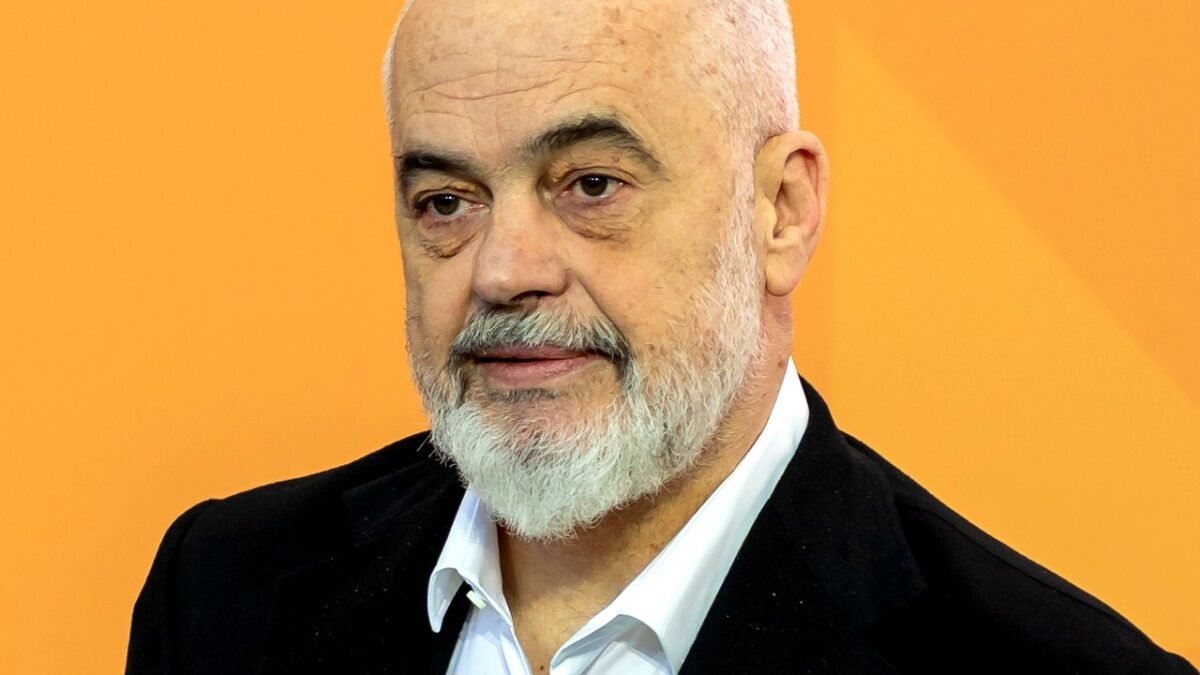
TIRANA — Albania is facing the most serious political crisis of Edi Rama’s 13 years in power, as a wave of youth-led protests that began as peaceful evening gatherings has escalated into violent street confrontations, with government buildings and banks set on fire and thousands of young Albanians demanding the prime minister’s resignation.
The demonstrations, which entered their most intense phase this week, turned into a riot in the capital on Thursday, with protesters smashing windows, raiding a bank, tearing down traffic lights and street signs, and clashing with police, according to reporting by Reuters. Police responded with tear gas and water cannon, and parliament cancelled its session.
According to police figures cited by Reuters, 500 protesters have been detained, 330 of whom have since been released. Some 120 police officers and 45 protesters were injured — though the protester figure is likely higher, the agency noted, since many injuries go unrecorded.
On Friday, thousands of young Albanians marched through Tirana on the fourth day of what Reuters described as an increasingly violent student-led campaign to force the prime minister to resign. The protests, which began as student demonstrations over the cost and quality of higher education, have hardened into a broader demand for political change.
“They are pushing us to the limits,” said 19-year-old protester Enea, who declined to give his second name for fear of arrest. His message to Rama, he told Reuters: “To resign as fast as possible before everything burns down.”
A movement that lost patience
The unrest has a backstory that stretches well beyond this week. For more than four months, a leaderless citizens’ movement dubbed the “Flamingo Revolution” by its participants has been holding daily protests in Tirana — peaceful evening gatherings with pink flamingo signs and children’s areas, Le Monde reported on Saturday. The movement took a new and more radical turn on Tuesday, October 13, when thousands of students joined it, exasperated, in the participants’ own description, by what they call the “contempt” and “indifference” of the prime minister.
“We’ve been protesting peacefully for 140 days, and nothing was heard. So this is our only chance to be heard and get our rights that we deserve,” a 19-year-old protester who gave her name only as Klea told Reuters.
The anger, according to Le Monde, is rooted in what researcher Gresa Hasa of the Balkans in Europe Policy Advisory Group described as “35 years of pent-up frustration since the fall of the communist dictatorship in 1991.” The protesters’ demands, as reported by both outlets, centre on three things: the resignation of the prime minister, improved living conditions, and an end to endemic corruption in the Balkan country of 2.4 million people.
“People want to live in a democratic country,” Hasa told Le Monde. “This is the result of 35 years of pent-up frustration.”
Corruption, a lack of jobs and a general feeling that the government does not work for them are the drivers Reuters identified among the young protesters. The students also accuse officials of neglecting education, and say they are angry about the sale of pristine parts of Albania’s coast for a luxury resort development backed by Jared Kushner, the son-in-law of United States President Donald Trump — a project that has already faced legal challenges and which helped spark months of the earlier peaceful demonstrations.
The defector from Rama’s own ranks
One of the most striking symbols of the crisis is Marjana Koceku, a 25-year-old member of parliament who was hand-picked by Rama himself last year to run for parliament as one of a legion of young lawmakers he hoped would become the face of his Socialist Party. Koceku, now sitting as an independent, has joined the mass protests calling for her former patron to step down.
“The country is amazing, but … the wrong policies that have been implemented by this political elite are completely against what the Albanian communities and Albanian citizens have been asking and seeking for so long,” Koceku said during the protests on Friday, as police fired tear gas and water cannon at protesters nearby, according to Reuters.
Rama refuses to go
Rama, a former basketball player who has been in power since 2013 and won a fourth term in elections last year, denies wrongdoing and has told Reuters this week that he would not step down.
“Governments are changed through democratic elections and we had them last year, not through violence,” he said. In written responses to Reuters on Thursday, he put it this way: “As for calls for my resignation, governments are changed through democratic elections. We had elections last year, not a revolution.”
The prime minister said his responsibility was “to listen, address legitimate concerns and keep Albania moving forward,” adding that he would be ready to discuss the rising cost of education. But, he said, “attacking institutions, destroying public property and threatening public safety have nothing to do with the legitimate demands of students.” On Facebook, he wrote: “We will not bow to violence.”
Rama has also accused the opposition of orchestrating the unrest — even as opposition politicians who tried to join the rallies were themselves booed by protesters, Le Monde reported, underscoring the movement’s determination to remain independent of the established parties.
Beyond the capital
The unrest is no longer confined to Tirana. Reuters reported that demonstrations have spread to the coastal town of Lezha, where police clashed with stone-hurling protesters, and to Elbasan, Skhodra and Korca, where demonstrators broke windows and set fire to garbage bins. Le Monde reported that the anger spread on Thursday to five more cities across the country.
The confrontations have begun to reshape daily life in the capital. Reuters reported that the students, many wearing masks, faced off against lines of riot police in front of the Education Ministry building, while some small businesses pulled down their shutters — some leaving notes on their facades saying: “We are with you. Do not damage our business all over the town.”
Albania’s unrest is part of a wider wave of student activism in Europe, Reuters noted, including in France, where high school students have staged weeks of protests and school blockades demanding more teachers and better facilities. Tens of thousands were expected to protest across France on Saturday against high prices and the country’s fraying social model.
Analysis: Why It Matters
The Albanian crisis matters far beyond the borders of a small Balkan country, and the reasons begin with timing. Rama won a fourth term last year on promises to take Albania into the European Union, with membership targeted as early as 2028. Alongside Montenegro, Albania is currently leading the accession process among the Balkan candidates. A government that loses control of its streets — or one that clings to power by force — is a government whose EU timetable collapses. Brussels watches accession candidates for democratic resilience; images of burning ministries in Tirana will travel further and faster than any progress report.
Second, the movement’s leaderless, youth-driven character is precisely what makes it dangerous to the established order — and difficult to defuse. Koceku’s defection is emblematic: this is not the old opposition returning with old slogans. The protesters booed opposition politicians who showed up at their rallies. There is no party headquarters to negotiate with, no leader to co-opt or arrest. Rama’s playbook — framing the unrest as an opposition plot — has already failed its first test on the streets. A government that cannot identify who it is supposed to talk to often defaults to force, and force has already produced 500 detentions and scores of injuries.
Third, the corruption grievance has a specificity that earlier protest waves lacked. The Kushner-backed coastal resort has given abstract anger a concrete address: a pristine stretch of coastline, sold off, with the fingerprints of foreign money on the deal. Whether or not the project is legally clean — it faces legal challenges — it functions politically as a symbol of everything the protesters believe is wrong: public assets traded away, elites enriched, young people locked out. Symbols like that sustain movements long after the initial spark fades.
Fourth, the 140-day figure quoted by young Klea should haunt everyone involved. These young people did not start with stones. They started with four and a half months of peaceful evening gatherings — pink flamingo signs, children’s areas — and they believe they were ignored. The radicalisation of the Flamingo Revolution is a textbook case of what happens when peaceful protest is met with indifference: the demand does not disappear, it hardens. The lesson travels well beyond Albania, to every government that mistakes quiet streets for consent.
Finally, the regional picture is worth watching. Student movements are stirring across Europe — France’s school blockades, Albania’s flamingos — driven by a generation that came of age in economic precarity and institutional distrust. If Tirana’s protesters force concessions or, more dramatically, force out a 13-year incumbent, the demonstration effect will be felt in every Balkan capital and far beyond. If they are crushed, the effect will be felt too, in the opposite direction. Either way, this small country’s crisis has become a test case for how European democracies handle a generation that has stopped asking politely.
What to Watch Next
- The next parliamentary session. Parliament cancelled its Thursday session as violence escalated. Whether — and under what security conditions — lawmakers reconvene will be an early signal of whether the state is stabilising or retreating.
- Rama’s offer of talks. The prime minister says he is ready to discuss education costs. Whether the government opens formal talks with student organisers — and whether the movement, which has no recognised leadership, can even respond — will determine if there is a political off-ramp.
- Police tactics and European reaction. Tear gas and water cannon against teenagers will draw scrutiny from Albania’s EU partners. Any sign of disproportionate force could complicate the accession timetable Rama himself invokes.
- The opposition’s next move. Rama accuses the opposition of orchestrating the unrest; the protesters booed opposition figures at their rallies. Whether the established opposition converges with the movement or remains frozen out will shape what comes after the streets.
- The resort project. The Kushner-backed coastal development that helped spark the earlier peaceful wave now sits at the symbolic centre of the corruption grievance. Its legal challenges — and the government’s handling of them — will be read as a test of whether the system can police itself.
Sources
- Reuters — “Our land, our Albania”: young lawmaker demands new future as protests rage (October 17, 2026)
- Le Monde — In Albania, the “Flamingo Revolution” radicalizes in response to the prime minister’s “contempt” and “indifference” (October 17, 2026)
- Reuters — Thousands march in Albanian capital as anti-government protests spread (October 16, 2026)
- Reuters — Albania’s Rama says he will not resign over protests (October 15, 2026)

About the Author — Abdul Mannan
Related Articles
Trump Waives Most of the Lindsey O. Graham Sanctions Law, Shelving Russia Tariffs Two Days Before They Took Effect
President Trump signed an executive order Friday waiving most of the Lindsey O. Graham Sanctioning Russia and Iran…
Putin Declares New ‘Security Zone’ Inside Ukraine Non-Negotiable as Moscow Widens Its Territorial Claims
Putin, in military uniform at a command post, said the 660km zone — 70% already under Russian control…
Thousands Rally in New Delhi Demanding Resignation of Election Chief Gyanesh Kumar Over Voter Roll Purge
Thousands thronged Connaught Place in New Delhi waving the national flag and demanding the election chief's resignation over…