
Putin Declares New ‘Security Zone’ Inside Ukraine Non-Negotiable as Moscow Widens Its Territorial Claims

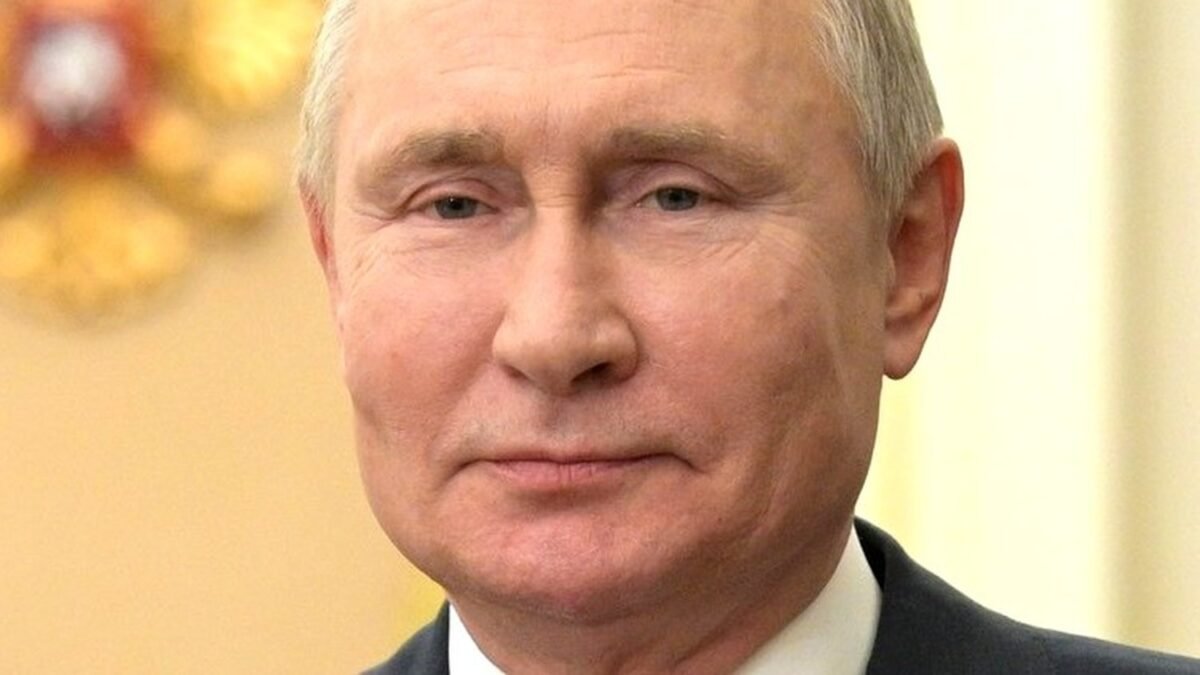
Russian President Vladimir Putin has declared that Moscow is establishing a new “security zone” inside Ukrainian territory along their shared border, and that the zone will be non-negotiable in any future peace talks with Kyiv — the first time he has publicly named territory beyond Russia’s claimed annexations as permanently off the diplomatic table.
Putin made the announcement on Friday, October 16, during a visit to a military command post, where he appeared in full military uniform — attire he rarely dons — and struck a hawkish, confident tone as he addressed senior officers in televised remarks. The operation, he said, was a direct response to Ukraine’s 2024-25 incursion into Russia’s western Kursk region, which saw Ukrainian forces seize and hold Russian territory for months.
“The Russian armed forces were tasked not only with expelling the enemy from our land but also with establishing a security zone in the adjacent territory,” Putin said, according to Reuters. “This task is being carried out successfully.”
He went further: “Our goal is to ensure the absolute security of Russia’s border regions for the future, and we do not plan to make this a subject for potential peace negotiations with Ukraine.”
Kremlin spokesman Dmitry Peskov later provided the first concrete dimensions of the planned zone: it will span 660 kilometres (410 miles) along the border, of which roughly 70 percent is currently under Russian control. He did not say how deep the zone would extend into Ukrainian territory.
Land Russia Never Claimed
The geography of the announcement matters as much as its wording. The security zone requires Russia to carve out territory in Ukraine’s Sumy and Kharkiv regions — areas Moscow has never formally claimed, unlike the four Ukrainian oblasts (Donetsk, Luhansk, Zaporizhzhia and Kherson) it declared annexed in 2022 following referendums widely condemned as illegitimate.
Putin has spoken before, in general terms, about the need for a buffer along the border. But he had never previously spelled out the planned extent of such a zone, nor — critically — declared it off-limits for negotiations. Friday’s remarks convert what had been a vague military aspiration into a stated political demand.
According to Reuters, Putin also used the command-post visit to review the state of the broader campaign. He said Russian forces had yet to capture just over 10 percent of Ukraine’s Donetsk region — a key Kremlin objective — and 16.5 percent of the Zaporizhzhia region. His appearance at the command post carried an unmistakable signal: Moscow is planning for a long war, not an imminent settlement.
Reporting by Asian News International on the same visit added that Putin instructed commanders to continue what he described as large-scale, coordinated strikes against Ukrainian defence-industry facilities and logistics centres. Putin also claimed Russian forces had brought more than 1,300 square kilometres of territory in Donbas and what he called “Novorossiya” under their control in September, and around 6,500 square kilometres and 310 settlements since the start of the year. Those battlefield claims have not been independently verified.
Kursk: The Origin of the Demand
The security zone’s stated origin story is Ukraine’s cross-border operation into Russia’s Kursk region, which ran through 2024 and 2025. That incursion — the first sustained occupation of Russian territory by a foreign army since the Second World War — humiliated the Kremlin and exposed the thinness of Russia’s border defences.
Ukrainian forces were eventually pushed out, but the episode reshaped Moscow’s vocabulary. Russian officials began arguing that only a demilitarised strip inside Ukraine could guarantee the safety of Russian border settlements. What began as a military rationale has now been elevated into a permanent territorial claim — one Putin says no negotiation will touch.
The logic, from Moscow’s perspective, is straightforward: a zone deep enough to keep Ukrainian artillery and drones away from Russian border towns. But the non-negotiable framing transforms a tactical concept into a strategic land grab, with the depth left deliberately undefined — a gap that lets Moscow keep moving the marker forward as long as its forces keep advancing.
A Cold Shoulder to Diplomacy
The timing of the announcement is pointed. It came exactly one week after US President Donald Trump announced a deal for the United States to purchase Russian diesel — an arrangement that won favour in Washington but infuriated Kyiv and prompted a visible souring of the relationship between Trump and Ukrainian President Volodymyr Zelenskyy.
It also landed at one of the most fraught moments in the diplomacy around the war. Trump had announced on October 11 that Ukraine and Russia had agreed to stop targeting each other’s energy infrastructure. Zelenskyy abandoned that understanding on October 15, declaring that Ukraine would resume strikes on Russian energy sites after accusing Moscow of never observing the truce. The next day, Ukraine struck a Rosneft refinery southeast of Moscow.
Trump responded in a Newsmax interview aired Thursday, calling Ukraine’s resumed strikes a “disgrace” that keeps global energy prices elevated. “All he’s doing is making the world oil price higher,” he said, according to Reuters.
While Putin was speaking at the command post on Friday, Zelenskyy was in Brussels for a European Union summit — a gathering that turned into a show of solidarity after Trump’s criticism. Zelenskyy condemned the US-Russian diesel deal as a “parody” of peace negotiations and welcomed the prospect of a greater European role in talks, calling EU leaders “real leaders,” according to Reuters. He asked the bloc for an additional 79 billion euros to sustain Ukraine’s war effort.
European leaders rallied around him. European Commission President Ursula von der Leyen said the EU would not lift sanctions on Russia while the war continues, and the bloc’s 22nd sanctions package — adopted on October 12 — targeted around 1,600 representatives of Russia’s defence-industrial sector, according to Reuters.
Moscow, for its part, has been pricing European support directly. On the eve of the summit, Russia moved to place the local assets of French, German, Swedish and Dutch companies under temporary management — a retaliatory step tied to the EU’s backing of Kyiv, according to Reuters.
Analysis: Why It Matters
Putin’s security-zone declaration is best understood not as a military update but as a negotiating weapon fired in advance of any negotiation. By naming new territory “non-negotiable” before his forces fully control it — 70 percent, per Peskov’s own figures — Putin has converted a battlefield objective into a political fact that any future talks must now work around rather than resolve. The remaining 30 percent becomes not a question of whether Russia takes it, but of how much pressure Kyiv must absorb before the line settles.
Second, the choice of Sumy and Kharkiv breaks the existing frame of the war’s territorial question. Every peace formula discussed in Western capitals — from frozen lines to land-for-security swaps — has revolved around the four oblasts Russia claimed in 2022. A fresh claim on territory Moscow never even pretended to annex widens the bargaining table in only one direction. If this land is non-negotiable too, then the price of peace keeps rising with each Russian advance — which is precisely the incentive structure the declaration creates.
Third, the military uniform matters. Putin rarely wears it; he chose to announce a permanent territorial demand not from the Kremlin’s gilded halls but from a command post, flanked by officers, on the same day Ukraine’s president was seeking billions in Brussels. The staging tells two audiences two things: Kyiv and the West see a leader publicly pricing his concession in advance; the Russian military and public see a commander signalling that the war — and its spoils — will continue regardless of what diplomats arrange.
Fourth, the announcement complicates Trump’s mediation. The US president has staked political capital on ending the war quickly, and he is simultaneously pressuring Kyiv to halt refinery strikes while courting Moscow with energy deals. Putin has now publicly taken an asset Trump would need to negotiate over and removed it from the table before talks begin — a move that makes any eventual “deal” harder to sell as a victory, and that tests how far Washington will go to keep Moscow at the table.
Finally, the deliberate vagueness about depth is the most consequential detail. A 660-kilometre line with an unspecified depth is not a border proposal; it is an open-ended instrument. Whether the zone means five kilometres or fifty will be decided by where Russian forces stand when the talking starts — which is another way of saying the talking will start only when Moscow’s advance stops. Until then, every kilometre gained in Sumy and Kharkiv hardens into “security,” and security, Putin now says, is not for sale.
What to Watch Next
- The depth question: Whether Moscow clarifies how far into Sumy and Kharkiv the zone will reach — the difference between a border strip and a land grab measured in dozens of kilometres.
- The remaining 30 percent: Whether Russian forces can actually seize the rest of the 660-kilometre line, and what it costs both sides to contest it.
- Europe’s 79-billion-euro answer: How EU leaders respond to Zelenskyy’s funding request, and whether the Brussels solidarity translates into the winter air-defence and budget package Kyiv says it needs.
- Trump’s next move: Whether the US president escalates pressure on Kyiv over refinery strikes — with American midterms weeks away and energy prices in the frame — or pushes back on Putin’s new red line.
- The energy war: Whether the collapsed October truce on energy strikes gives way to a winter of mutual infrastructure attacks, and how that affects both Ukrainian cities and global oil prices.
Sources
- Reuters — “Putin says Russia is building non-negotiable ‘security zone’ in Ukraine along border” (October 16, 2026)
- Reuters — “Ukraine’s Zelenskiy blasts US-Russian diesel deal, welcomes bigger European role in peace process” (October 16, 2026)
- Reuters — “EU leaders rally around Zelenskiy as Trump calls Ukrainian strikes on Russia a ‘disgrace'” (October 16, 2026)
- Asian News International (via Desi Talk) — “Trump calls for end to Russia-Ukraine war amid Zelenskyy’s warning against trusting Putin” (October 16, 2026)

About the Author — Abdul Mannan
Related Articles
Trump Waives Most of the Lindsey O. Graham Sanctions Law, Shelving Russia Tariffs Two Days Before They Took Effect
President Trump signed an executive order Friday waiving most of the Lindsey O. Graham Sanctioning Russia and Iran…
Thousands Rally in New Delhi Demanding Resignation of Election Chief Gyanesh Kumar Over Voter Roll Purge
Thousands thronged Connaught Place in New Delhi waving the national flag and demanding the election chief's resignation over…
Trump Calls Ukraine’s Refinery Strikes ‘a Disgrace’ as EU Leaders Rally Around Zelenskyy at Brussels Summit
Donald Trump branded Ukraine's renewed strikes on Russian oil refineries 'a disgrace' in a Newsmax interview, hours before…