
Thousands Rally in New Delhi Demanding Resignation of Election Chief Gyanesh Kumar Over Voter Roll Purge

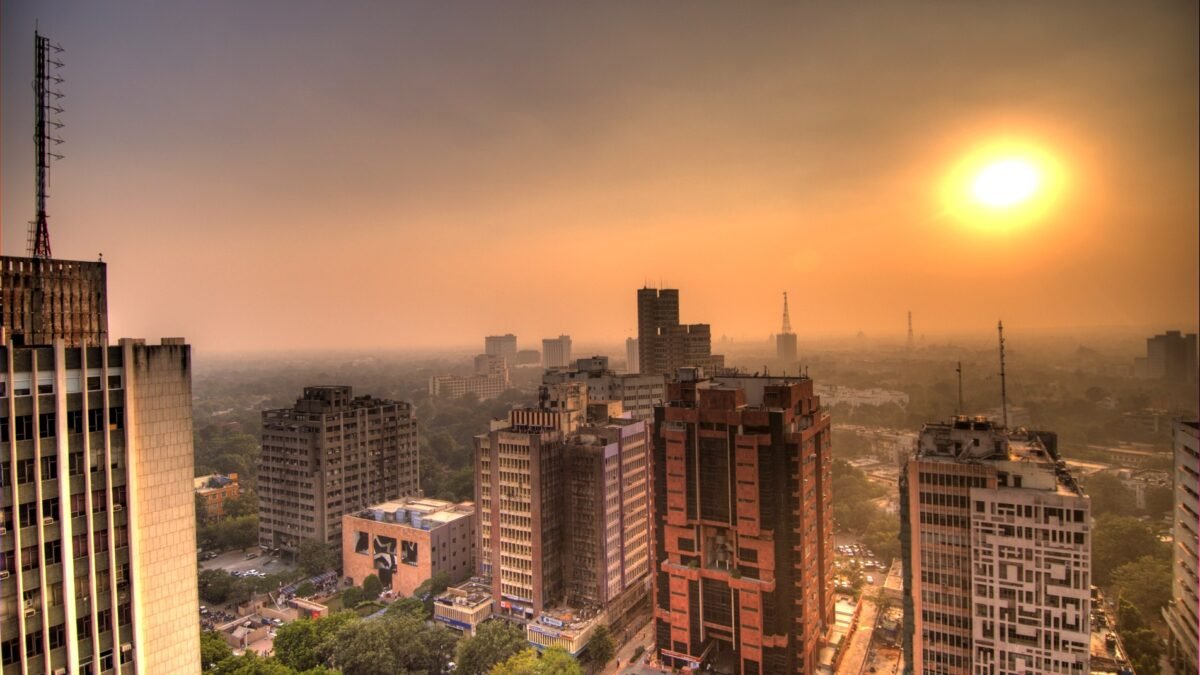
Thousands Throng Connaught Place, Waving Tricolours and Demanding Gyanesh Kumar’s Resignation
Thousands of Indians thronged one of New Delhi’s busiest commercial districts on Friday, waving the national flag and demanding the resignation of the country’s chief election commissioner, in the latest and most visible show of public dissent against Prime Minister Narendra Modi’s government, according to the Associated Press.
The protesters poured into Connaught Place, the white colonial-era shopping and food district at the heart of the capital, responding to a call by the youth-led “Cockroach” movement, whose leader, Abhijeet Dipke, was detained by police ahead of the demonstration, the AP reported. Protesters spanning generations joined the rally, reflecting broad public anger and intensifying pressure on the country’s top election official, Chief Election Commissioner Gyanesh Kumar.
Columns of riot police stood watch along the road as demonstrators, in large numbers, vastly outnumbered the security personnel lining the route. Student activist Neha Bora, who had taken a prominent position in the rally, was detained by police during the demonstration itself. Authorities had earlier asked people not to join the rally, offering instead to let a small group gather to wave the national flag and sing the national anthem. In anticipation of the protests, the civic authority closed Central Park, the green space ringed by Connaught Place’s famous colonnades, on both Friday and Saturday.
The rally was part of a growing campaign of street protest that has put Modi’s government under mounting pressure. It came a week after a police crackdown on protesters in New Delhi, and it followed a series of almost daily demonstrations this month by the Cockroach Janta Party, opposition groups and student organisations demanding Kumar’s exit, according to Reuters.
The Dispute Over the Electoral Rolls
At the centre of the anger is the Election Commission of India’s Special Intensive Revision, known as the SIR, of the country’s electoral rolls. Protests by the youth and opposition parties have intensified over the ongoing review, which has removed more than 130 million names from voter lists since last year, the AP reported.
Critics say the exercise is politically motivated, threatens to disenfranchise millions more, and has disproportionately affected minorities, particularly Muslims. They have demanded the resignation of Gyanesh Kumar, who has run the poll body through the controversy.
The Election Commission and Modi’s administration deny the allegations and say the revision is intended to remove duplicate and ineligible entries. Reuters reported that the commission has denied favouring any political party and said voters wrongly deleted from the rolls can re-enrol.
The Bharatiya Janata Party has accused its rivals of trying to undermine democracy by wrongly questioning legitimate electoral processes, Reuters reported. Citing Election Commission data, the BJP has said that of the roughly 130 million names deleted, 28 million were of people who had died, 63 million had relocated, 10 million were duplicates and 30 million could not be traced by officials.
The revision began in the eastern state of Bihar in June 2025 before being expanded to other parts of the country, and has since covered most of India. The opposition alleges that many eligible voters have been wrongly excluded and accuses the poll body of conducting the process improperly. Political analyst Zainab Sikander said updating voter lists was necessary in a democracy but argued that the current exercise had been carried out in a rushed manner.
The exercise has also shifted a heavy administrative burden onto ordinary voters. The system, managed by the Election Commission and supported by software from Tata Consultancy Services, can flag what officials describe as “logical discrepancies”, including spelling inconsistencies. The requirements have raised concerns in a country where many citizens lack standardised documentation, potentially making it harder for eligible voters to establish their status. Former election commissioner Ashok Lavasa described the exercise as “aggressive, ambitious and abrupt”.
From Satire to Street Power: The Cockroach Janta Party
The movement that called Friday’s rally began as an online satire. The Cockroach Janta Party, or CJP, is a Gen Z-backed satirical movement that has, within months, converted meme-fuelled mockery into some of the most disruptive street protests India has seen this year.
The CJP organised demonstrations in Mumbai and Delhi earlier in October, also demanding the chief election commissioner’s resignation, describing them as the beginning of a nationwide campaign. On October 10, security personnel stood guard outside the headquarters of the Election Commission of India during a CJP protest seeking Kumar’s resignation, according to Reuters. Two days later, opposition leaders walked to the Supreme Court to seek action on the revisions, the Associated Press reported.
The movement has already demonstrated an ability to force outcomes. In July, weeks of CJP-led protest forced the education minister to quit, a result that transformed the group from a joke into a political fact. Friday’s rally was its largest single mobilisation to date.
The authorities’ response has grown steadily harsher. On October 6, police detained opposition leaders in Delhi, including 237 MPs from a range of parties, who were marching to the Election Commission demanding Kumar’s resignation. According to Reuters, CJP founder Abhijeet Dipke called Friday’s flag protest in support of two CJP leaders detained and sent to jail this week for five days for demonstrating at a protest site in violation of a ban.
Traders in the Connaught Place area petitioned the Supreme Court to prevent Friday’s protest, arguing it would cause severe losses to their businesses, and demanded compensation for losses suffered during a similar rally planned over the weekend that was foiled by a security crackdown, Reuters reported.
The pressure has also reached inside the Election Commission itself. An investigation by the Indian Express reported that election commissioners Sukhbir Singh Sandhu and Vivek Joshi had formally objected at least 14 times over a 10-month period to decisions and orders they said had been issued in the Election Commission’s name without their knowledge. The commission has said all its decisions were lawful.
Meanwhile, the confrontation is drawing attention beyond India’s borders. Singer Mary Millben alleged that American donors were funding the CJP and opposing Modi, urging Indian youth to counter-protest. Dipke called the claim foreign interference, and no Indian agency has confirmed any investigation into the allegation, which remains unverified.
Analysis: Why It Matters
India’s democracy has always argued with itself loudly. What makes Friday’s rally significant is not just its size but what the protesters chose to carry: the national flag, en masse, in a confrontation with the state. By waving the tricolour at riot police, the demonstrators were seizing the most powerful symbol of Indian patriotism and turning it against the government, forcing the authorities into the awkward position of standing opposite their own flag. It is a tactic borrowed from some of the most successful protest movements of the last two decades worldwide, and it is designed to make a crackdown look unpatriotic rather than necessary.
Second, the rally confirms that the SIR controversy has moved from courtroom to street, and that is where it becomes hardest to control. The opposition’s allegations about the voter rolls have followed the traditional path, through the Supreme Court, through parliamentary marches, through press conferences. The CJP has added something the opposition parties could not: a youthful, mocking energy that treats the chief election commissioner the way internet culture treats everything, as material. Governments know how to handle opposition parties; they are far less sure how to handle a joke that keeps showing up with thousands of people attached.
Third, the numbers themselves are the real centre of gravity. More than 130 million names deleted from draft rolls is roughly 13 per cent of India’s electorate. The Election Commission’s categories, the dead, the relocated, the duplicates, the untraced, may each be legitimate on paper. But when the burden of proof falls on individual voters to show they belong on the list, and when independent analyses show disproportionate impacts on Muslims, women and migrants, the technical defence starts to sound like a procedural excuse. The question is no longer only whether the deletions are legal; it is whether a system that deletes first and invites appeal later can be trusted with the franchise.
Fourth, the internal dissent story is arguably more damaging to the commission than the protests. The Indian Express report of 14 formal objections by two fellow election commissioners to decisions taken in the commission’s name does something that street protests cannot: it punctures the commission’s claim to act as a unified, neutral institution. Elections in India have long been the one administrative machine that nearly everyone trusted. Once trust in the referee slips, every future result becomes contestable, and contestability in a country of this size and political temperature is dangerous.
Fifth, the timing tells its own story. The BJP is preparing a nationwide outreach campaign, including a 24-page dossier, to rebut the opposition’s claims, while the Election Commission has begun ordering a Special Summary Revision in 17 states and union territories with simpler procedures. Congress leader P. Chidambaram has called that shift an effective admission that the SIR was botched. Whether or not that characterisation is fair, the rollback suggests the government has concluded that the politics of the revision had become costlier than its administrative benefits.
What to Watch Next
- The Supreme Court’s posture: Traders have already petitioned the court over the protests, and the opposition’s march there earlier this month put the revision itself in the court’s line of sight. Any substantive ruling on the SIR’s legality would reshape the entire dispute.
- The final electoral rolls: Names missing from draft lists can still be restored through appeals and re-registration before final lists are published. The gap between draft deletions and final rolls will show how much of the controversy was administrative noise and how much was real.
- The BJP’s dossier and outreach campaign: The ruling party’s planned nationwide campaign to defend the revision will test whether its technical case, 28 million dead, 63 million moved, 10 million duplicates, persuades the public or sounds like an excuse.
- Whether the CJP keeps momentum: The movement has now proved it can put thousands in Connaught Place despite pre-emptive detentions, a closed park and a Supreme Court petition. Its next call will reveal whether this was a peak or a pattern.
- Police tactics: Each round of detentions, including Friday’s of Abhijeet Dipke and Neha Bora, has so far enlarged rather than shrunk the movement. How the Delhi Police handles the next rally may matter as much as the rally itself.
Sources
- Associated Press, “Crowds throng New Delhi and wave Indian flags amid escalating protests”, via Montana Public Radio, 16 October 2026
- Reuters, “Security stepped up in India’s capital for ‘cockroach’ movement rally”, 16 October 2026
- Bonikbarta, “Why India’s tens of millions of voter deletions have led to widespread protests”, background on the SIR figures and the Election Commission’s defence

About the Author — Abdul Mannan
Related Articles
Trump Waives Most of the Lindsey O. Graham Sanctions Law, Shelving Russia Tariffs Two Days Before They Took Effect
President Trump signed an executive order Friday waiving most of the Lindsey O. Graham Sanctioning Russia and Iran…
Putin Declares New ‘Security Zone’ Inside Ukraine Non-Negotiable as Moscow Widens Its Territorial Claims
Putin, in military uniform at a command post, said the 660km zone — 70% already under Russian control…
Trump Calls Ukraine’s Refinery Strikes ‘a Disgrace’ as EU Leaders Rally Around Zelenskyy at Brussels Summit
Donald Trump branded Ukraine's renewed strikes on Russian oil refineries 'a disgrace' in a Newsmax interview, hours before…