
Alberta Votes Overwhelmingly to Stay in Canada in Historic Referendum, Handing Carney a Defining Win

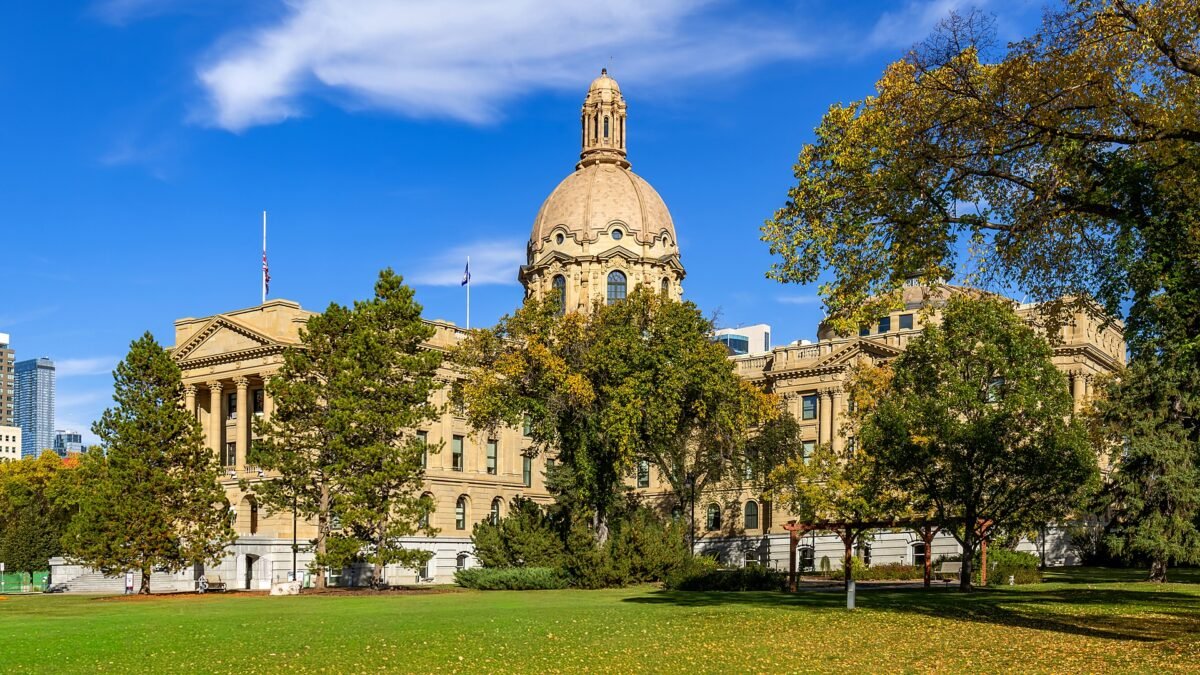
Alberta chooses Canada — and settles it by a landslide
Alberta will stay in Canada. Voters in the oil-rich western province have decisively rejected a proposal that would have set the province on the legal road toward a binding referendum on separation, according to unofficial results from Elections Alberta published early on Tuesday.
With roughly 1.2 million votes counted, the Canadian Broadcasting Corporation projected late on Monday night that Option 1 — “Alberta should remain a province in Canada” — had won with about 76 per cent of the vote. Option 2, which would have directed the provincial government to begin the legal process toward a later binding vote on separation, was trailing at about 23 to 24 per cent. Unofficial tallies early on Tuesday put the score at 941,204 votes for remaining in Canada against 288,259 for starting the separation process, out of about 1.23 million valid votes counted so far — 76.4 per cent to 23.6 per cent. The Times of London, reporting on the same unofficial figures, put the split at 77 per cent to 23 per cent with more than a million votes counted.
It is a margin no one will mistake for a near miss. Quebec’s 1995 separation referendum was decided by a razor-thin 50.6 per cent to 49.4 per cent. Alberta’s result, by contrast, is a landslide for unity — and a personal political triumph for Prime Minister Mark Carney, who spent the final week of the campaign on the ground in Alberta urging voters to reject the separatist path.
“Albertans made a clear choice,” Carney said in a statement on Tuesday. “They chose unity, to build together, and to take care of each other. Above all, Albertans chose Canada.” He added that the response to what he called “the defining question of separation” meant that “Albertans and all Canadians will move forward together with renewed purpose and high ambition,” and that “Canada is so much greater than the sum of its parts.”
Carney said the result would allow Canadians to accelerate efforts to diversify trade, develop major infrastructure projects and make Canada a global energy superpower — with Alberta at its centre.
What the question actually asked
The ballot that went before voters on Monday was not itself a vote on leaving Canada. Question 10 — the tenth and final question on a ballot that also contained nine other nonbinding questions — asked Albertans to choose between two options: that Alberta remain a province in Canada, or that the provincial government begin the legal process required to hold a future binding referendum on separation.
A simple majority for the separation option would not have taken Alberta out of the country. It would have started a process — enabling legislation, a legally defined question, constitutional scrutiny, negotiation with Ottawa — that could take years and could fail at multiple checkpoints. Under Canada’s Clarity Act of 2000, the national parliament’s House of Commons must determine whether a referendum demonstrates “a clear expression of a will by a clear majority” before any negotiation toward secession could begin. A genuine departure would likely require a constitutional amendment involving the federal government and the other provinces.
The other nine questions covered five non-constitutional matters — immigration rules, voter identification and election security — and four constitutional ones concerning Alberta’s relationship with the federal government and seeking amendments to the Constitution of Canada. Premier Danielle Smith had urged voters to vote yes on those nine questions while voting to remain in Canada on Question 10. Carney, for his part, had spent the previous week asking Albertans to vote “no to the nine” as well as to stay. Results for those questions were still trickling in early on Tuesday.
Record turnout, and a delay
The referendum drew a remarkable turnout. More than 1.35 million Albertans — about 43 per cent of eligible voters — cast advance or special ballots, according to Elections Alberta, a substantial increase over the roughly 810,000 advance votes in the 2023 provincial election. Mail-in ballots surged to 519,082, roughly a tenfold increase from the previous election.
High turnout brought its own complications. More than 100 polling stations were forced to extend their hours on Monday after late openings, and counting was delayed into the night. One polling station in southern Alberta, in an area home to the Siksika Nation, temporarily ran out of ballots on election day and stayed open until after 10 p.m. local time to ensure that everyone in line could vote, with the CBC reporting strong turnout from First Nations voters.
The shadow of tragedy hung over polling day. A fire at the Canadian Forces base at Wainwright, Alberta, that killed four soldiers and injured others cast a pall over the proceedings; some voters told local media they struggled to concentrate on the referendum amid the national mourning.
Smith gets the answer she wanted — and the problem she feared
Premier Danielle Smith called the referendum in May after sustained pressure from separatists inside her governing United Conservative Party, even though she personally opposes independence. Announcing the addition of the tenth question, Smith said it was “time to have a vote, understand the will of Albertans on this subject, and move on.” She said she herself voted for Alberta to remain in Canada during advance polling.
“I’m very pleased to see the initial results from Elections Alberta show widespread support for remaining in Canada,” Smith said in a statement. “Albertans have voted for a stronger Alberta in a united Canada.” She said she would deliver a live address to the province on Tuesday evening about the results and “where our province goes from here.”
Smith has promised she will not hold a second, binding referendum on separation while she is premier if the remain side wins. But opinion surveys show her own United Conservative Party is deeply divided on the issue, and political analysts say the tension inside her coalition is likely to play out in the coming months. Unlike her predecessor Jason Kenney, a staunch advocate of staying in Confederation, Smith has refused to characterise separatists as fringe extremists, saying their grievances deserve to be aired — a stance that kept her channels open to a movement she has now been obliged to campaign against.
Separatists claim a quarter of the province as their consolation
Separatist leaders did not wait for the final numbers to declare their own kind of victory. “We don’t have the final results. I think the numbers are going to fluctuate, but it is fair to say that at least a quarter of Albertans feel that Alberta needs to be treated better,” Keith Wilson, a leader of the independence group Let Alberta Decide, told supporters. Before the vote, Wilson had told the Associated Press that the unprecedented level of public engagement was already a success: “People are engaged and people are talking about this topic at a level that’s unprecedented historically.”
Some separatist leaders have said they will continue to pursue another vote even if most Albertans voted to remain. A poll by Angus Reid published on October 16 found that 62 per cent of Albertans believe “there will never be an end to the separatist movement” in the province.
On the unity side, Thomas Lukaszuk, a former Alberta deputy premier who led the Forever Canadian campaign against separation, told supporters: “We are a solid country that’s united from coast to coast to coast.”
Why the referendum happened at all
Alberta’s grievances with Ottawa are decades old and run deep. The scars begin in 1980, when Pierre Trudeau’s federal government imposed the National Energy Program, keeping domestic oil prices below world levels and increasing the federal share of oil revenues. Albertans saw it as a federal money grab on their natural wealth. Although the programme was ended by Brian Mulroney in 1985, the wounds never fully healed, and “western alienation” became a permanent current in Canadian politics.
The modern separatist revival drew strength from the era of Justin Trudeau’s Liberal government: a consumer carbon tax, an oil and gas emissions cap, clean-electricity regulations, and blocked pipelines. Premier Smith described the federal stance as “anti-energy, anti-agriculture, and anti-resource development.” A fringe movement mobilised during the Covid-19 pandemic found common cause with grievances over equalization payments — the federal transfers that separatists argue see Alberta’s energy wealth subsidising poorer parts of the country — and with resentment that immigration, energy and population policy are set in distant Ottawa.
Carney, who won a minority government in April 2025, moved early to defuse the confrontation. Within his first 18 months he cancelled the consumer carbon tax, loosened emissions rules, scrapped what Smith called the “destructive” electricity regulations, and committed to building new pipeline capacity — including a million-barrel-a-day pipeline to the British Columbia west coast and new pipelines carrying nearly a million barrels a day to the United States. Smith herself boasted that the federal Liberals had adopted most of Alberta’s positions on energy and resource development. But it was not enough to stop the petition drive: separatist organisers collected hundreds of thousands of signatures demanding the question be put to voters, and Smith’s government obliged.
Hanging over the entire campaign was Donald Trump’s trade war with Canada and his repeated threats to Canadian sovereignty. Alberta produces more than four million barrels of oil a day — most of it shipped to refineries in the United States — and energy is Canada’s largest category of exports. Carney argued that separation in the middle of a confrontation with Washington would be economically ruinous, a warning that carried weight from a former governor of the Bank of England who led that institution through Brexit.
Analysis: Why It Matters
1. A landslide settles the question — not the grievance
Seventy-six per cent is not a coin flip. Compared with Quebec’s near-death experience of 1995, when barely half the province chose Canada, Alberta’s result gives unity a margin of more than fifty points. For the separatist campaign’s central claim — that a silent majority of Albertans were waiting for permission to leave — the numbers are a cold answer. But the result does not dissolve the grievances that fed the movement. A quarter of a politically engaged, high-turnout electorate voted to begin the process of leaving the country. That is a permanent constituency for a politics of confrontation with Ottawa, and it will still be there the morning after the celebrations. The referendum settles what Albertans want; it does not settle what they want from Ottawa.
2. Carney’s wager paid off — twice over
Mark Carney took two calculated risks and both came good. The first was substantive: appeasement. He spent his first 18 months in office dismantling the Trudeau-era climate architecture that had infuriated Alberta — the consumer carbon tax, the emissions cap, the clean-electricity rules — and replaced it with pipeline approvals and an explicit “energy superpower” pitch. The second was rhetorical: confrontation. In the campaign’s final days he called the separation option “a dangerous bluff that will lead to years of deep division,” told a Calgary rally to “vote like Canada depends on it,” and leaned hard on his Brexit experience as the man who managed an economy through a real secession. Appeasement took the grievance off the boil; confrontation gave fence-sitters a reason to treat the vote seriously. It is the most complete political victory of his young premiership — and it was won on separatist turf, by a prime minister who grew up in Edmonton.
3. Trump, the unwitting unionist
No figure did more for Canadian unity this year than Donald Trump. The trade war and the annexation threats transformed the economic calculus of separation: independence in 2026 would not have meant liberation but isolation — a landlocked, four-million-barrel-a-day oil province negotiating market access with a hostile United States while its closest ally, Ottawa, became an adversary. Carney’s warning that separation would come with “crippling economic consequences” landed because the tariff war had already made the abstract concrete. There is a sharp irony here: the separatist movement grew in part from anger at Ottawa’s treatment of Alberta’s energy, yet it was ultimately Washington’s treatment of Canada’s economy that made leaving unthinkable. The referendum’s clearest lesson may be that Canadian nationalism is now forged less in Quebec’s language debates than in its disputes with America.
4. The 24 per cent is Smith’s next problem
Danielle Smith got the result she campaigned for and the politics she feared. She called the referendum to manage separatist pressure inside her United Conservative Party, urged a remain vote, and can now claim she has “moved on.” But the dynamic inside her party has not moved on with her. A quarter of her province’s voters — drawn disproportionately from her own base — voted to start down the path she refuses to walk, and some separatist leaders have already signalled they will demand another vote. Her carefully balanced formula of a “sovereign Alberta within a united Canada” will now be tested by supporters who hear the first word more loudly than the second. The referendum was supposed to settle the party’s internal argument; landslides rarely settle internal arguments.
5. The First Nations veto no one can wish away
Quietly present in the campaign’s margins is the party that would have the strongest legal claim in any real separation process: First Nations. Their land treaties with Ottawa predate the creation of the province of Alberta within Canada, and First Nations groups objected to the very idea of an independent Alberta — a constitutional complication no referendum question can vote away. The strong First Nations turnout on Monday, with Siksika Nation voters queuing past 10 p.m., was a reminder that the map of Alberta contains other sovereignties. Any future separation campaign will have to answer a question it conspicuously avoided this time: whose land would an independent Alberta be?
What to Watch Next
- Smith’s Tuesday-evening address: how the premier frames the landslide to a party split between federalists and separatists will set the tone for Alberta’s next year of politics.
- The final count and the other nine questions: the official Elections Alberta tally and the results on immigration, election security and constitutional amendments will show how far Albertans want the province to push Ottawa — separation may have lost, but leverage politics has not.
- The separatists’ next move: whether the movement accepts the verdict or begins agitating for a second referendum will test Wilson’s warning that the debate is not over.
- Carney’s energy promises under delivery pressure: the pipeline approvals and “energy superpower” commitments that helped win the vote must now survive budgets, courts and American tariffs.
- The Quebec echo: sovereigntists in Quebec, who lost two referendums of their own, are watching whether Ottawa’s playbook — concession plus confrontation — becomes the template for the next national-unity fight.
Sources
- The Times — “Alberta referendum results: voters want to remain part of Canada”
- The Wall Street Journal — “Albertans Vote to Stay in Canada in Historic Referendum”
- Associated Press — “Alberta rejects a move toward independence from Canada in a victory for Carney”
- NPR — “Alberta voters reject a move toward independence in referendum backing Canadian unity”
- Reuters — “What does Alberta’s referendum on separation from Canada mean?”

About the Author — Abdul Mannan
Related Articles
Houthi Missiles Kill Dozens of Recruits at Yemen Training Camp in Deadliest Strike Since War Reignited
Three ballistic missiles struck a training camp for government security forces in Yemen's Shabwa province on Monday, killing…
Exiled Rwandan Critic Robert Kabera Found Beheaded in Uganda
The body of former RDF sergeant major Robert Kabera, a YouTube critic of President Paul Kagame, was found…
Putin Proposes Three-Way Summit With Trump and Xi on Ukraine at APEC — Without Zelenskyy
Vladimir Putin has proposed a three-way summit with Donald Trump and Xi Jinping on the sidelines of November's…