
Hegseth Makes Unannounced Visit to Israel for Talks With Netanyahu Days Before Election

Secret trip lands eight days before Israel’s election
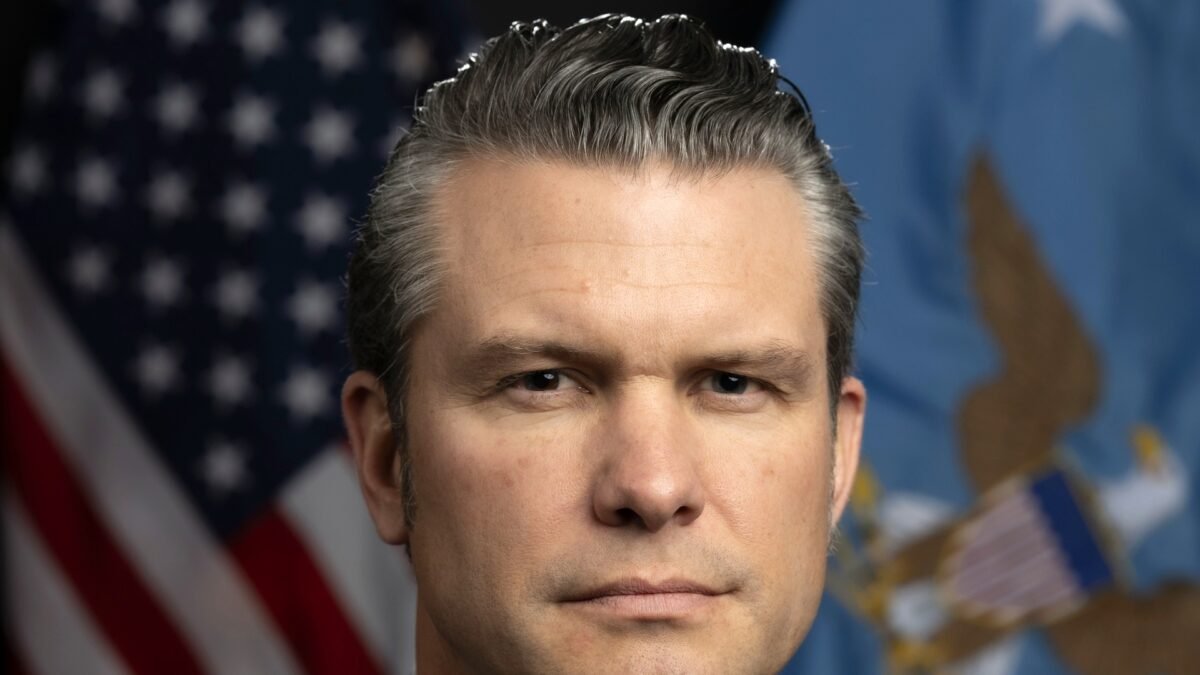
U.S. Defense Secretary Pete Hegseth made an unannounced visit to Israel on Monday, meeting Prime Minister Benjamin Netanyahu at Ovda Air Base in southern Israel, according to Axios, which cited two sources with knowledge of the trip. The visit was kept secret until the news outlet broke the story, and it came just eight days before Israel’s Knesset election on October 27.
The meeting took place at Ovda, where U.S. refueling aircraft and fighter jets are deployed, the sources said. Hegseth also met with American troops stationed at the base, and he later posted an image of himself visiting U.S. Central Command troops, without mentioning Israel. The Pentagon declined to comment on the trip, and Netanyahu’s office did not immediately respond to requests for comment, according to the reporting.
The timing is hard to miss. Washington and Jerusalem are, according to the same reporting, discussing the possibility of resuming major combat operations against Iran, the country the two nations attacked together earlier this year. The visit landed one day after President Donald Trump publicly endorsed Netanyahu for reelection and warned Tehran that unless it changes course rapidly, the United States would “soon finish the job.”
Trump’s endorsement and the threat to Tehran
Trump issued his endorsement of Netanyahu on Sunday, calling him a “Great Warrior Prime Minister” and offering his “Complete and Total Endorsement” ahead of the October 27 vote, Israel’s first national election since the Hamas-led October 7, 2023 attacks and the devastating campaign in Gaza that followed. In the same message, Trump warned Iran that further military action could follow unless Tehran changed course, according to reports of his posts.
“If the Iranians do not change their ways, rapidly, we will soon finish the job,” Trump wrote, as reported by several outlets. He added that without Netanyahu in office, the United States might have to finish the fight against Tehran on its own, suggesting that “if Israel has the wrong leader, which would be anyone other than Bibi, America will have to do this work ourselves, and I am not inclined to do so.”
Netanyahu responded publicly, thanking Trump for what he called the “tremendous support and the joint work,” and writing, in a message reported by Newsmax, “Together we will complete the mission.”
The endorsement is a significant political intervention eight days out from an election in which polls have suggested Netanyahu’s governing coalition could fall short of a parliamentary majority. Earlier this week, Netanyahu visited an Israeli Air Force base and delivered a pointed warning to Israel’s enemies. “We have the readiness, the determination and the capability to strike our enemies the moment it is required,” he said, according to JFeed. “Our enemies will take harder blows than they have taken until now… Do not test us.”
Iran pushes back on the threat
Tehran was quick to answer Trump’s warning. Iranian Foreign Minister Abbas Araghchi responded on Sunday on X, writing: “Last time you wanted to ‘finish the job’, Iran emerged even stronger. Want to try your luck again? Be our guest. But be careful; we have unfinished jobs too.”
Araghchi went further, accusing Netanyahu of “driving America into another war to stay out of jail, whatever the consequences for Israel — let alone POTUS.” The message was a blunt effort to drive a wedge between the Israeli prime minister and the American president, framing the threat of renewed war as a product of Netanyahu’s political needs rather than American strategic interests.
The exchange underscores how the public messaging around any renewed campaign has already begun: Trump threatening overwhelming action, Israel signaling readiness, and Iran promising a costlier fight than the last round.
Vance declines to endorse Netanyahu
Not everyone in the administration followed Trump’s lead. Vice President JD Vance declined on Monday to endorse Netanyahu, telling journalist Mark Halperin, in an interview reported by The Wall Street Journal and covered by Newsmax: “I endorse American candidates … so I’m not getting involved in Israeli elections.”
Vance said he was neither supporting nor opposing Netanyahu, explaining that his focus was on the November 3 U.S. midterm elections. His stance stood in contrast to Trump’s full-throated endorsement, and it highlighted that senior figures in the administration are not taking identical approaches to Israeli politics, as one analysis of the developments put it. The split also offered Netanyahu a lesson he has apparently already absorbed: according to the reports, the Israeli prime minister has been warning that a future, less supportive American president could leave Israel exposed, and he has been building partnerships beyond the current White House relationship.
The wider war and the Strait of Hormuz
The Hegseth trip did not happen in a vacuum. The regional conflict that began with the joint U.S.-Israeli campaign against Iran earlier this year continues to shape everything from global energy prices to Gulf diplomacy. Transit through the Strait of Hormuz, the world’s most important oil chokepoint, is running at roughly 70 percent below pre-war levels, and mine and projectile strikes on shipping have intensified in recent weeks, according to regional reporting.
The Houthis in Yemen, who are aligned with Iran, claimed on Monday to have carried out several attacks on Saudi energy, airport and military targets, including an Aramco site in Yanbu, the Shaybah oilfield, and the airports in Riyadh and Abha, according to Reuters, which noted that Saudi authorities did not immediately confirm the claims and that it could not independently verify them. The same day, a Houthi attack on a training camp for government security forces in Yemen’s Shabwa province killed dozens of people, with casualty figures differing between sources.
Saudi Arabia, rocked by deadly attacks in recent weeks as the conflict has widened, postponed its flagship Future Investment Initiative conference until next year, organizers announced on Monday. Gulf stock markets fell on Tuesday after the Houthi claims, with Saudi Arabia’s benchmark index dropping 1.1 percent, according to Reuters.
Against that backdrop, France has deployed assets to help protect Saudi energy sites, and Macron spent the weekend touring the Gulf to secure additional diesel and oil supplies for France as fuel prices soar. Qatar, for its part, has been seeking a diplomatic exit ramp ahead of the French state visit, while Tehran is still weighing its response to the latest U.S. proposals, including a limited ceasefire and a phased reopening of the strait.
Analysis: Why It Matters
Secrecy is the message
Defense secretaries do not travel in secret for routine check-ins. An unannounced flight to an air base that hosts American refueling tankers and fighter jets, a closed-door meeting with a wartime prime minister eight days before an election, and a Pentagon that declines to comment — every element of the Hegseth trip is engineered to project preparation rather than diplomacy. Refueling aircraft are the unglamorous backbone of any long-range air campaign, and meeting at the base that houses them is a choice of scenery that reads as deliberate. When the Pentagon chief shows up unannounced at the flight line, the intended audience is not only Tehran.
The election clock is running the war clock
The October 27 vote compresses every decision. Trump’s endorsement, Trump’s threat to “finish the job,” and Hegseth’s boots on the ground all land within a 48-hour window eight days before Israelis vote. That compression can be read two ways: as a coordinated show of American backing designed to steady Netanyahu’s campaign, or as a genuine war council convened because the window for action is genuinely narrowing. The uncomfortable possibility is that it is both — that political timelines and military timelines have fused, and that the decision about whether to strike again will be shaped as much by the electoral calendar in Tel Aviv as by the strategic picture in Tehran.
The Pentagon chief, not the diplomat
It is notable that this was Hegseth’s trip, not the secretary of state’s. The messenger is a statement of intent: this is about military options, not negotiations. That fits the reporting that Washington and Jerusalem are discussing the resumption of major combat operations — and it fits the pattern of recent weeks, in which American messaging toward Iran has oscillated between Trump’s public warnings and quiet diplomatic channels. Sending the defense secretary says the quiet part out loud: the planning is real, even if the decision is not yet made.
A non-denial in CENTCOM clothing
Hegseth’s public response to the story breaking was a photograph of himself with American troops and a line about a “historic mission” — confirming he was in the region while saying nothing about Israel at all. It is the classic non-denial denial: technically accurate, strategically silent. The refusal of both the Pentagon and Netanyahu’s office to comment on the meeting itself preserves the ambiguity that keeps Tehran guessing. But it also leaves the public record dependent entirely on Axios’s sources — a reminder that on the most consequential questions of war and peace, the public is reading leaked accounts of secret meetings rather than official statements.
Iran reads this as pressure, not accident
Araghchi’s response — taunting Trump, accusing Netanyahu of dragging America toward war — is the response of a government that has decided the threat is real enough to answer publicly. Whether the answer is defiance or deterrence depends on the next moves. The danger of this kind of choreographed pressure is the one strategists always warn about: each side reads the other’s signals through its own worst-case lens, and a visit meant to sharpen deterrence can be read in Tehran as the final checklist before a strike. With Hormuz already running at a fraction of its capacity and the Gulf’s energy infrastructure under repeated attack, the margin for misreading is thin.
What to Watch Next
- The October 27 election: whether Netanyahu wins outright or faces a hung Knesset will determine how much freedom he has to escalate — and whether Trump’s endorsement moved any votes.
- Tehran’s answer: Iran is still weighing its response to the latest U.S. proposals. If a deal on a limited ceasefire and phased Hormuz reopening materializes, the logic of a strike weakens; if talks stall past the Israeli vote, the pressure builds.
- U.S. force posture: any movement of tankers, carriers or strike aircraft in the region will be the concrete tell that planning is turning into preparation.
- The Houthi front: continued attacks on Saudi energy and aviation targets raise the cost of restraint for Riyadh and Washington alike — and give hawks their argument for wider action.
- The midterm clock: with U.S. midterms on November 3, Trump faces his own version of the election-war tension: a show of strength that rallies voters versus a new war that could sour them.
Sources
- JFeed — “Back to War? Pete Hegseth Secretly Visited Israel, Met Netanyahu Amid Talks” (reporting Axios’s account)
- Newsmax — “Vance Declines Netanyahu Endorsement as Trump Backs Bibi”
- Livemint — “Not getting involved: JD Vance opts out of endorsing Netanyahu”
- Demócrata — “Hegseth travels to the Middle East amid tension with Iran”
- The National — “Iran war latest: Hegseth makes surprise visit to Israel”

About the Author — Abdul Mannan
Related Articles

Macron Takes France’s Fuel Plea to the Gulf as Hormuz Disruption Tightens Its Grip
Emmanuel Macron is in Doha on a state visit, the final leg of a four-nation Gulf tour to…
Riyadh’s Iconic Kingdom Centre Empties Its Offices as Houthi Attacks Rattle Saudi Capital
Management at Riyadh's 99-storey Kingdom Centre ordered all office staff to work remotely until further notice after overnight…
Tugboat Hit by Two Projectiles Off the UAE as Attacks on Gulf Shipping Reach a Wartime Weekly High
A tugboat was struck by two projectiles off the UAE's Khor Fakkan coast as UKMTO recorded 12 attacks…