
Jamaat-e-Islami Launches Third Phase of Petroleum Levy Protests as Fresh Talks With Government End Without Breakthrough

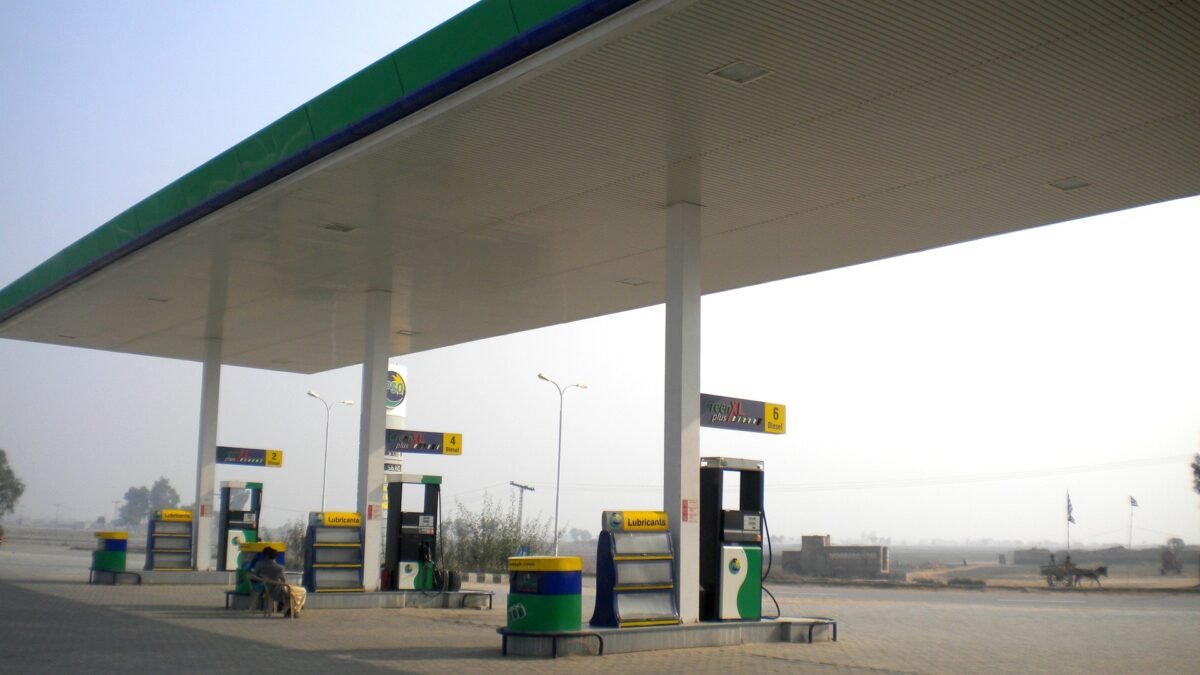
ISLAMABAD: Jamaat-e-Islami (JI) launched the third phase of its nationwide campaign against the petroleum levy on Friday, staging sit-ins, rallies and demonstrations across the country, even as a fresh round of negotiations with the government ended without a breakthrough, according to The News.
The protests, held on the appeal of JI Ameer Hafiz Naeemur Rehman, drew party workers and citizens from different walks of life in Lahore, Karachi, Peshawar, Islamabad, Quetta and many other cities, The News reported. Participants chanted slogans against inflation and demanded the abolition of the levy. JI leaders claimed simultaneous protests were held in 150 cities across the country.
Earlier in the day, negotiating committees of the two sides met at Punjab House in Islamabad to discuss the levy and possible relief for consumers. The JI delegation was led by central Naib Ameer Liaquat Baloch and included Deputy Secretary Syed Farasat Shah, Islamabad Ameer Nasrullah Randhawa, Lahore Ameer Ziauddin Ansari and North KP Ameer Inayatullah Khan, according to The News. The government team comprised Planning Minister Ahsan Iqbal, Petroleum Minister Ali Pervaiz Malik, the Prime Minister’s Adviser on Political Affairs Rana Sanaullah Khan and Minister of State for Finance Bilal Azhar Kiani.
The two sides agreed to form a technical committee consisting of Kiani, Randhawa and Shah, which will meet within two to three days to examine outstanding issues and technical details. However, no date was fixed for a meeting between Prime Minister Shehbaz Sharif and the JI leadership — a meeting the party has been seeking for weeks.
Speaking to journalists after the talks, Baloch urged the prime minister to announce relief for the public at the proposed meeting with Hafiz Naeemur Rehman, which he said should take place within a week and “must not be reduced to a photo opportunity”. “We will continue negotiations, but we will not abandon the path of protest,” he said, according to The News.
Baloch claimed the actual price of petrol was Rs242.66 per litre and of diesel Rs246.80, while the government was collecting an additional Rs162 per litre on petrol and Rs148 on diesel in the form of taxes. He further claimed the government had collected Rs1,568 billion through the petroleum levy, The News reported.
Protests across all four provinces
In Lahore, JI staged a sit-in outside the Press Club, led by Naib Ameer Khalid Ahmed Butt and Secretary Azhar Bilal. Karachi saw a major demonstration led by district Ameer Muneem Zafar, while sit-ins were also held in parts of Islamabad and Rawalpindi, according to The News.
In Punjab, protests took place in Bahawalpur, Gujrat, Faisalabad, Multan, Sheikhupura, Sargodha, Jaranwala, Sahiwal, Attock, Taxila, Khushab, Chishtian, Vehari, Khanewal, Muzaffargarh and Dera Ghazi Khan, among other districts. JI’s leadership joined the protests in Bahawalpur, Gujrat, Multan and Faisalabad.
In Sindh, major demonstrations were held in Larkana and Badin, with rallies and sit-ins in Shikarpur, Jacobabad, Kandhkot, Tando Allahyar, Dadu, Qambar-Shahdadkot, Mirpurkhas, Jamshoro, Tharparkar, Thatta and Sukkur. In Khyber Pakhtunkhwa, demonstrations were held in Peshawar, Mardan, Nowshera, Swabi, Charsadda, Khyber and Upper Dir, among other areas. In Balochistan, district leaders organised a sit-in in Naseerabad. Protesters gathered outside press clubs and at major intersections, The News reported.
Dealers urge calm over fuel supplies
Separately, fuel dealers on Friday urged consumers to avoid panic buying, insisting that national petroleum supplies remained under control despite rumours of shortages, according to Dawn. Petroleum industry sources told the newspaper that local refineries were supplying roughly 70 per cent of the country’s diesel requirements, although most of the crude they processed was imported. Petrol demand for November was estimated at around 630,000 tonnes, with local production accounting for about 30 per cent of national consumption.
The newspaper also reported that the technical committee formed after the Punjab House talks would review unresolved matters within two to three days. Liaquat Baloch told reporters that the party would continue pursuing talks but would keep organising public protests until economic relief was announced, and had requested a direct meeting between the prime minister and Hafiz Naeemur Rehman.
Weeks of back-and-forth
The Friday talks were the latest in a sequence of engagements stretching back to early September, when the federal government and JI agreed to form committees to recommend measures for reducing the petroleum levy, according to the Islamabad Post. On September 22, JI chief Hafiz Naeemur Rehman announced that the party was postponing its long march — whose convoy had already reached Multan — at the request of Prime Minister Shehbaz Sharif, pending a meeting with him.
Earlier phases of the campaign had included sit-ins at 510 locations across the country and a shutdown strike, and the party has maintained that it would seek written assurances from the government before deciding its future course of action, the Islamabad Post reported.
On Thursday, Planning Minister Ahsan Iqbal contacted Liaquat Baloch to arrange the Friday meeting at Punjab House, where the two sides were also to work out a schedule for the proposed meeting between the prime minister and the JI emir, according to Sabah News. Baloch warned at the time that if the government failed to meet the party’s demands, JI would proceed with its planned long march from Multan.
Speaking to reporters after the Friday session, Baloch said the campaign was not about the party’s own interests but aimed at securing public relief, reducing unbearable production costs and reviving economic activity. He argued that cutting the petroleum levy and payments to independent power producers (IPPs) was essential to easing pressure on households, agriculture, industry, trade and small businesses, according to Sabah News.
Analysis: Why It Matters
The levy is the government’s fiscal lifeline — and its political weak point
The petroleum levy sits at the uncomfortable intersection of two imperatives. For the treasury, it is one of the most productive revenue instruments available — JI’s own figures, whether or not they hold up to audit, put the collection at Rs1,568 billion, a sum any finance minister would be reluctant to surrender. With Pakistan bound by fiscal commitments to international lenders, every rupee of levy revenue foregone has to be replaced from somewhere else. For households and transporters, meanwhile, the levy is the most visible tax of all: it is paid at the pump, felt daily, and impossible to disguise. That combination — indispensable to the state, intolerable to the public — is precisely why it makes such effective political ammunition.
JI is filling the organised-street-opposition space
Jamaat-e-Islami’s significance in this campaign goes beyond the numbers of people at its rallies. With the Pakistan Tehreek-e-Insaf consumed by its own battles — a jailed founder, an emergency and governor’s rule imposed in Khyber Pakhtunkhwa on October 11, and a series of confrontations with the state — JI has become the only party capable of mounting sustained, disciplined, countrywide street action without immediately triggering a security crackdown. Its cadre-based organisation, honed over decades, can put sit-ins outside press clubs in dozens of districts on the same day and then pull them back without losing control. That is a rare asset in Pakistan’s politics, and it is the reason the government is negotiating with JI rather than simply dispersing its demonstrations.
Talks without breakthroughs suit both sides — for now
The pattern of engagement — committees, technical committees, postponed marches, meetings arranged and deferred — is not accidental. For the government, keeping JI at the table prevents a second street front from opening while it manages the fallout of the KP emergency and the counter-terrorism operation the province’s administration is now expected to run. A three-member technical committee that reports in “two to three days” costs nothing and buys exactly that much time. For JI, the negotiations are equally useful: they certify the party as a legitimate interlocutor, keep its workers mobilised without the risks of a full march, and build leverage for the meeting that really matters — the one between Hafiz Naeemur Rehman and the prime minister. Neither side gains anything from a definitive rupture this week.
The real decision point is the Shehbaz–Hafiz Naeem meeting
Everything about Friday’s outcome points to one conclusion: nothing substantive will move until the two principals sit down. Baloch’s warning that the meeting “must not be reduced to a photo opportunity” is the tell. JI has been burned before — the September 22 postponement of its long march, at the prime minister’s personal request, produced weeks of committee-level talks and no announced relief. The party will not absorb another round of process without product. The government, for its part, needs to calibrate how much relief — if any — it can announce without alarming its fiscal managers. Expect the technical committee’s findings to be framed precisely as the menu from which that meeting chooses.
What to watch next
First, the technical committee’s report in two to three days: if it surfaces concrete options for levy reduction, the proposed prime-ministerial meeting gains momentum; if it returns platitudes, JI’s patience will thin. Second, the scheduling of that meeting itself — Baloch wants it “within a week”; any slippage will be read by the party as bad faith. Third, the trajectory of the third-phase protests: they were orderly on day one, but prolonged street action with no payoff historically drifts toward harder confrontation, particularly in Punjab’s industrial districts. Fourth, the fuel-supply picture: the dealers’ no-panic-buying appeal suggests rumours are already circulating, and any hint of real shortage would transform a political protest into an economic crisis overnight. And finally, the fiscal ledger: whatever relief is announced will have to be paid for, and the search for the offsetting revenue will write the next chapter of this story.
Sources

About the Author — Abdul Mannan
Related Articles
Federal Cabinet Bans Tehreek-e-Labbaik Pakistan Under Anti-Terrorism Law After Violent Protests
Pakistan's federal cabinet has unanimously banned the Tehreek-e-Labbaik Pakistan under the Anti-Terrorism Act, declaring it a proscribed organisation;…
Government Offers Talks as Opposition Insists on Its Terms, Venue Row and Imran Khan Access Demands Stall Dialogue
Islamabad renews its dialogue offer to the opposition, but a venue row, the demand for access to Imran…
PM Shehbaz Announces Rs160 Billion Package for KP on First Peshawar Visit Since Governor’s Rule, Accuses PTI of ‘Callousness’
Prime Minister Shehbaz Sharif on Thursday visited Peshawar for the first time since the federal government imposed an…